Velociraptor

Description
Source: Wikipédia
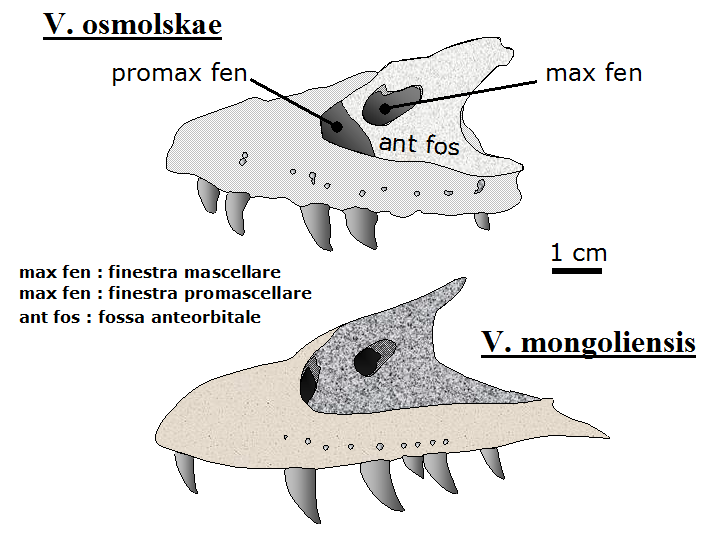
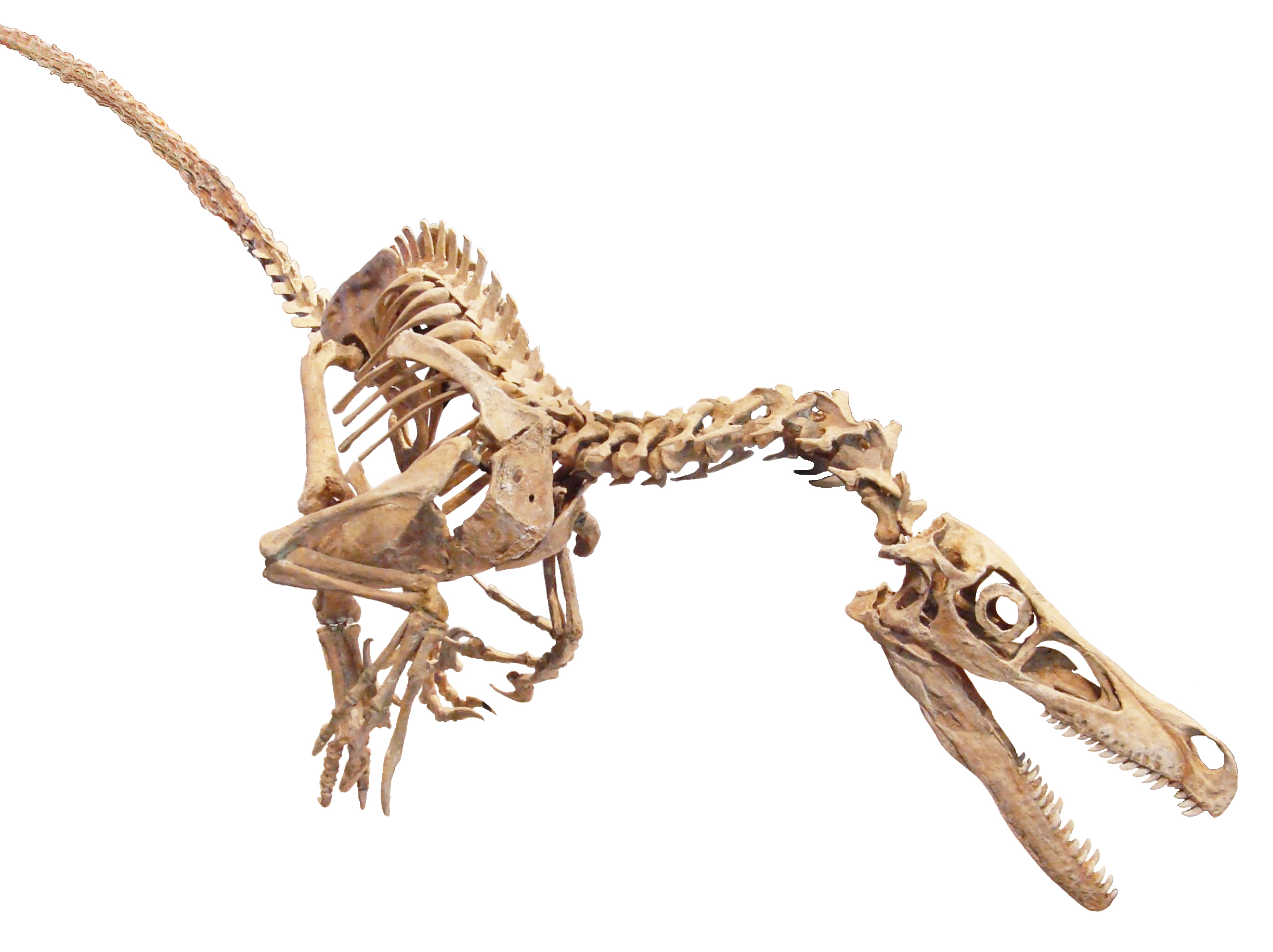
Velociraptor (littéralement « voleur rapide »), souvent francisé sous le terme vélociraptor, est un genre éteint de dinosaures théropodes appartenant à la famille des droméosauridés, ayant vécu durant le Crétacé supérieur dans ce qui est aujourd'hui l'Asie, il y a entre 75 et 71 millions d'années. Deux espèces sont actuellement connues, bien que d'autres aient été attribuées par le passé. L'espèce type, Velociraptor mongoliensis, est connue à partir des fossiles découverts dans la formation de Djadokhta en Mongolie. Une deuxième espèce, Velociraptor osmolskae, a été décrite en 2008 grâce à des fragments crâniens découverts dans la formation de Bayan Mandahu en Chine.
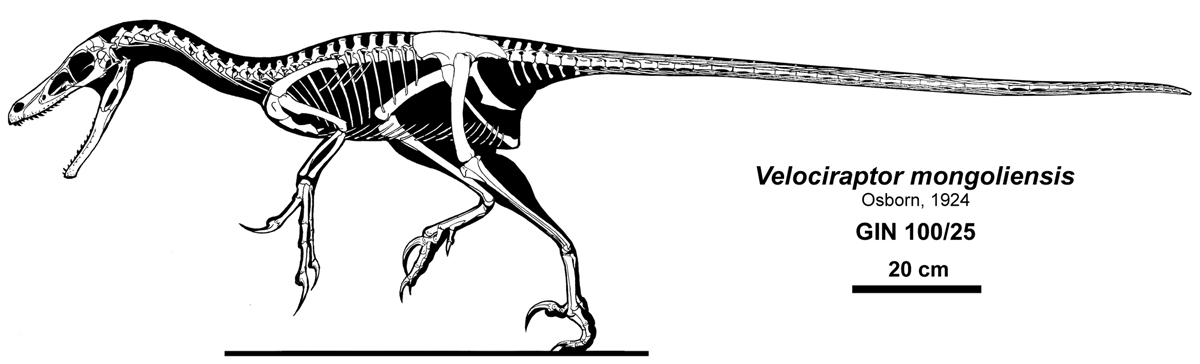
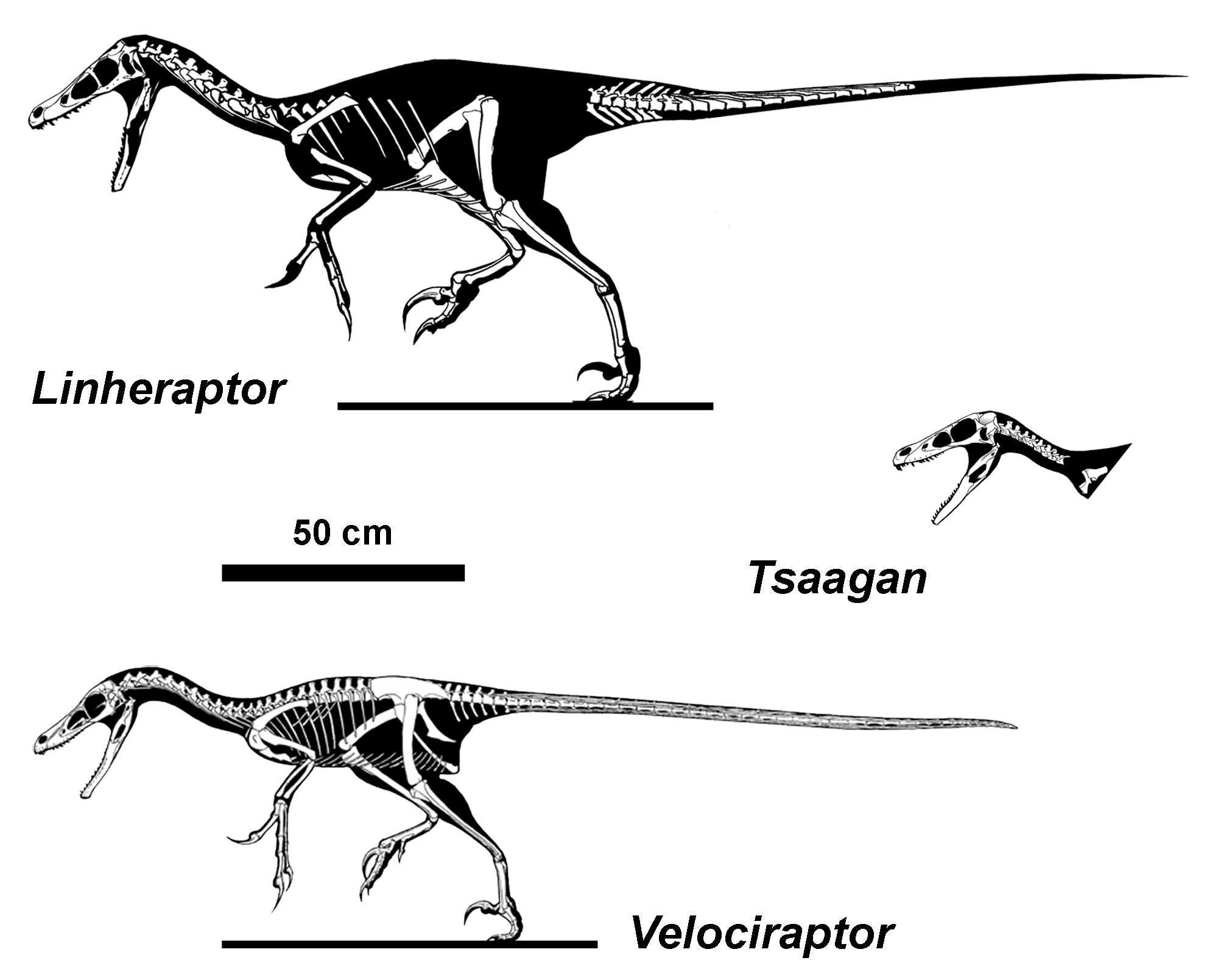
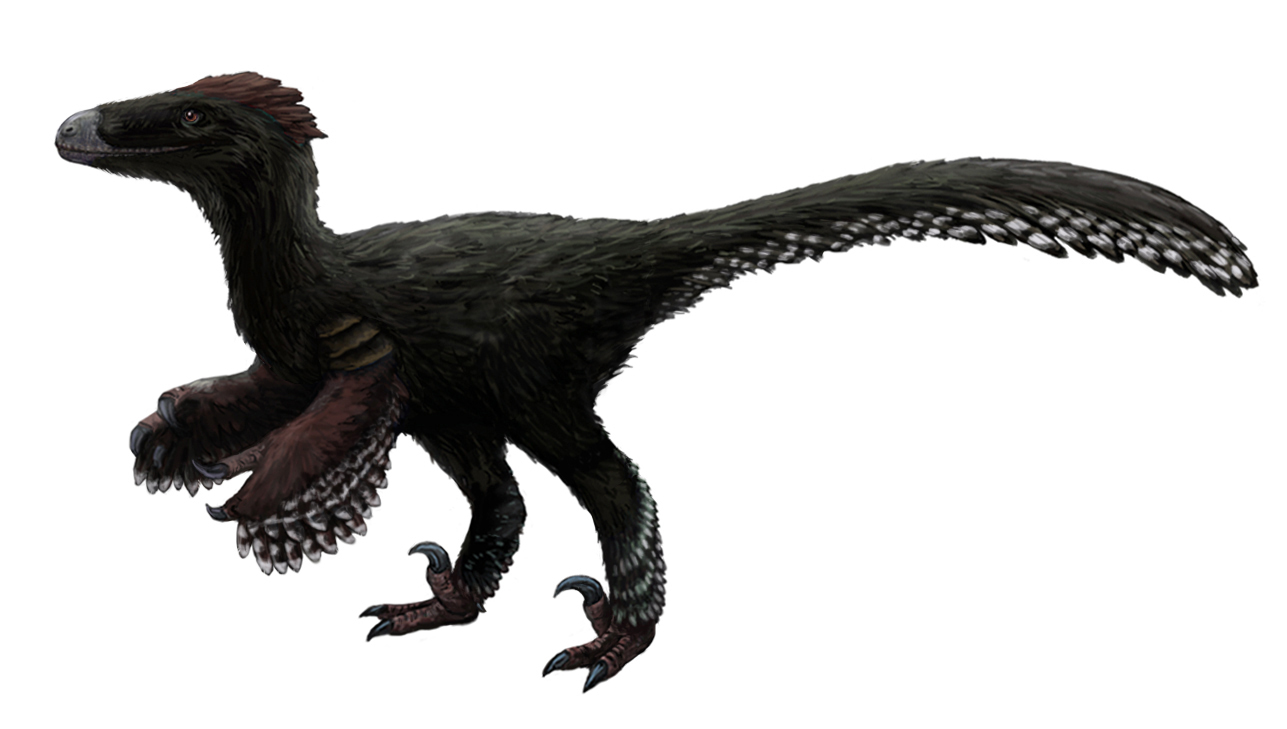
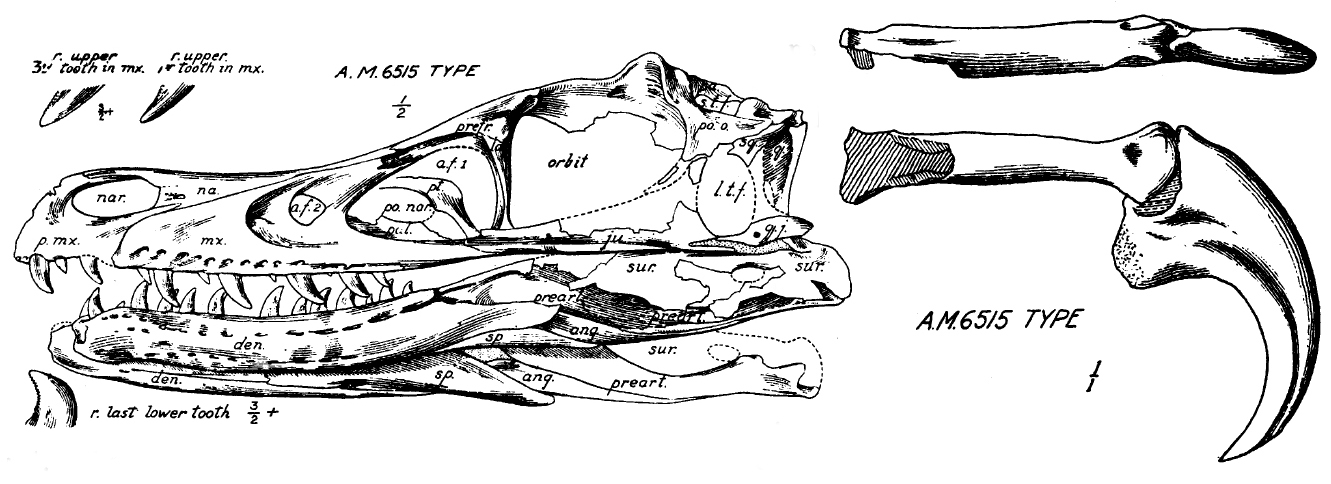
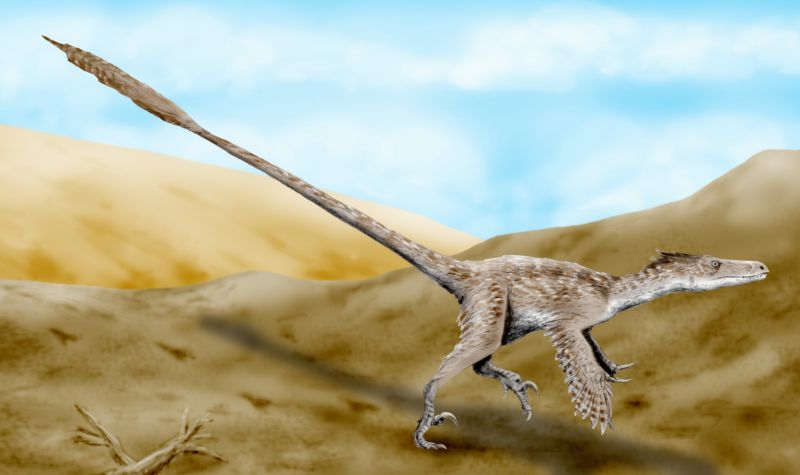
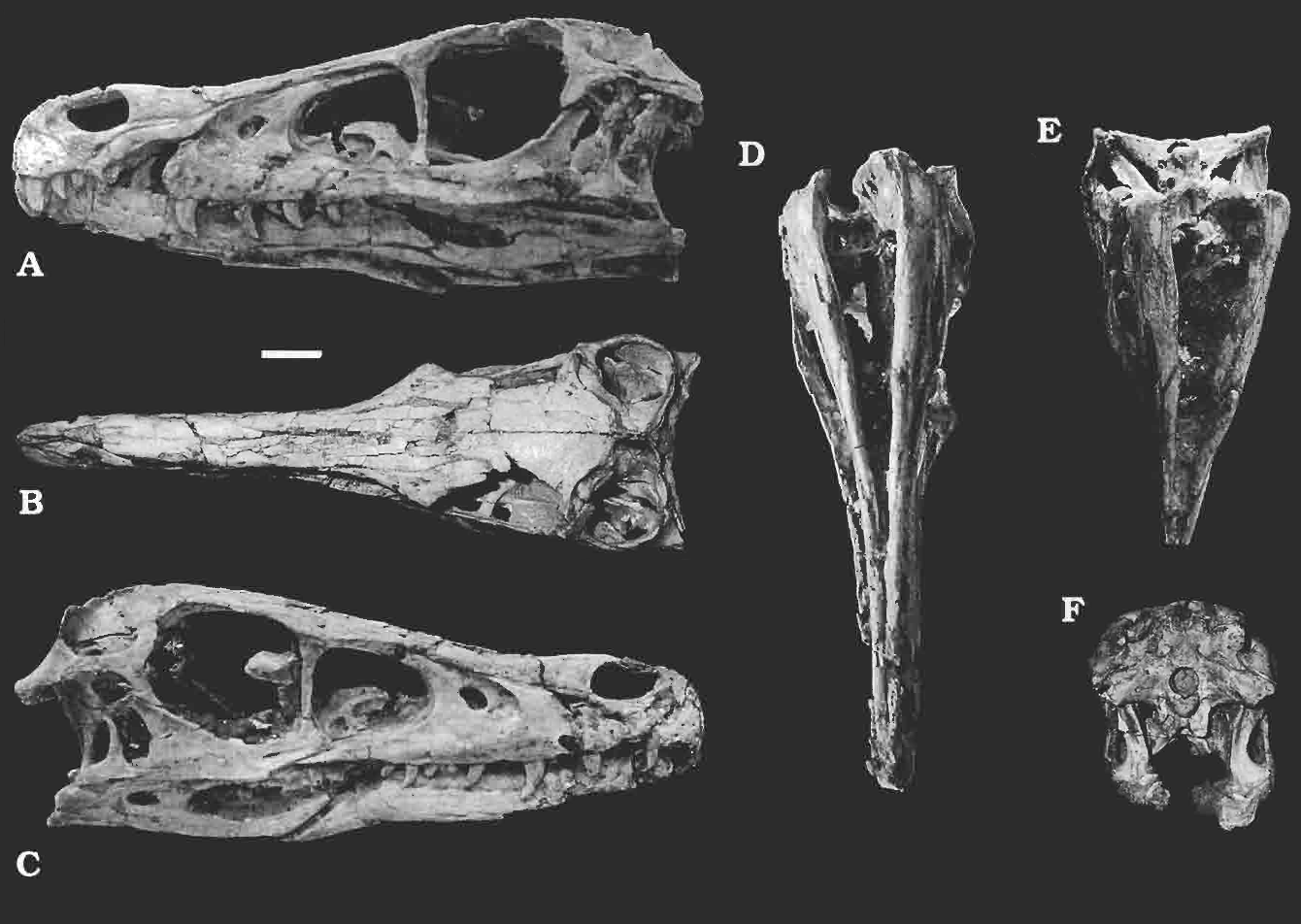
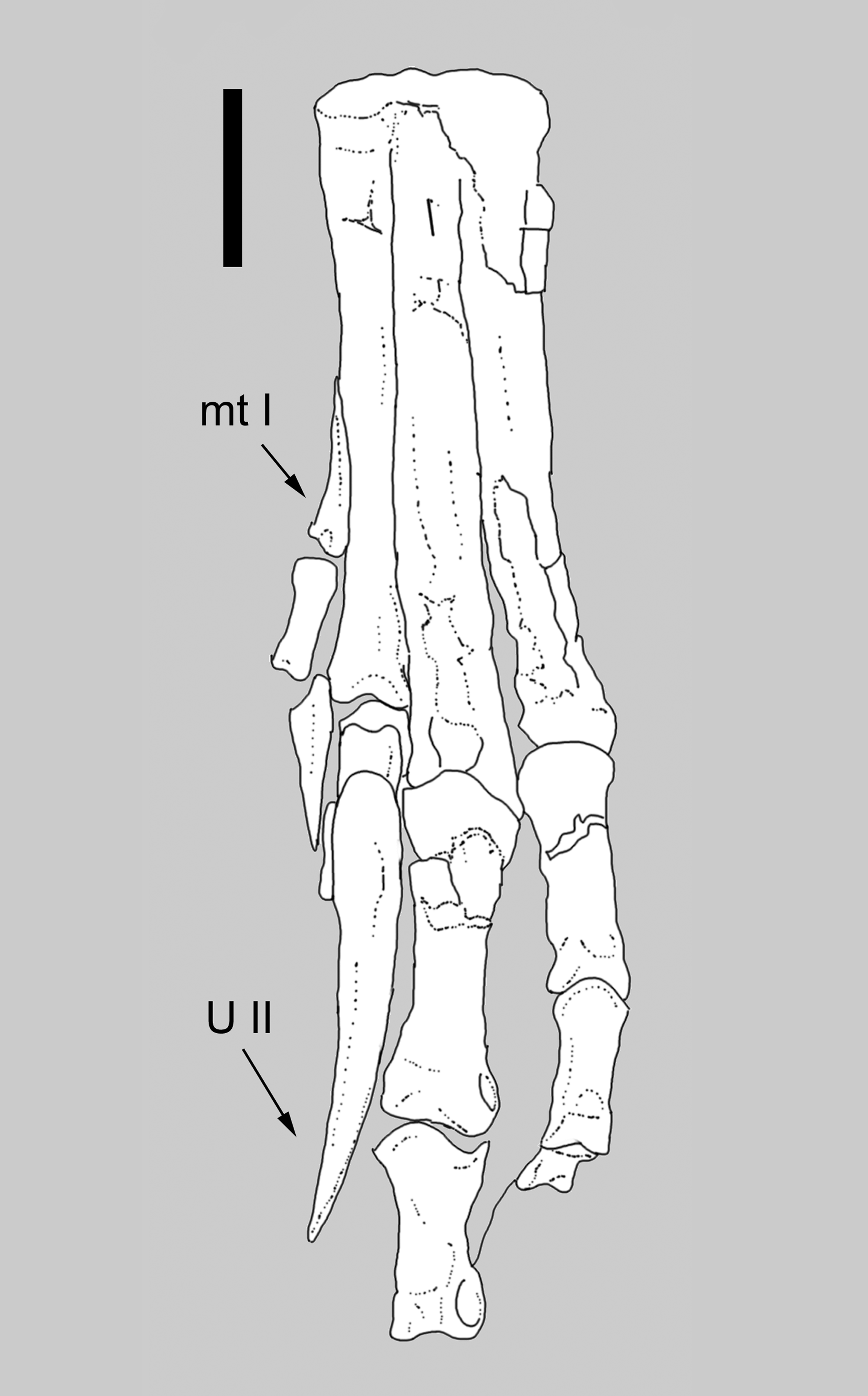
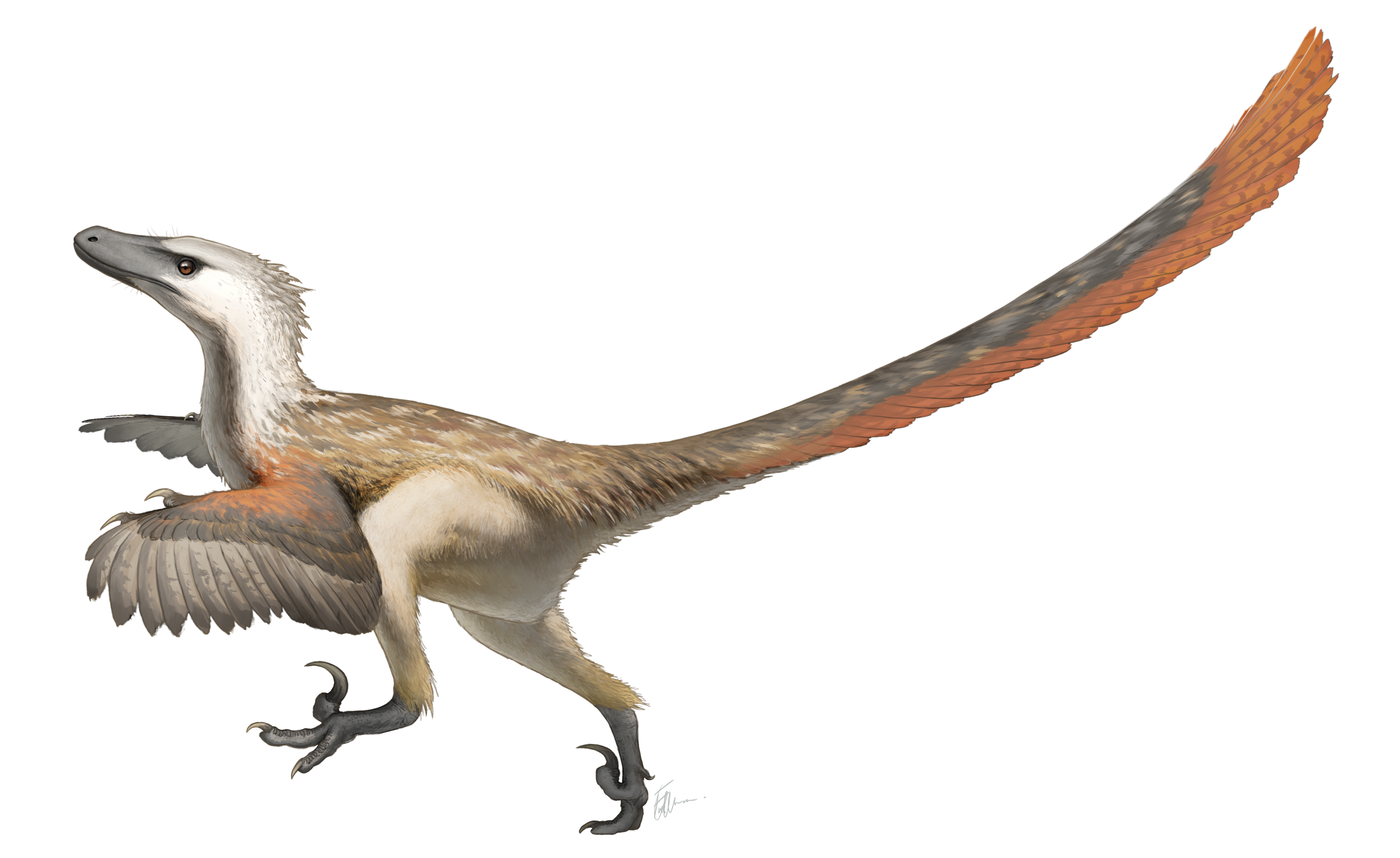
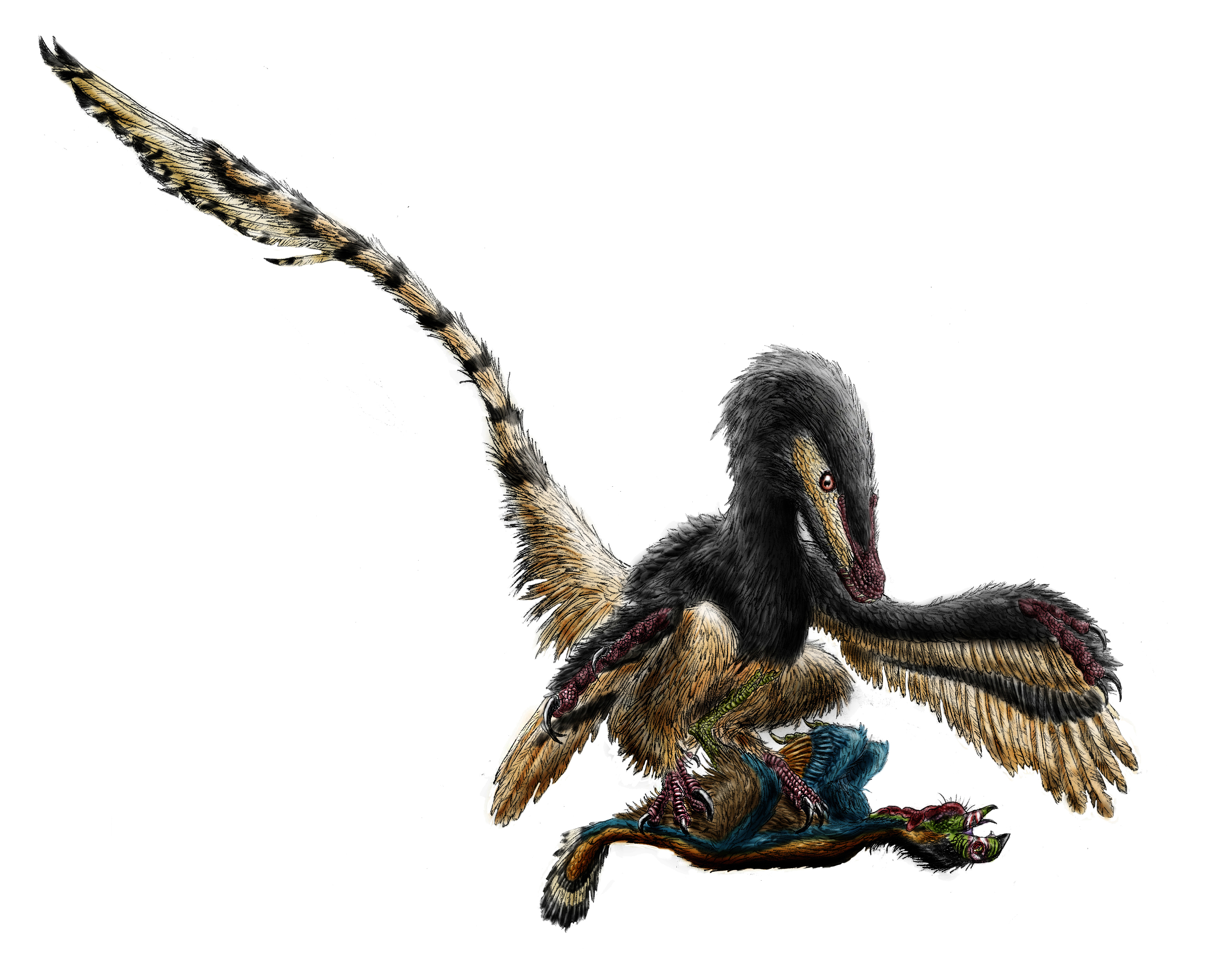
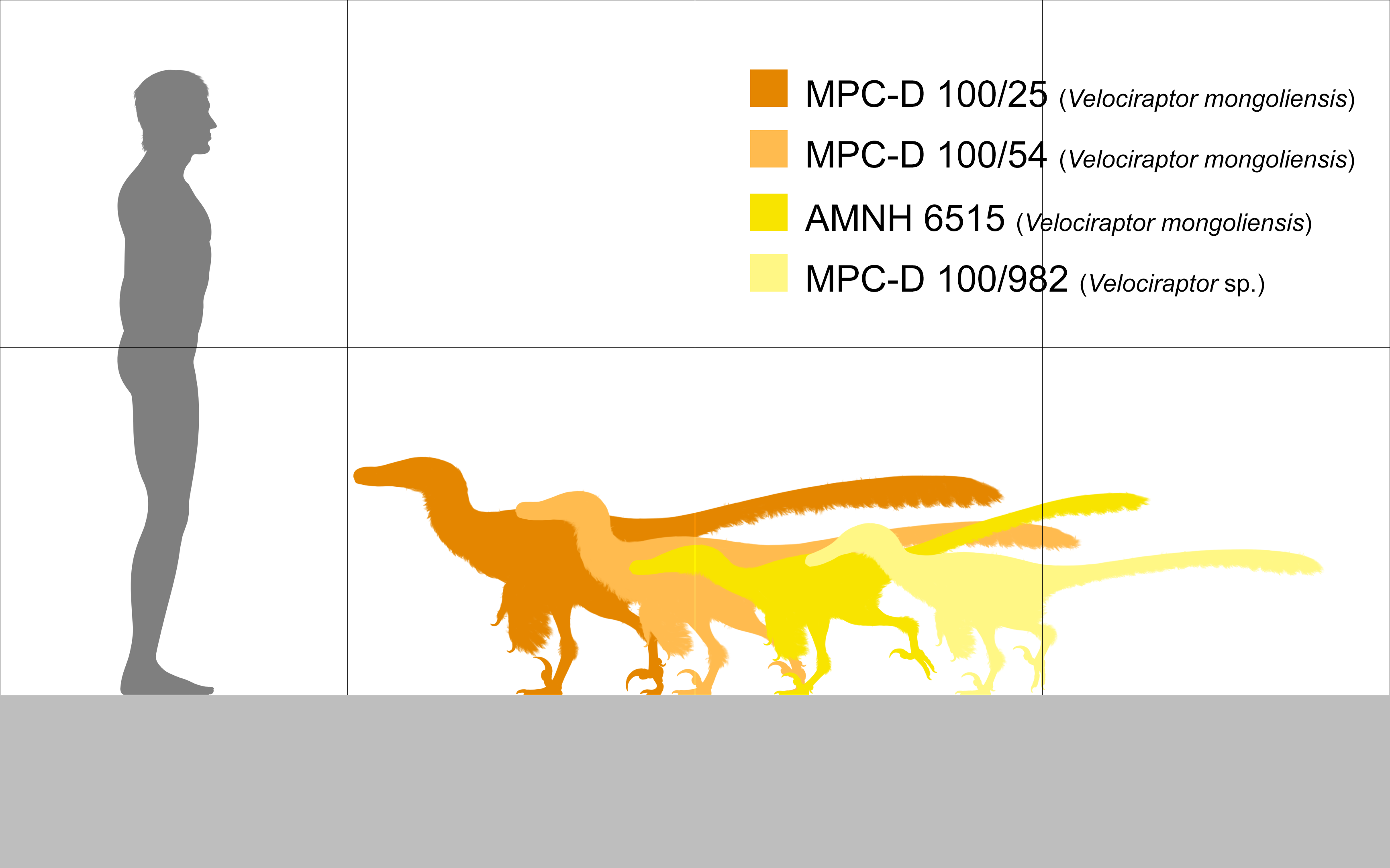
Mesurant environ 1,5 à 2 m de long pour une masse corporelle comprise entre 15 et 18 kg, Velociraptor est plus petit que d'autres droméosauridés tels que Deinonychus ou Achillobator. Il partage néanmoins bon nombre de caractéristiques anatomiques avec ceux-ci. C'était un carnivore bipède à plumes doté d'une longue queue et d'une grande griffe en forme de faucille sur chaque patte arrière, qui aurait été utilisée pour attaquer et retenir les proies. Velociraptor se distingue des autres droméosauridés par son crâne long et bas, au museau retroussé.
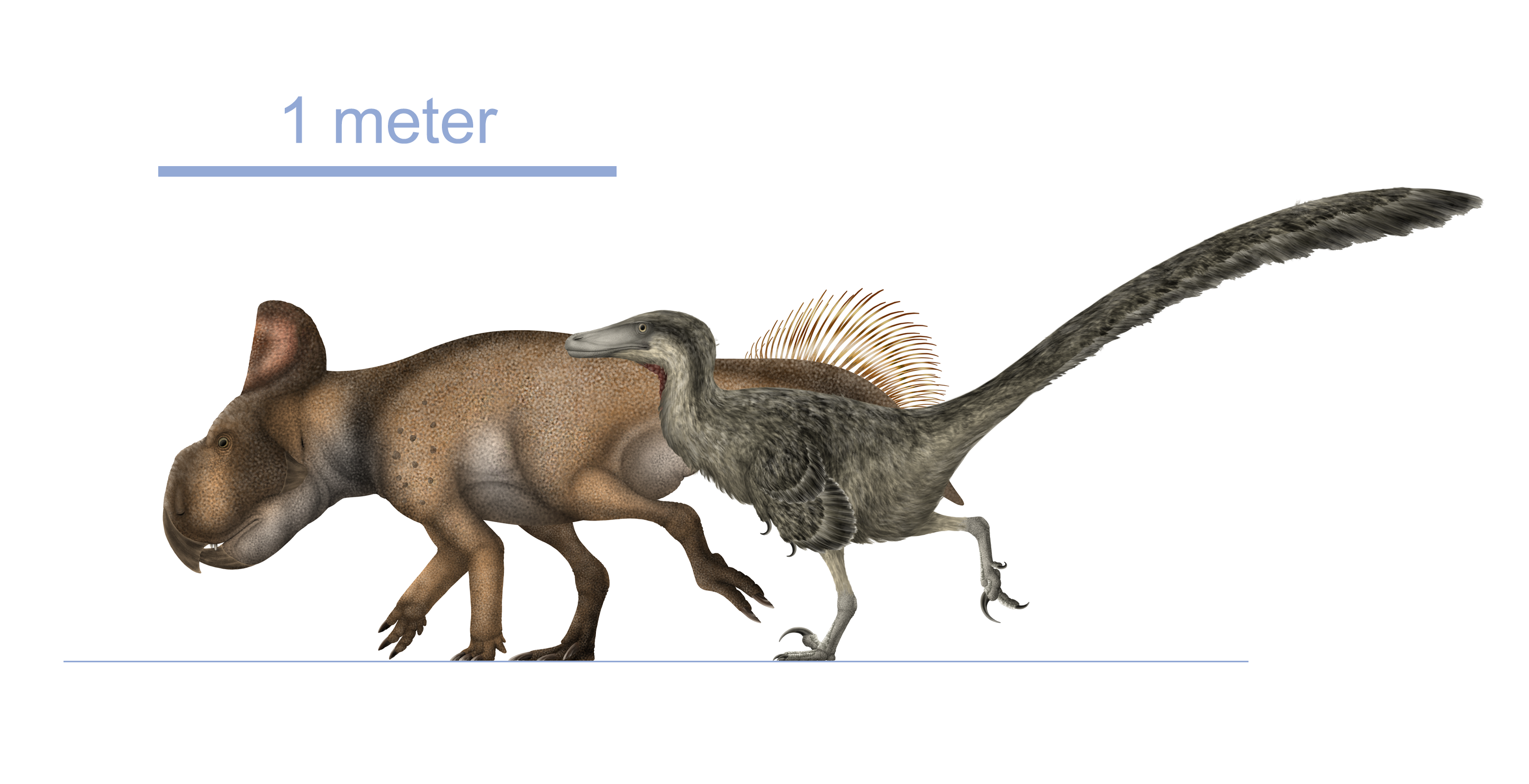
Velociraptor est l'un des dinosaures les plus connus du grand public en raison de son rôle de premier plan dans les films de la saga Jurassic Park et Jurassic World. En réalité, le Velociraptor est à peu près haut comme une dinde, considérablement plus petit que les reptiles d'environ 2 m de haut et de 90 kg décrits dans les romans et les films (qui sont basés sur des membres du genre apparenté Deinonychus). Parmi les droméosauridés, Velociraptor est particulièrement bien connu des paléontologues, plus d'une douzaine de squelettes fossiles ayant été décrits. Un fossile particulièrement célèbre conserve d'ailleurs un Velociraptor figé dans un combat avec un Protoceratops.
Information(s)
Source: The Paleobiology Database
- Attibution: Osborn 192413096
- Statut: Valide
- Nom commun: Voleur rapide
- Longueur (en m): ?
- Largeur (en m): ?
- Hauteur (en m): ?
- Poids (en m): de ? à ?
- Environnement de découverte: terrestrial
- Mode de vie: terrestrial
- Mode de locomotion: actively mobile
- Vision: ?
- Alimentation: carnivore
- Mode de reprodution: oviparous
- Classification: Velociraptorinae >> Eudromaeosauria >> Dromaeosauridae >> Deinonychosauria >> Paraves >> Maniraptora >> Coelurosauria >> Tetanurae >> Averostra >> Neotheropoda >> Theropoda >> Saurischia >> Dinosauria
- Période: Coniacian - Maastrichtian (de -89.80 Ma à -66.00 Ma)
- Espèce(s):
- Specimen(s):
- Velociraptor mongoliensis: IGM 100/982 - fibula (right)
- Velociraptor mongoliensis: IGM 100/986 - femur (right) , tibiotarsus (right) , femur (left) , tibiotarsus (left) , fibula (left)
- Détail des Spécimens
- Autre(s) Taxon(s) trouvés dans la litterature:
- Velociraptor
- Velociraptorinae
- Velociraptor mongoliense misspelling of Velociraptor mongoliensis
- Velociraptor osmolskae
- Velociraptor mongoliensis
- Découverte(s): 60 occcurrences
Ouvrir - Fermer Brésil
 Canada
- Alberta
- ?
- County of Warner
- Formation Milk River
- Velociraptorinae: ? 94184
- Formation Milk River
- Alberta
 Chine
Chine Allemagne
- Niedersachsen
- ?
- Formation Süntel
- Velociraptorinae: ? 70252
- Formation Süntel
- ?
- Niedersachsen
 Espagne
 Royaume-Uni
- England
- East Sussex
- Formation Wadhurst Clay
- Velociraptorinae: ? 32811
- Formation Wadhurst Clay
- East Sussex
- England
 Japon
Japon- Gifu
- ?
- Formation Okurodani
- Velociraptorinae: ? 14077
- Formation Okurodani
- ?
- Gifu
 Kazakhstan
 Maroc
Maroc Mongolie
- Dornogov
- ?
- Formation Baruungoyot
- Velociraptor: ? 55298
- Formation Baruungoyot
- ?
- Omngov
- ?
- Formation Djadokhta
- Velociraptor mongoliensis: IGM 100/982: fibula (right) 18147
- Formation Djadokhta
- ?
- Omnogov
- ?
- Formation Baruungoyot
- Velociraptor: ? 59136
- Formation Djadokhta
- Velociraptor: ? 5757
- Velociraptor: ? 42293
- Velociraptor: ? 42154
- Velociraptor: ? 42291
- Velociraptor mongoliensis: ? 5757
- Velociraptor mongoliensis: ? 13096
- Velociraptor mongoliensis: IGM 100/986: femur (right) , tibiotarsus (right) , femur (left) , tibiotarsus (left) , fibula (left) 18147
- Velociraptor mongoliensis: ? 18147
- Velociraptor mongoliensis: ? 28193
- Velociraptor mongoliensis: ? 63431
- Formation Baruungoyot
- Gurvan Tes
- Formation Djadokhta
- Velociraptor mongoliensis: ? 91033
- Formation Djadokhta
- ?
- Dornogov
 Portugal
 Roumanie
 Russie
- Amur
- Blagoveschensk
- Formation Udurchukan
- Velociraptorinae: ? 77450
- Formation Udurchukan
- Blagoveschensk
- Amur
 Soudan
- Ash Shamaliyah
- ?
- Formation Wadi Milk
- Velociraptorinae: ? 10388
- Formation Wadi Milk
- ?
- Ash Shamaliyah
 États-Unis
- Historique des modifications:
Pas de modification récente.
Publication(s)
La base comprend 43 publication(s).
Source: The Paleobiology Database
- ↑1 2 3 H. F. Osborn. 1924. Three new Theropoda, Protoceratops zone, central Mongolia. American Museum Novitates 144:1-12
- ↑1 2 P. Godefroit, P. J. Currie, and H. Li, C. Y. Shang, Z.-M. Dong. 2008. A new species of Velociraptor (Dinosauria: Dromaeosauridae) from the Upper Cretaceous of northern China. Journal of Vertebrate Paleontology 28(2):432-438 (https://doi.org/10.1671/0272-4634(2008)28[432:ansovd]2.0.co;2)
- ↑1 2 C. F. C. Geroto and R. J. Bertini. 2014. New records of fossil vertebrates from the Upper Cretaceous Adamantina Formation (Bauru Group), southeastern Brazil. Revista do Instituto Geológico 35(2):39-56 (https://doi.org/10.5935/0100-929X.20140008)
- ↑1 J. M. Wood, R.G. Thomas, and J. Visser. 1988. Fluvial processes and vertebrate taphonomy: the Upper Cretaceous Judith River Formation, south-central Dinosaur Provincial Park, Alberta, Canada. Palaeogeography, Palaeoclimatology, Palaeoecology 66:127-143 (https://doi.org/10.1016/0031-0182(88)90085-5)
- ↑1 2 3 4 5 6 7 8 9 D. W. Larson. 2008. Diversity and variation of theropod dinosaur teeth from the uppermost Santonian Milk River Formation (Upper Cretaceous), Alberta: a quantitative method supporting identification of the oldest dinosaur tooth assemblage in Canada. Canadian Journal of Earth Sciences 45(12):1455-1468 (https://doi.org/10.1139/e08-070)
- ↑1 K. Yu, W. Wu, and W. Sun, J. Chen, X. Wang. 2025. New dinosaur teeth from the Upper Cretaceous Nenjiang Formation in Songliao Basin, northeast China. Acta Geologica Sinica - English Edition 99(2):320–331 (https://doi.org/10.1111/1755-6724.15288)
- ↑1 B. Bohlin. 1953. VI. Vertebrate Palaeontology 6. Fossil reptiles from Mongolia and Kansu. Reports from the Scientific Expedition to the North-western Provinces of China under Leadership of Dr. Sven Hedin. The Sino-Swedish Expedition Publication 37:1-113
- ↑1 C.-C. Young. 1958. The first record of dinosaurian remains from Shansi. Vertebrata PalAsiatica 2(4):231-236
- ↑1 T. van der Lubbe, U. Richter, and N. Knötschke. 2009. Velociraptorine dromaeosaurid teeth from the Kimmeridgian (Late Jurassic) of Germany. Acta Palaeontologica Polonica 54(3):401-408 (https://doi.org/10.4202/app.2008.0007)
- ↑1 J. I. Canudo, J. M. Gasca, and M. Aurell, A. Badiola, H.-A. Blain, P. Cruzado-Caballero, D. Gómez-Fernández, M. Moreno-Azanza, J. Parrilla, R. Rabal-Garcés, J. I. Ruiz-Omeñaca. 2010. La Cantalera: an exceptional window onto the vertebrate biodiversity of the Hauterivian-Barremian transition in the Iberian Peninsula. Journal of Iberian Geology 36(2):205-224 (https://doi.org/10.5209/rev_JIGE.2010.v36.n2.8)
- ↑1 B. Sánchez-Hernández, M. J. Benton, and D. Naish. 2007. Dinosaurs and other fossil vertebrates from the Late Jurassic and Early Cretaceous of the Galve area, NE Spain. Palaeogeography, Palaeoclimatology, Palaeoecology 249:180-215 (https://doi.org/10.1016/j.palaeo.2007.01.009)
- ↑1 F. Barroso-Barcenilla, O. Cambra-Moo, and F. Escaso, F. Ortega, A. Pascual, A. Pérez-García, J. Rodríguez-Lázaro, J. L. Sanz, M. Segura, A. Torices. 2009. New and exceptional discovery in the Upper Cretaceous of the Iberian Peninsula: the palaeontological site of ‘‘Lo Hueco’’, Cuenca, Spain. Cretaceous Research 30:1368-1378 (https://doi.org/10.1016/j.cretres.2009.07.010)
- ↑1 E. Isasmendi, A. Torices, and J. I. Canudo, P. J. Currie, X. Pereda-Suberbiola. 2022. Upper Cretaceous European theropod palaeobiodiversity, palaeobiogeography and the intra‐Maastrichtian faunal turnover: new contributions from the Iberian fossil site of Laño. Papers in Palaeontology 8(1):e1419:1-38 (https://doi.org/10.1002/spp2.1419)
- ↑1 O. W. M. Rauhut. 2002. Dinosaur teeth from the Barremian of Uña, province of Cuenca, Spain. Cretaceous Research 23:255-263 (https://doi.org/10.1006/cres.2002.1003)
- ↑1 P. Austen, D. Brockhurst, and K. Honeysett. 2010. Vertebrate fauna from Ashdown Brickworks, Bexhill, East Sussex. Wealden News (8):13-23
- ↑1 S. E. Evans, M. Manabe, and E. Cook, R. Hirayama, S. Isaji, C. J. Nicholas, D. Unwin, Y. Yabumoto. 1998. An Early Cretaceous assemblage from Gifu Prefecture, Japan. Lower and Middle Cretaceous Terrestrial Ecosystems, New Mexico Museum of Natural History and Science Bulletin 14:183-186
- ↑1 A. O. Averianov. 2007. Theropod dinosaurs from Late Cretaceous deposits in the northeastern Aral Sea region, Kazakhstan. Cretaceous Research 28:532-544 (https://doi.org/10.1016/j.cretres.2006.08.008)
- ↑1 A. N. Riabinin. 1938. Some results of the studies of the Upper Cretaceous dinosaurian fauna from the vicinity of the station Sary-Agach, South Kazakhstan. Problems of Paleontology 4:125-135
- ↑1 2 3 F. Knoll and J. I. Ruiz-Omeñaca. 2009. Theropod teeth from the basalmost Cretaceous of Anoual (Morocco) and their palaeobiogeographical significance. Geological Magazine 146(4):602-616 (https://doi.org/10.1017/S0016756809005950)
- ↑1 M. Watabe, K. Tsogtbaatar, and S. Suzuki, M. Saneyoshi. 2010. Geology of dinosaur-fossil-bearing localities (Jurassic and Cretaceous: Mesozoic) in the Gobi Desert: Results of the HMNS-MPC Joint Paleontological Expedition. Hayashibara Museum of Natural Sciences Research Bulletin 3:41-118
- ↑1 2 3 M. A. Norell and P. J. Makovicky. 1999. Important features of the dromaeosaur skeleton II: information from newly collected specimens of Velociraptor mongoliensis. American Museum Novitates 3282:1-45
- ↑1 R. Gradzinski, Z. Kielan-Jaworowska, and T. Maryanska. 1977. Upper Cretaceous Djadokhta, Barun Goyot and Nemegt formations of Mongolia, including remarks on previous subdivisions. Acta Geologica Polonica 27(3):281-318
- ↑1 2 D. Dashzeveg, M. J. Novacek, and MA Norell, JM Clark, LM Chiappe, A. Davidson, MC McKenna, L. Dingus, C. Swisher, P. Altangerel. 1995. Extraordinary preservation in a new vertebrate assemblage from the Late Cretaceous of Mongolia. Nature 374:446-449 (https://doi.org/10.1038/374446a0)
- ↑1 S. Suzuki and M. Watabe. 2000. Report on the Japan–Mongolia Joint Paleontological Expedition to the Gobi desert, 1998. Hayashibara Museum of Natural Sciences Research Bulletin 1:83-98
- ↑1 M. Watabe and S. Suzuki. 2000. Cretaceous fossil localities and a list of fossils collected by the Hayashibara Museum of Natural Sciences and Mongolian Paleontological Center Joint Paleontological Expedition (JMJPE) from 1993 through 1998. Hayashibara Museum of Natural Sciences Research Bulletin 1:99-108
- ↑1 W. Watabe and S. Suzuki. 2000. Report on the Japan–Mongolia Joint Paleontological Expedition to the Gobi desert, 1994. Hayashibara Museum of Natural Sciences Research Bulletin 1:30-44
- ↑1 L. M. Chiappe, S. Suzuki, and G. J. Dyke, M. Watabe, K. Tsogtbaatar, R. Barsbold. 2007. A new enantiornithine bird from the Late Cretaceous of the Gobi Desert. Journal of Systematic Palaeontology 5(2):193-208 (https://doi.org/10.1017/S1477201906001969)
- ↑1 R. Barsbold. 1974. Poyedinok dinozavrov [Dueling dinosaurs]. Prioda 1974(2):81-83
- ↑1 A. H. Turner, P. J. Makovicky, and M. A. Norell. 2007. Feather quill knobs in the dinosaur Velociraptor. Science 317(5845):1721 (https://doi.org/10.1126/science.1145076)
- ↑1 J. Zinke. 1998. Small theropod teeth from the Upper Jurassic coal mine of Guimarota (Portugal). Paläontologische Zeitschrift 72(1/2):179-189 (https://doi.org/10.1007/bf02987825)
- ↑1 F. Batista, L. Castro, and P. Moita, B. Maggia, F. Ortega, E. Malafaia. 2025. Microwear structures and surface analysis on isolated theropod teeth from the Upper Jurassic Andrés fossil site, Pombal, Portugal. Lethaia 58(4):1–16 (https://doi.org/10.18261/let.58.4.2)
- ↑1 V. Codrea, P. Godefroit, and T. Smith. 2012. First discovery of Maastrichtian (latest Cretaceous) terrestrial vertebrates in Rusca Montană Basin (Romania). Bernissart Dinosaurs and Early Cretaceous Terrestrial Ecosystems
- ↑1 D. Grigorescu, M. Venczel, and Z. Csiki, R. Limberea. 1999. New latest Cretaceous microvertebrate fossil assemblages from the Haţeg Basin (Romania). Geologie en Mijnbouw 78:301-314
- ↑1 S. Vasile. 2008. A new microvertebrate site from the Upper Cretaceous (Maastrichtian) deposits of the Hateg Basin. Sargetia, Acta Musei Devensis, Series Scientia Naturae 21:5-15
- ↑1 T. Smith, V. A. Codrea, and A. Sasaran, J. Van Itterbeeck, P. Bultynck, Z. Csiki, P. Dica, C. Farcas, A. Folie, G. Garcia, P. Godefroit. 2002. A new exceptional vertebrate site from the Late Cretaceous of the Hateg Basin (Romania). Studia Universitatis Babes-Bolyai, Geologia, Special Issue 1:321-330
- ↑1 2 Z. Csiki and D. Grigorescu. 1998. Small theropods from the Late Cretaceous of the Hateg Basin (Western Romania) - an unexpected diversity at the top of the food chain. Oryctos 1:87-104
- ↑1 V. Codrea, T. Smith, and P. Dica, A. Folie, G. Garcia, P. Godefroit, J. Van Itterbeeck. 2002. Dinosaur egg nests, mammals and other vertebrates from a new Maastrichtian site of the Hateg Basin (Romania). Comptes Rendus Palevol 1(3):173-180 (https://doi.org/10.1016/s1631-0683(02)00021-0)
- ↑1 I. U. Bolotsky. 2011. On paleoecology of carnivorous dinosaurs (Tyrannosauridae, Dromaeosauridae) from Late Cretaceous fossil deposits of Amur region, Russian Far East. Global Geology 14(1):1-6, 14 (https://doi.org/10.3969/j.issn.1673-9736.2011.01.01)
- ↑1 O. W. M. Rauhut. 1999. A dinosaur fauna from the Late Cretaceous (Cenomanian) of northern Sudan. Palaeontologia Africana 35:61-84
- ↑1 P. Senter, J. I. Kirkland, and D. D. DeBlieux, S. Madsen, N. Toth. 2012. New dromaeosaurids (Dinosauria: Theropoda) from the Lower Cretaceous of Utah, and the evolution of the dromaeosaurid tail. PLoS ONE 7(5):e36790 (https://doi.org/10.1371/journal.pone.0036790)
- ↑1 A. R. Fiorillo. 1999. Non-mammalian microvertebrate remains from the Robison Eggshell site, Cedar Mountain Formation (Lower Cretaceous), Emery County, Utah. Vertebrate Paleontology in Utah, Utah Geological Survey Miscellaneous Publication 99-1:259-268
- ↑1 2 3 J. M. Parrish. 1999. Dinosaur teeth from the Upper Cretaceous (Turonian–Judithian) of southern Utah. Vertebrate Paleontology in Utah, Utah Geological Survey Miscellaneous Publication 99-1:319-321
- ↑1 J. I. Kirkland and J. R. Lively. 2023. MTE14 Mesozoic of Utah Field Trip. (https://doi.org/10.3102/2004552)
Galerie d'images
Source: Wikimédia
.png)
.png)
.png)
.jpg)