Genre
Ichnogenre Taxon formel Éteint

Platytrisauropus

Ellenberger 1972

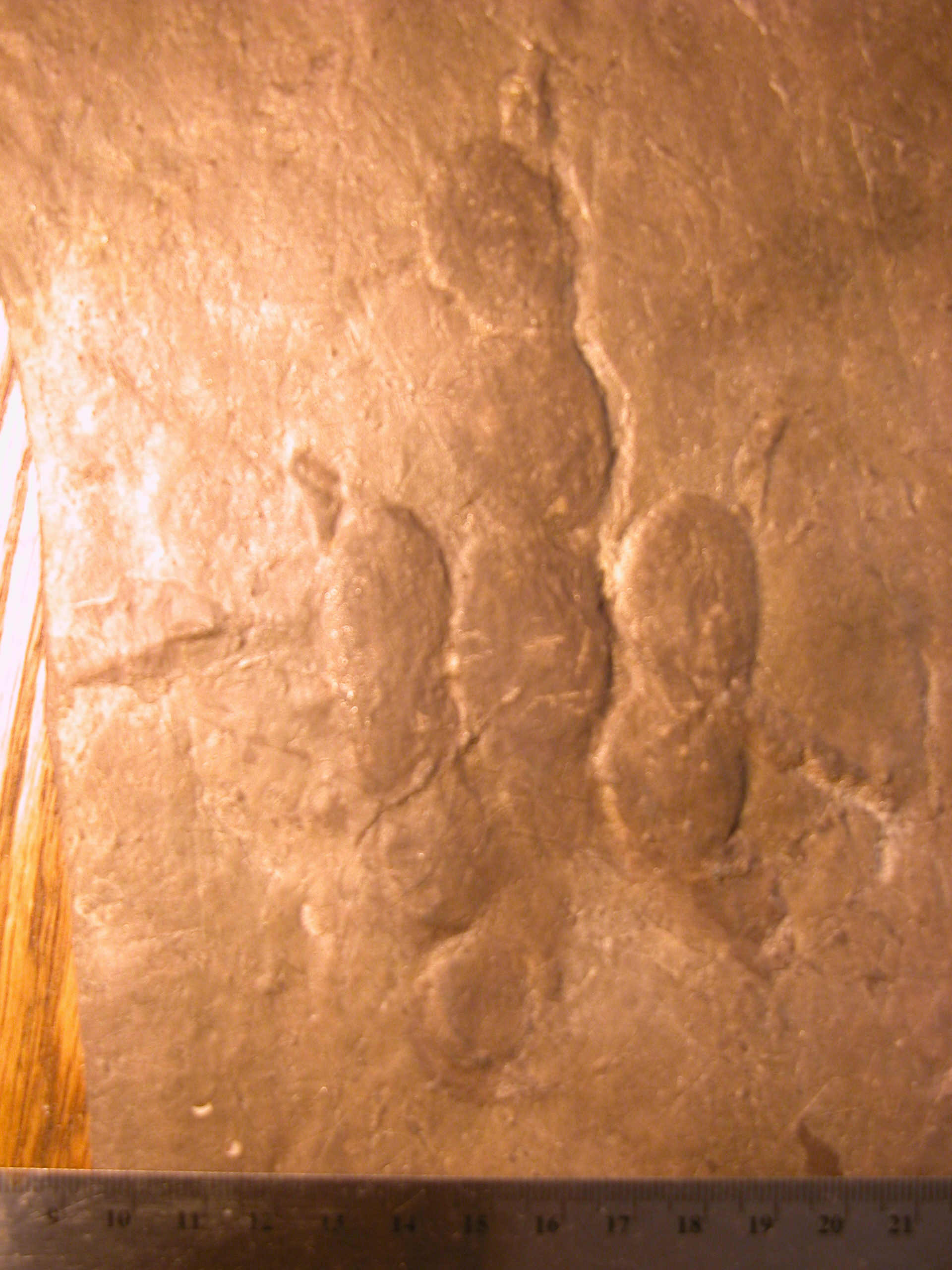
Grallator is an ichnogenus which covers a common type of small, three-toed print made by a variety of bipedal theropod dinosaurs. Grallator-type footprints have been found in formations dating from the Early Triassic through to the early Cretaceous periods. They are found in the United States, Canada, Europe, India, Australia, Brazil and China, but are most abundant on the east coast of North America, especially the Triassic and Early Jurassic formations of the northern part of the Newark Supergroup. The name Grallator translates into "stilt walker", although the actual length and form of the trackmaking legs varied by species, usually unidentified. The related term "Grallae" is an ancient name for the presumed group of long-legged wading birds, such as storks and herons. These footprints were given this name by their discoverer, Edward Hitchcock, in 1858.

Résumé en anglais — version française non disponible.

Plage temporelle
Occurrences PBDB
0
Groupe
Dinosaures
Terrestre
Platytrisauropus
cliquer pour agrandir
Lamont-Doherty Earth Observatory specimen of Ichnogenus Grallator © Safranes at English Wikipedia · Public domain · Wikimedia

Légende en anglais — traduction française non disponible.

PBDB Wikipedia
Classification
Dinosauria Clade non classé
Saurischia Clade non classé
Palaeopoda Sous-ordre
Thecodontosauria Infraordre
Platytrisauropus Genre
Images 1
Bibliographie
Description originale
P. Ellenberger. 1972. Contribution à la classification des Pistes de Vertébrés du Trias: Les types du Stormberg d’Afrique du Sud (I) [Contribution to the classification of Triassic vertebrate footprints: the types from the Stormberg of South Africa (I)]. Palaeovertebrata Mem. Ext.(1972):1-152