Genre
Valide Éteint

Joaquinraptor

Ibiricu et al. 2025

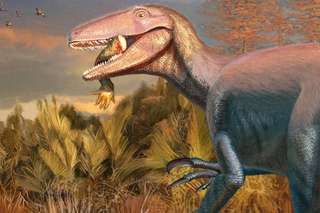
Joaquinraptor is an extinct genus of megaraptorid theropod dinosaurs known from the Late Cretaceous Lago Colhué Huapi Formation of Argentina. The genus contains a single species, Joaquinraptor casali, representing the youngest definitive megaraptoran. It is known from a partially articulated, incomplete skeleton including vertebrae and bones of the skull, forelimbs and hindlimbs, and pectoral girdle, making it one of the most completely known members of the Megaraptora. It was likely at least 7 metres (23 ft) long.

Résumé en anglais — version française non disponible.

Plage temporelle
Trias
Jurassique
Crétacé
Paléogène
Néogène
252 201 145 66 0 Ma
Occurrences PBDB
1
Groupe
Dinosaures
Carnivore Vivant au sol, solitaire Terrestre
Joaquinraptor
cliquer pour agrandir
Mandible of Joaquinraptor casali (in situ) © Marcelo Luna (photographer) · CC BY 2.5 ar · Wikimedia

Légende en anglais — traduction française non disponible.

PBDB Wikipedia
Classification
Dinosauria Clade non classé
Theropoda Clade non classé
Neotheropoda Clade non classé
Averostra Clade non classé
Tetanurae Clade non classé
Coelurosauria Clade non classé
Megaraptora Clade non classé
Megaraptoridae Famille
Joaquinraptor Genre
Sites de découverte 1 sites géolocalisés
Répartition
Principaux pays
🇦🇷 Argentine
1
Formations géologiques
Lago Colhué Huapi
1
Distribution temporelle
Maastrichtien (72.2–66 Ma)
1
Espèces (1)
Joaquinraptor casali 72 Ma
Images 1
Bibliographie
Description originale
L. M. Ibiricu, M. C. Lamanna, and B. N. Alvarez, I. A. Cerda, J. L. Caglianone, N. V. Cardozo, M. Luna, R. D. Martínez. 2025. Latest Cretaceous megaraptorid theropod dinosaur sheds light on megaraptoran evolution and palaeobiology. Nature Communications 16(8298):1-18 DOI ↗
Bibliographie (1)
L. M. Ibiricu, M. C. Lamanna, and B. N. Alvarez, I. A. Cerda, J. L. Caglianone, N. V. Cardozo, M. Luna, R. D. Martínez. 2025. Latest Cretaceous megaraptorid theropod dinosaur sheds light on megaraptoran evolution and palaeobiology. Nature Communications 16(8298):1-18 DOI ↗