Classification
Sites de découverte 20 sites géolocalisés
Répartition
Principaux pays
Formations géologiques
Distribution temporelle
Maastrichtien
(72.2–66 Ma)
18
Campanien
(83.6–72.2 Ma)
2
Synonymes (1)
Liodon asiaticum
nomen dubium, species not entered Mosasaurini
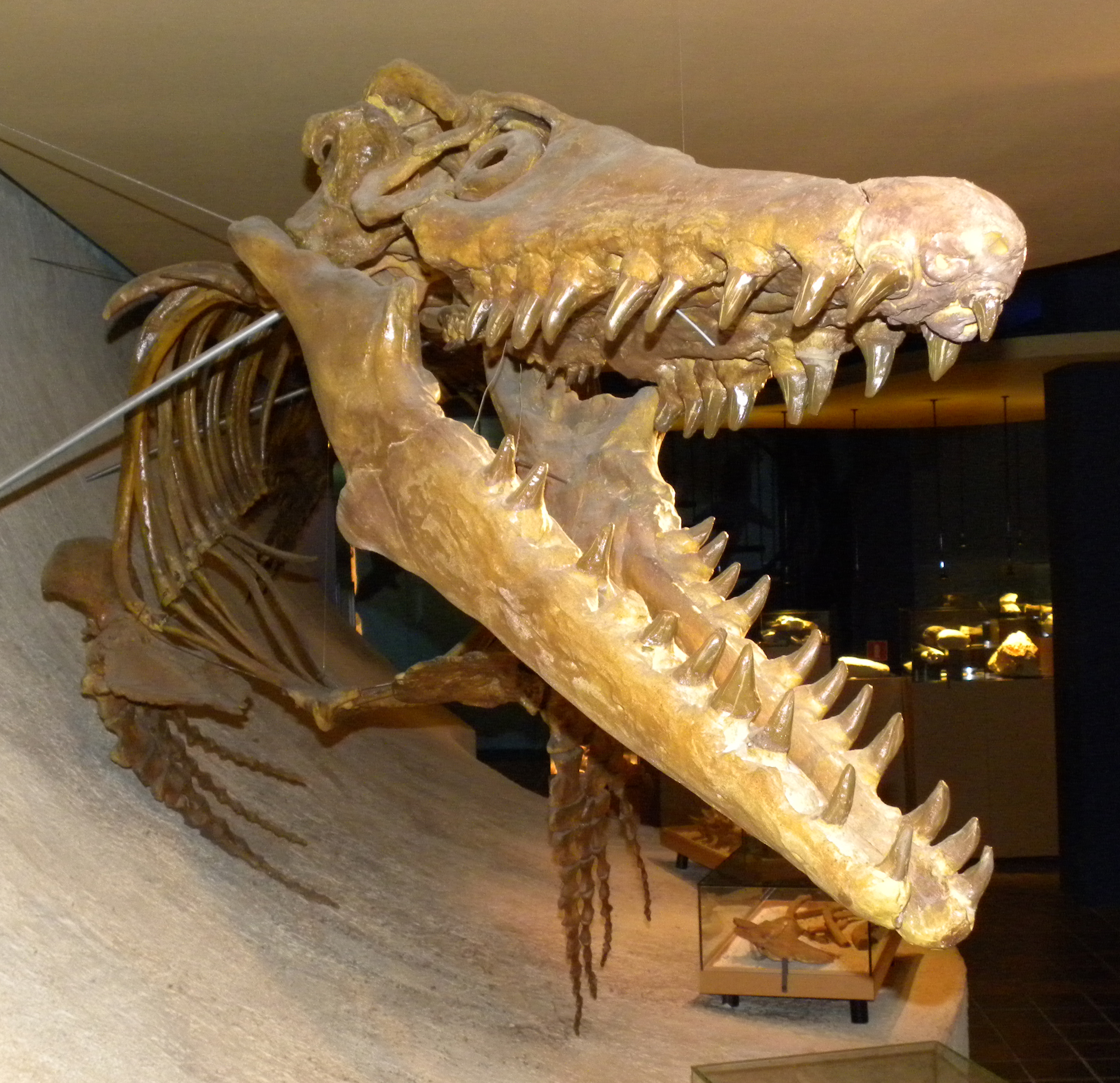
Images 1
Bibliographie
Description originale
D. A. Russell. 1967. Systematics and morphology of American mosasaurs (Reptilia, Sauria). Bulletin of the Peabody Museum of Natural History 23:1-252
Bibliographie (9)
N. Bardet, D. Desmares, and R. Sanchez-Pellicer, S. Gardin. 2021. Rediscovery of “Liodon” asiaticum Répelin, 1915, a Mosasaurini (Squamata, Mosasauridae, Mosasaurinae) from the Upper Cretaceous of the vicinity of Jerusalem – Biostratigraphical insights from microfossils. Comptes Rendus Palevol 20(20):351-372
DOI ↗
T. Kato, Y. Nakajima, and K. Shiseki, H. Ando. 2021. Advanced mosasaurs from the Upper Cretaceous Nakaminato Group in Japan. Island Arc 30:e12431
DOI ↗
E. Frey, E. W. A. Mulder, and W. Stinnesbeck, C. Salazar, L. A. H. Quinzio-Sinn. 2016. A mosasaur, cf. Plotosaurus, from the upper Maastrichtian Quiriquina Formation in Central Chile. Cretaceous Research 61:17-25
DOI ↗
H. Cappetta, N. Bardet, and X. Pereda Suberbiola, S. Adnet, D. Akkrim, M. Amalik, A. Benabdallah. 2014. Marine vertebrate faunas from the Maastrichtian phosphates of Benguérir (Ganntour Basin, Morocco): Biostratigraphy, palaeobiogeography and palaeoecology. Palaeogeography, Palaeoclimatology, Palaeoecology 409:217-238
DOI ↗
A. R. H. LeBlanc, M. W. Caldwell, and N. Bardet. 2012. A new mosasaurine from the Maastrichtian (Upper Cretaceous) phosphates of Morocco and its implications for mosasaurine systematics. Journal of Vertebrate Paleontology 32(1):82-104
DOI ↗
J. Lindgren, M. W. Caldwell, and J. W. Jagt. 2008. New data on the postcranial anatomy of the California mosasaur Plotosaurus bennisoni (Camp, 1942) (Upper Cretaceous: Maastrichtian), and the taxonomic status of P. tuckeri (Camp, 1942). Journal of Vertebrate Paleontology 28(4):1043-1054
DOI ↗
K. Workman Ford. 2006. Stratigraphic positions of marine reptile and dinosaur specimens in the Moreno Formation, in the Tumey Hills and Panoche Hills, Fresno County, California. Late Cretaceous Vertebrates from the Western Interior. New Mexico Museum of Natural History and Science Bulletin 35:407-410
L. B. de Carvalho. 1996. A ocorrência de lagartos marinhos (Mosasauridae - Lepidosauria) e sua associação faunística no cretáceo da Bacia Pernambuco Paraíba, nordeste do Brasil.
C. L. Camp. 1942. California mosasaurs. Memoirs of the University of California 13(1):1-68