Epoch Pli

Pliocene

5.3330 – 2.5800 Ma

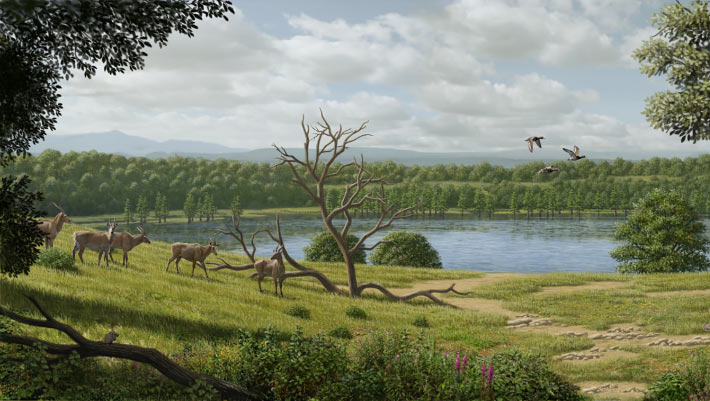
Sur l'échelle des temps géologiques, le Pliocène est la seconde époque et la plus récente époque géologique du Néogène. S'étendant de 5,332 ± 0,005 à 2,588 ± 0,005 millions d’années, il est suivi du Pléistocène et précédé par le Miocène. Cette période a été dénommée par Charles Lyell à partir du grec πλεῖον / pleîon (« plus ») et καινός / kainós, en référence aux mammifères déjà essentiellement modernes.

← Geological time scale
Pliocene
click to enlarge
© Scotese, Christopher R.; Vérard, Christian; Burgener, Landon; Elling, Reece P.; Kocsis, Ádám T. · CC BY 4.0
News 2
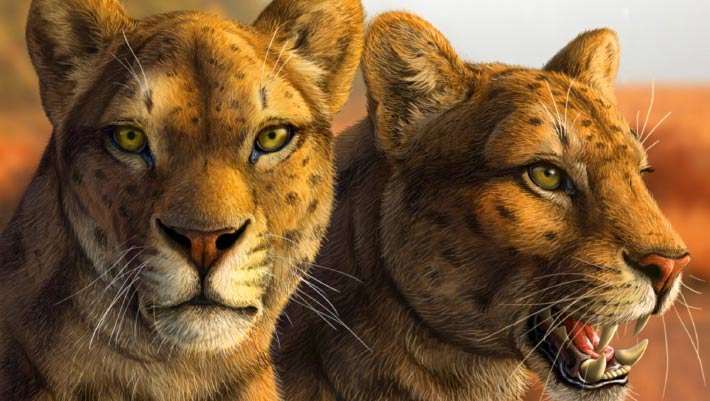
Early Saber-Toothed Cat Gets New Face after Decades of Mystery
A nearly complete skull unearthed decades ago in Arizona has given paleontologists their clearest look yet at Adelphailurus kansensis, an enigmatic felid species that inhabited North America more than 5 million years ago and occupied an early branch of the saber-toothed cat family tree. The post Early Saber-Toothed Cat Gets New Face after Decades of Mystery appeared first on Sci.News: Breaking Science News.
29/06/2026 sci-news
Half-Ton Cattle Relatives Roamed Europe 4 Million Years Ago
Near-complete bovine skeletons unearthed the Early Pliocene site of Camp dels Ninots in northeastern Spain reveal that the ancestors of today’s buffalo and cattle were already growing to impressive sizes long before humans arrived on the continent. The post Half-Ton Cattle Relatives Roamed Europe 4 Million Years Ago appeared first on Sci.News: Breaking Science News.
05/06/2026 sci-news
Parent interval
Neogene Period
Sub-intervals 2
Zanclean
5.3330 – 3.6000
Piacenzian
3.6000 – 2.5800