Epoch Mio

Miocene

23.0400 – 5.3330 Ma

The Miocene is the first geological epoch of the Neogene Period and extends from about 23.04 to 5.333 million years ago (Ma). The Miocene was named by Scottish geologist Charles Lyell and comes from Ancient Greek μείων (meíōn), lit. 'less', and καινός (kainós), lit. 'new' or 'recent', and thus means "less recent", because it has 18% fewer modern marine invertebrates than the Pliocene has. The Miocene followed the Oligocene and preceded the Pliocene.

← Geological time scale
Miocene
click to enlarge
© Scotese, Christopher R.; Vérard, Christian; Burgener, Landon; Elling, Reece P.; Kocsis, Ádám T. · CC BY 4.0
News 3
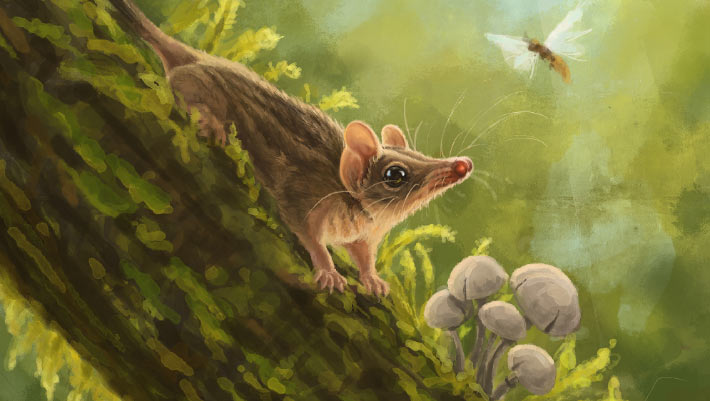
Early Miocene Fossil Rewrites Family Tree of Little Carnivorous Marsupials
Paleontologists at the University of New South Wales have described a new genus and species of dasyurid marsupial from the Early Miocene of Australia, offering the first solid evidence that the family Dasyuridae -- which today includes quolls, Tasmanian devils and tiny antechinuses -- existed long before scientists had proof of it in the fossil record. The post Early Miocene Fossil Rewrites Family Tree of Little Carnivorous Marsupials appeared first on Sci.News: Breaking Science News.
24/07/2026 sci-news
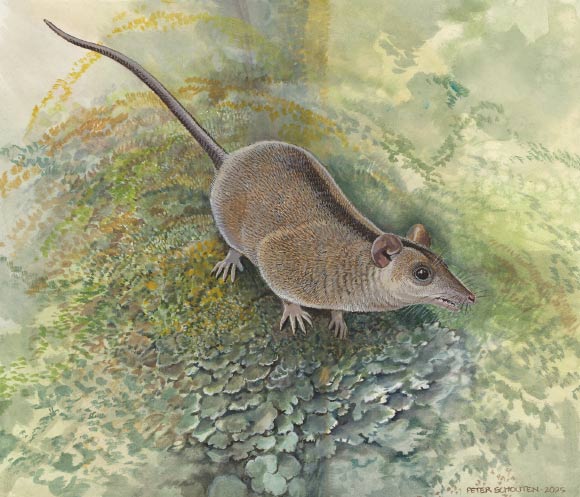
New Marsupial Lineage Emerges from Australian Fossils
Paleontologists have described a new genus and three new species of small, insect-eating marsupials from the Early Miocene deposits of the Riversleigh World Heritage Area in northwestern Queensland, one of Australia’s richest fossil sites. The post New Marsupial Lineage Emerges from Australian Fossils appeared first on Sci.News: Breaking Science News.
15/06/2026 sci-news
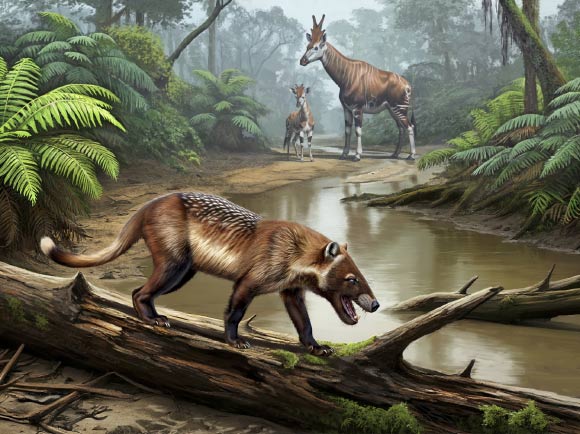
Paleontologists Identify New Hyaenodont Species in Pakistan
Paleontologists have recovered the fossilized remains of three hyaenodont species, including one previously unknown to science, from Miocene sediments in Pakistan. The post Paleontologists Identify New Hyaenodont Species in Pakistan appeared first on Sci.News: Breaking Science News.
29/05/2026 sci-news
Parent interval
Neogene Period
Sub-intervals 6
Aquitanian
23.0400 – 20.4500
Burdigalian
20.4500 – 15.9800
Langhian
15.9800 – 13.8200
Serravallian
13.8200 – 11.6300
Tortonian
11.6300 – 7.2460
Messinian
7.2460 – 5.3330