Classification
Dinosauria
Clade non classé
›
Ornithischia
Clade non classé
›
Neornithischia
Clade non classé
›
Pyrodontia
Clade non classé
›
Cerapoda
Clade non classé
›
Marginocephalia
Clade non classé
›
Ceratopsia
Sous-ordre
›
Neoceratopsia
Infraordre
›
Leptoceratopsidae
Famille
›
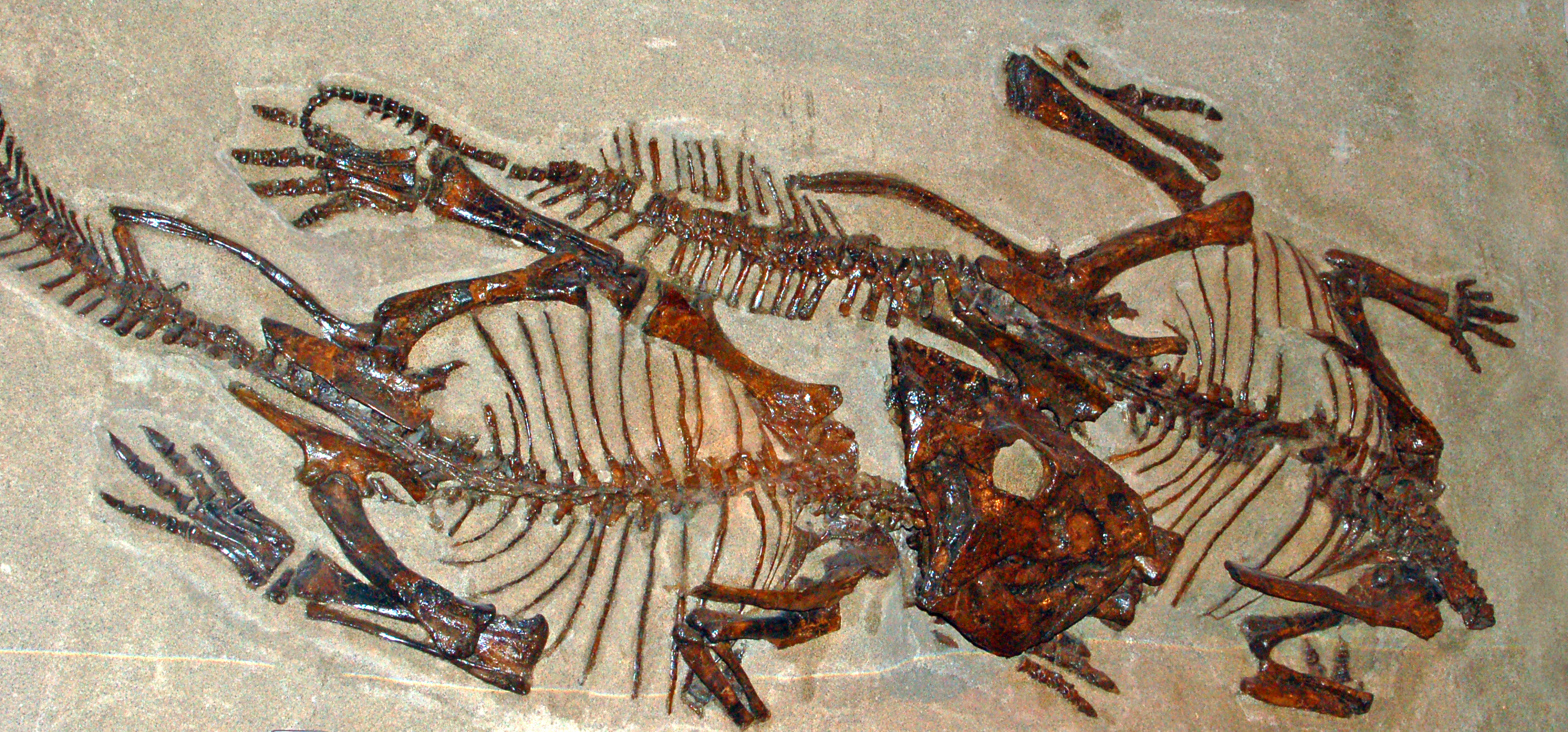
Leptoceratops
Genre
Mesures
Longueur
3 m ⓘ
2,6 m ⓘ
Leptoceratops gracilis
Masse
200 kg ⓘ
Leptoceratops gracilis
Sites de découverte 8 sites géolocalisés
Répartition
Espèces (1)
Leptoceratops gracilis
72 Ma
Actualités 1

Images 2
Bibliographie
Description originale
B. Brown. 1914. Leptoceratops, a new genus of Ceratopsia from the Edmonton Cretaceous of Alberta. Bulletin of the American Museum of Natural History 33(36):567-580
Bibliographie (7)
W. W. Stein. 2021. The paleontology, geology and taphonomy of the Tooth Draw Deposit; Hell Creek Formation (Maastrictian), Butte County, South Dakota. The Journal of Paleontological Sciences JPS.C.21:0001:1-108
C. J. Ott. 2007. Cranial anatomy and biogeography of the first Leptoceratops gracilis (Dinosauria: Ornithischia) specimens from the Hell Creek Formation, southeast Montana. Horns and Beaks: Ceratopsian and Ornithopod Dinosaurs
L. S. Russell. 1987. Biostratigraphy and paleontology of the Scollard Formation, Late Cretaceous and Paleocene of Alberta. Royal Ontario Museum Life Sciences Contribution 147:1-23
DOI ↗
J. H. Ostrom. 1978. <i>Leptoceratops gracilis</i> from the "Lance" Formation of Wyoming. Journal of Paleontology 52(3):697-704
M. C. McKenna and J. D. Love. 1970. Local stratigraphic and tectonic significance of Leptoceratops, a Cretaceous dinosaur in the Pinyon Conglomerate, northwestern Wyoming. United States Geological Survey Professional Paper 700(D):D55-D61
C. M. Sternberg. 1950. Leptoceratops, the most primitive horned dinosaur, from the Upper Edmonton of Alberta. Transactions of the Royal Society of Canada, series 3 44:229
B. Brown. 1914. Leptoceratops, a new genus of Ceratopsia from the Edmonton Cretaceous of Alberta. Bulletin of the American Museum of Natural History 33(36):567-580