prey

Behavior & Physiology

1 image(s) · 4 News

Image gallery

Taxa Rajasaurus

The theropod skull displays the distinctive features of this apex predator, including a long, robust snout, conical teeth, and strong jaw muscles adapted for gripping and tearing prey.

predator prey Rajasaurus skull

News

Mystery of Tyrannosaurus rex’s Tiny Arms May Finally Have an Answer
bone jaw predator prey Tyrannosaurus
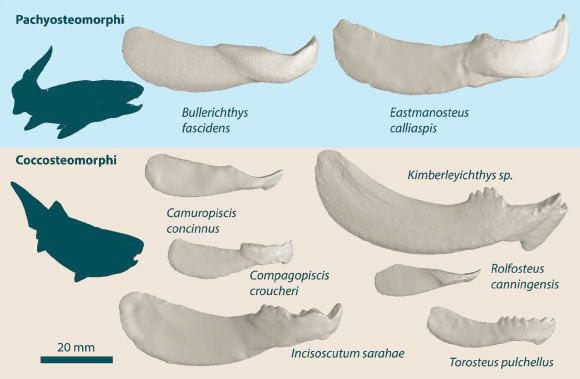
Paleontologists from University College London and the University of Cambridge say the large predatory dinosaurs’ tiny arms evolved alongside massive heads and bone-crushing jaws, suggesting ancient predators increasingly relied on biting rather than grasping prey. The post Mystery of Tyrannosaurus rex’s Tiny Arms May Finally Have an Answer appeared first on Sci.News: Breaking Science News.
20/05/2026 sci-news
T. rex’s tiny arms may have evolved for a surprisingly brutal reason
hunting prey
Why did T. rex have such tiny arms? Scientists now think it’s because its giant head became the ultimate hunting tool. Across multiple dinosaur groups, stronger skulls and crushing jaws evolved alongside shrinking forelimbs, especially in predators hunting enormous prey. In other words, once the bite became deadly enough, the arms may have stopped mattering.
20/05/2026 sciencedaily
Ancient bees found nesting inside fossil bones in rare cave discovery
prey fossil discovery
Thousands of years ago in a cave on Hispaniola, an unusual chain of events left behind a rare scientific treasure: bees nesting inside fossilized bones. After giant barn owls repeatedly brought prey like hutias into the cave, their remains accumulated in silt-rich chambers—creating a strange underground environment. Later, burrowing bees took advantage of the soft sediment and even reused tiny cavities in fossilized jaws and bones as ready-made nests, coating them with a smooth, waterproof linin
03/04/2026 sciencedaily
Baby dinosaurs were the backbone of the Jurassic food chain
hunting prey Jurassic fossil
Despite growing into the largest animals ever to walk on land, sauropods began life small, exposed, and alone. Fossil evidence suggests their babies were frequently eaten by multiple predators, making them a key part of the Jurassic food chain. This steady supply of easy prey may explain why early predators thrived without needing extreme hunting adaptations. The findings offer a rare glimpse into how dinosaur ecosystems truly worked.
02/02/2026 sciencedaily