←

Édiacarien

Intervalle géologique

3 image(s) · 3 Actualités

Voir la fiche

Galerie d'images

Delegates from the Ichnia 2012 conference inspect the Global Boundary Stratotype Section and Point (GSSP) for the Ediacaran-Cambrian boundary at Fortune Head Ecological Reserve, Newfoundland, Canada. The boundary is defined on the first appearance of the complex trace fossil Treptichnus (formerly Phycodes) pedum.
Intervalles Fortunian

Delegates from the Ichnia 2012 conference inspect the Global Boundary Stratotype Section and Point (GSSP) for the Ediacaran-Cambrian boundary at Fortune Head Ecological Reserve, Newfoundland, Canada. The boundary is defined on the first appearance of the complex trace fossil Treptichnus (formerly Phycodes) pedum.

Canada Cambrien Édiacarien fossile
This is a collage that represents three periods of Neoproterozoic and is composed of three images from Commons:
File:Otavia antiqua 3D reconstruction.jpg represents Tonian period (1000-720 mya), marked by start of evolution of animals.
File:AntarcticaDomeCSnow.jpg represents Cryogenian period (720-635 mya), marked by worldwide glaciations (aka "Snowball Earth").

File:Life in the Ediacaran sea.jpg represents Ediacaran period (635-541 mya), marked by first recognizable animal fauna - vendobionts.
Intervalles Neoproterozoic

This is a collage that represents three periods of Neoproterozoic and is composed of three images from Commons: File:Otavia antiqua 3D reconstruction.jpg represents Tonian period (1000-720 mya), marked by start of evolution of animals. File:AntarcticaDomeCSnow.jpg represents Cryogenian period (720-635 mya), marked by worldwide glaciations (aka "Snowball Earth"). File:Life in the Ediacaran sea.jpg represents Ediacaran period (635-541 mya), marked by first recognizable animal fauna - vendobionts.

Cryogénien Édiacarien Néoprotérozoïque Tonien +1
A collage depicting four major events during the Proterozoic eon:
File:Snowball Huronian.jpg
File:Ramathallus lobatus.png
File:AntarcticaDomeCSnow.jpg
File:Ediacaran ecosystem diorama NMNH.jpg
Intervalles Proterozoic

A collage depicting four major events during the Proterozoic eon: File:Snowball Huronian.jpg File:Ramathallus lobatus.png File:AntarcticaDomeCSnow.jpg File:Ediacaran ecosystem diorama NMNH.jpg

Édiacarien Protérozoïque

Actualités

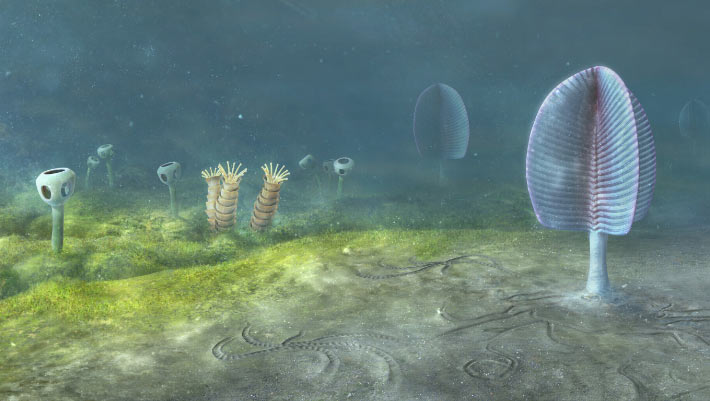
First Animals May Have Appeared 200 Million Years Earlier than Their Oldest Fossils Suggest
Les premiers animaux pourraient être apparus 200 millions d’années plus tôt que ne le suggèrent leurs plus anciens fossiles
Édiacarien fossile évolution
Les plus anciens fossiles d'animaux incontestés, provenant du biote de l'Édiacarien, datent d'environ 574 millions d'années, mais les traces chimiques laissées par les éponges, connues sous le nom de biomarqueurs lipidiques, suggèrent que les animaux existaient il y a avant 635 millions d'années. L’article Les premiers animaux pourraient être apparus 200 millions d’années plus tôt que ne le suggèrent leurs plus anciens fossiles est apparu en premier sur Sci.News : Breaking Science News.
02/10/2026 sci-news ⚙ Traduction automatique
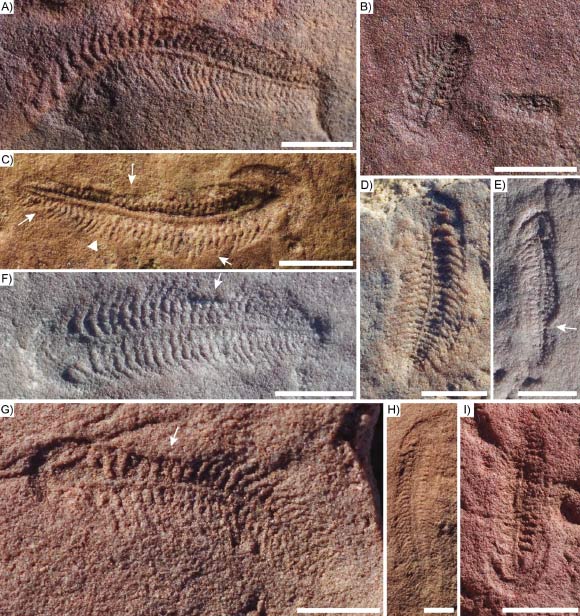
Ediacaran Sea Creature May Hold Earliest Evidence of Right-Handedness
La créature marine d'Édiacarien pourrait détenir la première preuve de droiterie
Édiacarien évolution
Spriggina floundersi, une espèce marine qui vivait pendant la période Édiacarienne il y a 550 millions d’années, est l’un des premiers animaux à symétrie bilatérale de la Terre. La créature marine d'Ediacaran pourrait détenir la première preuve de droiterie est apparue en premier sur Sci.News: Breaking Science News.
10/07/2026 sci-news ⚙ Traduction automatique
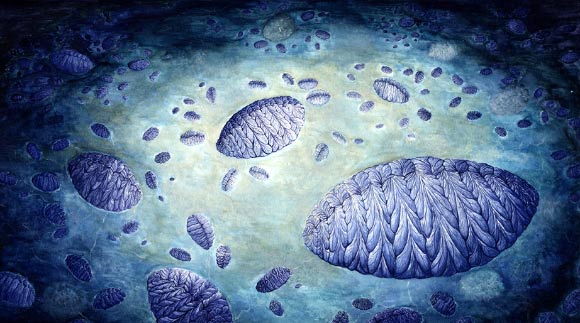
Earth’s Earliest Animals May Have Thrived Too Easily to Evolve
Les premiers animaux de la Terre ont peut-être prospéré trop facilement pour évoluer
reproduction Édiacarien fossile datation évolution
Les fossiles de certains des animaux les plus anciens connus sur Terre, datant d'il y a 574 millions d'années (période Édiacarienne), suggèrent que le clonage, et non la compétition, a dominé les mers de l'Édiacarien, ralentissant l'évolution jusqu'à ce que le stress environnemental contribue à l'essor de la reproduction sexuée et à un éclatement de la biodiversité. L’article Les premiers animaux de la Terre ont peut-être prospéré trop facilement pour évoluer est apparu en premier sur Sci.News : Breaking Science News.
10/06/2026 sci-news ⚙ Traduction automatique