←

protein

Behavior & Physiology

0 image(s) · 9 News

News

Where are all the males? Ancient human fossils reveal a startling mystery
tooth protein fossil discovery
A remarkable discovery in a South African cave suggests that an extinct human relative may have created an all-female burial site more than 240,000 years ago. Scientists analyzed ancient proteins preserved in Homo naledi teeth and found no male-specific markers among at least 20 individuals, potentially solving a mystery that has puzzled researchers for over a decade.
11/11/2026 sciencedaily-paleo
400,000-year-old teeth reveal a stunning twist in human evolution
protein China discovery evolution human origin
A groundbreaking discovery is rewriting the story of human evolution, revealing that an ancient human species once thought to be an evolutionary dead end may have left genetic traces in people alive today. By extracting proteins from 400,000-year-old Homo erectus teeth discovered in China, scientists uncovered evidence suggesting that these early humans interbred with Denisovans, another mysterious ancient human group. That genetic connection may have eventually reached modern populations in the
05/11/2026 sciencedaily-fossils
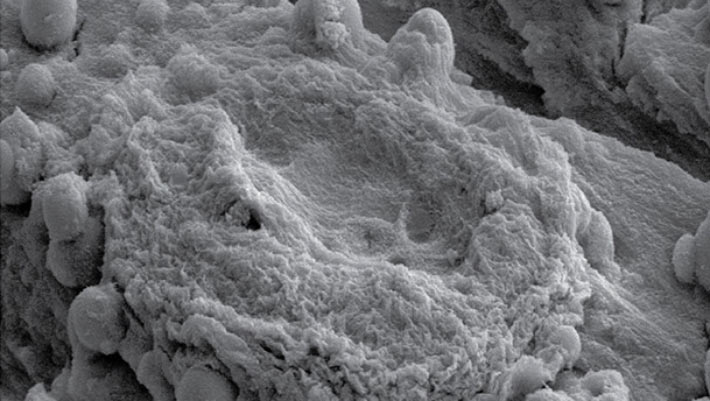
115-Million-Year-Old Dinosaur Bones Preserve Chemical Traces of Red Blood Cells
bone metabolism protein Brazil Cretaceous Early Cretaceous Aratasaurus Coelurosauria Dinosauria
The fossilized remains belong to Aratasaurus museunacionali, a species of coelurosaurian theropod dinosaur that lived in what is now northeastern Brazil during the Early Cretaceous epoch, some 115 million years ago. The post 115-Million-Year-Old Dinosaur Bones Preserve Chemical Traces of Red Blood Cells appeared first on Sci.News: Breaking Science News.
02/11/2026 sci-news
160-million-year-old proteins show surprising power against superbugs
protein mammals
Scientists resurrected antimicrobial peptides from mammals that lived millions of years ago and found that some were more potent against drug-resistant bacteria than modern human versions. These evolutionary relics could provide new clues for designing treatments as antibiotic resistance becomes an increasingly serious threat.
28/09/2026 sciencedaily-paleo
400,000-year-old teeth reveal a hidden link in human evolution
protein China evolution
More than 400,000-year-old Homo erectus teeth from China may reveal a surprising link between this ancient human species, Denisovans, and some modern people. Scientists found protein mutations suggesting several East Asian Homo erectus populations belonged to the same evolutionary group, including one mutation previously associated with Denisovans. That variant may have passed from Homo erectus into Denisovans and eventually reached modern populations in Southeast Asia and Oceania.
10/09/2026 sciencedaily
1 2