←

Chine

Pays

82 image(s) · 38 Actualités

Galerie d'images

Restoration of Zuoyunlong huangi from the Late Cretaceous of China
Taxons Zuoyunlong

Restoration of Zuoyunlong huangi from the Late Cretaceous of China

Chine Crétacé Crétacé supérieur Zuoyunlong
Kayrasaurus is a therizinosaurian dinosaur that lived during the Early Cretaceous period in what is now China. At an estimated 3.6 m in total body length, it is the largest therizinosaur known from the Jehol Biota. Like other therizinosaurs, Kayrasaurus was a bipedal herbivore with large curved claws on each hand.
Taxons Kayrasaurus

Kayrasaurus is a therizinosaurian dinosaur that lived during the Early Cretaceous period in what is now China. At an estimated 3.6 m in total body length, it is the largest therizinosaur known from the Jehol Biota. Like other therizinosaurs, Kayrasaurus was a bipedal herbivore with large curved claws on each hand.

griffe Chine Crétacé Crétacé inférieur +2
Yangtzepus yipingensis holotype (IVPP V2473) at the Paleozoological Museum of China.
Taxons Yangtzepus

Yangtzepus yipingensis holotype (IVPP V2473) at the Paleozoological Museum of China.

musée Chine holotype Yangtzepus
Mounted specimen of Archaeornithomimus asiaticus on display at the Paleozoological Museum of China.
Taxons Archaeornithomimus

Mounted specimen of Archaeornithomimus asiaticus on display at the Paleozoological Museum of China.

musée Chine spécimen Archaeornithomimus
Holotype scapula of Tienshanosaurus chitaiensis on display at the Paleozoological Museum of China.
Taxons Tienshanosaurus

Holotype scapula of Tienshanosaurus chitaiensis on display at the Paleozoological Museum of China.

musée Chine holotype Tienshanosaurus
Fossil skeleton of Qianichthyosaurus zhoui on display at the Geological Museum of China.
Taxons Qianichthyosaurus

Fossil skeleton of Qianichthyosaurus zhoui on display at the Geological Museum of China.

musée Chine fossile Qianichthyosaurus +1
Skeleton of '"Gyposaurus" sinensis on display at the Geological Museum of China.
Taxons Gyposaurus

Skeleton of '"Gyposaurus" sinensis on display at the Geological Museum of China.

musée Chine Gyposaurus squelette
Reversed-impression footptints (ichnites) of Jialingpus yuechiensis, on display at the Paleozoological Museum of China.
Taxons Jialingpus

Reversed-impression footptints (ichnites) of Jialingpus yuechiensis, on display at the Paleozoological Museum of China.

musée Chine Ichnites Jialingpus
Lufengosaurus huenei holotype (IVPP V15) at the Paleozoological Museum of China.
Taxons Lufengosaurus

Lufengosaurus huenei holotype (IVPP V15) at the Paleozoological Museum of China.

musée Chine holotype Lufengosaurus
Gandititan is a basal titanosaurian sauropod dinosaur from the Late Cretaceous of what is now China. It was a long-necked herbivore, typical of sauropods, with a relatively short tail, a characteristic of titanosaurs compared to other sauropods. Titanosauria have a wide range of body sizes, and Gandititan falls around the middle, slightly on the smaller side. Discovered with a fairly well articluated spine from neck to tail, Gandititan is estimated at about 14 m in total body length.
Taxons Gandititan

Gandititan is a basal titanosaurian sauropod dinosaur from the Late Cretaceous of what is now China. It was a long-necked herbivore, typical of sauropods, with a relatively short tail, a characteristic of titanosaurs compared to other sauropods. Titanosauria have a wide range of body sizes, and Gandititan falls around the middle, slightly on the smaller side. Discovered with a fairly well articluated spine from neck to tail, Gandititan is estimated at about 14 m in total body length.

Chine Crétacé Crétacé supérieur Dinosauria +2
Diagram featuring the holotype (BNMNH-PV030) skull of the troodontid Papiliovenator neimengguensis, from the Bayan Mandahu Formation. Abbreviations: a, angular; d, dentary; f, frontal; j, jugal; l, lacrimal; m, maxilla; n, nasal; p, parietal; q, quadrate;  s, surangular;  sp, splenial.[1]
References

↑  (2022). "A new troodontid from the Upper Cretaceous Gobi Basin of inner Mongolia, China". Cretaceous Research 130: Article 105052. DOI:10.1016/j.cretres.2021.105052.
Taxons Papiliovenator

Diagram featuring the holotype (BNMNH-PV030) skull of the troodontid Papiliovenator neimengguensis, from the Bayan Mandahu Formation. Abbreviations: a, angular; d, dentary; f, frontal; j, jugal; l, lacrimal; m, maxilla; n, nasal; p, parietal; q, quadrate; s, surangular; sp, splenial.[1] References ↑ (2022). "A new troodontid from the Upper Cretaceous Gobi Basin of inner Mongolia, China". Cretaceous Research 130: Article 105052. DOI:10.1016/j.cretres.2021.105052.

Chine Mongolie Crétacé holotype +4
Partial skeleton of the heterodontosaurid Tianyulong confuciusi from the Lower Cretaceous Jehol Group of China. Partial skeleton mainly in right lateral view (IVPP V17090). Enlargements of subsequent figures are shown in red. Scale bar equals 10 cm.
Taxons Tianyulong

Partial skeleton of the heterodontosaurid Tianyulong confuciusi from the Lower Cretaceous Jehol Group of China. Partial skeleton mainly in right lateral view (IVPP V17090). Enlargements of subsequent figures are shown in red. Scale bar equals 10 cm.

écaille Chine Crétacé Heterodontosauridae +3
Aurornis xui, a basal member of Avialae from northern China, which lived 160 mya
Taxons Aurornis

Aurornis xui, a basal member of Avialae from northern China, which lived 160 mya

Chine Aurornis Avialae
Reconstructed skull of the holotype and only specimen of Leshansaurus qianweiensis based on the possibly related megalosaurid Dubreuillosaurus valesdunensis. Scale bar is 10cm, image is 10px/cm. Cranial anatomy from figures in Fei et al. (2009) "A new carnosaur from the Late Jurassic of Qianwei, Sichuan, China". White bones are figured, light grey bones are unfigured and minimally described.
Taxons Leshansaurus

Reconstructed skull of the holotype and only specimen of Leshansaurus qianweiensis based on the possibly related megalosaurid Dubreuillosaurus valesdunensis. Scale bar is 10cm, image is 10px/cm. Cranial anatomy from figures in Fei et al. (2009) "A new carnosaur from the Late Jurassic of Qianwei, Sichuan, China". White bones are figured, light grey bones are unfigured and minimally described.

os écaille Chine Jurassique +9
Huashanosaurus is a basal sauropod dinosaur that lived from the Early to Middle Jurassic periods of what is now China. It was a long-necked herbivore which still exhibited many basal traits of the earlier sauropodomorphs, while transitioning to obligate quardupedality. Huashanosaurus grew to approximately 12 m in length, and weighed around 10 t.
Taxons Huashanosaurus

Huashanosaurus is a basal sauropod dinosaur that lived from the Early to Middle Jurassic periods of what is now China. It was a long-necked herbivore which still exhibited many basal traits of the earlier sauropodomorphs, while transitioning to obligate quardupedality. Huashanosaurus grew to approximately 12 m in length, and weighed around 10 t.

Chine Jurassique Jurassique moyen Dinosauria +1
Fujianvenator is an anchiornithid avialan from the Late Jurassic of China, whose discovery gave important insight to the evolution of birds. It had proportionately long legs, with the tibia twice the length of the femur. This suggests it may have been a strong runner, and possibly had a terrestrial or wading lifestyle. Fujianvenator was a small dinosaur, weighing about 640 g. As an avialan, it was almost certainly covered in feathers, though it does not seem likely to have been capable of flight.
Taxons Fujianvenator

Fujianvenator is an anchiornithid avialan from the Late Jurassic of China, whose discovery gave important insight to the evolution of birds. It had proportionately long legs, with the tibia twice the length of the femur. This suggests it may have been a strong runner, and possibly had a terrestrial or wading lifestyle. Fujianvenator was a small dinosaur, weighing about 640 g. As an avialan, it was almost certainly covered in feathers, though it does not seem likely to have been capable of flight.

plume vol Chine Jurassique +7
1 2 3 4 5 6

Actualités

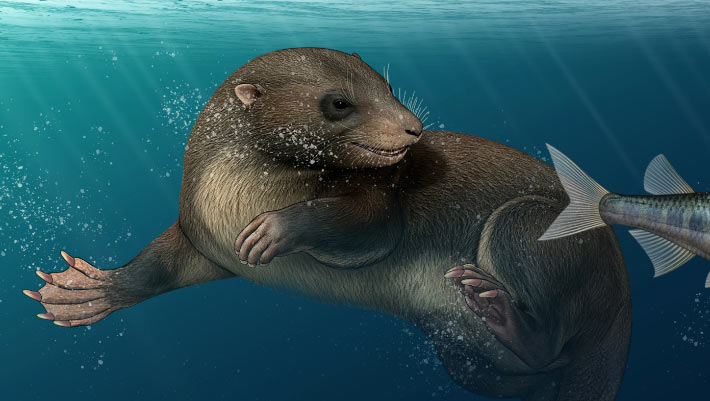
Dinosaur-Era Mammal Swam Like Platypus and Replaced Its Teeth Multiple Times
Un mammifère de l’ère des dinosaures a nagé comme un ornithorynque et a remplacé ses dents plusieurs fois
Chine Dinosauria mammifères
Dongoconodon platycauda, ​​un petit mammifère eutriconodonte qui vivait aux côtés des dinosaures dans ce qui est aujourd'hui le nord-est de la Chine, pagayait dans l'eau avec des mains et des pieds palmés ressemblant à des ornithorynques, et remplaçait ses dents à plusieurs reprises. L'article Un mammifère de l'ère des dinosaures a nagé comme un ornithorynque et a remplacé ses dents plusieurs fois est apparu en premier sur Sci.News : Breaking Science News.
01/10/2026 sci-news ⚙ Traduction automatique
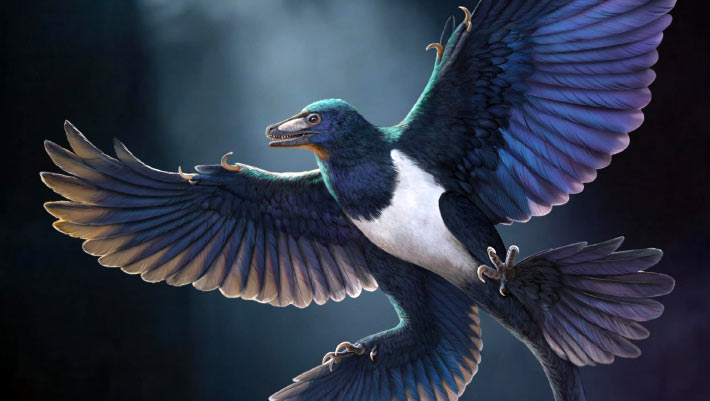
New Feathered Dinosaur Suggests Flight Evolved More Than Once among Birds’ Closest Relatives
Un nouveau dinosaure à plumes suggère que le vol a évolué plus d’une fois parmi les plus proches parents des oiseaux
vol Chine Dinosauria Norellraptor oiseau nouvelle espèce
Norellraptor barsboldi, une nouvelle espèce de petit dinosaure microraptorine provenant des lits rocheux vieux de 120 millions d'années de la province chinoise du Liaoning, remet en question l'idée selon laquelle les premiers aviateurs partageaient un modèle commun pour prendre leur envol. L'article Un nouveau dinosaure à plumes suggère que le vol a évolué plus d'une fois parmi les plus proches parents des oiseaux est apparu en premier sur Sci.News : Breaking Science News.
01/10/2026 sci-news ⚙ Traduction automatique
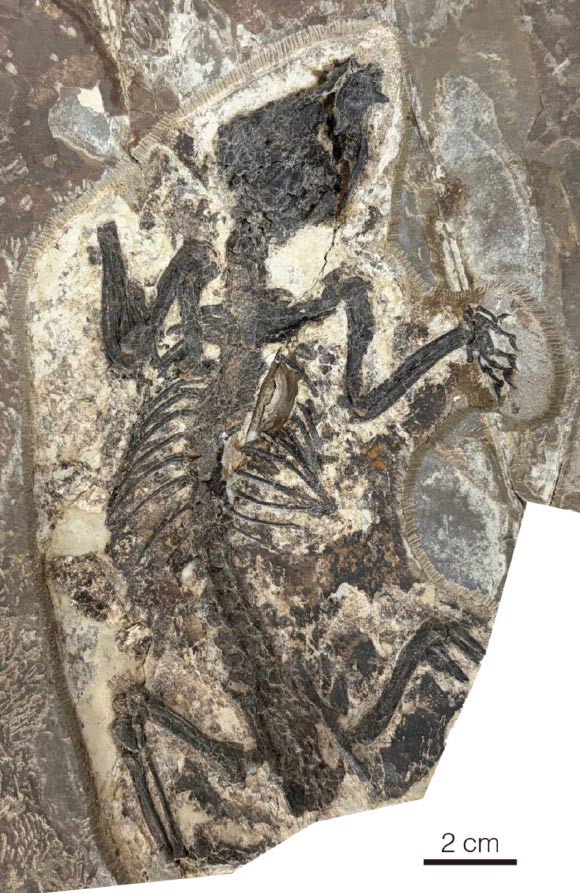
120-Million-Year-Old Fossil Pushes Back Origin of Marsupial Lineage
Un fossile vieux de 120 millions d’années repousse l’origine de la lignée marsupiale
Chine fossile mammifères nouvelle espèce
Une nouvelle espèce de mammifère deltathéroide de Chine pourrait être le plus ancien ancêtre confirmé de marsupiaux jamais découvert, offrant une nouvelle preuve que l'Asie a joué un rôle central dans la profonde division évolutive entre les marsupiaux et les mammifères placentaires. L'article Un fossile vieux de 120 millions d'années repousse l'origine de la lignée marsupiale est apparu en premier sur Sci.News : Breaking Science News.
28/09/2026 sci-news ⚙ Traduction automatique
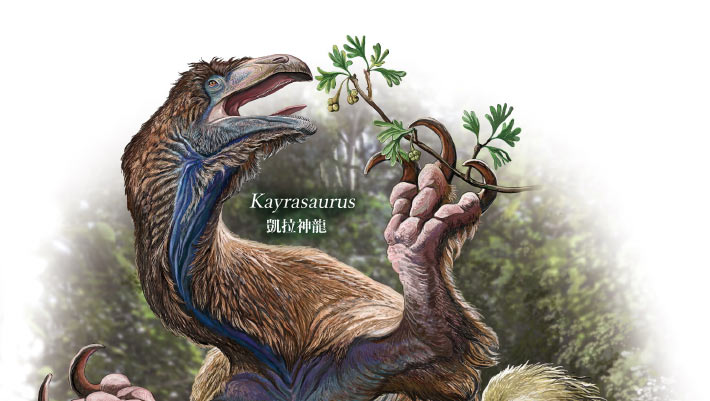
New Therizinosaurian Dinosaur Unearthed in China
Un nouveau dinosaure thérizinosaurien découvert en Chine
Chine Dinosauria Kayrasaurus Therizinosauria nouvelle espèce squelette
Les paléontologues ont décrit un nouveau genre et une nouvelle espèce de thérizinosaure sur la base d'un squelette presque complet trouvé dans le nord-est de la Chine. L'article Un nouveau dinosaure thérizinosaurien découvert en Chine est apparu en premier sur Sci.News : Breaking Science News.
21/09/2026 sci-news ⚙ Traduction automatique
Des fleurs remarquables du Miocène préservées dans l’ambre révèlent une ancienne forêt tropicale
Chine Miocène fossile étude
Les fleurs du Miocène conservées dans l'ambre offrent aux scientifiques un aperçu remarquable d'une forêt tropicale humide qui prospérait il y a environ 15 millions d'années. Les petites fleurs proviennent de la célèbre flore Zhangpu de la province du Fujian, au sud-est de la Chine. Des chercheurs chinois et européens ont examiné deux fleurs fossiles exceptionnellement bien conservées. Leur étude démontre que les plantes grimpantes,
11/09/2026 everythingdinosaur ⚙ Traduction automatique
1 2 3 4 5 6 7 8