China

Country

87 image(s) · 27 News

Image gallery

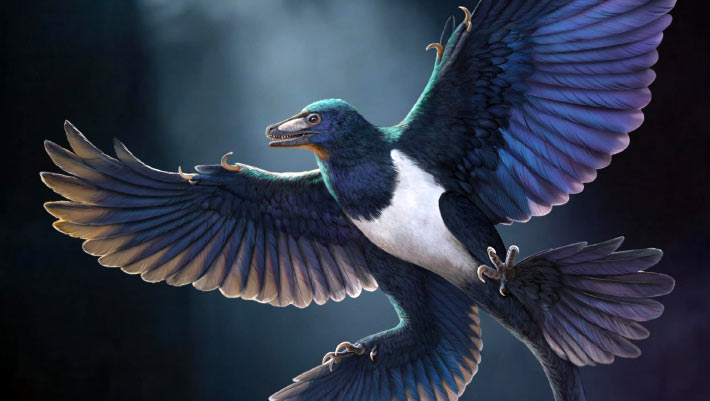
A reconstruction of Aorun, a small coelurosaurian theropod from the Middle Jurassic China.
Taxa Aorun

A reconstruction of Aorun, a small coelurosaurian theropod from the Middle Jurassic China.

China Jurassic Middle Jurassic Aorun +1
Holotype of Shenzhousaurus orientalis on display at the Geological Museum of China.
Taxa Shenzhousaurus

Holotype of Shenzhousaurus orientalis on display at the Geological Museum of China.

museum China holotype Shenzhousaurus
Holotype skull of Wannanosaurus yansiensis on display at the Paleozoological Museum of China.
Taxa Wannanosaurus

Holotype skull of Wannanosaurus yansiensis on display at the Paleozoological Museum of China.

museum China holotype Wannanosaurus +1
The hadrosaurid dinosaur Wulagasaurus dongi gen. et sp. nov. from the Upper Cretaceous Yuliangze Formation at the Wulaga quarry, China.

A. Holotype GMH W184, right dentary in lateral (A1) and medial (A2) views. B. GMH W217, right dentary in lateral (B1) and medial (B2) views.
Taxa Wulagasaurus

The hadrosaurid dinosaur Wulagasaurus dongi gen. et sp. nov. from the Upper Cretaceous Yuliangze Formation at the Wulaga quarry, China. A. Holotype GMH W184, right dentary in lateral (A1) and medial (A2) views. B. GMH W217, right dentary in lateral (B1) and medial (B2) views.

China Cretaceous holotype Dinosauria +3
Changmiania liaoningensis, an ornithopod dinosaur from the Lower Cretaceous of Lujiatun (Liaoning Province, China).
(A) Holotype PMOL AD00114 in dorsal view; (B) anterior part of the holotype PMOL AD00114 in caudolateral view; (C) referred specimen PMOL LFV022 in dorsal view. Red arrows indicate the emplacement of the gastrolith clusters.
Taxa Changmiania

Changmiania liaoningensis, an ornithopod dinosaur from the Lower Cretaceous of Lujiatun (Liaoning Province, China). (A) Holotype PMOL AD00114 in dorsal view; (B) anterior part of the holotype PMOL AD00114 in caudolateral view; (C) referred specimen PMOL LFV022 in dorsal view. Red arrows indicate the emplacement of the gastrolith clusters.

China Cretaceous holotype specimen +2
Partial skeleton of the heterodontosaurid Tianyulong confuciusi from the Lower Cretaceous Jehol Group of China. Partial skeleton mainly in right lateral view (IVPP V17090). Enlargements of subsequent figures are shown in red. Scale bar equals 10 cm.
Taxa Tianyulong

Partial skeleton of the heterodontosaurid Tianyulong confuciusi from the Lower Cretaceous Jehol Group of China. Partial skeleton mainly in right lateral view (IVPP V17090). Enlargements of subsequent figures are shown in red. Scale bar equals 10 cm.

scale China Cretaceous Heterodontosauridae +3
Youngoolithus xiaguanensis nest on display at the Paleozoological Museum of China.
Taxa Youngoolithus

Youngoolithus xiaguanensis nest on display at the Paleozoological Museum of China.

nest museum China Youngoolithidae +1
Youngoolithus xiaguanensis nest on display at the Paleozoological Museum of China.
Taxa Youngoolithidae

Youngoolithus xiaguanensis nest on display at the Paleozoological Museum of China.

nest museum China Youngoolithidae +1
Figure 1: Reconstruction of the skull of Bellusaurus sui from the Middle-Late Jurassic Shishugou Formation of Xinjiang, China.
This reconstruction is a composite based on isolated holotypic and referred material. (A) Right lateral view. (B) Dorsal view. Holotypic elements are indicated in blue and referred elements are in green.
Taxa Bellusaurus

Figure 1: Reconstruction of the skull of Bellusaurus sui from the Middle-Late Jurassic Shishugou Formation of Xinjiang, China. This reconstruction is a composite based on isolated holotypic and referred material. (A) Right lateral view. (B) Dorsal view. Holotypic elements are indicated in blue and referred elements are in green.

China Jurassic Late Jurassic Bellusaurus +2
Chuanjiesaurus fossil in China Science and Technology Museum. The other two smaller suites of fossils are Lufengosaurus and Dilophosaurus.
Taxa Chuanjiesaurus

Chuanjiesaurus fossil in China Science and Technology Museum. The other two smaller suites of fossils are Lufengosaurus and Dilophosaurus.

museum China fossil Chuanjiesaurus +2
Jiangxititan a titanosaurian sauropod from the Late Cretaceous of China. Typical for a sauropod, it had a long neck and stood on four pillar-like legs to support its massive body. Jiangxititan is a member of the Lognkosauria, which include some of the largest dinosaurs known, and is one of the few from mainland Asia. The discovery of Jiangxititan demonstrates the presence of both early-diverging and late-diverging titanosauriform sauropods in that area during the Late Cretaceous.
Taxa Jiangxititan

Jiangxititan a titanosaurian sauropod from the Late Cretaceous of China. Typical for a sauropod, it had a long neck and stood on four pillar-like legs to support its massive body. Jiangxititan is a member of the Lognkosauria, which include some of the largest dinosaurs known, and is one of the few from mainland Asia. The discovery of Jiangxititan demonstrates the presence of both early-diverging and late-diverging titanosauriform sauropods in that area during the Late Cretaceous.

China Cretaceous Late Cretaceous Dinosauria +5
Restoration of Dongbeititan dongi from the Early Cretaceous of China
Taxa Dongbeititan

Restoration of Dongbeititan dongi from the Early Cretaceous of China

China Cretaceous Early Cretaceous Dongbeititan
Henan Geological Museum, Zhengzhou, China. Complete indexed photo collection at WorldHistoryPics.com.
Taxa Baotianmansaurus

Henan Geological Museum, Zhengzhou, China. Complete indexed photo collection at WorldHistoryPics.com.

museum China Baotianmansaurus
Gandititan is a basal titanosaurian sauropod dinosaur from the Late Cretaceous of what is now China. It was a long-necked herbivore, typical of sauropods, with a relatively short tail, a characteristic of titanosaurs compared to other sauropods. Titanosauria have a wide range of body sizes, and Gandititan falls around the middle, slightly on the smaller side. Discovered with a fairly well articluated spine from neck to tail, Gandititan is estimated at about 14 m in total body length.
Taxa Gandititan

Gandititan is a basal titanosaurian sauropod dinosaur from the Late Cretaceous of what is now China. It was a long-necked herbivore, typical of sauropods, with a relatively short tail, a characteristic of titanosaurs compared to other sauropods. Titanosauria have a wide range of body sizes, and Gandititan falls around the middle, slightly on the smaller side. Discovered with a fairly well articluated spine from neck to tail, Gandititan is estimated at about 14 m in total body length.

China Cretaceous Late Cretaceous Dinosauria +2
Restoration of Zhuchengtitan zangjiazhuangensis from the Late Cretaceous of China
Taxa Zhuchengtitan

Restoration of Zhuchengtitan zangjiazhuangensis from the Late Cretaceous of China

China Cretaceous Late Cretaceous Zhuchengtitan
Restoration of Borealosaurus a potentially titanosaur dinosaur from the Cretaceous of China
Taxa Borealosaurus

Restoration of Borealosaurus a potentially titanosaur dinosaur from the Cretaceous of China

China Cretaceous Borealosaurus Dinosauria +1
1 2 3 4 5 6

News

Meet Bataspis crux, Jawless Fish that Cruised Devonian Seas with Batwing Head
jaw China Devonian Late Devonian fish new species skull
Paleontologists in China have identified a new species of armored, jawless fish from rocks around 419 million years old whose skull was shaped like the wing of a bat and whose unusual head made it an efficient glider through Devonian seas. The post Meet Bataspis crux, Jawless Fish that Cruised Devonian Seas with Batwing Head appeared first on Sci.News: Breaking Science News.
18/08/2026 sci-news
Fossil Find in China Reveals Dinosaur Family Never Before Seen in East Asia
China fossil Dinosauria discovery new species
Paleontologists working in southern China have identified a new species of sauropod dinosaur that appears to belong to a group never before documented anywhere in East Asia. The post Fossil Find in China Reveals Dinosaur Family Never Before Seen in East Asia appeared first on Sci.News: Breaking Science News.
04/08/2026 sci-news
244-Million-Year-Old Fossil Preserves Earliest Reptilian Digestive System
China Triassic fossil specimen
An exquisitely preserved specimen of Austronaga minuta, a small, long-necked marine reptile from the Triassic of China, contains a fossilized stomach, liver and intestines, offering paleontologists their oldest detailed glimpse yet of how early reptiles digested food. The post 244-Million-Year-Old Fossil Preserves Earliest Reptilian Digestive System appeared first on Sci.News: Breaking Science News.
04/08/2026 sci-news
Remarkable Eoceras shaanxiense Fossils Rewrite Cephalopod Evolution
China Cambrian Stage 3 fossil evolution formation
Researchers have identified tiny fossils from the Shuijingtuo Formation (Cambrian Stage 3) of South China that could transform our understanding of cephalopod evolution. The newly described species, Eoceras shaanxiense, provides the oldest known evidence of a primordial siphuncle, a crucial anatomical feature that enabled cephalopods to regulate buoyancy and eventually become some of the oceans'
03/08/2026 everythingdinosaur
520-Million-Year-Old Fossil from China Fills Gap in Evolutionary History of Cephalopods
China Cambrian fossil evolution
Paleontologists have identified the earliest-known cephalopod equipped with a siphuncle -- a tubular extension of the mantle found in shelled cephalopods -- pushing back the fossil record of this key evolutionary feature to the Early Cambrian, roughly 520 million years ago. The post 520-Million-Year-Old Fossil from China Fills Gap in Evolutionary History of Cephalopods appeared first on Sci.News: Breaking Science News.
30/07/2026 sci-news
1 2 3 4 5 6