poisson

Thématique

8 image(s) · 6 Actualités

Galerie d'images

In 2000 a virtually complete Scelidosaurus skeleton was discovered in England. This fossil's hundreds of armor plates and spikes are preserved in their life positions, providing extraordinary details about how this dinosaur looked. St. George is the only place anywhere in the Western Hemisphere that the 11-foot long Scelidosaurus replica has been on display.
The St. George Dinosaur Discovery Site at Johnson Farm (St. George, Utah) is home to exceptionally well-preserved dinosaur tracks, some displaying skin impressions. These tracks, along with hundreds of fossil fish, plants, rare dinosaur remains, invertebrates traces and important sedimentary structures, show evidence that this site was produced along the western edge of a large, Early Jurassic (age between 195-198 million years ago) freshwater lake named Lake Dixie. 

Source: www.sgcity.org/dinotrax/
Taxons Scelidosaurus

In 2000 a virtually complete Scelidosaurus skeleton was discovered in England. This fossil's hundreds of armor plates and spikes are preserved in their life positions, providing extraordinary details about how this dinosaur looked. St. George is the only place anywhere in the Western Hemisphere that the 11-foot long Scelidosaurus replica has been on display. The St. George Dinosaur Discovery Site at Johnson Farm (St. George, Utah) is home to exceptionally well-preserved dinosaur tracks, some displaying skin impressions. These tracks, along with hundreds of fossil fish, plants, rare dinosaur remains, invertebrates traces and important sedimentary structures, show evidence that this site was produced along the western edge of a large, Early Jurassic (age between 195-198 million years ago) freshwater lake named Lake Dixie. Source: www.sgcity.org/dinotrax/

armure peau Jurassique inférieur Jurassique +7
Fossil samples – e.g. ‘primitive’ bony fish (1, 2), a skull of a temnospondyl ‘amphibian’ (probably a metoposauroid) in dorsal view (3), a skull of an archosaur of the crocodile lineage (probably a phytosaur) in palatal view (4), holotype of the “gliding reptile” Icarosaurus siefkeri [1] (5) and Atreipus-Grallator-type dinosaur tracks (bottom right) – from the Newark Supergroup, i.e. a series of mainly Late Triassic to Early Jurassic sedimentary rocks of eastern North America


↑ Edwin H. Colbert: A gliding reptile from the Triassic of New Jersey. American Museum Novitates, 2230. American Museum of Natural History, New York 1966, digitallibrary.amnh.org, cf. fig. 3 therein.
Taxons Atreipus

Fossil samples – e.g. ‘primitive’ bony fish (1, 2), a skull of a temnospondyl ‘amphibian’ (probably a metoposauroid) in dorsal view (3), a skull of an archosaur of the crocodile lineage (probably a phytosaur) in palatal view (4), holotype of the “gliding reptile” Icarosaurus siefkeri [1] (5) and Atreipus-Grallator-type dinosaur tracks (bottom right) – from the Newark Supergroup, i.e. a series of mainly Late Triassic to Early Jurassic sedimentary rocks of eastern North America ↑ Edwin H. Colbert: A gliding reptile from the Triassic of New Jersey. American Museum Novitates, 2230. American Museum of Natural History, New York 1966, digitallibrary.amnh.org, cf. fig. 3 therein.

musée Jurassique inférieur Jurassique Trias supérieur +9
Pliosaurus (Luskhan itilensis) lived on the territory of the Volga region in the Hauterivian age of the Early Cretaceous period. Discovered in 2002 by G.N. Uspensky on the banks of the Volga near the village of Slantsevy Rudnik. This is the most complete pliosaurus skeleton found in Russia. This pliosaurus was not a predator and preferred to feed on fish and cephalopods.

Pliosaurus (Luskhan itilensis) lived on the territory of the Volga region in the Hauterivian age of the Early Cretaceous period. Discovered in 2002 by G.N. Uspensky on the banks of the Volga near the village of Slantsevy Rudnik. This is the most complete pliosaurus skeleton found in Russia. This pliosaurus was not a predator and preferred to feed on fish and cephalopods.

prédateur Russie Crétacé Crétacé inférieur +5
Elasmobranchs teeth from the Thanetian phosphatic serie of Jebel Dyr (Algerian-Tunisian border area); 14. Nebrius bequaerti; 15. Archaeomanta priemi; 16. Burnhamia daviesi; 17. Ginglymostoma subafricanum; 18. Myliobatis sulcidens; 21. Hemiscyllium daimeriesi; 23. Squatiscyllium nigeriensis. a: labial; b: lingual; c: lateral; d: occlusal; e: oral; f: basilar views.

Elasmobranchs teeth from the Thanetian phosphatic serie of Jebel Dyr (Algerian-Tunisian border area); 14. Nebrius bequaerti; 15. Archaeomanta priemi; 16. Burnhamia daviesi; 17. Ginglymostoma subafricanum; 18. Myliobatis sulcidens; 21. Hemiscyllium daimeriesi; 23. Squatiscyllium nigeriensis. a: labial; b: lingual; c: lateral; d: occlusal; e: oral; f: basilar views.

Thanétien fossile poisson géologie
Elasmobranchs teeth from the Thanetian phosphatic serie of Jebel Dyr (Algerian-Tunisian border area); 7. Brachycarcharias lerichei; 8. Anomotodon novus; 9. Mustelus biddlei 10. Brachycarcharias lerichei; 11. Mennerotodus sp; 12. Abdounia beaugei; 13. Galeorhinus mesetaensis. a: labial; b: lingual; c: lateral views.

Elasmobranchs teeth from the Thanetian phosphatic serie of Jebel Dyr (Algerian-Tunisian border area); 7. Brachycarcharias lerichei; 8. Anomotodon novus; 9. Mustelus biddlei 10. Brachycarcharias lerichei; 11. Mennerotodus sp; 12. Abdounia beaugei; 13. Galeorhinus mesetaensis. a: labial; b: lingual; c: lateral views.

Thanétien fossile poisson géologie
Elasmobranchs teeth from the Thanetian phosphatic serie of Jebel Dyr (Algerian-Tunisian border area); 1. Abdounia beaugei; 2. Palaoegaleus vincenti; 3. Galeorhinus mesetaensis; 4. Delpitoscyllium africanum; 5. Squatina prima; 6. Brachycarcharias lerichei. a: labial; b: lingual; c: lateral; d: occlusal views.

Elasmobranchs teeth from the Thanetian phosphatic serie of Jebel Dyr (Algerian-Tunisian border area); 1. Abdounia beaugei; 2. Palaoegaleus vincenti; 3. Galeorhinus mesetaensis; 4. Delpitoscyllium africanum; 5. Squatina prima; 6. Brachycarcharias lerichei. a: labial; b: lingual; c: lateral; d: occlusal views.

Thanétien fossile poisson géologie
Elasmobranchs teeth and vertebrae from the Thanetian phosphatic serie of Jebel Dyr (Algerian-Tunisian border area); 23. Raja sp.; 24. Heterodontus sp.; 25. Dasyatis hexagonalis; 26. Abdounia beaugei; 27. Physogaleus secundus; 28. Carcharias hopei; 29-30. Cretalamna appendiculata; 31. Brachycarcharias lerichei; 32. Isurolamna affinis; 33-36. Sectioned fossil vertebral centrum of sharks. a: labial; b: lingual; c: lateral; d: occlusal; e: oral views.
Intervalles Thanetian

Elasmobranchs teeth and vertebrae from the Thanetian phosphatic serie of Jebel Dyr (Algerian-Tunisian border area); 23. Raja sp.; 24. Heterodontus sp.; 25. Dasyatis hexagonalis; 26. Abdounia beaugei; 27. Physogaleus secundus; 28. Carcharias hopei; 29-30. Cretalamna appendiculata; 31. Brachycarcharias lerichei; 32. Isurolamna affinis; 33-36. Sectioned fossil vertebral centrum of sharks. a: labial; b: lingual; c: lateral; d: occlusal; e: oral views.

Thanétien fossile poisson géologie
Reprodução a partir da gravura original do Holótipo, Hybodus acutus Agassiz, 1837, na publicação e prancha: L. Agassiz. 1837. Recherches sur les poissons fossiles Vol.3 (Atlas); Tab 10

Reprodução a partir da gravura original do Holótipo, Hybodus acutus Agassiz, 1837, na publicação e prancha: L. Agassiz. 1837. Recherches sur les poissons fossiles Vol.3 (Atlas); Tab 10

fossile poisson

Actualités

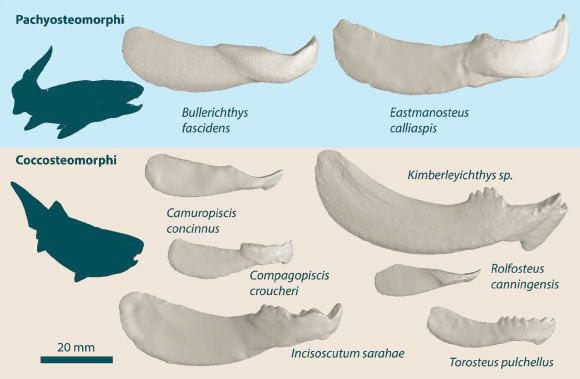
Devonian Armored Fish Show Multiple Ways to Crush Hard-Shelled Prey
Les poissons blindés du Dévonien montrent plusieurs façons d'écraser des proies à carapace dure
armure proie Dévonien poisson
Bien avant que les requins ou les reptiles ne dominent les mers, les poissons blindés appelés placodermes expérimentaient déjà différentes conceptions de mâchoires pour écraser leurs proies à carapace dure. L'article Les poissons blindés du Dévonien montrent plusieurs façons d'écraser des proies à carapace dure est apparu en premier sur Sci.News : Breaking Science News.
14/09/2026 sci-news ⚙ Traduction automatique
Le « guépard » américain n’était pas du tout un guépard
fossile poisson
Le « guépard américain », aujourd'hui disparu, n'était pas vraiment un guépard, mais un parent d'un puma doté d'un mode de vie étonnamment flexible. Les fossiles du Yukon suggèrent que les populations du Nord ont survécu en partie en mangeant du poisson, y compris peut-être du saumon, tandis que les chats du Sud chassaient sur terre.
08/09/2026 sciencedaily-paleo ⚙ Traduction automatique
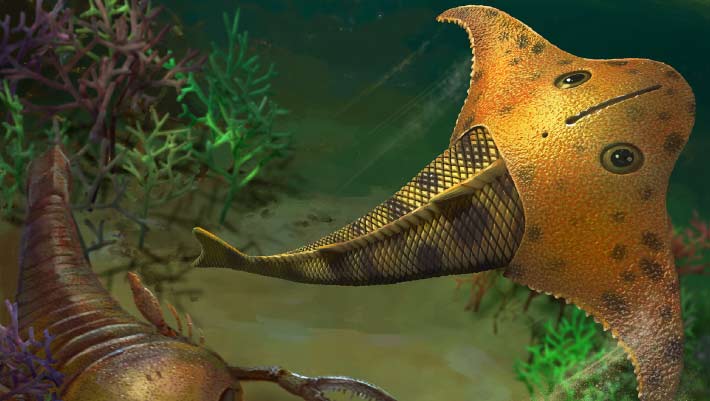
Meet Bataspis crux, Jawless Fish that Cruised Devonian Seas with Batwing Head
Rencontrez Bataspis crux, un poisson sans mâchoire qui naviguait dans les mers du Dévonien avec une tête de chauve-souris
mâchoire Chine Dévonien Dévonien poisson nouvelle espèce crâne
Des paléontologues chinois ont identifié une nouvelle espèce de poisson blindé et sans mâchoire provenant de roches vieilles d'environ 419 millions d'années, dont le crâne avait la forme d'une aile de chauve-souris et dont la tête inhabituelle en faisait un planeur efficace dans les mers du Dévonien. L'article Rencontrez Bataspis crux, un poisson sans mâchoire qui a navigué dans les mers du Dévonien avec une tête de chauve-souris est apparu en premier sur Sci.News : Breaking Science News.
18/08/2026 sci-news ⚙ Traduction automatique
Des scientifiques découvrent ce qui a permis à d’anciens feux de camp de brûler pendant des générations
alimentation Israël poisson Homo sapiens
Il y a près de 800 000 ans, les premiers humains vivant au bord d’un lac dans ce qui est aujourd’hui Israël ont peut-être choisi cet emplacement pour une raison étonnamment pratique : le bois de chauffage. Les chercheurs ont découvert que ces peuples anciens ramassaient régulièrement du bois flotté échoué le long du rivage, ce qui leur fournissait une source de combustible facile et fiable pour cuire le poisson, transformer les gros animaux, fabriquer des outils et organiser la vie quotidienne autour des foyers.
15/07/2026 sciencedaily-paleo ⚙ Traduction automatique
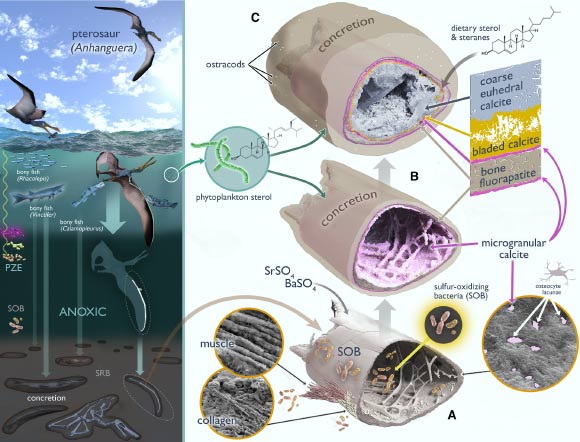
113-Million-Year-Old Pterosaur Fossil Reveals What Flying Reptiles Ate
Un fossile de ptérosaure vieux de 113 millions d'années révèle ce que mangeaient les reptiles volants
tissus alimentation Brésil fossile Anhangueridae Pterosauria poisson
Un fossile de ptérosaure vieux de 113 millions d'années provenant du nord-est du Brésil a fourni des preuves rares de tissus mous, de molécules organiques et de traces chimiques d'un régime alimentaire riche en poissons et en céphalopodes tels que les calmars ou les nautiles. L'article Un fossile de ptérosaure vieux de 113 millions d'années révèle ce que mangeaient les reptiles volants est apparu en premier sur Sci.News : Breaking Science News.
19/06/2026 sci-news ⚙ Traduction automatique
1 2