reconstitution

Type de contenu

167 image(s) · 1 Actualités

Galerie d'images

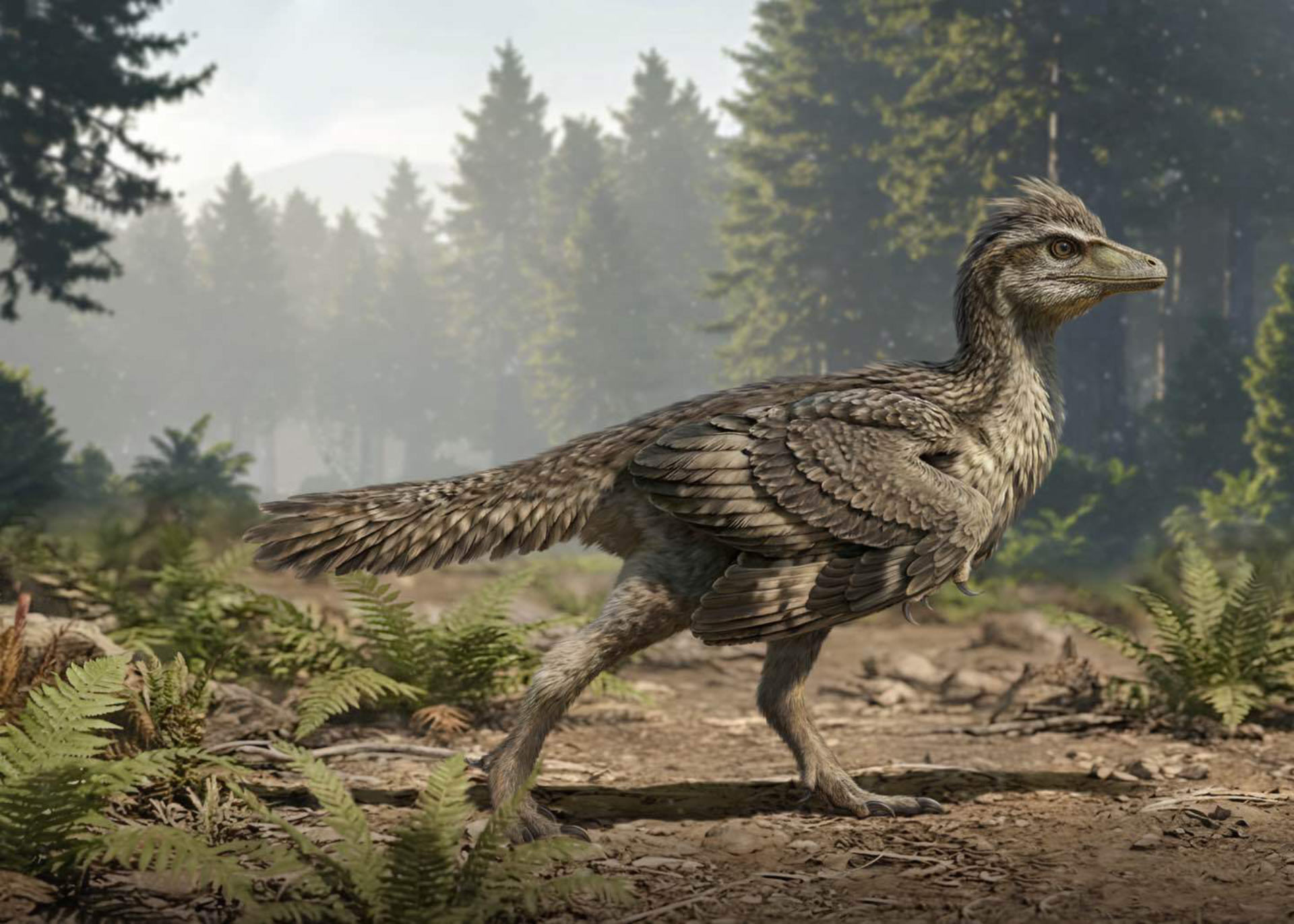
Life reconstruction of Jinchuanloong niedu

reconstitution Jinchuanloong

Life reconstruction of Tawa hallae

reconstitution Tawa

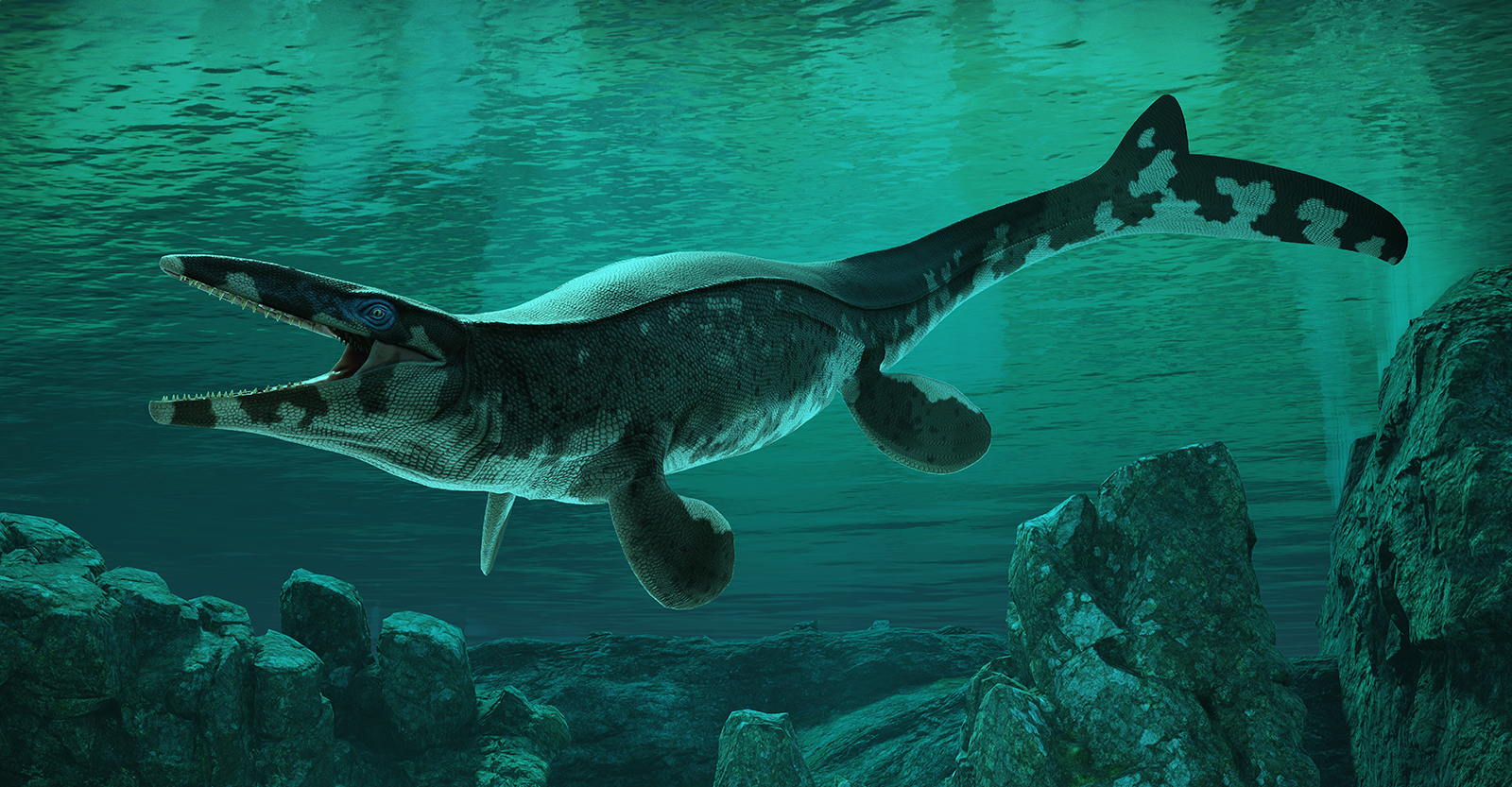
Artists’ reconstruction of the living Sarabosaurus dahli swimming with ammonites and fish in southern Utah, 94 million years ago. Artwork by Andrey Atuchin. On June 23, 2023, the following link will go live for more information, www.blm.gov/press-release/94-million-year-old-fossil-prov...

reconstitution fossile Sarabosaurus Selmasaurini

Life restoration of Proceratosaurus bradleyi. Missing parts of skull are consistent with those of the related Guanlong per:[1] Body proportions are consistent with the skeletal reconstruction of Guanlong in fig. 11 here:[2]

reconstitution restauration Coeluridae Guanlong +2

Reconstruction of a paleoecological environment, showing a Cymbospondylus petrinus swimming next to a group of Phalarodon fraasi (formerly identified as Mixosaurus nordenskioeldii as depicted by Sander & Bucher (1990) and Schmitz (2005)).

reconstitution Cymbospondylus Mixosauridae Mixosaurus +1

A life reconstruction of the plioplatecarpine Angolasaurus bocagei, alongside the turtle Angolachelys mbaxi. Digital painting.

reconstitution Angolasaurus Plioplatecarpinae
Taxons Anurognathidae

Life reconstruction of Sinomacrops bondei

reconstitution Anurognathidae Batrachognathinae Sinomacrops
Taxons Batrachognathinae

Life reconstruction of Sinomacrops bondei

reconstitution Anurognathidae Batrachognathinae Sinomacrops
Taxons Saturnaliidae

Life reconstruction of Saturnalia tupiniquim

reconstitution Saturnalia Saturnaliidae Saturnaliinae
Taxons Saturnaliinae

Life reconstruction of Saturnalia tupiniquim

reconstitution Saturnalia Saturnaliidae Saturnaliinae
Taxons Monofenestrata

Figure 4 The reconstruction of the skull and lower jaw of the holotype of Darwinopterus camposi sp. nov. (IVPP V 17957). Scale bar: 50 mm. Abbreviations: d, dentary; f, frontal; j, jugal; ltf, lower temporal fenestra; m, maxilla; man.sys, mandibular symphysis; naof, nasoantorbital fenestra; o, orbit; p, parietal; pm, premaxilla; pmcr, premaxillary crest; po, postorbital; prn, nasal process; q, quadrate; sq, squamosal; utf, upper temporal fenestra.

crête écaille reconstitution holotype +4
Taxons Darwinoptera

Figure 4 The reconstruction of the skull and lower jaw of the holotype of Darwinopterus camposi sp. nov. (IVPP V 17957). Scale bar: 50 mm. Abbreviations: d, dentary; f, frontal; j, jugal; ltf, lower temporal fenestra; m, maxilla; man.sys, mandibular symphysis; naof, nasoantorbital fenestra; o, orbit; p, parietal; pm, premaxilla; pmcr, premaxillary crest; po, postorbital; prn, nasal process; q, quadrate; sq, squamosal; utf, upper temporal fenestra.

crête écaille reconstitution holotype +4
Taxons Baryonychinae

Skeletal reconstruction of Suchomimus tenerensis and Baryonyx walkeri to scale.

écaille reconstitution Baryonychinae Baryonyx +2
Taxons Ceratosuchopsini

Skeletal reconstruction of Suchomimus tenerensis and Baryonyx walkeri to scale.

écaille reconstitution Baryonychinae Baryonyx +2
Taxons Wahlisaurus

Life reconstruction of Wahlisaurus massarae

reconstitution Wahlisaurus
Taxons Makhaira

Ancient myceaean swords after reconstruction - replicas from the museum in Mycenae. The original pieces of these swords are in the National Archeological Museum in Athens.

musée reconstitution Makhaira
1 2 3 4 5 6 7 8 9 10 11

Actualités

Une momie de dinosaure retrouvée avec des sabots et une crête cachée
crête reconstitution Edmontosaurus
Les scientifiques ont reconstitué le profil le plus complet et le plus réaliste d’Edmontosaurus annectens grâce à un processus de préservation extraordinaire appelé modèle d’argile, dans lequel un mince film d’argile a capturé la peau, les écailles, les pointes et même les sabots du dinosaure en trois dimensions. En combinant des «momies» récemment fouillées, une imagerie avancée et une reconstruction artistique, les chercheurs ont révélé une haute crête, une seule rangée de pointes de queue, de délicates écailles ressemblant à des cailloux et, ce qui est le plus remarquable, le plus ancien sabot connu.
30/11/2025 sciencedaily ⚙ Traduction automatique