Cambrian

Geological interval

0 image(s) · 10 News

View page

News

Episode 177: Cambrian Fecal Revolution
Cambrian fossil evolution
The Cambrian Explosion is one of the most significant events in evolutionary history. Classically, it describes the sudden appearance of complex fossils (including all major animal groups) at the beginning of the Cambrian Period. Before then it was thought that only relatively simple single-celled or multicellular life existed. We now understand this event to be [&hellip
17/08/2026 palaeocast
Remarkable Eoceras shaanxiense Fossils Rewrite Cephalopod Evolution
China Cambrian Stage 3 fossil evolution formation
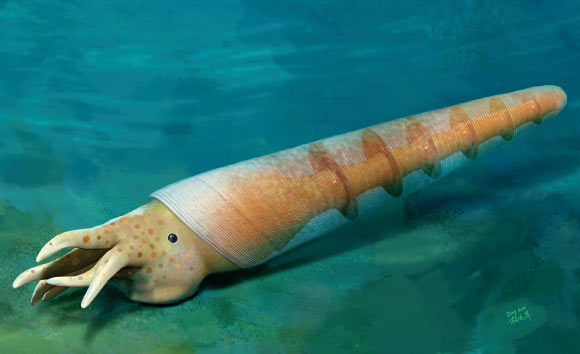
Researchers have identified tiny fossils from the Shuijingtuo Formation (Cambrian Stage 3) of South China that could transform our understanding of cephalopod evolution. The newly described species, Eoceras shaanxiense, provides the oldest known evidence of a primordial siphuncle, a crucial anatomical feature that enabled cephalopods to regulate buoyancy and eventually become some of the oceans'
03/08/2026 everythingdinosaur
520-Million-Year-Old Fossil from China Fills Gap in Evolutionary History of Cephalopods
China Cambrian fossil evolution
Paleontologists have identified the earliest-known cephalopod equipped with a siphuncle -- a tubular extension of the mantle found in shelled cephalopods -- pushing back the fossil record of this key evolutionary feature to the Early Cambrian, roughly 520 million years ago. The post 520-Million-Year-Old Fossil from China Fills Gap in Evolutionary History of Cephalopods appeared first on Sci.News: Breaking Science News.
30/07/2026 sci-news
Ancient Sea Creature Pushes Back Origins of Spider Fangs to 518 Million Years Ago
jaw predator China Cambrian evolution
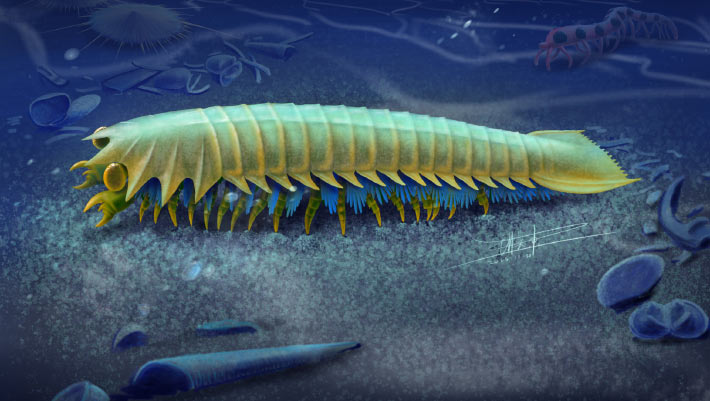
Urokodia aequalis, an early Cambrian marine predator from the Chengjiang biota of China, preserves the earliest known evidence of chelicerae -- the pincer-like structures that later evolved into the fangs of spiders and the pincers of scorpions. The post Ancient Sea Creature Pushes Back Origins of Spider Fangs to 518 Million Years Ago appeared first on Sci.News: Breaking Science News.
01/07/2026 sci-news
Complex Colonial Life Was Already Thriving during Cambrian Explosion
Cambrian
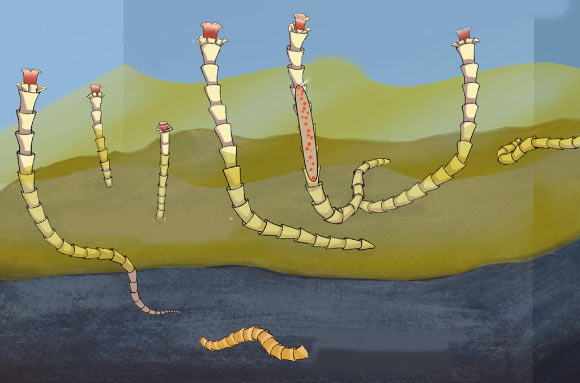
Tiny colonial animals called bryozoans were long thought to have appeared tens of millions of years after the Cambrian explosion. The post Complex Colonial Life Was Already Thriving during Cambrian Explosion appeared first on Sci.News: Breaking Science News.
03/06/2026 sci-news
1 2