←

évolution

Thématique

17 image(s) · 72 Actualités

Galerie d'images

Rates of skeletal character evolution in the skull and postcranial skeleton of hadrosauroids. Cladograms illustrate the results from branch likelihood tests for two morphological partitions: skull (cranium and mandible) (A) and postcranial skeleton (B). In both cladograms, results from the branch likelihood tests are summarized on a strict consensus tree derived from four separately analyzed MPTs, each with 100 dating replicates (a total of 400 Hedman-dated phylogenies). Pie charts on branches illustrate the proportion of dating replicates that showed significantly high rates (red), slow rates (blue), or nonsignificant average rates (white). No pie charts are plotted on branches that showed nonsignificant rates in 100% of dating replicates. Branches that showed high rates (red) in more than 50% of dating replicates are doubled in length. See the Supplementary Material for Hedman-based results plotted separately for each MPT (Supplementary Fig. S2) and for results using the MBL dating method (Supplementary Fig. S3). Silhouettes were created by Scott Hartman and were downloaded from http://phylopic.org (Creative Commons license CC BY 3.0).

Rates of skeletal character evolution in the skull and postcranial skeleton of hadrosauroids. Cladograms illustrate the results from branch likelihood tests for two morphological partitions: skull (cranium and mandible) (A) and postcranial skeleton (B). In both cladograms, results from the branch likelihood tests are summarized on a strict consensus tree derived from four separately analyzed MPTs, each with 100 dating replicates (a total of 400 Hedman-dated phylogenies). Pie charts on branches illustrate the proportion of dating replicates that showed significantly high rates (red), slow rates (blue), or nonsignificant average rates (white). No pie charts are plotted on branches that showed nonsignificant rates in 100% of dating replicates. Branches that showed high rates (red) in more than 50% of dating replicates are doubled in length. See the Supplementary Material for Hedman-based results plotted separately for each MPT (Supplementary Fig. S2) and for results using the MBL dating method (Supplementary Fig. S3). Silhouettes were created by Scott Hartman and were downloaded from http://phylopic.org (Creative Commons license CC BY 3.0).

Protohadros datation évolution squelette +1
Phylogenetic affinities of Saltriovenator and evolution of the hand in Theropoda.

Reduced strict consensus of the shortest trees found by the phylogenetic analysis after pruning of Lewisuchus and Teleocrater. Numbers at nodes indicate decay index. Inferred manual phalangeal formula for selected nodes indicated below clade names. Hands of representative members of the avian stem (bold names) in extensor view (Herrerasaurus in flexor view), medial side at left, missing elements in white based on ancestral states inferred at least inclusive node containing the taxon. Red star indicates loss of metacarpal V, blue stars indicate multiple independent losses of metacarpal IV among tetanurans. Drawings by A. Cau.

Phylogenetic affinities of Saltriovenator and evolution of the hand in Theropoda. Reduced strict consensus of the shortest trees found by the phylogenetic analysis after pruning of Lewisuchus and Teleocrater. Numbers at nodes indicate decay index. Inferred manual phalangeal formula for selected nodes indicated below clade names. Hands of representative members of the avian stem (bold names) in extensor view (Herrerasaurus in flexor view), medial side at left, missing elements in white based on ancestral states inferred at least inclusive node containing the taxon. Red star indicates loss of metacarpal V, blue stars indicate multiple independent losses of metacarpal IV among tetanurans. Drawings by A. Cau.

dessin Herrerasaurus Lewisuchus Saltriovenator +2
Tylosaurus reconstruction. From Osborn, H. F. (1917). The origin and evolution of life, on the theory of action, reaction and interaction of energy.

Tylosaurus reconstruction. From Osborn, H. F. (1917). The origin and evolution of life, on the theory of action, reaction and interaction of energy.

Tylosaurus évolution
1 2

Actualités

Le séquençage du génome d’échantillons de musée pourrait transformer la science
musée spécimen découverte évolution génétique
Les musées d'histoire naturelle pourraient détenir la clé de découvertes scientifiques majeures, selon un nouvel article. Le séquençage du génome des spécimens de musée pourrait transformer la recherche en évolution, conservation, médecine et changement environnemental. Les collections d’histoire naturelle du monde entier contiennent plus d’un milliard de spécimens. Ensemble, ils préservent une énorme quantité d’informations génétiques. Cependant, les scientifiques ont séquencé
21/09/2026 everythingdinosaur ⚙ Traduction automatique
Un fossile vieux de 240 millions d’années vient de changer la chronologie des dinosaures
Tanzanie fossile Dinosauria découverte évolution phylogénie
Un animal âgé de 240 millions d’années récemment identifié en Tanzanie oblige les scientifiques à repenser la chronologie des premiers dinosaures. Dinodontosaurus isiyavamanda appartient à un groupe auparavant connu uniquement en Amérique du Sud, reliant les gisements de fossiles des deux continents. Ce lien suggère que les fossiles de dinosaures les plus anciens de Tanzanie pourraient en réalité être des millions d’années plus jeunes qu’on ne le pensait auparavant.
16/09/2026 sciencedaily ⚙ Traduction automatique
Des dents vieilles de 400 000 ans révèlent un lien caché dans l'évolution humaine
protéine Chine évolution
Des dents d'Homo erectus de Chine vieilles de plus de 400 000 ans pourraient révéler un lien surprenant entre cette ancienne espèce humaine, les Dénisoviens, et certains peuples modernes. Les scientifiques ont découvert des mutations protéiques suggérant que plusieurs populations d'Homo erectus d'Asie de l'Est appartenaient au même groupe évolutif, y compris une mutation précédemment associée aux Dénisoviens. Cette variante est peut-être passée de l’Homo erectus aux Dénisoviens et a finalement atteint les populations modernes d’Asie du Sud-Est et d’Océanie.
10/09/2026 sciencedaily ⚙ Traduction automatique
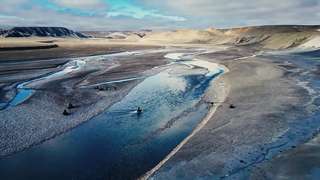
« Ce n’est pas possible » : ces scientifiques ont dû refaire l’expérience avant de croire ce qu’ils voyaient en Arctique
évolution
Dans le Haut-Arctique canadien, des chercheurs ont obtenu des résultats si inattendus qu’ils ont d’abord pensé à une erreur. Pourtant, expérience après expérience, le même phénomène s’est reproduit. Et il pourrait obliger les scientifiques à revoir la manière dont ils comprennent l’évolution des...
09/09/2026 futura-terre
Service client exceptionnel pour les modèles de dinosaures – même lors d'une fête nationale !
Royaume-Uni Dinosauria évolution
Hier (le 31 août), c'était peut-être un jour férié dans la majeure partie du Royaume-Uni, mais il restait encore des dinosaures à expédier ! Mike et Sue de Everything Dinosaur ont passé la majeure partie de la journée à préparer les commandes des clients. Cela signifiait que les colis pouvaient être emballés rapidement et envoyés aujourd'hui. La photographie montre deux Everything Dinosaur Evolution 1:33
01/09/2026 everythingdinosaur ⚙ Traduction automatique
1 2 3 4 5 6 7 8 9 10 11 12 13 14 15