écaille

Partie anatomique

238 image(s) · 17 Actualités

Galerie d'images

Skeleton of Gondwanatitan faustoi (MN 4111-V), not to scale.(adapted from Kellner and Campos, 2000).

Skeleton of Gondwanatitan faustoi (MN 4111-V), not to scale.(adapted from Kellner and Campos, 2000).

écaille Gondwanatitan squelette
Paludititan nalatzensis (UBB NVM1-43), Maastrichtian, Haţeg Basin, Romania. Scale bar equals 10 cm.

Paludititan nalatzensis (UBB NVM1-43), Maastrichtian, Haţeg Basin, Romania. Scale bar equals 10 cm.

écaille Roumanie Maastrichtien Paludititan
Sarahsaurus aurifontanalis, referred skull (MCZ 8893), in (a) lateral, (b) occipital, (c) dorsal and (d) ventral views. an, angular; ar, articular; bo, basioccipital; bs, basisphenoid; ec, ectopterygoid; f, frontal; h, hyoid; j, jugal; l, lacrimal; ls, laterosphenoid; m, maxilla; n, nasal; op, opisthotic-exoccipital; p, parietal; po, postorbital; prf, prefrontal; pm, premaxilla; pt, pterygoid; q, quadrate; qj, quadratojugal; so, supraoccipital; sq, squamosal. Scale bar, 5 cm.

Sarahsaurus aurifontanalis, referred skull (MCZ 8893), in (a) lateral, (b) occipital, (c) dorsal and (d) ventral views. an, angular; ar, articular; bo, basioccipital; bs, basisphenoid; ec, ectopterygoid; f, frontal; h, hyoid; j, jugal; l, lacrimal; ls, laterosphenoid; m, maxilla; n, nasal; op, opisthotic-exoccipital; p, parietal; po, postorbital; prf, prefrontal; pm, premaxilla; pt, pterygoid; q, quadrate; qj, quadratojugal; so, supraoccipital; sq, squamosal. Scale bar, 5 cm.

écaille Sarahsaurus crâne
Cimoliopterus cuvieri. Holotype NHMUK PV 39409 (Cenomanian / Turonian, Chalk Formation), anterior part of the rostrum A right lateral view B respective line drawing C ventral view D respective line drawing. Abbreviations: m – maxillae, pm – premaxillae, pmcr – premaxillary crest, prid – palatal ridge. Arrows and numbers indicate alveoli or teeth and their respective position. Scale bar = 10 mm. Photos courtesy of The Natural History Museum.

Cimoliopterus cuvieri. Holotype NHMUK PV 39409 (Cenomanian / Turonian, Chalk Formation), anterior part of the rostrum A right lateral view B respective line drawing C ventral view D respective line drawing. Abbreviations: m – maxillae, pm – premaxillae, pmcr – premaxillary crest, prid – palatal ridge. Arrows and numbers indicate alveoli or teeth and their respective position. Scale bar = 10 mm. Photos courtesy of The Natural History Museum.

crête écaille dessin musée +5
Camposipterus nasutus comb. n. Holotype CAMSM B 54556 (Albian, Cambridge Greensand), anterior part of the rostrum A left lateral view B respective line drawing C ventral view D respective line drawing. Abbreviations: m – maxillae, pm – premaxillae, prid – palatal ridge. Arrows and numbers indicate alveoli or teeth and their respective position. Scale bar = 10 mm.

Camposipterus nasutus comb. n. Holotype CAMSM B 54556 (Albian, Cambridge Greensand), anterior part of the rostrum A left lateral view B respective line drawing C ventral view D respective line drawing. Abbreviations: m – maxillae, pm – premaxillae, prid – palatal ridge. Arrows and numbers indicate alveoli or teeth and their respective position. Scale bar = 10 mm.

écaille dessin Albien holotype +1
Skeletal restoration of Byronosaurus jaffei. Scale bar = 10cm
Taxons Byronosaurus

Skeletal restoration of Byronosaurus jaffei. Scale bar = 10cm

écaille Byronosaurus
Specimens of Galleonosaurus dorisae n. gen. n. sp. from the Flat Rocks Sandstone in the upper Barremian, Wonthaggi Formation, Gippsland Basin, southeastern Australia: (1–2) holotype (NMV P229196), left maxilla in lateral (1) and medial (2) views; (3) NMV P208178, left maxilla in lateral view; (4) NMV P212845, left maxilla in lateral view; (5) NMV P209977, left maxilla in lateral view; (6) NMV P186440, left maxilla in lateral view; (7) NMV 208113, right maxillary tooth in labial view. Scale bars = 10 mm (1–6); 1 mm (7).
Taxons Galleonosaurus

Specimens of Galleonosaurus dorisae n. gen. n. sp. from the Flat Rocks Sandstone in the upper Barremian, Wonthaggi Formation, Gippsland Basin, southeastern Australia: (1–2) holotype (NMV P229196), left maxilla in lateral (1) and medial (2) views; (3) NMV P208178, left maxilla in lateral view; (4) NMV P212845, left maxilla in lateral view; (5) NMV P209977, left maxilla in lateral view; (6) NMV P186440, left maxilla in lateral view; (7) NMV 208113, right maxillary tooth in labial view. Scale bars = 10 mm (1–6); 1 mm (7).

écaille dent Australie Barrémien +4
Dorsal vertebra (IVPP V156AI) of Sanpasaurus.

(A) Anterior view; (B) posterior view; (C) dorsal view; (D) left lateral view; (E) right lateral view. Abbreviations: cdf, centrodiapophyseal fossa; cpol, centropostzygapophyseal lamina; lar, lateral ridge; ms, midline septum; pp, parapophyses; prpl, prezygoparapophyseal lamina; prz, prezygapophyses; tprl, intraprezygapophyseal lamina. Scale bars equal 5 cm. Photographs by B.W.M. and C.S.overbite.
Taxons Sanpasaurus

Dorsal vertebra (IVPP V156AI) of Sanpasaurus. (A) Anterior view; (B) posterior view; (C) dorsal view; (D) left lateral view; (E) right lateral view. Abbreviations: cdf, centrodiapophyseal fossa; cpol, centropostzygapophyseal lamina; lar, lateral ridge; ms, midline septum; pp, parapophyses; prpl, prezygoparapophyseal lamina; prz, prezygapophyses; tprl, intraprezygapophyseal lamina. Scale bars equal 5 cm. Photographs by B.W.M. and C.S.overbite.

écaille vertèbre Sanpasaurus
Photograph of a holotype (AMNH FARB 5764) vertebra of the sauropod Amphicoelias (Cope, 1878). A is the anterior view; B is the right lateral view; C is the posterior view; D is the left lateral view; E is the ventral view (with anterior surface toward the top). Blue polygon in C obscures hand used to brace the fragile vertebra for photography. Scale bar equals 10 centimetres.
Abbreviations: acpl, anterior centroparapophyseal lamina; cpol, centropostzygapophyseal lamina; cprl, centroprezygapophyseal lamina; d, diapophysis; hs, hyposphene; lspol, lateral spinopostzygapophyseal lamina; mspol, medial spinopostzygapophyseal lamina; p, parapophysis; pcdl, posterior centrodiapophyseal lamina; pcpl, posterior centroparapophyseal lamina; podl, postzygodiapophyseal lamina; prsl, prespinal lamina; spdl, spinodiapophyseal lamina; sprl, spinoprezygapophyseal lamina; tpol, interpostzygapophyseal lamina.
Taxons Amphicoelias

Photograph of a holotype (AMNH FARB 5764) vertebra of the sauropod Amphicoelias (Cope, 1878). A is the anterior view; B is the right lateral view; C is the posterior view; D is the left lateral view; E is the ventral view (with anterior surface toward the top). Blue polygon in C obscures hand used to brace the fragile vertebra for photography. Scale bar equals 10 centimetres. Abbreviations: acpl, anterior centroparapophyseal lamina; cpol, centropostzygapophyseal lamina; cprl, centroprezygapophyseal lamina; d, diapophysis; hs, hyposphene; lspol, lateral spinopostzygapophyseal lamina; mspol, medial spinopostzygapophyseal lamina; p, parapophysis; pcdl, posterior centrodiapophyseal lamina; pcpl, posterior centroparapophyseal lamina; podl, postzygodiapophyseal lamina; prsl, prespinal lamina; spdl, spinodiapophyseal lamina; sprl, spinoprezygapophyseal lamina; tpol, interpostzygapophyseal lamina.

écaille vertèbre holotype Amphicoelias
Figure 4: Savannasaurus elliottorum gen. et sp. nov., holotype specimen AODF 660. (a–e) Dorsal vertebrae (left lateral view). (f) Sacrum (ventral view). (g,h) Caudal vertebrae (left lateral view). (i) Left coracoid (lateral view). (j) Right sternal plate (ventral view). (k) Left radius (posterior view). (l) Right metacarpal III (anterior view). (m) Left astragalus (anterior view). (n) Coossified right and left pubes (anterior view). A number of ribs were preserved but have been omitted for clarity. Scale bar = 500 mm. [N.b.: the right sternal plate is misidentified [1] and is actually a left sternal plate.]
Taxons Savannasaurus

Figure 4: Savannasaurus elliottorum gen. et sp. nov., holotype specimen AODF 660. (a–e) Dorsal vertebrae (left lateral view). (f) Sacrum (ventral view). (g,h) Caudal vertebrae (left lateral view). (i) Left coracoid (lateral view). (j) Right sternal plate (ventral view). (k) Left radius (posterior view). (l) Right metacarpal III (anterior view). (m) Left astragalus (anterior view). (n) Coossified right and left pubes (anterior view). A number of ribs were preserved but have been omitted for clarity. Scale bar = 500 mm. [N.b.: the right sternal plate is misidentified [1] and is actually a left sternal plate.]

écaille holotype spécimen Savannasaurus
Early Triassic marine vertebrate apex predators during the Griesbachian to Smithian interval (left) and the Spathian to Anisian interval (right). Predators not exactly to scale; see text and Tables S1–S2 for details on body size and stratigraphic occurrence. Marine vertebrate apex predators: 1, Wantzosaurus (trematosaurid ‘amphibian’); 2, Fadenia (eugeneodontiform chondrichthyan); 3, Saurichthys (actinopterygian ambush predator); 4, Rebellatrix (fork-tailed actinistian); 5, Hovasaurus (‘younginiform’ diapsid reptile); 6, Birgeria (fast-swimming predatory actinopterygian); 7, Aphaneramma (trematosaurid ‘amphibian’); 8, Bobasatrania (durophagous actinopterygian); 9, hybodontoid chondrichthyan with durophagous (e.g. Acrodus, Palaeobates) or tearing-type dentition (e.g. Hybodus); 10, e.g., Mylacanthus (durophagous actinistian); 11, Tanystropheus (protorosaurian reptile); 12, Corosaurus (sauropterygian reptile); 13, e.g., Ticinepomis (actinistian); 14, Mixosaurus (small ichthyosaur); 15, large cymbospondylid/shastasaurid ichthyosaur; 16, neoselachian chondrichthyan; 17, Omphalosaurus skeleton (possible durophagous ichthyosaur); 18, Placodus (durophagous sauropterygian reptile).
Taxons Corosaurus

Early Triassic marine vertebrate apex predators during the Griesbachian to Smithian interval (left) and the Spathian to Anisian interval (right). Predators not exactly to scale; see text and Tables S1–S2 for details on body size and stratigraphic occurrence. Marine vertebrate apex predators: 1, Wantzosaurus (trematosaurid ‘amphibian’); 2, Fadenia (eugeneodontiform chondrichthyan); 3, Saurichthys (actinopterygian ambush predator); 4, Rebellatrix (fork-tailed actinistian); 5, Hovasaurus (‘younginiform’ diapsid reptile); 6, Birgeria (fast-swimming predatory actinopterygian); 7, Aphaneramma (trematosaurid ‘amphibian’); 8, Bobasatrania (durophagous actinopterygian); 9, hybodontoid chondrichthyan with durophagous (e.g. Acrodus, Palaeobates) or tearing-type dentition (e.g. Hybodus); 10, e.g., Mylacanthus (durophagous actinistian); 11, Tanystropheus (protorosaurian reptile); 12, Corosaurus (sauropterygian reptile); 13, e.g., Ticinepomis (actinistian); 14, Mixosaurus (small ichthyosaur); 15, large cymbospondylid/shastasaurid ichthyosaur; 16, neoselachian chondrichthyan; 17, Omphalosaurus skeleton (possible durophagous ichthyosaur); 18, Placodus (durophagous sauropterygian reptile).

écaille prédateur Anisien Early Triassic +6
Early Triassic marine vertebrate apex predators during the Griesbachian to Smithian interval (left) and the Spathian to Anisian interval (right). Predators not exactly to scale; see text and Tables S1–S2 for details on body size and stratigraphic occurrence. Marine vertebrate apex predators: 1, Wantzosaurus (trematosaurid ‘amphibian’); 2, Fadenia (eugeneodontiform chondrichthyan); 3, Saurichthys (actinopterygian ambush predator); 4, Rebellatrix (fork-tailed actinistian); 5, Hovasaurus (‘younginiform’ diapsid reptile); 6, Birgeria (fast-swimming predatory actinopterygian); 7, Aphaneramma (trematosaurid ‘amphibian’); 8, Bobasatrania (durophagous actinopterygian); 9, hybodontoid chondrichthyan with durophagous (e.g. Acrodus, Palaeobates) or tearing-type dentition (e.g. Hybodus); 10, e.g., Mylacanthus (durophagous actinistian); 11, Tanystropheus (protorosaurian reptile); 12, Corosaurus (sauropterygian reptile); 13, e.g., Ticinepomis (actinistian); 14, Mixosaurus (small ichthyosaur); 15, large cymbospondylid/shastasaurid ichthyosaur; 16, neoselachian chondrichthyan; 17, Omphalosaurus skeleton (possible durophagous ichthyosaur); 18, Placodus (durophagous sauropterygian reptile).
Taxons Corosauridae

Early Triassic marine vertebrate apex predators during the Griesbachian to Smithian interval (left) and the Spathian to Anisian interval (right). Predators not exactly to scale; see text and Tables S1–S2 for details on body size and stratigraphic occurrence. Marine vertebrate apex predators: 1, Wantzosaurus (trematosaurid ‘amphibian’); 2, Fadenia (eugeneodontiform chondrichthyan); 3, Saurichthys (actinopterygian ambush predator); 4, Rebellatrix (fork-tailed actinistian); 5, Hovasaurus (‘younginiform’ diapsid reptile); 6, Birgeria (fast-swimming predatory actinopterygian); 7, Aphaneramma (trematosaurid ‘amphibian’); 8, Bobasatrania (durophagous actinopterygian); 9, hybodontoid chondrichthyan with durophagous (e.g. Acrodus, Palaeobates) or tearing-type dentition (e.g. Hybodus); 10, e.g., Mylacanthus (durophagous actinistian); 11, Tanystropheus (protorosaurian reptile); 12, Corosaurus (sauropterygian reptile); 13, e.g., Ticinepomis (actinistian); 14, Mixosaurus (small ichthyosaur); 15, large cymbospondylid/shastasaurid ichthyosaur; 16, neoselachian chondrichthyan; 17, Omphalosaurus skeleton (possible durophagous ichthyosaur); 18, Placodus (durophagous sauropterygian reptile).

écaille prédateur Anisien Early Triassic +6
Kronosaurus queenslandicus (QM F18827; proposed neotype [part]) skull in dorsal view (modified from McHenry Citation2009). Scale = 30 cm.

Kronosaurus queenslandicus (QM F18827; proposed neotype [part]) skull in dorsal view (modified from McHenry Citation2009). Scale = 30 cm.

écaille Kronosaurus crâne
Azhdarcho sp., ZIN PH 56/43, distal fragment of a right ulna in proximal (a), ventral (b), posterior (c), dorsal (d), anterior (e), and distal (f, stereopair) views. This specimen is from the Tyulkili locality in the northeastern Aral Sea region of Kazakhstan; Zhirkindek Formation, Upper Cretaceous (upper Turonian – Coniacian). Abbreviations: das, dorsal articulation surface; ft, groove for flexor tendon; tub, tuberculum; vf, ventral fovea. Scale bar is 10 mm.
Taxons Azhdarcho

Azhdarcho sp., ZIN PH 56/43, distal fragment of a right ulna in proximal (a), ventral (b), posterior (c), dorsal (d), anterior (e), and distal (f, stereopair) views. This specimen is from the Tyulkili locality in the northeastern Aral Sea region of Kazakhstan; Zhirkindek Formation, Upper Cretaceous (upper Turonian – Coniacian). Abbreviations: das, dorsal articulation surface; ft, groove for flexor tendon; tub, tuberculum; vf, ventral fovea. Scale bar is 10 mm.

écaille Kazakhstan Coniacien Crétacé +4
The probable azhdarchid trace fossil Haenamichnus uhangriensis. A, the 7.3 m trackway CNUPH.P9; B, H. uhangriensis holotype (CNUPH.P2), manus (top) and pes (bottom) prints. Scale bars represent 1 m (A) and 100 mm (B).
Taxons Haenamichnus

The probable azhdarchid trace fossil Haenamichnus uhangriensis. A, the 7.3 m trackway CNUPH.P9; B, H. uhangriensis holotype (CNUPH.P2), manus (top) and pes (bottom) prints. Scale bars represent 1 m (A) and 100 mm (B).

écaille fossile holotype Azhdarchidae +1
Illustration of the holotype frontal bone of Albertavenator curriei TMP 1993.105.0001 in dorsal view. Scale bar is 5mm.
Taxons Albertavenator

Illustration of the holotype frontal bone of Albertavenator curriei TMP 1993.105.0001 in dorsal view. Scale bar is 5mm.

os écaille holotype Albertavenator
1 2 3 4 5 6 7 8 9 10 11 12 13 14 15

Actualités

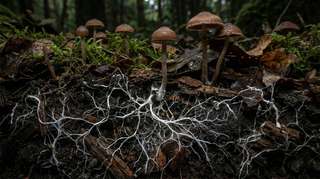
Voici la première carte mondiale d’un immense réseau vivant caché sous nos pieds
écaille étude
Sous nos pieds se cache l’un des plus vastes réseaux vivants de la planète. Une nouvelle étude révèle l’ampleur vertigineuse des champignons mycorhiziens, ces alliés invisibles des plantes qui transportent des milliards de tonnes de carbone chaque année et pourraient jouer un rôle clé dans la...
13/06/2026 futura-terre
Le modèle de dinosaure Haolonggood Diplodocus photographié au soleil
écaille jouet Dinosauria Diplodocia
Le modèle de dinosaure Haolonggood Diplodocus est une impressionnante figure animale préhistorique. Mesurant environ soixante-quinze centimètres de long, cette réplique à l'échelle 1:35 fait une véritable déclaration dans n'importe quelle collection. Récemment, le jeune fan de dinosaures et artiste talentueux Caldey a envoyé à Everything Dinosaur une magnifique photographie du modèle de dinosaure Haolonggood Diplodocus (variante Meng Kang) profitant d'un soleil radieux.
13/06/2026 everythingdinosaur ⚙ Traduction automatique
Nouveau Cameron articulé le tyrannosaure rex
écaille Dinosauria Tyrannosaurus
La nouveauté pour 2026, a articulé le PNSO Cameron, la figurine Tyrannosaurus rex devrait arriver sous peu.  Nous sommes impatients de recevoir la première figurine de dinosaure articulée de PNSO.  Le modèle mesure trente-six centimètres de long et mesure plus de onze centimètres de haut.  Nous pensons qu'il s'agit d'une figurine à l'échelle 1:35. Le nouveau PNSO articulé T.
22/05/2026 everythingdinosaur ⚙ Traduction automatique
Model Collector propose un examen exclusif des bêtes de l'Allosaure mésozoïque à l'échelle 1:35
écaille Mésozoïque Allosauria Dinosauria
Nos remerciements au collectionneur dévoué de modèles de dinosaures qui a envoyé à Everything Dinosaur une revue des bêtes du Mésozoïque, Allosaurus fragilis.  L'Allosaure est l'un de nos dinosaures préférés et nous sommes également de grands fans de la gamme de modèles Les Bêtes du Mésozoïque.  C'est génial d'avoir les Bêtes du Mésozoïque
21/05/2026 everythingdinosaur ⚙ Traduction automatique
Vues exclusives du modèle CollectA Deluxe Magnapaulia
écaille Dinosauria Magnapaulia
La brève période de beau temps nous a permis de prendre quelques photos du modèle CollectA Deluxe Magnapaulia à l'extérieur.  Ce splendide chiffre a été introduit plus tôt cette année.  Il s'agit d'une maquette à l'échelle 1:60 de la lambéosaurine géante Magnapaulia laticaudus.  Il s’avère déjà populaire auprès des collectionneurs de modèles de dinosaures. Le CollectA Deluxe à l'échelle 1:60
10/05/2026 everythingdinosaur ⚙ Traduction automatique
1 2 3 4