←

fossile

Nature du spécimen

226 image(s) · 215 Actualités

Galerie d'images

Rhomaleosaurus cramptoni fossil, Natural History Museum, London
Taxons Rhomaleosaurus

Rhomaleosaurus cramptoni fossil, Natural History Museum, London

musée fossile Rhomaleosaurus
fossil femur of Phuwiangosaurus sirindhornae, an extinct sauropod
Taxons Phuwiangosaurus

fossil femur of Phuwiangosaurus sirindhornae, an extinct sauropod

fossile Phuwiangosaurus
Fossil of Hainosaurus, an extinct reptile  --  Took the photo at Natural History Museum of Bruxelles
Taxons Hainosaurus

Fossil of Hainosaurus, an extinct reptile -- Took the photo at Natural History Museum of Bruxelles

musée fossile Hainosaurus
Fossil in the Oxford University natural history museum
Taxons Colymbosaurus

Fossil in the Oxford University natural history museum

musée Pérou fossile Colymbosaurus
Magnoavipes sp. - dinosaur track from the Cretaceous of Colorado, USA. (replica; public display, Red Rocks Amphitheater visitor center, west of Denver, Colorado, USA)
Dinosaur Ridge, Colorado has numerous dinosaur fossils, including bones and tracks.  The most common track type at the site is Caririchnium leonardii, which was made by an iguanodontid dinosaur.  A less common track is this - a slender, three-toed print called Magnoavipes, which was made by a theropod dinosaur.
Stratigraphy: Dakota Sandstone, upper Lower Cretaceous

Provenance: eastern side of Dinosaur Ridge, Dakota Hogback, west of Denver, north-central Colorado, USA
Taxons Magnoavipes

Magnoavipes sp. - dinosaur track from the Cretaceous of Colorado, USA. (replica; public display, Red Rocks Amphitheater visitor center, west of Denver, Colorado, USA) Dinosaur Ridge, Colorado has numerous dinosaur fossils, including bones and tracks. The most common track type at the site is Caririchnium leonardii, which was made by an iguanodontid dinosaur. A less common track is this - a slender, three-toed print called Magnoavipes, which was made by a theropod dinosaur. Stratigraphy: Dakota Sandstone, upper Lower Cretaceous Provenance: eastern side of Dinosaur Ridge, Dakota Hogback, west of Denver, north-central Colorado, USA

os États-Unis Denver Crétacé +7
Fossil bone of Procerosaurus exogyrarum, possible dinosaur from the Czech Republic. National Museum, Prague (2007).
Taxons Ponerosteus

Fossil bone of Procerosaurus exogyrarum, possible dinosaur from the Czech Republic. National Museum, Prague (2007).

os musée Tchéquie fossile +3
Fossil of Pinacosaurus, an ankylosaurian  dinosaur
Took the photo at Musee d'Histoire Naturelle, Brussels

Fossil of Pinacosaurus, an ankylosaurian dinosaur Took the photo at Musee d'Histoire Naturelle, Brussels

fossile Ankylosauria Dinosauria Pinacosaurus
Fossil of Archaeopteryx- Took the picture at Teylers Museum, Haarlem
Taxons Ostromia

Fossil of Archaeopteryx- Took the picture at Teylers Museum, Haarlem

musée fossile Archaeopteryx Ostromia
fossil of hydrorion
Taxons Hydrorion

fossil of hydrorion

fossile Hydrorion
Theiophytalia kerri Brill & Carpenter, 2006 - ornithopod dinosaur skull from the Cretaceous of Colorado, USA. (YPM 1887, public display, Garden of the Gods visitor center, Colorado Springs, Colorado, USA)
This skull is the holotype and only known specimen of an entire genus of ornithopod dinosaurs, Theiophytalia.  Ornithopods were herbivorous dinosaurs.


From exhibit signage:
A Brand New Dinosaur Species Theiophytalia kerri
What we know about the dinosaur fossil - so far:
It is the only Theiophytalia kerri fossil known to exist in the world.
It is a brand new genus and species of dinosaur.
Theiophytalia kerri means "belonging to the Garden of the Gods".  "Theios" is a Greek word that means "belonging to the gods" and "phytalia" means "garden".  "kerri" honors James Hutchinson Kerr (pronounced "Care"), who discovered the dinosaur fossil.
Theiophytalia was a medium-sized dinosaur, measuring about 30 feet from head to tail.
It was found in 1878 in the Garden of the Gods in the lower Lytle Member of the Purgatoire Rock Formation of the Dakota Group.
The dinosaur fossil skull is from the Aptian-Albian Age of the Cretaceous Ear, 125 - 100 million years old.
Look closely at the fossil skull.  Where are the teeth located?  You can see the teeth in the back of the jaw.  There are no teeth in the front of the dinosaur's beak-like mouth.  This is evidence that the Theiophytalia was a plant eater.  It could nip and tear plants, then grind them between its tightly-packed back teeth, similar to plant-eaters of today.
Timeline:
Dinosaur Fossil Discovered, then Forgotten
1878 - James Kerr, geology professor at Colorado College, finds a fossil skull "in one of the ridges east of the red rocks of the Garden of the Gods."
1886 - O.C. Marsh, famous 1800s dinosaur collector from Yale University, obtains the fossil skull from James Kerr, identifies it as a Camptosaurus dinosaur, and sends the fossil to the Yale Peabody Museum in New Haven, Connecticut.
1886 - 1995 - While the dinosaur fossil skull safely rests in the Yale Museum for many decades, knowledge of its existence is forgotten in Colorado Springs.
Rediscovery - 117 years later
1994 - Colorado Springs City park staff research new exhibits for the Garden of the Gods Visitor and Nature Center, set to open in 1995.  They meet with Doctor Kirk Johnson, curator of paleontology at the Denver Museum of Nature & Science.
1995 - Kirk Johnson refers the park staff to his museum colleague Doctor Ken Carpenter, expert dinosaur scientist.  Doctor Carpenter remembers seeing in his files "something about a dinosaur fossil found in Garden of the Gods" and mails the following article to park staff.
Camptosaurus amplus No. 1887, Yale Museum, consisting of portions of the skull and lower jaw.  It was collected from deposits in the Garden of the Gods, Colorado Springs, Colorado.  With this specimen was found the following note in Professor O.C. Marsh's handwriting, "Part of this animal and various Sauropoda bones were taken out by Professor Kerr in 1878."
A Case of Mistaken Identity Reveals a Brand New Dinosaur!
1996 - Kirk Johnson (a Yale alumnus) secures permission to hand-carry the Camptosaurus fossil from the Yale Peabody Museum to Denver so that Ken Carpenter can make a cast (a precise replica) of the fossil.
Doctor Carpenter notices irregularities in the Camptosaurus fossil and decides to re-examine the fossil when his schedule permits.
1997 - The Camptosaurus fossil replica is given to the City of Colorado Springs and is exhibited at the Garden of the Gods Visitor and Nature Center.
2006 - Doctor Carpenter and his associate Kathleen Brill reassess the fossil skull and note that it differs from other Camptosaurus skulls in several significant ways, such as the narrower mouth and snout, and the position of the nasal openings, and the bony structures over the eyes.
Also, microscopic identification of the rock matrix clinging to the fossil, and research of archival maps, reveal that the fossil skull was actually found in the lower Dakota Rock Formation, not the Morrison Formation as originally reported in the 1800s.  The skull is from a dinosaur that lived in the Cretaceous Ear and can't be a Jurassic Era Camptosaurus.
Doctor Carpenter's exacting research reveals that the dinosaur skull is a brand new genus and species of dinosaur!  He names it Theiophytalia kerri.
2008 - The Theiophytalia kerri is proudly re-exhibited at the Garden of the Gods Visitor and Nature Center.


Classification: Animalia, Chordata, Vertebrata, Dinosauria, Ornithischia, Ornithopoda
Stratigraphy: lower Lytle Member, Purgatoire Formation, Dakota Group, Aptian to Albian Stages, upper Lower Cretaceous
Locality: Garden of the Gods, Colorado Springs, Colorado, USA


See info. at:
en.wikipedia.org/wiki/Theiophytalia
and

en.wikipedia.org/wiki/Ornithopoda
Taxons Theiophytalia

Theiophytalia kerri Brill & Carpenter, 2006 - ornithopod dinosaur skull from the Cretaceous of Colorado, USA. (YPM 1887, public display, Garden of the Gods visitor center, Colorado Springs, Colorado, USA) This skull is the holotype and only known specimen of an entire genus of ornithopod dinosaurs, Theiophytalia. Ornithopods were herbivorous dinosaurs. From exhibit signage: A Brand New Dinosaur Species Theiophytalia kerri What we know about the dinosaur fossil - so far: It is the only Theiophytalia kerri fossil known to exist in the world. It is a brand new genus and species of dinosaur. Theiophytalia kerri means "belonging to the Garden of the Gods". "Theios" is a Greek word that means "belonging to the gods" and "phytalia" means "garden". "kerri" honors James Hutchinson Kerr (pronounced "Care"), who discovered the dinosaur fossil. Theiophytalia was a medium-sized dinosaur, measuring about 30 feet from head to tail. It was found in 1878 in the Garden of the Gods in the lower Lytle Member of the Purgatoire Rock Formation of the Dakota Group. The dinosaur fossil skull is from the Aptian-Albian Age of the Cretaceous Ear, 125 - 100 million years old. Look closely at the fossil skull. Where are the teeth located? You can see the teeth in the back of the jaw. There are no teeth in the front of the dinosaur's beak-like mouth. This is evidence that the Theiophytalia was a plant eater. It could nip and tear plants, then grind them between its tightly-packed back teeth, similar to plant-eaters of today. Timeline: Dinosaur Fossil Discovered, then Forgotten 1878 - James Kerr, geology professor at Colorado College, finds a fossil skull "in one of the ridges east of the red rocks of the Garden of the Gods." 1886 - O.C. Marsh, famous 1800s dinosaur collector from Yale University, obtains the fossil skull from James Kerr, identifies it as a Camptosaurus dinosaur, and sends the fossil to the Yale Peabody Museum in New Haven, Connecticut. 1886 - 1995 - While the dinosaur fossil skull safely rests in the Yale Museum for many decades, knowledge of its existence is forgotten in Colorado Springs. Rediscovery - 117 years later 1994 - Colorado Springs City park staff research new exhibits for the Garden of the Gods Visitor and Nature Center, set to open in 1995. They meet with Doctor Kirk Johnson, curator of paleontology at the Denver Museum of Nature & Science. 1995 - Kirk Johnson refers the park staff to his museum colleague Doctor Ken Carpenter, expert dinosaur scientist. Doctor Carpenter remembers seeing in his files "something about a dinosaur fossil found in Garden of the Gods" and mails the following article to park staff. Camptosaurus amplus No. 1887, Yale Museum, consisting of portions of the skull and lower jaw. It was collected from deposits in the Garden of the Gods, Colorado Springs, Colorado. With this specimen was found the following note in Professor O.C. Marsh's handwriting, "Part of this animal and various Sauropoda bones were taken out by Professor Kerr in 1878." A Case of Mistaken Identity Reveals a Brand New Dinosaur! 1996 - Kirk Johnson (a Yale alumnus) secures permission to hand-carry the Camptosaurus fossil from the Yale Peabody Museum to Denver so that Ken Carpenter can make a cast (a precise replica) of the fossil. Doctor Carpenter notices irregularities in the Camptosaurus fossil and decides to re-examine the fossil when his schedule permits. 1997 - The Camptosaurus fossil replica is given to the City of Colorado Springs and is exhibited at the Garden of the Gods Visitor and Nature Center. 2006 - Doctor Carpenter and his associate Kathleen Brill reassess the fossil skull and note that it differs from other Camptosaurus skulls in several significant ways, such as the narrower mouth and snout, and the position of the nasal openings, and the bony structures over the eyes. Also, microscopic identification of the rock matrix clinging to the fossil, and research of archival maps, reveal that the fossil skull was actually found in the lower Dakota Rock Formation, not the Morrison Formation as originally reported in the 1800s. The skull is from a dinosaur that lived in the Cretaceous Ear and can't be a Jurassic Era Camptosaurus. Doctor Carpenter's exacting research reveals that the dinosaur skull is a brand new genus and species of dinosaur! He names it Theiophytalia kerri. 2008 - The Theiophytalia kerri is proudly re-exhibited at the Garden of the Gods Visitor and Nature Center. Classification: Animalia, Chordata, Vertebrata, Dinosauria, Ornithischia, Ornithopoda Stratigraphy: lower Lytle Member, Purgatoire Formation, Dakota Group, Aptian to Albian Stages, upper Lower Cretaceous Locality: Garden of the Gods, Colorado Springs, Colorado, USA See info. at: en.wikipedia.org/wiki/Theiophytalia and en.wikipedia.org/wiki/Ornithopoda

os musée États-Unis Denver +19
Part of the holotype of Metriacanthosaurus parkeri
Taxons Metriacanthosaurus

Part of the holotype of Metriacanthosaurus parkeri

musée fossile holotype Metriacanthosaurus
fossil of Plesiopterys
Taxons Plesiopterys

fossil of Plesiopterys

fossile Plesiopterys
Fossil includes two tail feathers at the left of the image.
Taxons Wulong

Fossil includes two tail feathers at the left of the image.

plume fossile Wulong
Life restoration of Morrosaurus antarcticus based on fossil images. Integument based on small, bipedal ornithischians like Kulindadromeus.
Taxons Morrosaurus

Life restoration of Morrosaurus antarcticus based on fossil images. Integument based on small, bipedal ornithischians like Kulindadromeus.

fossile Kulindadromeus Morrosaurus Ornithischia
The skull of Aquilops in three versions: the actual holotype fossil down below, a reconstruction of the distorted skull with the missing bits sculpted in by preparator and reptile-reconstructor extraordinaire Kyle Davies (see more of his work here), and a reconstruction of the skull as it might have looked before it went through the ravages of taphonomy.
Taxons Aquilops

The skull of Aquilops in three versions: the actual holotype fossil down below, a reconstruction of the distorted skull with the missing bits sculpted in by preparator and reptile-reconstructor extraordinaire Kyle Davies (see more of his work here), and a reconstruction of the skull as it might have looked before it went through the ravages of taphonomy.

fossile holotype Aquilops crâne
Illustration of a fossil of Indosaurus
Taxons Indosaurus

Illustration of a fossil of Indosaurus

fossile Indosaurus
1 2 3 4 5 6 7 8 9 10 11 12 13 14 15

Actualités

Une nouvelle étude suggère que le jeune Maiasaura mangeait des aliments différents de ceux des adultes
dent alimentation fossile juvénile Hadrosauria Maiasaura étude
Un article scientifique récemment publié a fourni de nouvelles informations sur les habitudes alimentaires du célèbre hadrosaure Maiasaura peeblesorum. L'analyse de l'usure des dents chez les Maiasaura juvéniles par rapport aux hadrosaures adultes suggère que les jeunes Maiasaura se nourrissaient différemment des animaux adultes. Les chercheurs ont examiné l’usure dentaire associée aux dents fossiles de Maiasaura peeblesorum.  Des informations sur l'alimentation peuvent aider à
13/05/2026 everythingdinosaur ⚙ Traduction automatique
Repérer un magnifique fossile d'ammonite dans un carrelage
chasse fossile
Attendre un avion est fastidieux. Cependant, étant donné notre intérêt pour les fossiles, il est toujours possible de partir à la chasse aux fossiles de manière impromptue.  Par exemple, alors que nous étions à l'aéroport de Brandebourg de Berlin (Flughafen Berlin Brandenburg - BER), Sue et moi avons passé le temps à examiner les nombreuses ammonites et autres fossiles d'invertébrés conservés dans le sol ciré.
12/05/2026 everythingdinosaur ⚙ Traduction automatique
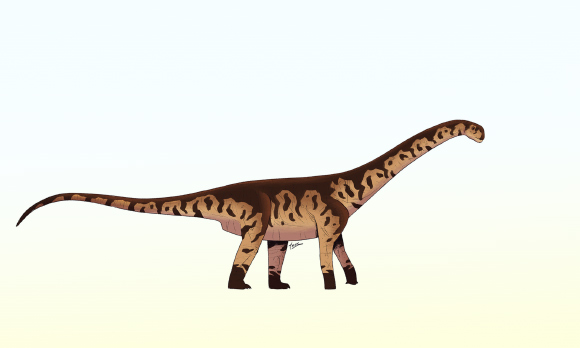
Cet étrange dinosaure géant pourrait changer ce que nous savons sur les titans du Jurassique
Argentine Jurassique fossile Bicharracosaurus Brachiosauria Brachiosauridae Dinosauria Diplodocia évolution
Un étrange nouveau dinosaure géant découvert en Argentine donne aux paléontologues un nouveau regard sur l'évolution des titans du Jurassique dans l'hémisphère sud. Bicharracosaurus dionidei s'étendait sur environ 20 mètres de long et présentait un étrange mélange de caractéristiques observées chez les parents du Diplodocus et du Brachiosaurus. Les scientifiques pensent qu’il pourrait s’agir du premier brachiosaure du Jurassique connu d’Amérique du Sud, contribuant ainsi à combler une lacune majeure dans les archives fossiles de dinosaures.
12/05/2026 sciencedaily ⚙ Traduction automatique
Une découverte étonnante de fossiles remet en question les origines de la vie animale
Brésil fossile découverte
Des scientifiques revisitant de mystérieux microfossiles brésiliens vieux de 540 millions d’années ont renversé une idée majeure sur les débuts de la vie animale. Ce que l’on pensait autrefois être des traces laissées par de minuscules créatures ressemblant à des vers sont maintenant considérées comme des communautés fossilisées de bactéries et d’algues – certaines avec des cellules remarquablement préservées et de la matière organique encore intacte.
12/05/2026 sciencedaily-paleo ⚙ Traduction automatique
New Species of Giant Long-Necked Dinosaur Identified in Argentina
Une nouvelle espèce de dinosaure géant à long cou identifiée en Argentine
Argentine fossile Dinosauria Macronaria nouvelle espèce
Les fossiles découverts dans un ranch isolé en Argentine appartiennent à un nouveau genre et à une nouvelle espèce de dinosaure sauropode macronaire, selon une équipe internationale de paléontologues dirigée par la Ludwig-Maximilians-Universität München. L'article Nouvelle espèce de dinosaure géant à long cou identifié en Argentine apparaît en premier sur Sci.News : Breaking Science News.
11/05/2026 sci-news ⚙ Traduction automatique
1 2 3 4 5 6 7 8 9 10 11 12 13 14 15 16 17 18 19 20 21 22 23 24 25 26 27 28 29 30 31 32 33 34 35 36 37 38 39 40 41 42 43