other reptiles

Theme

1 image(s) · 9 News

Image gallery

Identifier: waterreptilesofp1914will
Title: Water reptiles of the past and present
Year: 1914 (1910s)
Authors:  Williston, Samuel Wendell, 1851-1918
Subjects:  Aquatic reptiles
Publisher:  Chicago, Ill., The University of Chicago Press
Contributing Library:  Boston Public Library
Digitizing Sponsor:  Boston Public Library

View Book Page: Book Viewer
About This Book: Catalog Entry
View All Images: All Images From Book
Click here to view book online to see this illustration in context in a browseable online version of this book.

Text Appearing Before Image:
served and very complete skeletons ofdifferent species of ichthyosaurs from the Jurassic deposits ofWiirtemberg, in which remains of these animals occur in great 112 WATER REPTILES OF THE PAST AND PRESENT profusion. His researches, and those of several authors since then,supplementing and confirming or disproving those of the manyobservers made during the preceding seventy years, have finallydetermined almost perfectly the complete structure of the moretypical ichthyosaurs, enabling us to infer not a little as to theirhabits and distribution in the old Jurassic oceans. Within thepast few years the discoveries of Professor J. C. Merriam of Cali-fornia have likewise added greatly to our knowledge of the earlierichthyosaurs. It may now truthfully be said that of no group ofextinct reptiles do we have a more complete and satisfactory knowl-edge than of the ichthyosaurs. Nevertheless we have yet very much more to learn about theorder Ichthyosauria as a whole—whence they came and how they
Text Appearing After Image:
Fig. 52.—Ichthyosaurus quadricissus.museum, from Dr. Dreverman. Photograph of specimen in Senckenberg originated; what their nearest kin were among other reptiles; andespecially, more about the connecting links between them andterrestrial reptiles. They have, as an order, so isolated a position,are so widely separated from all other reptiles in structure, that theyhave long been a puzzle to paleontologists. Like the whales andother cetaceans among mammals, we know the ichthyosaurs wellin the plenitude of their power and the fulness of their development,but have yet only an imperfect knowledge of their earlier history,and none whatever of their earliest. However, as will be seenfarther on, the recent discoveries by Merriam have shed much lighton some of the stages of their evolution. So nearly perfectly wereall the later ichthyosaurs adapted to their life in the water that itwas believed by nearly all paleontologists until about a score of years ICHTHYOSAURIA 3 ago that they had desc

Note About Images

Please note that these images are extracted from scanned page images that may have been digitally enhanced for readability - coloration and appearance of these illustrations may not perfectly resemble the original work.
Taxa Stenopterygiidae

Identifier: waterreptilesofp1914will Title: Water reptiles of the past and present Year: 1914 (1910s) Authors: Williston, Samuel Wendell, 1851-1918 Subjects: Aquatic reptiles Publisher: Chicago, Ill., The University of Chicago Press Contributing Library: Boston Public Library Digitizing Sponsor: Boston Public Library View Book Page: Book Viewer About This Book: Catalog Entry View All Images: All Images From Book Click here to view book online to see this illustration in context in a browseable online version of this book. Text Appearing Before Image: served and very complete skeletons ofdifferent species of ichthyosaurs from the Jurassic deposits ofWiirtemberg, in which remains of these animals occur in great 112 WATER REPTILES OF THE PAST AND PRESENT profusion. His researches, and those of several authors since then,supplementing and confirming or disproving those of the manyobservers made during the preceding seventy years, have finallydetermined almost perfectly the complete structure of the moretypical ichthyosaurs, enabling us to infer not a little as to theirhabits and distribution in the old Jurassic oceans. Within thepast few years the discoveries of Professor J. C. Merriam of Cali-fornia have likewise added greatly to our knowledge of the earlierichthyosaurs. It may now truthfully be said that of no group ofextinct reptiles do we have a more complete and satisfactory knowl-edge than of the ichthyosaurs. Nevertheless we have yet very much more to learn about theorder Ichthyosauria as a whole—whence they came and how they Text Appearing After Image: Fig. 52.—Ichthyosaurus quadricissus.museum, from Dr. Dreverman. Photograph of specimen in Senckenberg originated; what their nearest kin were among other reptiles; andespecially, more about the connecting links between them andterrestrial reptiles. They have, as an order, so isolated a position,are so widely separated from all other reptiles in structure, that theyhave long been a puzzle to paleontologists. Like the whales andother cetaceans among mammals, we know the ichthyosaurs wellin the plenitude of their power and the fulness of their development,but have yet only an imperfect knowledge of their earlier history,and none whatever of their earliest. However, as will be seenfarther on, the recent discoveries by Merriam have shed much lighton some of the stages of their evolution. So nearly perfectly wereall the later ichthyosaurs adapted to their life in the water that itwas believed by nearly all paleontologists until about a score of years ICHTHYOSAURIA 3 ago that they had desc Note About Images Please note that these images are extracted from scanned page images that may have been digitally enhanced for readability - coloration and appearance of these illustrations may not perfectly resemble the original work.

book museum Jurassic specimen +7

News

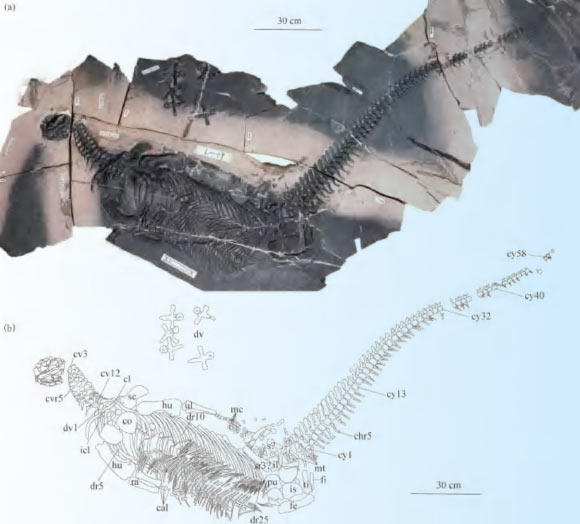
Spoon-Toothed, Short-Headed Marine Reptile Unearthed in China
tooth China Triassic Sauropterygia new species other reptiles skeleton
A new genus and species of sauropterygian reptile that lived during the Triassic period, some 245 million years ago, has been identified from a nearly complete skeleton found in China. The post Spoon-Toothed, Short-Headed Marine Reptile Unearthed in China appeared first on Sci.News: Breaking Science News.
20/08/2026 sci-news
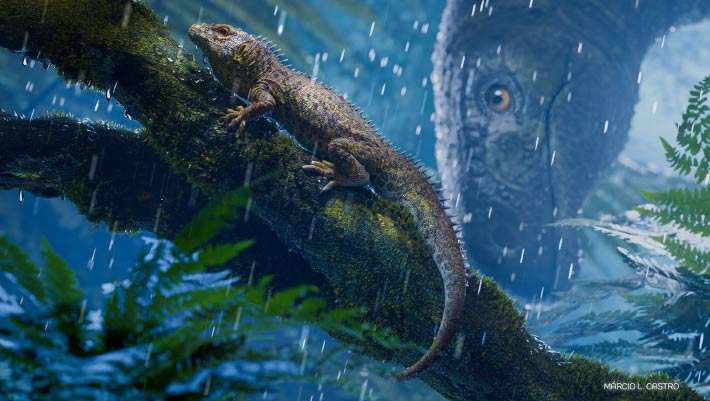
240-million-year-old reptile fossil reveals a lost chapter before dinosaurs and crocodiles
predator Brazil Triassic fossil Dinosauria evolution other reptiles
A 240-million-year-old reptile discovered in Brazil is revealing what evolution looked like just before the rise of dinosaurs and crocodiles. The small predator had unusually positioned legs that may have allowed it to move more efficiently than many earlier reptiles. Its close relatives were previously known mostly from other continents, suggesting these ancient animals spread much farther across the Triassic world than scientists realized.
10/08/2026 sciencedaily
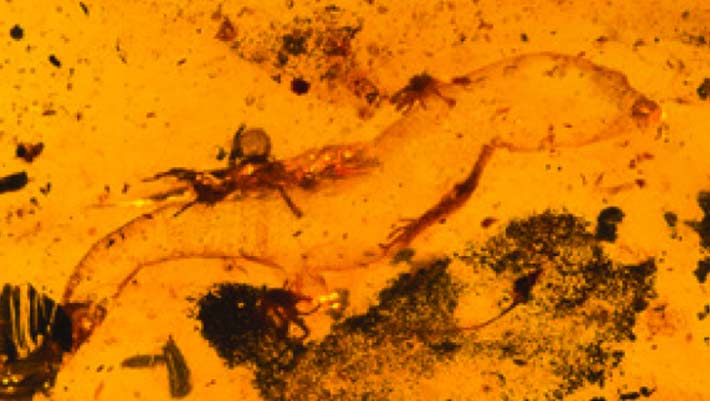
Oldest Known Male Gecko Found Preserved in Kachin Amber
Myanmar Cretaceous new species other reptiles
Paleontologists have described a new genus and species of ancient gecko found in two pieces of amber from the 99-million-year-old (mid-Cretaceous) amber deposits in Kachin province, Myanmar. The post Oldest Known Male Gecko Found Preserved in Kachin Amber appeared first on Sci.News: Breaking Science News.
20/07/2026 sci-news
Tiny Triassic Reptile Sheds Light on Early Lizard Evolution
New Zealand Triassic evolution other reptiles
Today, lepidosaurs -- the reptile group that includes lizards, snakes and New Zealand’s tuatara -- are among the most diverse vertebrates on Earth, but their earliest evolutionary history remains poorly understood. The post Tiny Triassic Reptile Sheds Light on Early Lizard Evolution appeared first on Sci.News: Breaking Science News.
10/07/2026 sci-news
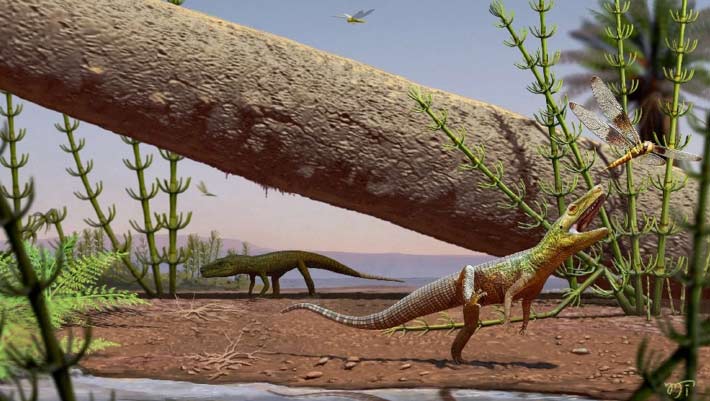
Distant Cousin of Crocodiles Stalked Brazil 240 Million Years Ago
Brazil Dinosauria other reptiles
Paleontologists working in Brazil have identified a previously unknown species of archosauriform that lived about 240 million years ago and may belong to a poorly understood group of ancient reptiles that closely resembled the ancestors of crocodiles and dinosaurs. The post Distant Cousin of Crocodiles Stalked Brazil 240 Million Years Ago appeared first on Sci.News: Breaking Science News.
26/06/2026 sci-news
1 2