←

oiseau

Thématique

18 image(s) · 32 Actualités

Galerie d'images

This diagram illustrates how scientists believe the dinosaur group theropoda shall be classed in a  phylogenetic tree, besides Sauropoda and Pterosauria. The main reason of this diagram is to show groups or families which had respiratory system like birds. AS in the diagram is abbreviations for "Airsacs", and ASW means "AirSacs supported by immobile femur and a knee-driven Walk". BL means "Bellow lungs". 
Airsacs are known in many different theropods, as well as in birds, which most scientists believe are descendants of dinosaurus. Air sacs are found in the primitive Tawa hallae,[1] the abelisaurid Majungasaurus,[2] as well as Allosauroids like Aerosteon.[3] There is also evidence for respiratory systems like penguinss in Deinonychosaurians.[4] The primitive bird Archaeopteryx also had airsacs (Bonde and Christiansen, 2000).
It is very likely that Deinonychosaurians had airsacs. We don't know  whether Deinonychosauria had a walking/breathing system with immobile thighbones, ASW (like birds) or movable thighbones. However, some people suggsest coeluosaurs had the same type of leg movement as birds ("kneedriven walking").[5]
Bellow lungs are lungs like our own, which alternately is filled with air, and thereafter emptied, after which you take a new breath. This type of lungs exist in mammals, most reptiles, and most amphibians (although some frogs get their oxygen through the skin). There is no evidence for airsacs in Ornithischia, so the likely had bellow lungs.
References.=

↑ (see the video at http://www.nsf.gov/news/special_reports/tawa/)

↑ (Claessens & O'connor, 2006).

↑ Alcober O.A, Sereno P.C, Larsson H.C.E et.al (2008), "Evidence for Avian Intrathoracic Air Sacs in a New Predatory Dinosaur from Argentina", Public Library of Science Journals.

↑ http://www.stumbleupon.com/su/20q5Z4/news.bbc.co.uk/2/hi/science/nature/7081166.stm

↑ http://www.geol.umd.edu/~tholtz/G104/lectures/104coelur.html.

This diagram illustrates how scientists believe the dinosaur group theropoda shall be classed in a phylogenetic tree, besides Sauropoda and Pterosauria. The main reason of this diagram is to show groups or families which had respiratory system like birds. AS in the diagram is abbreviations for "Airsacs", and ASW means "AirSacs supported by immobile femur and a knee-driven Walk". BL means "Bellow lungs". Airsacs are known in many different theropods, as well as in birds, which most scientists believe are descendants of dinosaurus. Air sacs are found in the primitive Tawa hallae,[1] the abelisaurid Majungasaurus,[2] as well as Allosauroids like Aerosteon.[3] There is also evidence for respiratory systems like penguinss in Deinonychosaurians.[4] The primitive bird Archaeopteryx also had airsacs (Bonde and Christiansen, 2000). It is very likely that Deinonychosaurians had airsacs. We don't know whether Deinonychosauria had a walking/breathing system with immobile thighbones, ASW (like birds) or movable thighbones. However, some people suggsest coeluosaurs had the same type of leg movement as birds ("kneedriven walking").[5] Bellow lungs are lungs like our own, which alternately is filled with air, and thereafter emptied, after which you take a new breath. This type of lungs exist in mammals, most reptiles, and most amphibians (although some frogs get their oxygen through the skin). There is no evidence for airsacs in Ornithischia, so the likely had bellow lungs. References.= ↑ (see the video at http://www.nsf.gov/news/special_reports/tawa/) ↑ (Claessens & O'connor, 2006). ↑ Alcober O.A, Sereno P.C, Larsson H.C.E et.al (2008), "Evidence for Avian Intrathoracic Air Sacs in a New Predatory Dinosaur from Argentina", Public Library of Science Journals. ↑ http://www.stumbleupon.com/su/20q5Z4/news.bbc.co.uk/2/hi/science/nature/7081166.stm ↑ http://www.geol.umd.edu/~tholtz/G104/lectures/104coelur.html.

Abelisauridae Aerosteon Archaeopteryx Deinonychosauria +7
Representative taxa from the latest Campanian–Maastrichtian faunas from Transylvania, western Romania. A–B Nidophis insularis (Serpentes, Madtsoiidae), articulated vertebrae (LPB (FGGUB) v.547/2) in left lateral (A) and dorsal (B) views (Densuş-Ciula Formation, Tuştea, Haţeg Basin; photo by Ştefan Vasile) C Allodaposuchus precedens (Eusuchia, ?Hylaeochampsidae), skull (PSMUBB V 438) in dorsal view (Sebeş = Şard Formation, Oarda de Jos, southwestern Transylvanian Basin; photo by Vlad Codrea/Massimo Delfino) D Theriosuchus sympiestodon (Mesoeucrocodylia, Atoposauridae), right maxilla (MCDRD 793) in lateral view (Sînpetru Formation, Sînpetru, Haţeg Basin) E–F Indeterminate titanosaur (?Magyarosaurus dacus) (Sauropoda, Titanosauria), isolated osteoderm (LPB (FGGUB) R.1410) in dorsal (E) and lateral (F) views (Sînpetru Formation, Sînpetru, Haţeg Basin) G Indeterminate ornithuran bird (Aves, Ornithurae), incomplete left tibiotarsus (LPB (FGGUB) R.1902) in anterior view (Densuş-Ciula Formation, Vălioara, Haţeg Basin) H Balaur bondoc (Theropoda, Dromaeosauridae), articulated left distal hindlimb (EME PV.313) in lateral view (Sebeş = Şard Formation, Sebeş-Glod, southewestern Transylvanian Basin; photo by Mick Ellison) I Zalmoxes robustus (Ornithopoda, Rhabdodontidae), right dentary (NHMUK R.3407) in medial view (Sînpetru Formation, Sînpetru, Haţeg Basin) J Telmatosaurus transsylvanicus (Hadrosauria), right maxilla (MFGI unnumbered) in lateral view (Sînpetru Formation, Sînpetru, Haţeg Basin) K Indeterminate nodosaurid – Struthiosaurus transylvanicus or new taxon – (Ankylosauria, Nodosauridae), isolated tooth (LPB (FGGUB) R.2182) in medial view (Sînpetru Formation, Sînpetru, Haţeg Basin) L Barbatodon transylvanicus (Multituberculata, Kogaionidae), right maxilla (LPB (FGGUB) M.1635) in medial view (Sînpetru Formation, Pui, Haţeg Basin). Scale bars equal 1 mm in A, B; 5 mm in K; 1 cm in G, L; 2 cm in D; and 5 cm in C, E, F, H, I, J.

Representative taxa from the latest Campanian–Maastrichtian faunas from Transylvania, western Romania. A–B Nidophis insularis (Serpentes, Madtsoiidae), articulated vertebrae (LPB (FGGUB) v.547/2) in left lateral (A) and dorsal (B) views (Densuş-Ciula Formation, Tuştea, Haţeg Basin; photo by Ştefan Vasile) C Allodaposuchus precedens (Eusuchia, ?Hylaeochampsidae), skull (PSMUBB V 438) in dorsal view (Sebeş = Şard Formation, Oarda de Jos, southwestern Transylvanian Basin; photo by Vlad Codrea/Massimo Delfino) D Theriosuchus sympiestodon (Mesoeucrocodylia, Atoposauridae), right maxilla (MCDRD 793) in lateral view (Sînpetru Formation, Sînpetru, Haţeg Basin) E–F Indeterminate titanosaur (?Magyarosaurus dacus) (Sauropoda, Titanosauria), isolated osteoderm (LPB (FGGUB) R.1410) in dorsal (E) and lateral (F) views (Sînpetru Formation, Sînpetru, Haţeg Basin) G Indeterminate ornithuran bird (Aves, Ornithurae), incomplete left tibiotarsus (LPB (FGGUB) R.1902) in anterior view (Densuş-Ciula Formation, Vălioara, Haţeg Basin) H Balaur bondoc (Theropoda, Dromaeosauridae), articulated left distal hindlimb (EME PV.313) in lateral view (Sebeş = Şard Formation, Sebeş-Glod, southewestern Transylvanian Basin; photo by Mick Ellison) I Zalmoxes robustus (Ornithopoda, Rhabdodontidae), right dentary (NHMUK R.3407) in medial view (Sînpetru Formation, Sînpetru, Haţeg Basin) J Telmatosaurus transsylvanicus (Hadrosauria), right maxilla (MFGI unnumbered) in lateral view (Sînpetru Formation, Sînpetru, Haţeg Basin) K Indeterminate nodosaurid – Struthiosaurus transylvanicus or new taxon – (Ankylosauria, Nodosauridae), isolated tooth (LPB (FGGUB) R.2182) in medial view (Sînpetru Formation, Sînpetru, Haţeg Basin) L Barbatodon transylvanicus (Multituberculata, Kogaionidae), right maxilla (LPB (FGGUB) M.1635) in medial view (Sînpetru Formation, Pui, Haţeg Basin). Scale bars equal 1 mm in A, B; 5 mm in K; 1 cm in G, L; 2 cm in D; and 5 cm in C, E, F, H, I, J.

Roumanie Densuş-Ciula Sebeş Sînpetru +9
The Naturmuseum Senckenberg in Frankfurt is the second largest museum of natural history in Germany. It is particularly popular with children, who enjoy the extensive collection of dinosaur skeletons: Senckenberg boasts the largest exhibition of large dinosaurs in Europe. One particular treasure is a dinosaur fossil with unique, preserved scaled skin. The museum contains the world's largest and most diverse collection of stuffed birds with about 2000 specimens.

The Naturmuseum Senckenberg in Frankfurt is the second largest museum of natural history in Germany. It is particularly popular with children, who enjoy the extensive collection of dinosaur skeletons: Senckenberg boasts the largest exhibition of large dinosaurs in Europe. One particular treasure is a dinosaur fossil with unique, preserved scaled skin. The museum contains the world's largest and most diverse collection of stuffed birds with about 2000 specimens.

musée Allemagne fossile spécimen +4
Coelophysis bauri (Cope, 1887) theropod dinosaur from the Triassic of New Mexico, USA.
This is a remarkable complete skeleton of the small early theropod Coelophysis.  It comes from a nearly monospecific concentration of numerous complete to disarticulated skeletons in reddish-colored fluvial siltstones, often called a "Coelophysis graveyard".  This occurrence has been interpreted as a carcass-jammed channel filling following mass mortality of dinosaurs by regional drought (see Schwartz & Gillette, 1994).
Stratigraphy: Rock Point Member, Chinle Formation, Upper Triassic
Locality: Whitaker Quarry (Coelophysis Quarry), Ghost Ranch, Rio Arriba County, northern New Mexico, USA


Some info. from:
Hunt, A.P. & S.G. Lucas.  1991.  Rioarribasaurus, a new name for a Late Triassic dinosaur from New Mexico (USA).  Paläontologische Zeitschrift  65: 191-198.
Schwartz, H.L. & D.D. Gillette.  1994.  Geology and taphonomy of the Coelophysis Quarry, Upper Triassic Chinle Formation, Ghost Ranch, New Mexico.  Journal of Paleontology 68: 1118-1130.


Theropod were small to large, bipedal dinosaurs.  Almost all known members of the group were carnivorous (predators and/or scavengers).  They represent the ancestral group to the birds, and some theropods are known to have had feathers.  Some of the most well known dinosaurs to the general public are theropods, such as Tyrannosaurus, Allosaurus, and Spinosaurus.
Taxons Coelophysis

Coelophysis bauri (Cope, 1887) theropod dinosaur from the Triassic of New Mexico, USA. This is a remarkable complete skeleton of the small early theropod Coelophysis. It comes from a nearly monospecific concentration of numerous complete to disarticulated skeletons in reddish-colored fluvial siltstones, often called a "Coelophysis graveyard". This occurrence has been interpreted as a carcass-jammed channel filling following mass mortality of dinosaurs by regional drought (see Schwartz & Gillette, 1994). Stratigraphy: Rock Point Member, Chinle Formation, Upper Triassic Locality: Whitaker Quarry (Coelophysis Quarry), Ghost Ranch, Rio Arriba County, northern New Mexico, USA Some info. from: Hunt, A.P. & S.G. Lucas. 1991. Rioarribasaurus, a new name for a Late Triassic dinosaur from New Mexico (USA). Paläontologische Zeitschrift 65: 191-198. Schwartz, H.L. & D.D. Gillette. 1994. Geology and taphonomy of the Coelophysis Quarry, Upper Triassic Chinle Formation, Ghost Ranch, New Mexico. Journal of Paleontology 68: 1118-1130. Theropod were small to large, bipedal dinosaurs. Almost all known members of the group were carnivorous (predators and/or scavengers). They represent the ancestral group to the birds, and some theropods are known to have had feathers. Some of the most well known dinosaurs to the general public are theropods, such as Tyrannosaurus, Allosaurus, and Spinosaurus.

plume prédateur Mexique États-Unis +18
Coelophysis bauri (Cope, 1887) theropod dinosaur from the Triassic of New Mexico, USA.
This is a remarkable complete skeleton of the small early theropod Coelophysis.  It comes from a nearly monospecific concentration of numerous complete to disarticulated skeletons in reddish-colored fluvial siltstones, often called a "Coelophysis graveyard".  This occurrence has been interpreted as a carcass-jammed channel filling following mass mortality of dinosaurs by regional drought (see Schwartz & Gillette, 1994).
Stratigraphy: Rock Point Member, Chinle Formation, Upper Triassic
Locality: Whitaker Quarry (Coelophysis Quarry), Ghost Ranch, Rio Arriba County, northern New Mexico, USA


Some info. from:
Hunt, A.P. & S.G. Lucas.  1991.  Rioarribasaurus, a new name for a Late Triassic dinosaur from New Mexico (USA).  Paläontologische Zeitschrift  65: 191-198.
Schwartz, H.L. & D.D. Gillette.  1994.  Geology and taphonomy of the Coelophysis Quarry, Upper Triassic Chinle Formation, Ghost Ranch, New Mexico.  Journal of Paleontology 68: 1118-1130.


Theropod were small to large, bipedal dinosaurs.  Almost all known members of the group were carnivorous (predators and/or scavengers).  They represent the ancestral group to the birds, and some theropods are known to have had feathers.  Some of the most well known dinosaurs to the general public are theropods, such as Tyrannosaurus, Allosaurus, and Spinosaurus.
Taxons Coelophysoidea

Coelophysis bauri (Cope, 1887) theropod dinosaur from the Triassic of New Mexico, USA. This is a remarkable complete skeleton of the small early theropod Coelophysis. It comes from a nearly monospecific concentration of numerous complete to disarticulated skeletons in reddish-colored fluvial siltstones, often called a "Coelophysis graveyard". This occurrence has been interpreted as a carcass-jammed channel filling following mass mortality of dinosaurs by regional drought (see Schwartz & Gillette, 1994). Stratigraphy: Rock Point Member, Chinle Formation, Upper Triassic Locality: Whitaker Quarry (Coelophysis Quarry), Ghost Ranch, Rio Arriba County, northern New Mexico, USA Some info. from: Hunt, A.P. & S.G. Lucas. 1991. Rioarribasaurus, a new name for a Late Triassic dinosaur from New Mexico (USA). Paläontologische Zeitschrift 65: 191-198. Schwartz, H.L. & D.D. Gillette. 1994. Geology and taphonomy of the Coelophysis Quarry, Upper Triassic Chinle Formation, Ghost Ranch, New Mexico. Journal of Paleontology 68: 1118-1130. Theropod were small to large, bipedal dinosaurs. Almost all known members of the group were carnivorous (predators and/or scavengers). They represent the ancestral group to the birds, and some theropods are known to have had feathers. Some of the most well known dinosaurs to the general public are theropods, such as Tyrannosaurus, Allosaurus, and Spinosaurus.

plume prédateur Mexique États-Unis +18
Coelophysis bauri (Cope, 1887) theropod dinosaur from the Triassic of New Mexico, USA.
This is a remarkable complete skeleton of the small early theropod Coelophysis.  It comes from a nearly monospecific concentration of numerous complete to disarticulated skeletons in reddish-colored fluvial siltstones, often called a "Coelophysis graveyard".  This occurrence has been interpreted as a carcass-jammed channel filling following mass mortality of dinosaurs by regional drought (see Schwartz & Gillette, 1994).
Stratigraphy: Rock Point Member, Chinle Formation, Upper Triassic
Locality: Whitaker Quarry (Coelophysis Quarry), Ghost Ranch, Rio Arriba County, northern New Mexico, USA


Some info. from:
Hunt, A.P. & S.G. Lucas.  1991.  Rioarribasaurus, a new name for a Late Triassic dinosaur from New Mexico (USA).  Paläontologische Zeitschrift  65: 191-198.
Schwartz, H.L. & D.D. Gillette.  1994.  Geology and taphonomy of the Coelophysis Quarry, Upper Triassic Chinle Formation, Ghost Ranch, New Mexico.  Journal of Paleontology 68: 1118-1130.


Theropod were small to large, bipedal dinosaurs.  Almost all known members of the group were carnivorous (predators and/or scavengers).  They represent the ancestral group to the birds, and some theropods are known to have had feathers.  Some of the most well known dinosaurs to the general public are theropods, such as Tyrannosaurus, Allosaurus, and Spinosaurus.
Taxons Coelophysidae

Coelophysis bauri (Cope, 1887) theropod dinosaur from the Triassic of New Mexico, USA. This is a remarkable complete skeleton of the small early theropod Coelophysis. It comes from a nearly monospecific concentration of numerous complete to disarticulated skeletons in reddish-colored fluvial siltstones, often called a "Coelophysis graveyard". This occurrence has been interpreted as a carcass-jammed channel filling following mass mortality of dinosaurs by regional drought (see Schwartz & Gillette, 1994). Stratigraphy: Rock Point Member, Chinle Formation, Upper Triassic Locality: Whitaker Quarry (Coelophysis Quarry), Ghost Ranch, Rio Arriba County, northern New Mexico, USA Some info. from: Hunt, A.P. & S.G. Lucas. 1991. Rioarribasaurus, a new name for a Late Triassic dinosaur from New Mexico (USA). Paläontologische Zeitschrift 65: 191-198. Schwartz, H.L. & D.D. Gillette. 1994. Geology and taphonomy of the Coelophysis Quarry, Upper Triassic Chinle Formation, Ghost Ranch, New Mexico. Journal of Paleontology 68: 1118-1130. Theropod were small to large, bipedal dinosaurs. Almost all known members of the group were carnivorous (predators and/or scavengers). They represent the ancestral group to the birds, and some theropods are known to have had feathers. Some of the most well known dinosaurs to the general public are theropods, such as Tyrannosaurus, Allosaurus, and Spinosaurus.

plume prédateur Mexique États-Unis +18
Coelophysis bauri (Cope, 1887) theropod dinosaur from the Triassic of New Mexico, USA.
This is a remarkable complete skeleton of the small early theropod Coelophysis.  It comes from a nearly monospecific concentration of numerous complete to disarticulated skeletons in reddish-colored fluvial siltstones, often called a "Coelophysis graveyard".  This occurrence has been interpreted as a carcass-jammed channel filling following mass mortality of dinosaurs by regional drought (see Schwartz & Gillette, 1994).
Stratigraphy: Rock Point Member, Chinle Formation, Upper Triassic
Locality: Whitaker Quarry (Coelophysis Quarry), Ghost Ranch, Rio Arriba County, northern New Mexico, USA


Some info. from:
Hunt, A.P. & S.G. Lucas.  1991.  Rioarribasaurus, a new name for a Late Triassic dinosaur from New Mexico (USA).  Paläontologische Zeitschrift  65: 191-198.
Schwartz, H.L. & D.D. Gillette.  1994.  Geology and taphonomy of the Coelophysis Quarry, Upper Triassic Chinle Formation, Ghost Ranch, New Mexico.  Journal of Paleontology 68: 1118-1130.


Theropod were small to large, bipedal dinosaurs.  Almost all known members of the group were carnivorous (predators and/or scavengers).  They represent the ancestral group to the birds, and some theropods are known to have had feathers.  Some of the most well known dinosaurs to the general public are theropods, such as Tyrannosaurus, Allosaurus, and Spinosaurus.
Taxons Coelophysinae

Coelophysis bauri (Cope, 1887) theropod dinosaur from the Triassic of New Mexico, USA. This is a remarkable complete skeleton of the small early theropod Coelophysis. It comes from a nearly monospecific concentration of numerous complete to disarticulated skeletons in reddish-colored fluvial siltstones, often called a "Coelophysis graveyard". This occurrence has been interpreted as a carcass-jammed channel filling following mass mortality of dinosaurs by regional drought (see Schwartz & Gillette, 1994). Stratigraphy: Rock Point Member, Chinle Formation, Upper Triassic Locality: Whitaker Quarry (Coelophysis Quarry), Ghost Ranch, Rio Arriba County, northern New Mexico, USA Some info. from: Hunt, A.P. & S.G. Lucas. 1991. Rioarribasaurus, a new name for a Late Triassic dinosaur from New Mexico (USA). Paläontologische Zeitschrift 65: 191-198. Schwartz, H.L. & D.D. Gillette. 1994. Geology and taphonomy of the Coelophysis Quarry, Upper Triassic Chinle Formation, Ghost Ranch, New Mexico. Journal of Paleontology 68: 1118-1130. Theropod were small to large, bipedal dinosaurs. Almost all known members of the group were carnivorous (predators and/or scavengers). They represent the ancestral group to the birds, and some theropods are known to have had feathers. Some of the most well known dinosaurs to the general public are theropods, such as Tyrannosaurus, Allosaurus, and Spinosaurus.

plume prédateur Mexique États-Unis +18
Coelophysis bauri (Cope, 1887) theropod dinosaur from the Triassic of New Mexico, USA.
This is a remarkable complete skeleton of the small early theropod Coelophysis.  It comes from a nearly monospecific concentration of numerous complete to disarticulated skeletons in reddish-colored fluvial siltstones, often called a "Coelophysis graveyard".  This occurrence has been interpreted as a carcass-jammed channel filling following mass mortality of dinosaurs by regional drought (see Schwartz & Gillette, 1994).
Stratigraphy: Rock Point Member, Chinle Formation, Upper Triassic
Locality: Whitaker Quarry (Coelophysis Quarry), Ghost Ranch, Rio Arriba County, northern New Mexico, USA


Some info. from:
Hunt, A.P. & S.G. Lucas.  1991.  Rioarribasaurus, a new name for a Late Triassic dinosaur from New Mexico (USA).  Paläontologische Zeitschrift  65: 191-198.
Schwartz, H.L. & D.D. Gillette.  1994.  Geology and taphonomy of the Coelophysis Quarry, Upper Triassic Chinle Formation, Ghost Ranch, New Mexico.  Journal of Paleontology 68: 1118-1130.


Theropod were small to large, bipedal dinosaurs.  Almost all known members of the group were carnivorous (predators and/or scavengers).  They represent the ancestral group to the birds, and some theropods are known to have had feathers.  Some of the most well known dinosaurs to the general public are theropods, such as Tyrannosaurus, Allosaurus, and Spinosaurus.
Taxons Podokesaurinae

Coelophysis bauri (Cope, 1887) theropod dinosaur from the Triassic of New Mexico, USA. This is a remarkable complete skeleton of the small early theropod Coelophysis. It comes from a nearly monospecific concentration of numerous complete to disarticulated skeletons in reddish-colored fluvial siltstones, often called a "Coelophysis graveyard". This occurrence has been interpreted as a carcass-jammed channel filling following mass mortality of dinosaurs by regional drought (see Schwartz & Gillette, 1994). Stratigraphy: Rock Point Member, Chinle Formation, Upper Triassic Locality: Whitaker Quarry (Coelophysis Quarry), Ghost Ranch, Rio Arriba County, northern New Mexico, USA Some info. from: Hunt, A.P. & S.G. Lucas. 1991. Rioarribasaurus, a new name for a Late Triassic dinosaur from New Mexico (USA). Paläontologische Zeitschrift 65: 191-198. Schwartz, H.L. & D.D. Gillette. 1994. Geology and taphonomy of the Coelophysis Quarry, Upper Triassic Chinle Formation, Ghost Ranch, New Mexico. Journal of Paleontology 68: 1118-1130. Theropod were small to large, bipedal dinosaurs. Almost all known members of the group were carnivorous (predators and/or scavengers). They represent the ancestral group to the birds, and some theropods are known to have had feathers. Some of the most well known dinosaurs to the general public are theropods, such as Tyrannosaurus, Allosaurus, and Spinosaurus.

plume prédateur Mexique États-Unis +18
1 2

Actualités

Exceptionally Preserved Bird Feathers Found in 66-Million-Year-Old Dinosaur Coprolite
Des plumes d'oiseaux exceptionnellement préservées trouvées dans du coprolite de dinosaure vieux de 66 millions d'années
plume Dinosauria oiseau
Des paléontologues du Montana ont découvert des plumes remarquablement préservées d'un ancien oiseau aquatique à l'intérieur d'une chute de dinosaure fossilisée, offrant ainsi un aperçu rare de la raison pour laquelle certains oiseaux ont survécu à l'impact d'un astéroïde qui a anéanti les dinosaures il y a 66 millions d'années. L'article Des plumes d'oiseaux exceptionnellement préservées trouvées dans un coprolite de dinosaure vieux de 66 millions d'années est apparu en premier sur Sci.News : Breaking Science News.
10/09/2026 sci-news ⚙ Traduction automatique
« Il y avait tellement de proies disponibles » : ce crocodilien géant dominait ce monde perdu il y a 10 millions d’années
dent prédateur proie oiseau mammifères étude
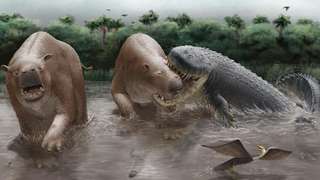
Il y a plus de 10 millions d’années, l’Amérique du Sud abritait un écosystème peuplé de prédateurs impressionnants. Mammifères à dents de sabre, anacondas ou encore « oiseaux-terreur » se partageaient le territoire. Mais une nouvelle étude révèle que certains reptiles occupaient une place encore...
18/08/2026 futura-terre
Archaeopteryx Took Off with Series of Hops, Not One Big Leap: Study
L'archéoptéryx a décollé avec une série de sauts, pas un seul grand bond : étude
Archaeopteryx biomécanique oiseau étude
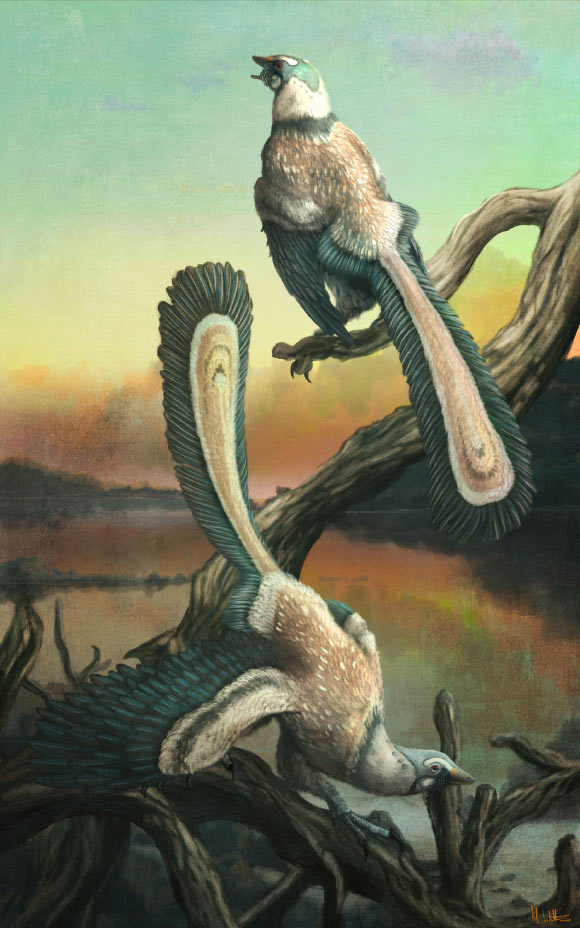
Selon une nouvelle étude biomécanique publiée dans la revue Developmental Biology, l'archéoptéryx - le tout premier oiseau à habiter la Terre - aurait pu sauter dans les airs, plutôt que de se lancer avec le seul et puissant saut utilisé par les oiseaux modernes. L'article Archaeopteryx a décollé avec une série de houblons, pas un grand saut : étude est apparu en premier sur Sci.News : Breaking Science News.
17/08/2026 sci-news ⚙ Traduction automatique
Des gravures sur coquilles d'œufs d'autruche vieilles de 60 000 ans révèlent un esprit humain étonnamment sophistiqué
comportement oiseau Homo sapiens
Il y a plus de 60 000 ans, les humains d’Afrique australe gravaient des coquilles d’œufs d’autruche avec des motifs géométriques complexes qui semblent beaucoup plus organisés qu’on ne le pensait auparavant. Les chercheurs ont découvert des grilles récurrentes, des lignes parallèles, des angles droits et des formes répétées, suggérant que les conceptions suivaient des règles délibérées plutôt que d’être improvisées. Les graveurs peuvent même avoir planifié des motifs entiers dans leur esprit avant de les sculpter.
09/08/2026 sciencedaily-fossils ⚙ Traduction automatique
L’oiseau dodo possédait un monde sensoriel secret que les scientifiques découvrent seulement maintenant
oiseau tomographie découverte crâne
Les tomodensitogrammes des crânes de dodo les plus rares au monde suggèrent que l'oiseau disparu aurait pu avoir un odorat plus fort, un bec très sensible et un mode de vie qui s'étendait jusqu'à l'aube et au crépuscule. Ces découvertes contribuent à renverser des mythes vieux de plusieurs siècles et à révéler un animal bien plus complexe que le fameux dodo « stupide » de l’imagination populaire.
09/08/2026 sciencedaily-paleo ⚙ Traduction automatique
1 2 3 4 5 6 7