←

oiseau

Thématique

18 image(s) · 32 Actualités

Galerie d'images

This diagram illustrates how scientists believe the dinosaur group theropoda shall be classed in a  phylogenetic tree, besides Sauropoda and Pterosauria. The main reason of this diagram is to show groups or families which had respiratory system like birds. AS in the diagram is abbreviations for "Airsacs", and ASW means "AirSacs supported by immobile femur and a knee-driven Walk". BL means "Bellow lungs". 
Airsacs are known in many different theropods, as well as in birds, which most scientists believe are descendants of dinosaurus. Air sacs are found in the primitive Tawa hallae,[1] the abelisaurid Majungasaurus,[2] as well as Allosauroids like Aerosteon.[3] There is also evidence for respiratory systems like penguinss in Deinonychosaurians.[4] The primitive bird Archaeopteryx also had airsacs (Bonde and Christiansen, 2000).
It is very likely that Deinonychosaurians had airsacs. We don't know  whether Deinonychosauria had a walking/breathing system with immobile thighbones, ASW (like birds) or movable thighbones. However, some people suggsest coeluosaurs had the same type of leg movement as birds ("kneedriven walking").[5]
Bellow lungs are lungs like our own, which alternately is filled with air, and thereafter emptied, after which you take a new breath. This type of lungs exist in mammals, most reptiles, and most amphibians (although some frogs get their oxygen through the skin). There is no evidence for airsacs in Ornithischia, so the likely had bellow lungs.
References.=

↑ (see the video at http://www.nsf.gov/news/special_reports/tawa/)

↑ (Claessens & O'connor, 2006).

↑ Alcober O.A, Sereno P.C, Larsson H.C.E et.al (2008), "Evidence for Avian Intrathoracic Air Sacs in a New Predatory Dinosaur from Argentina", Public Library of Science Journals.

↑ http://www.stumbleupon.com/su/20q5Z4/news.bbc.co.uk/2/hi/science/nature/7081166.stm

↑ http://www.geol.umd.edu/~tholtz/G104/lectures/104coelur.html.

This diagram illustrates how scientists believe the dinosaur group theropoda shall be classed in a phylogenetic tree, besides Sauropoda and Pterosauria. The main reason of this diagram is to show groups or families which had respiratory system like birds. AS in the diagram is abbreviations for "Airsacs", and ASW means "AirSacs supported by immobile femur and a knee-driven Walk". BL means "Bellow lungs". Airsacs are known in many different theropods, as well as in birds, which most scientists believe are descendants of dinosaurus. Air sacs are found in the primitive Tawa hallae,[1] the abelisaurid Majungasaurus,[2] as well as Allosauroids like Aerosteon.[3] There is also evidence for respiratory systems like penguinss in Deinonychosaurians.[4] The primitive bird Archaeopteryx also had airsacs (Bonde and Christiansen, 2000). It is very likely that Deinonychosaurians had airsacs. We don't know whether Deinonychosauria had a walking/breathing system with immobile thighbones, ASW (like birds) or movable thighbones. However, some people suggsest coeluosaurs had the same type of leg movement as birds ("kneedriven walking").[5] Bellow lungs are lungs like our own, which alternately is filled with air, and thereafter emptied, after which you take a new breath. This type of lungs exist in mammals, most reptiles, and most amphibians (although some frogs get their oxygen through the skin). There is no evidence for airsacs in Ornithischia, so the likely had bellow lungs. References.= ↑ (see the video at http://www.nsf.gov/news/special_reports/tawa/) ↑ (Claessens & O'connor, 2006). ↑ Alcober O.A, Sereno P.C, Larsson H.C.E et.al (2008), "Evidence for Avian Intrathoracic Air Sacs in a New Predatory Dinosaur from Argentina", Public Library of Science Journals. ↑ http://www.stumbleupon.com/su/20q5Z4/news.bbc.co.uk/2/hi/science/nature/7081166.stm ↑ http://www.geol.umd.edu/~tholtz/G104/lectures/104coelur.html.

Abelisauridae Aerosteon Archaeopteryx Deinonychosauria +7
Representative taxa from the latest Campanian–Maastrichtian faunas from Transylvania, western Romania. A–B Nidophis insularis (Serpentes, Madtsoiidae), articulated vertebrae (LPB (FGGUB) v.547/2) in left lateral (A) and dorsal (B) views (Densuş-Ciula Formation, Tuştea, Haţeg Basin; photo by Ştefan Vasile) C Allodaposuchus precedens (Eusuchia, ?Hylaeochampsidae), skull (PSMUBB V 438) in dorsal view (Sebeş = Şard Formation, Oarda de Jos, southwestern Transylvanian Basin; photo by Vlad Codrea/Massimo Delfino) D Theriosuchus sympiestodon (Mesoeucrocodylia, Atoposauridae), right maxilla (MCDRD 793) in lateral view (Sînpetru Formation, Sînpetru, Haţeg Basin) E–F Indeterminate titanosaur (?Magyarosaurus dacus) (Sauropoda, Titanosauria), isolated osteoderm (LPB (FGGUB) R.1410) in dorsal (E) and lateral (F) views (Sînpetru Formation, Sînpetru, Haţeg Basin) G Indeterminate ornithuran bird (Aves, Ornithurae), incomplete left tibiotarsus (LPB (FGGUB) R.1902) in anterior view (Densuş-Ciula Formation, Vălioara, Haţeg Basin) H Balaur bondoc (Theropoda, Dromaeosauridae), articulated left distal hindlimb (EME PV.313) in lateral view (Sebeş = Şard Formation, Sebeş-Glod, southewestern Transylvanian Basin; photo by Mick Ellison) I Zalmoxes robustus (Ornithopoda, Rhabdodontidae), right dentary (NHMUK R.3407) in medial view (Sînpetru Formation, Sînpetru, Haţeg Basin) J Telmatosaurus transsylvanicus (Hadrosauria), right maxilla (MFGI unnumbered) in lateral view (Sînpetru Formation, Sînpetru, Haţeg Basin) K Indeterminate nodosaurid – Struthiosaurus transylvanicus or new taxon – (Ankylosauria, Nodosauridae), isolated tooth (LPB (FGGUB) R.2182) in medial view (Sînpetru Formation, Sînpetru, Haţeg Basin) L Barbatodon transylvanicus (Multituberculata, Kogaionidae), right maxilla (LPB (FGGUB) M.1635) in medial view (Sînpetru Formation, Pui, Haţeg Basin). Scale bars equal 1 mm in A, B; 5 mm in K; 1 cm in G, L; 2 cm in D; and 5 cm in C, E, F, H, I, J.

Representative taxa from the latest Campanian–Maastrichtian faunas from Transylvania, western Romania. A–B Nidophis insularis (Serpentes, Madtsoiidae), articulated vertebrae (LPB (FGGUB) v.547/2) in left lateral (A) and dorsal (B) views (Densuş-Ciula Formation, Tuştea, Haţeg Basin; photo by Ştefan Vasile) C Allodaposuchus precedens (Eusuchia, ?Hylaeochampsidae), skull (PSMUBB V 438) in dorsal view (Sebeş = Şard Formation, Oarda de Jos, southwestern Transylvanian Basin; photo by Vlad Codrea/Massimo Delfino) D Theriosuchus sympiestodon (Mesoeucrocodylia, Atoposauridae), right maxilla (MCDRD 793) in lateral view (Sînpetru Formation, Sînpetru, Haţeg Basin) E–F Indeterminate titanosaur (?Magyarosaurus dacus) (Sauropoda, Titanosauria), isolated osteoderm (LPB (FGGUB) R.1410) in dorsal (E) and lateral (F) views (Sînpetru Formation, Sînpetru, Haţeg Basin) G Indeterminate ornithuran bird (Aves, Ornithurae), incomplete left tibiotarsus (LPB (FGGUB) R.1902) in anterior view (Densuş-Ciula Formation, Vălioara, Haţeg Basin) H Balaur bondoc (Theropoda, Dromaeosauridae), articulated left distal hindlimb (EME PV.313) in lateral view (Sebeş = Şard Formation, Sebeş-Glod, southewestern Transylvanian Basin; photo by Mick Ellison) I Zalmoxes robustus (Ornithopoda, Rhabdodontidae), right dentary (NHMUK R.3407) in medial view (Sînpetru Formation, Sînpetru, Haţeg Basin) J Telmatosaurus transsylvanicus (Hadrosauria), right maxilla (MFGI unnumbered) in lateral view (Sînpetru Formation, Sînpetru, Haţeg Basin) K Indeterminate nodosaurid – Struthiosaurus transylvanicus or new taxon – (Ankylosauria, Nodosauridae), isolated tooth (LPB (FGGUB) R.2182) in medial view (Sînpetru Formation, Sînpetru, Haţeg Basin) L Barbatodon transylvanicus (Multituberculata, Kogaionidae), right maxilla (LPB (FGGUB) M.1635) in medial view (Sînpetru Formation, Pui, Haţeg Basin). Scale bars equal 1 mm in A, B; 5 mm in K; 1 cm in G, L; 2 cm in D; and 5 cm in C, E, F, H, I, J.

Roumanie Densuş-Ciula Sebeş Sînpetru +9
The Naturmuseum Senckenberg in Frankfurt is the second largest museum of natural history in Germany. It is particularly popular with children, who enjoy the extensive collection of dinosaur skeletons: Senckenberg boasts the largest exhibition of large dinosaurs in Europe. One particular treasure is a dinosaur fossil with unique, preserved scaled skin. The museum contains the world's largest and most diverse collection of stuffed birds with about 2000 specimens.

The Naturmuseum Senckenberg in Frankfurt is the second largest museum of natural history in Germany. It is particularly popular with children, who enjoy the extensive collection of dinosaur skeletons: Senckenberg boasts the largest exhibition of large dinosaurs in Europe. One particular treasure is a dinosaur fossil with unique, preserved scaled skin. The museum contains the world's largest and most diverse collection of stuffed birds with about 2000 specimens.

musée Allemagne fossile spécimen +4
Coelophysis bauri (Cope, 1887) theropod dinosaur from the Triassic of New Mexico, USA.
This is a remarkable complete skeleton of the small early theropod Coelophysis.  It comes from a nearly monospecific concentration of numerous complete to disarticulated skeletons in reddish-colored fluvial siltstones, often called a "Coelophysis graveyard".  This occurrence has been interpreted as a carcass-jammed channel filling following mass mortality of dinosaurs by regional drought (see Schwartz & Gillette, 1994).
Stratigraphy: Rock Point Member, Chinle Formation, Upper Triassic
Locality: Whitaker Quarry (Coelophysis Quarry), Ghost Ranch, Rio Arriba County, northern New Mexico, USA


Some info. from:
Hunt, A.P. & S.G. Lucas.  1991.  Rioarribasaurus, a new name for a Late Triassic dinosaur from New Mexico (USA).  Paläontologische Zeitschrift  65: 191-198.
Schwartz, H.L. & D.D. Gillette.  1994.  Geology and taphonomy of the Coelophysis Quarry, Upper Triassic Chinle Formation, Ghost Ranch, New Mexico.  Journal of Paleontology 68: 1118-1130.


Theropod were small to large, bipedal dinosaurs.  Almost all known members of the group were carnivorous (predators and/or scavengers).  They represent the ancestral group to the birds, and some theropods are known to have had feathers.  Some of the most well known dinosaurs to the general public are theropods, such as Tyrannosaurus, Allosaurus, and Spinosaurus.
Taxons Coelophysis

Coelophysis bauri (Cope, 1887) theropod dinosaur from the Triassic of New Mexico, USA. This is a remarkable complete skeleton of the small early theropod Coelophysis. It comes from a nearly monospecific concentration of numerous complete to disarticulated skeletons in reddish-colored fluvial siltstones, often called a "Coelophysis graveyard". This occurrence has been interpreted as a carcass-jammed channel filling following mass mortality of dinosaurs by regional drought (see Schwartz & Gillette, 1994). Stratigraphy: Rock Point Member, Chinle Formation, Upper Triassic Locality: Whitaker Quarry (Coelophysis Quarry), Ghost Ranch, Rio Arriba County, northern New Mexico, USA Some info. from: Hunt, A.P. & S.G. Lucas. 1991. Rioarribasaurus, a new name for a Late Triassic dinosaur from New Mexico (USA). Paläontologische Zeitschrift 65: 191-198. Schwartz, H.L. & D.D. Gillette. 1994. Geology and taphonomy of the Coelophysis Quarry, Upper Triassic Chinle Formation, Ghost Ranch, New Mexico. Journal of Paleontology 68: 1118-1130. Theropod were small to large, bipedal dinosaurs. Almost all known members of the group were carnivorous (predators and/or scavengers). They represent the ancestral group to the birds, and some theropods are known to have had feathers. Some of the most well known dinosaurs to the general public are theropods, such as Tyrannosaurus, Allosaurus, and Spinosaurus.

plume prédateur Mexique États-Unis +18
Coelophysis bauri (Cope, 1887) theropod dinosaur from the Triassic of New Mexico, USA.
This is a remarkable complete skeleton of the small early theropod Coelophysis.  It comes from a nearly monospecific concentration of numerous complete to disarticulated skeletons in reddish-colored fluvial siltstones, often called a "Coelophysis graveyard".  This occurrence has been interpreted as a carcass-jammed channel filling following mass mortality of dinosaurs by regional drought (see Schwartz & Gillette, 1994).
Stratigraphy: Rock Point Member, Chinle Formation, Upper Triassic
Locality: Whitaker Quarry (Coelophysis Quarry), Ghost Ranch, Rio Arriba County, northern New Mexico, USA


Some info. from:
Hunt, A.P. & S.G. Lucas.  1991.  Rioarribasaurus, a new name for a Late Triassic dinosaur from New Mexico (USA).  Paläontologische Zeitschrift  65: 191-198.
Schwartz, H.L. & D.D. Gillette.  1994.  Geology and taphonomy of the Coelophysis Quarry, Upper Triassic Chinle Formation, Ghost Ranch, New Mexico.  Journal of Paleontology 68: 1118-1130.


Theropod were small to large, bipedal dinosaurs.  Almost all known members of the group were carnivorous (predators and/or scavengers).  They represent the ancestral group to the birds, and some theropods are known to have had feathers.  Some of the most well known dinosaurs to the general public are theropods, such as Tyrannosaurus, Allosaurus, and Spinosaurus.
Taxons Coelophysoidea

Coelophysis bauri (Cope, 1887) theropod dinosaur from the Triassic of New Mexico, USA. This is a remarkable complete skeleton of the small early theropod Coelophysis. It comes from a nearly monospecific concentration of numerous complete to disarticulated skeletons in reddish-colored fluvial siltstones, often called a "Coelophysis graveyard". This occurrence has been interpreted as a carcass-jammed channel filling following mass mortality of dinosaurs by regional drought (see Schwartz & Gillette, 1994). Stratigraphy: Rock Point Member, Chinle Formation, Upper Triassic Locality: Whitaker Quarry (Coelophysis Quarry), Ghost Ranch, Rio Arriba County, northern New Mexico, USA Some info. from: Hunt, A.P. & S.G. Lucas. 1991. Rioarribasaurus, a new name for a Late Triassic dinosaur from New Mexico (USA). Paläontologische Zeitschrift 65: 191-198. Schwartz, H.L. & D.D. Gillette. 1994. Geology and taphonomy of the Coelophysis Quarry, Upper Triassic Chinle Formation, Ghost Ranch, New Mexico. Journal of Paleontology 68: 1118-1130. Theropod were small to large, bipedal dinosaurs. Almost all known members of the group were carnivorous (predators and/or scavengers). They represent the ancestral group to the birds, and some theropods are known to have had feathers. Some of the most well known dinosaurs to the general public are theropods, such as Tyrannosaurus, Allosaurus, and Spinosaurus.

plume prédateur Mexique États-Unis +18
Coelophysis bauri (Cope, 1887) theropod dinosaur from the Triassic of New Mexico, USA.
This is a remarkable complete skeleton of the small early theropod Coelophysis.  It comes from a nearly monospecific concentration of numerous complete to disarticulated skeletons in reddish-colored fluvial siltstones, often called a "Coelophysis graveyard".  This occurrence has been interpreted as a carcass-jammed channel filling following mass mortality of dinosaurs by regional drought (see Schwartz & Gillette, 1994).
Stratigraphy: Rock Point Member, Chinle Formation, Upper Triassic
Locality: Whitaker Quarry (Coelophysis Quarry), Ghost Ranch, Rio Arriba County, northern New Mexico, USA


Some info. from:
Hunt, A.P. & S.G. Lucas.  1991.  Rioarribasaurus, a new name for a Late Triassic dinosaur from New Mexico (USA).  Paläontologische Zeitschrift  65: 191-198.
Schwartz, H.L. & D.D. Gillette.  1994.  Geology and taphonomy of the Coelophysis Quarry, Upper Triassic Chinle Formation, Ghost Ranch, New Mexico.  Journal of Paleontology 68: 1118-1130.


Theropod were small to large, bipedal dinosaurs.  Almost all known members of the group were carnivorous (predators and/or scavengers).  They represent the ancestral group to the birds, and some theropods are known to have had feathers.  Some of the most well known dinosaurs to the general public are theropods, such as Tyrannosaurus, Allosaurus, and Spinosaurus.
Taxons Coelophysidae

Coelophysis bauri (Cope, 1887) theropod dinosaur from the Triassic of New Mexico, USA. This is a remarkable complete skeleton of the small early theropod Coelophysis. It comes from a nearly monospecific concentration of numerous complete to disarticulated skeletons in reddish-colored fluvial siltstones, often called a "Coelophysis graveyard". This occurrence has been interpreted as a carcass-jammed channel filling following mass mortality of dinosaurs by regional drought (see Schwartz & Gillette, 1994). Stratigraphy: Rock Point Member, Chinle Formation, Upper Triassic Locality: Whitaker Quarry (Coelophysis Quarry), Ghost Ranch, Rio Arriba County, northern New Mexico, USA Some info. from: Hunt, A.P. & S.G. Lucas. 1991. Rioarribasaurus, a new name for a Late Triassic dinosaur from New Mexico (USA). Paläontologische Zeitschrift 65: 191-198. Schwartz, H.L. & D.D. Gillette. 1994. Geology and taphonomy of the Coelophysis Quarry, Upper Triassic Chinle Formation, Ghost Ranch, New Mexico. Journal of Paleontology 68: 1118-1130. Theropod were small to large, bipedal dinosaurs. Almost all known members of the group were carnivorous (predators and/or scavengers). They represent the ancestral group to the birds, and some theropods are known to have had feathers. Some of the most well known dinosaurs to the general public are theropods, such as Tyrannosaurus, Allosaurus, and Spinosaurus.

plume prédateur Mexique États-Unis +18
Coelophysis bauri (Cope, 1887) theropod dinosaur from the Triassic of New Mexico, USA.
This is a remarkable complete skeleton of the small early theropod Coelophysis.  It comes from a nearly monospecific concentration of numerous complete to disarticulated skeletons in reddish-colored fluvial siltstones, often called a "Coelophysis graveyard".  This occurrence has been interpreted as a carcass-jammed channel filling following mass mortality of dinosaurs by regional drought (see Schwartz & Gillette, 1994).
Stratigraphy: Rock Point Member, Chinle Formation, Upper Triassic
Locality: Whitaker Quarry (Coelophysis Quarry), Ghost Ranch, Rio Arriba County, northern New Mexico, USA


Some info. from:
Hunt, A.P. & S.G. Lucas.  1991.  Rioarribasaurus, a new name for a Late Triassic dinosaur from New Mexico (USA).  Paläontologische Zeitschrift  65: 191-198.
Schwartz, H.L. & D.D. Gillette.  1994.  Geology and taphonomy of the Coelophysis Quarry, Upper Triassic Chinle Formation, Ghost Ranch, New Mexico.  Journal of Paleontology 68: 1118-1130.


Theropod were small to large, bipedal dinosaurs.  Almost all known members of the group were carnivorous (predators and/or scavengers).  They represent the ancestral group to the birds, and some theropods are known to have had feathers.  Some of the most well known dinosaurs to the general public are theropods, such as Tyrannosaurus, Allosaurus, and Spinosaurus.
Taxons Coelophysinae

Coelophysis bauri (Cope, 1887) theropod dinosaur from the Triassic of New Mexico, USA. This is a remarkable complete skeleton of the small early theropod Coelophysis. It comes from a nearly monospecific concentration of numerous complete to disarticulated skeletons in reddish-colored fluvial siltstones, often called a "Coelophysis graveyard". This occurrence has been interpreted as a carcass-jammed channel filling following mass mortality of dinosaurs by regional drought (see Schwartz & Gillette, 1994). Stratigraphy: Rock Point Member, Chinle Formation, Upper Triassic Locality: Whitaker Quarry (Coelophysis Quarry), Ghost Ranch, Rio Arriba County, northern New Mexico, USA Some info. from: Hunt, A.P. & S.G. Lucas. 1991. Rioarribasaurus, a new name for a Late Triassic dinosaur from New Mexico (USA). Paläontologische Zeitschrift 65: 191-198. Schwartz, H.L. & D.D. Gillette. 1994. Geology and taphonomy of the Coelophysis Quarry, Upper Triassic Chinle Formation, Ghost Ranch, New Mexico. Journal of Paleontology 68: 1118-1130. Theropod were small to large, bipedal dinosaurs. Almost all known members of the group were carnivorous (predators and/or scavengers). They represent the ancestral group to the birds, and some theropods are known to have had feathers. Some of the most well known dinosaurs to the general public are theropods, such as Tyrannosaurus, Allosaurus, and Spinosaurus.

plume prédateur Mexique États-Unis +18
Coelophysis bauri (Cope, 1887) theropod dinosaur from the Triassic of New Mexico, USA.
This is a remarkable complete skeleton of the small early theropod Coelophysis.  It comes from a nearly monospecific concentration of numerous complete to disarticulated skeletons in reddish-colored fluvial siltstones, often called a "Coelophysis graveyard".  This occurrence has been interpreted as a carcass-jammed channel filling following mass mortality of dinosaurs by regional drought (see Schwartz & Gillette, 1994).
Stratigraphy: Rock Point Member, Chinle Formation, Upper Triassic
Locality: Whitaker Quarry (Coelophysis Quarry), Ghost Ranch, Rio Arriba County, northern New Mexico, USA


Some info. from:
Hunt, A.P. & S.G. Lucas.  1991.  Rioarribasaurus, a new name for a Late Triassic dinosaur from New Mexico (USA).  Paläontologische Zeitschrift  65: 191-198.
Schwartz, H.L. & D.D. Gillette.  1994.  Geology and taphonomy of the Coelophysis Quarry, Upper Triassic Chinle Formation, Ghost Ranch, New Mexico.  Journal of Paleontology 68: 1118-1130.


Theropod were small to large, bipedal dinosaurs.  Almost all known members of the group were carnivorous (predators and/or scavengers).  They represent the ancestral group to the birds, and some theropods are known to have had feathers.  Some of the most well known dinosaurs to the general public are theropods, such as Tyrannosaurus, Allosaurus, and Spinosaurus.
Taxons Podokesaurinae

Coelophysis bauri (Cope, 1887) theropod dinosaur from the Triassic of New Mexico, USA. This is a remarkable complete skeleton of the small early theropod Coelophysis. It comes from a nearly monospecific concentration of numerous complete to disarticulated skeletons in reddish-colored fluvial siltstones, often called a "Coelophysis graveyard". This occurrence has been interpreted as a carcass-jammed channel filling following mass mortality of dinosaurs by regional drought (see Schwartz & Gillette, 1994). Stratigraphy: Rock Point Member, Chinle Formation, Upper Triassic Locality: Whitaker Quarry (Coelophysis Quarry), Ghost Ranch, Rio Arriba County, northern New Mexico, USA Some info. from: Hunt, A.P. & S.G. Lucas. 1991. Rioarribasaurus, a new name for a Late Triassic dinosaur from New Mexico (USA). Paläontologische Zeitschrift 65: 191-198. Schwartz, H.L. & D.D. Gillette. 1994. Geology and taphonomy of the Coelophysis Quarry, Upper Triassic Chinle Formation, Ghost Ranch, New Mexico. Journal of Paleontology 68: 1118-1130. Theropod were small to large, bipedal dinosaurs. Almost all known members of the group were carnivorous (predators and/or scavengers). They represent the ancestral group to the birds, and some theropods are known to have had feathers. Some of the most well known dinosaurs to the general public are theropods, such as Tyrannosaurus, Allosaurus, and Spinosaurus.

plume prédateur Mexique États-Unis +18
1 2

Actualités

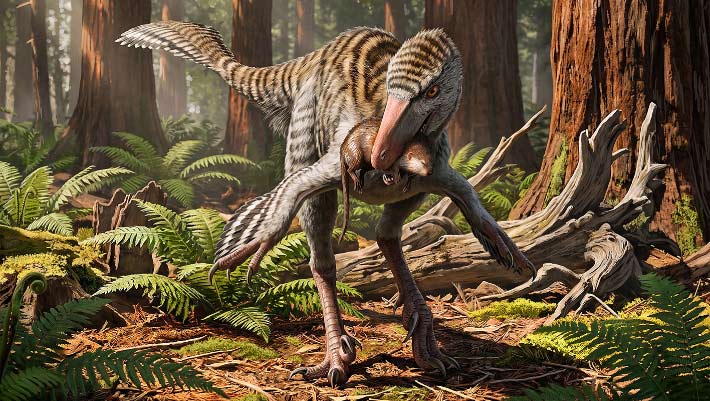
New Troodontid Dinosaur Genus Identified from Fossil Bone Found Decades Ago in New Mexico
Un nouveau genre de dinosaure troodontidé identifié à partir d'un os fossile découvert il y a plusieurs décennies au Nouveau-Mexique
os Mexique fossile Dinevenator Dinosauria Troodontidae oiseau
Les paléontologues ont décrit un nouveau genre de petit dinosaure ressemblant à un oiseau qui vivait dans ce qui est aujourd'hui le Nouveau-Mexique il y a environ 73 millions d'années. L'article Nouveau genre de dinosaures troodontidés identifié à partir d'os fossiles trouvés il y a des décennies au Nouveau-Mexique est apparu en premier sur Sci.News : Breaking Science News.
07/08/2026 sci-news ⚙ Traduction automatique
Une nouvelle étude examine la stratégie de reproduction des tyrannosaures
reproduction Dinosauria Tyrannosaurus oiseau étude
Une nouvelle étude examinant les nouveau-nés du Tyrannosaurus rex a fourni un nouvel aperçu des premières vies de ces célèbres dinosaures théropodes. Des chercheurs écrivant dans la revue "Biology" ont étudié les preuves liées au développement et aux stratégies de reproduction des grands dinosaures carnivores.  Les chercheurs ont conclu que les tyrannosaures produisaient des nouveau-nés relativement petits par rapport aux oiseaux modernes. Ceci suggère que
12/07/2026 everythingdinosaur ⚙ Traduction automatique
Une oie fossile rare réécrit l'histoire des oiseaux géants de Nouvelle-Zélande
Nouvelle-Zélande fossile oiseau découverte évolution
Les scientifiques ont découvert une oie fossile jusqu'alors inconnue qui remet en question une théorie vieille de plusieurs décennies sur l'évolution des oiseaux de Nouvelle-Zélande. La découverte suggère que les oies géantes incapables de voler du pays ont évolué à partir d'arrivées beaucoup plus récentes, révélant une histoire évolutive beaucoup plus dynamique qu'on ne le pensait autrefois.
11/07/2026 sciencedaily ⚙ Traduction automatique
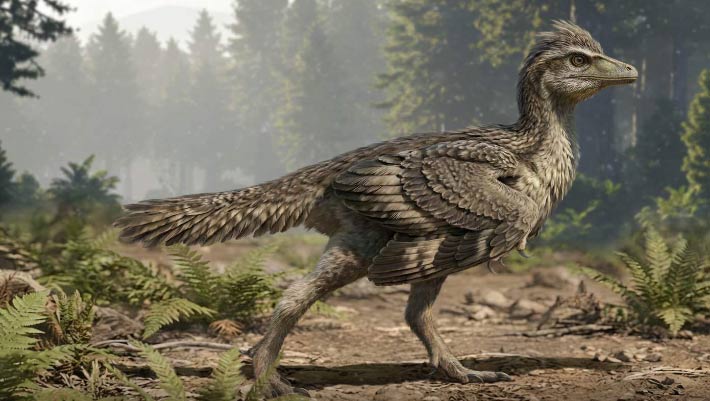
New Jurassic Fossil Reveals How Birds Lost Their Dinosaur Tails
Un nouveau fossile jurassique révèle comment les oiseaux ont perdu leur queue de dinosaure
Chine Jurassique fossile Dinosauria Zhengheornis oiseau
Des paléontologues chinois ont décrit un petit oiseau jurassique jusqu'alors inconnu dont la queue courte offre de nouvelles preuves de la façon dont les premiers oiseaux ont troqué leur longue queue semblable à celle d'un dinosaure contre le coccyx compact qui aide les oiseaux vivants à voler. L'article Un nouveau fossile du Jurassique révèle comment les oiseaux ont perdu leurs queues de dinosaures est apparu en premier sur Sci.News : Breaking Science News.
07/07/2026 sci-news ⚙ Traduction automatique
Les abeilles anciennes ont transformé les alvéoles dentaires en minuscules pépinières il y a 20 000 ans
os dent nid fossile oiseau découverte insecte mammifères
Une étonnante découverte de fossiles montre que d'anciennes abeilles utilisaient les alvéoles vides des os de mammifères comme de minuscules nids après que des hiboux aient dispersé les os sur le sol d'une grotte il y a 20 000 ans. Il s’agit de la première preuve connue de nidification d’abeilles dans des os d’animaux, révélant une stratégie de survie étonnamment créative.
05/07/2026 sciencedaily ⚙ Traduction automatique
1 2 3 4 5 6 7