←

China

Country

95 image(s) · 49 News

Image gallery

Prismatoolithus tiantaiensis eggs (IVPP V16515) on display at the Paleozoological Museum of China.
Taxa Prismatoolithus

Prismatoolithus tiantaiensis eggs (IVPP V16515) on display at the Paleozoological Museum of China.

museum China Prismatoolithidae Prismatoolithus
Prismatoolithus tiantaiensis eggs (IVPP V16515) on display at the Paleozoological Museum of China.
Taxa Prismatoolithus

Prismatoolithus tiantaiensis eggs (IVPP V16515) on display at the Paleozoological Museum of China.

museum China Prismatoolithidae Prismatoolithus
Elangatoolithidae fossil dinosaur eggs, from China. Exhibit in the Academy of Natural Sciences, 1900 Benjamin Franklin Parkway, Philadelphia, Pennsylvania, USA. Photography was permitted in this area of the museum without restrictions.
Taxa Elongatoolithidae

Elangatoolithidae fossil dinosaur eggs, from China. Exhibit in the Academy of Natural Sciences, 1900 Benjamin Franklin Parkway, Philadelphia, Pennsylvania, USA. Photography was permitted in this area of the museum without restrictions.

museum China United States fossil +2
Earth during the Middle Ordivician Period @ 460 Ma. Gondwana is seen above the equator (Australia & South China) and bellow the equator (North China, Kazakh terranes, Tarim, Antartica, India, Madagascar, Africa and South America). Laurentia, Baltica & Sibera are seperate continents, with Avalonia on its way to collide Baltica to form the Calledonian Orogeny, and Acadia on its way to collide Laurentia to form the Acadian Orogeny.
Legend:

Dark blue = ocean
Light blue = shallow seas
Tan = landmass
Black outlines = modern day coastlines showing their respective positions
Intervals Darriwilian

Earth during the Middle Ordivician Period @ 460 Ma. Gondwana is seen above the equator (Australia & South China) and bellow the equator (North China, Kazakh terranes, Tarim, Antartica, India, Madagascar, Africa and South America). Laurentia, Baltica & Sibera are seperate continents, with Avalonia on its way to collide Baltica to form the Calledonian Orogeny, and Acadia on its way to collide Laurentia to form the Acadian Orogeny. Legend: Dark blue = ocean Light blue = shallow seas Tan = landmass Black outlines = modern day coastlines showing their respective positions

Australia China India Madagascar +1
West of Chilton Chine The coastline west of the chine is accessible at lowish tides.  The various rock strata in the Wealden Beds can be seen, with the chalk of Highdown Cliffs SZ3285 beyond.

West of Chilton Chine The coastline west of the chine is accessible at lowish tides. The various rock strata in the Wealden Beds can be seen, with the chalk of Highdown Cliffs SZ3285 beyond.

China
Fossil of Mei long (holotype), on temporary display at the Shanghai Natural History Museum as part of the exhibition "China's Dinosaur World". Shot on July 22, 2025.
Taxa Mei

Fossil of Mei long (holotype), on temporary display at the Shanghai Natural History Museum as part of the exhibition "China's Dinosaur World". Shot on July 22, 2025.

museum China fossil holotype +1
Fossil specimen (IVPP V17903) of Corpulentapus lilasia on display at the Paleozoological Museum of China.
Taxa Corpulentapus

Fossil specimen (IVPP V17903) of Corpulentapus lilasia on display at the Paleozoological Museum of China.

museum China fossil specimen +1
Holotype of Ikrandraco avatar on display at the Paleozoological Museum of China.
Taxa Ikrandraco

Holotype of Ikrandraco avatar on display at the Paleozoological Museum of China.

museum China holotype Ikrandraco +1
Holotype specimen (GMV2128) of Dendrorhynchoides curvidentatus on display at the Geological Museum of China.
Taxa Dendrorhynchoides

Holotype specimen (GMV2128) of Dendrorhynchoides curvidentatus on display at the Geological Museum of China.

museum China holotype specimen +1
Holotype skeleton of Jianchangnathus robustus on display at the Paleozoological Museum of China.
Taxa Jianchangnathus

Holotype skeleton of Jianchangnathus robustus on display at the Paleozoological Museum of China.

museum China holotype Jianchangnathus +1
Holotype skeleton (AGB 6257) of Cartorhynchus lenticarpus on display at the Geological Museum of China.

Holotype skeleton (AGB 6257) of Cartorhynchus lenticarpus on display at the Geological Museum of China.

museum China holotype skeleton
Reconstruction of skeleton; Lower Cretaceous (120 mio. Years); Jungar Basin, China.
Taxa Dsungaripteridae

Reconstruction of skeleton; Lower Cretaceous (120 mio. Years); Jungar Basin, China.

China Cretaceous Dsungaripteridae Dsungaripterus +1
Reconstruction of skeleton; Lower Cretaceous (120 mio. Years); Jungar Basin, China.
Taxa Dsungaripterus

Reconstruction of skeleton; Lower Cretaceous (120 mio. Years); Jungar Basin, China.

China Cretaceous Dsungaripteridae Dsungaripterus +1
Jian is a microraptorine dromaeosaur, and the only non-avian dinosaur so far discovered from the Xiagou Formation of what is now China. Typical of microraptorinae, Jian had long pennaceous feathers growing from its arms as well as its legs, and was small in size, growing to approximately 1 m in total body length.

Jian is a microraptorine dromaeosaur, and the only non-avian dinosaur so far discovered from the Xiagou Formation of what is now China. Typical of microraptorinae, Jian had long pennaceous feathers growing from its arms as well as its legs, and was small in size, growing to approximately 1 m in total body length.

feather China Dinosauria Dromaeosauria +3
Paleoarte de pterossauro encontrado na China em 2006, pertecente ao grupos do Istiodactylus em estágio de pouso. Corpo com picnofibras é evidenciado no fóssil holótipo.
Taxa Longchengpterus

Paleoarte de pterossauro encontrado na China em 2006, pertecente ao grupos do Istiodactylus em estágio de pouso. Corpo com picnofibras é evidenciado no fóssil holótipo.

China Istiodactylus Longchengpterus
Life restoration of the large, Middle Triassic Nevadan ichthyosaur Cymbopsondylus petrinus. This illustration is primarily based on specimen UCMP 9950, with much of the tail restored following UCMP 9947. The size of the eye was reconstructed based on UCMP 9954 and UCMP 9913. The unknown distal portions of the flippers, as well as some of the tail, was reconstructed after the related genus Xinminosaurus.
References
Merriam, J. C. (1908)       Triassic Ichthyosauria: With special reference to the American forms, Berkley, California:  Berkley: The University Press  
Klein, N.; Schmitz, L.; Wintrich, T.; Sander, P. M. (2020). "A new cymbospondylid ichthyosaur (Ichthyosauria) from the Middle Triassic (Anisian) of the Augusta Mountains, Nevada, USA". Journal of Systematic Palaeontology 18 (14): 1167-1191. DOI:10.1080/14772019.2020.1748132.
Jiang, D.; Motani, R.; Hao, W.; Schmitz, L.; Rieppel, O.; Sun, Y.; Sun, Z. (2008). "New primitive ichthyosaurian (Reptilia, Diapsida) from the Middle Triassic of Panxian, Guizhou, southwestern China and its position in the Triassic biotic recovery". Progress in Natural Science 18 (10): 1315. DOI:10.1016/j.pnsc.2008.01.039.

Life restoration of the large, Middle Triassic Nevadan ichthyosaur Cymbopsondylus petrinus. This illustration is primarily based on specimen UCMP 9950, with much of the tail restored following UCMP 9947. The size of the eye was reconstructed based on UCMP 9954 and UCMP 9913. The unknown distal portions of the flippers, as well as some of the tail, was reconstructed after the related genus Xinminosaurus. References Merriam, J. C. (1908) Triassic Ichthyosauria: With special reference to the American forms, Berkley, California: Berkley: The University Press Klein, N.; Schmitz, L.; Wintrich, T.; Sander, P. M. (2020). "A new cymbospondylid ichthyosaur (Ichthyosauria) from the Middle Triassic (Anisian) of the Augusta Mountains, Nevada, USA". Journal of Systematic Palaeontology 18 (14): 1167-1191. DOI:10.1080/14772019.2020.1748132. Jiang, D.; Motani, R.; Hao, W.; Schmitz, L.; Rieppel, O.; Sun, Y.; Sun, Z. (2008). "New primitive ichthyosaurian (Reptilia, Diapsida) from the Middle Triassic of Panxian, Guizhou, southwestern China and its position in the Triassic biotic recovery". Progress in Natural Science 18 (10): 1315. DOI:10.1016/j.pnsc.2008.01.039.

China United States Anisian Middle Triassic +5
1 2 3 4 5 6

News

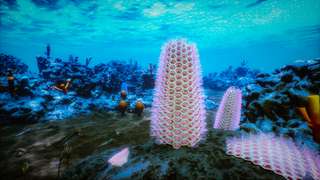
Une découverte en Chine bouscule l’histoire d’étranges animaux vieux de 520 millions d’années
A discovery in China shakes up the story of strange animals dating back 520 million years
China Cambrian fossil dating discovery
Discreet but omnipresent in today's oceans, bryozoans hide a much older history than previously thought. Exceptional fossils discovered in China show that 520 million years ago, these colonial animals were already complex structures, fully...
03/06/2026 futura-terre ⚙ Auto-translated
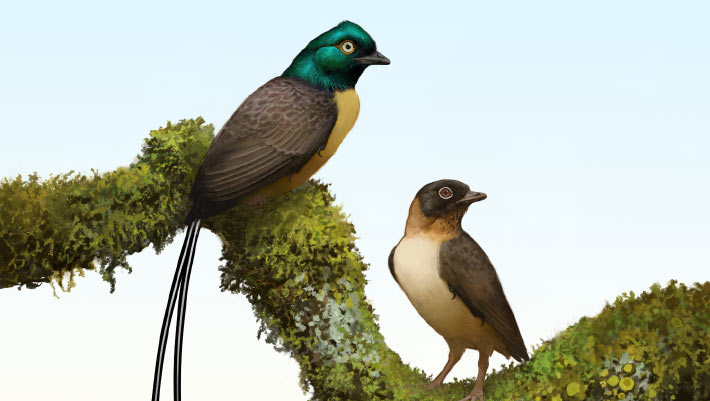
Cretaceous Bird from China Had Pair of Tail Feathers Twice as Long as Its Body
feather China Cretaceous bird
Named Plumadraco bankoorum, the newly-described species of enantiornithine bird lived in what is now northeastern China during the Cretaceous period, roughly 121 million years ago. The post Cretaceous Bird from China Had Pair of Tail Feathers Twice as Long as Its Body appeared first on Sci.News: Breaking Science News.
28/05/2026 sci-news
Gongshuilong: Beast of the Week
bone China Cretaceous Late Cretaceous Gongshuilong Hadrosauria
 Today we're checking out a recently described hadrosaur with a unique look, Gongshuilong fanwei!Gongshuilong lived in what is now eastern China, during the late Cretaceous period, between 68 and 66 million years ago.  From beak to tail it measured about 23 feet (7m) long and would have been a plant-eater when alive.  The genus name translates from Mandarin to "Gong River Dragon" in reference to the Gong River near where its bones were discovered.Gongshuilong life reconstruction in watercolors b
10/05/2026 prehistoricbeastoftheweek
Ice age humans in China crafted surprisingly advanced stone tools 146,000 years ago
bone China discovery
Scientists in China discovered that ancient humans were making surprisingly advanced stone tools during a harsh ice age 146,000 years ago. The tools, created by Homo juluensis, show careful planning and complex thinking rather than simple stone-chipping. Researchers dated the site using tiny calcite crystals inside animal bones, revealing the tools are much older than expected. The discovery challenges the idea that human creativity only thrives in easy, prosperous times.
09/05/2026 sciencedaily-paleo
Early Sauropodomorph Dinosaur Unearthed in China
China Early Jurassic Jurassic Dinosauria Massopoda new species partial skeleton
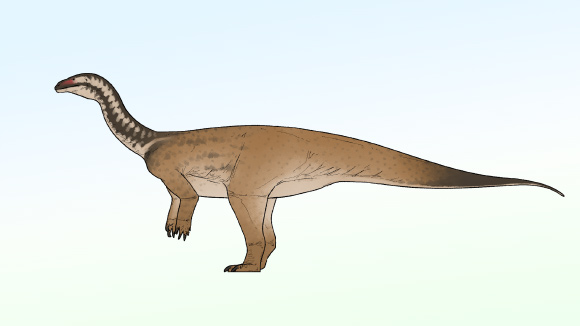
A new genus and species of massopodan sauropodomorph that lived during the Early Jurassic epoch has been identified from a partial skeleton unearthed in southwestern China. The post Early Sauropodomorph Dinosaur Unearthed in China appeared first on Sci.News: Breaking Science News.
04/05/2026 sci-news
1 2 3 4 5 6 7 8 9 10