Period K

Cretaceous

143.1000 – 66.0000 Ma

The Cretaceous is a geological period that lasted from about 143.1 to 66 Ma. It is the third and final period of the Mesozoic Era, as well as the longest. At around 77.1 million years, it is the ninth and longest geological period of the entire Phanerozoic. The name is derived from the Latin creta, 'chalk', which is abundant in deposits from the latter half of the period. It is usually abbreviated K, for its German translation Kreide.

← Geological time scale
Cretaceous
click to enlarge
© Scotese, Christopher R.; Vérard, Christian; Burgener, Landon; Elling, Reece P.; Kocsis, Ádám T. · CC BY 4.0
Fossil genera 1363
1 2 3 4 5 6 7 8 9 10 11 12 13 14 15 16 17 18 19 20 21 22 23 24 25 26 27 28 29 30 31 32 33 34 35 36 37 38 39 40 41 42 43 44 45 46 47 48 49 50 51 52 53 54 55 56 57 58 59 60 61 62 63 64 65 66 67 68 69 70 71 72 73 74 75 76 77 78 79 80 81 82 83 84 85 86
News 43
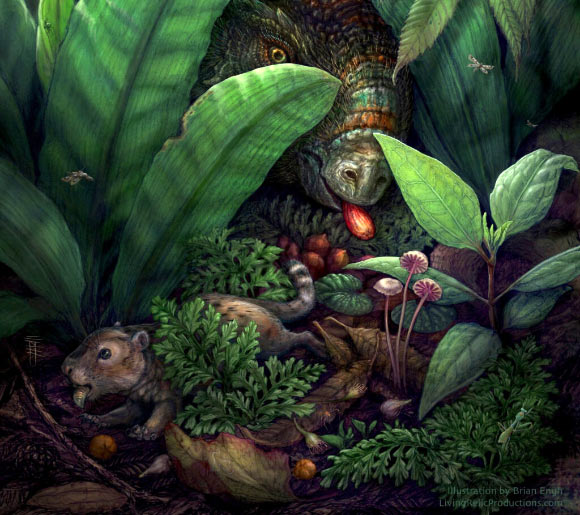
Flowering Plants Were Already Thriving before Dinosaur-Killing Asteroid Hit
Fossils from the Jose Creek Formation in New Mexico reveal that angiosperms (flowering plants) had built dense, fruit-bearing forests nearly 75 million years ago -- nearly 9 million years before the end-Cretaceous mass extinction that killed the dinosaurs -- challenging a long-held evolutionary narrative about how they came to dominate the planet. The post Flowering Plants Were Already Thriving before Dinosaur-Killing Asteroid Hit appeared first on Sci.News: Breaking Science News.
29/06/2026 sci-news
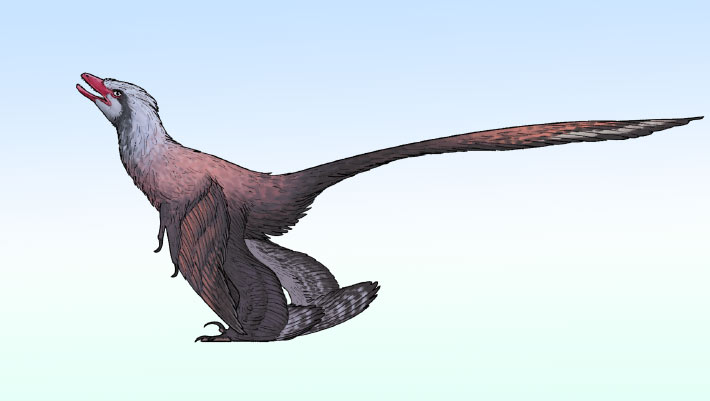
New Feathered Dinosaur from China Had Peacock-Like Tail
A new genus and species of four-winged pennaraptoran dinosaur from the Early Cretaceous of northern China is adding another twist to the story of how birds evolved from their dinosaur ancestors. The post New Feathered Dinosaur from China Had Peacock-Like Tail appeared first on Sci.News: Breaking Science News.
23/06/2026 sci-news
CollectA Deluxe Edmontosaurus Model Feeding on Some Conifers
Thank you Caldey for sending us a photograph of your CollectA Deluxe Edmontosaurus feeding in the garden.  The dinosaur looks very much at home munching on some conifers.  Palaeontologists know from hadrosaur stomach contents that these Late Cretaceous herbivores did feed on conifers.  It is a delightfully composed photograph.  The viewing angle gives the impression
23/06/2026 everythingdinosaur
125-Million-Year-Old Crocodile Relative Reveals Its True Colors
Exceptionally preserved skin of Montsecosuchus depereti, an extinct crocodylomorph no larger than a house cat that prowled the tropical wetlands of Early Cretaceous Spain, has allowed paleontologists to reconstruct details of its scales, sensory organs and even possible banded markings along its tail. The post 125-Million-Year-Old Crocodile Relative Reveals Its True Colors appeared first on Sci.News: Breaking Science News.
18/06/2026 sci-news
Sauroposeidon: Beast of the Week
 This week we will be checking out a huge dinosaur with an equally impressive name.  Enter Sauroposeidon proteles!Sauroposeidon was a sauropod dinosaur (long neck) that lived in what is now Oklahoma, Texas, and Wyoming, USA, during the early Cretaceous period, about 113 million years ago.  Its genus name translates to "Lizard Earthquake God" after the Greek god, Poseidon, who in addition to his more famous association with the ocean, was also the god of earthquakes in Greek mythology. Since not
14/06/2026 prehistoricbeastoftheweek
1 2 3 4 5 6 7 8 9
Parent interval
Mesozoic Era
Sub-intervals 2
Early Cretaceous
143.1000 – 100.5000
Late Cretaceous
100.5000 – 66.0000