Period K

Cretaceous

143.1000 – 66.0000 Ma

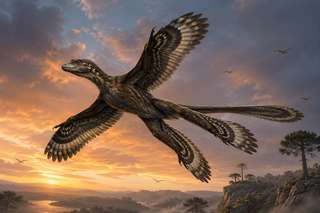
The Cretaceous is a geological period that lasted from about 143.1 to 66 Ma. It is the third and final period of the Mesozoic Era, as well as the longest. At around 77.1 million years, it is the ninth and longest geological period of the entire Phanerozoic. The name is derived from the Latin creta, 'chalk', which is abundant in deposits from the latter half of the period. It is usually abbreviated K, for its German translation Kreide.

← Geological time scale
Cretaceous
click to enlarge
© Scotese, Christopher R.; Vérard, Christian; Burgener, Landon; Elling, Reece P.; Kocsis, Ádám T. · CC BY 4.0
Fossil genera 1363
1 2 3 4 5 6 7 8 9 10 11 12 13 14 15 16 17 18 19 20 21 22 23 24 25 26 27 28 29 30 31 32 33 34 35 36 37 38 39 40 41 42 43 44 45 46 47 48 49 50 51 52 53 54 55 56 57 58 59 60 61 62 63 64 65 66 67 68 69 70 71 72 73 74 75 76 77 78 79 80 81 82 83 84 85 86
News 43
New Species of Enormous Mosasaur is Described
A newly named giant Tylosaurus species has been named by researchers.  The new species of Tylosaurus has been erected based on fossils found in northern Texas. This enormous predator ruled the ancient seas around 80 million years ago (Campanian faunal stage of the Late Cretaceous).  The scientific paper was published in the Bulletin of the American
26/05/2026 everythingdinosaur
A New Sauropod Dinosaur from the Early Cretaceous of Brazil
A new genus of sauropod dinosaur has been named from Brazil.  It expands the known diversity of Early Cretaceous sauropods in the northern part of South America. In addition, the newly named dinosaur Dasosaurus tocantinensis provides fresh evidence of dinosaur dispersal between Europe, Africa and South America. The scientific paper describing the new taxon was
15/05/2026 everythingdinosaur
Giant New Dinosaur Species Discovered in Thailand Reveals Hidden Diversity of Asian Titans
Paleontologists have identified a new genus and species of somphospondylan titanosauriform dinosaur -- the largest ever found in Southeast Asia -- from the fossilized bones found in Thailand, offering fresh evidence that the region was home to a surprisingly diverse group of enormous plant-eaters during the Early Cretaceous. The post Giant New Dinosaur Species Discovered in Thailand Reveals Hidden Diversity of Asian Titans appeared first on Sci.News: Breaking Science News.
14/05/2026 sci-news
Duplicated Genomes Helped Flowering Plants Survive End-Cretaceous Mass Extinction
A new analysis of 470 flowering plant species finds that whole-genome duplication surged precisely during Earth’s environmental crises, suggesting nature keeps a backup plan hidden in plain sight. The post Duplicated Genomes Helped Flowering Plants Survive End-Cretaceous Mass Extinction appeared first on Sci.News: Breaking Science News.
12/05/2026 sci-news
Gongshuilong: Beast of the Week
 Today we're checking out a recently described hadrosaur with a unique look, Gongshuilong fanwei!Gongshuilong lived in what is now eastern China, during the late Cretaceous period, between 68 and 66 million years ago.  From beak to tail it measured about 23 feet (7m) long and would have been a plant-eater when alive.  The genus name translates from Mandarin to "Gong River Dragon" in reference to the Gong River near where its bones were discovered.Gongshuilong life reconstruction in watercolors b
10/05/2026 prehistoricbeastoftheweek
1 2 3 4 5 6 7 8 9
Parent interval
Mesozoic Era
Sub-intervals 2
Early Cretaceous
143.1000 – 100.5000
Late Cretaceous
100.5000 – 66.0000