Period K

Cretaceous

143.1000 – 66.0000 Ma

The Cretaceous is a geological period that lasted from about 143.1 to 66 Ma. It is the third and final period of the Mesozoic Era, as well as the longest. At around 77.1 million years, it is the ninth and longest geological period of the entire Phanerozoic. The name is derived from the Latin creta, 'chalk', which is abundant in deposits from the latter half of the period. It is usually abbreviated K, for its German translation Kreide.

← Geological time scale
Cretaceous
click to enlarge
© Scotese, Christopher R.; Vérard, Christian; Burgener, Landon; Elling, Reece P.; Kocsis, Ádám T. · CC BY 4.0
Cretaceous
Cretaceous
Fossil genera 1364
1 2 3 4 5 6 7 8 9 10 11 12 13 14 15 16 17 18 19 20 21 22 23 24 25 26 27 28 29 30 31 32 33 34 35 36 37 38 39 40 41 42 43 44 45 46 47 48 49 50 51 52 53 54 55 56 57 58 59 60 61 62 63 64 65 66 67 68 69 70 71 72 73 74 75 76 77 78 79 80 81 82 83 84 85 86
News 54
Gongshuilong: Beast of the Week
 Today we're checking out a recently described hadrosaur with a unique look, Gongshuilong fanwei!Gongshuilong lived in what is now eastern China, during the late Cretaceous period, between 68 and 66 million years ago.  From beak to tail it measured about 23 feet (7m) long and would have been a plant-eater when alive.  The genus name translates from Mandarin to "Gong River Dragon" in reference to the Gong River near where its bones were discovered.Gongshuilong life reconstruction in watercolors b
10/05/2026 prehistoricbeastoftheweek
Mexidracon: Beast of the Week
 This week we will be taking a look at a unusual theropod.  Check out Mexidracon longimanus!Mexidracon was a theropod dinosaur that lived in what is now Coahuila, Mexico, during the late Cretaceous period, about 72 million years ago.  From beak to tail it measured about 10 feet (3m) long.  Its genus name translates to "Mexican Dragon" and its species name to "long hand".  It may have been a plant-eater when alive or possibly eaten a mix of both plants and meat.  Mexidracon life reconstruction in
03/05/2026 prehistoricbeastoftheweek
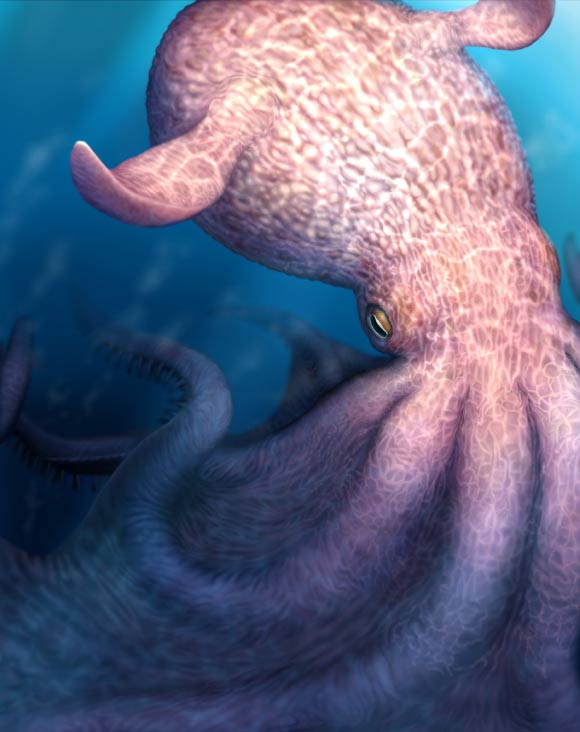
In Cretaceous Oceans, Giant ‘Kraken-Like’ Octopuses May Have Been Top Predators
Massive, soft-bodied cephalopods up to 19 m (62 feet) long rivaled -- and perhaps hunted -- the ocean’s fiercest reptiles in the Cretaceous period, according to new research led by Hokkaido University paleontologists. The post In Cretaceous Oceans, Giant ‘Kraken-Like’ Octopuses May Have Been Top Predators appeared first on Sci.News: Breaking Science News.
27/04/2026 sci-news
Peloroplites: Beast of the Week
 This week we will be checking out a large tank dinosaur.  Enter Peloroplites cedrimontanus!Peloroplites was a plant-eating dinosaur that lived in what is now Utah, USA, during the Cretaceous period, between 98 and 93 million years ago.  From snout to tail it would have measured about 20 feet (6m) long.  It's genus name translates to "Giant Hoplite" in reference to hoplites, the ancient Greek soldiers who famously carried spears and large shields.  The species name translates to "Cedar Mountain"
19/04/2026 prehistoricbeastoftheweek
Diamantinasaurus: Beast of the Week
This week we'll be learning about a beast that greatly helps us understand how sauropod dinosaurs ("long-necks") looked and lived.  Check out Diamantinasaurus matildae!Diamantinasaurus lived in what is now Queensland, Australia during the middle Cretaceous period, between 95 and 92 million years ago.  It's considered medium-sized for a sauropod, and would have measured about 52 feet (16m) long from snout to tail. (Yes. 52 feet is only medium for sauropods!) Like all sauropods it would have eaten
12/04/2026 prehistoricbeastoftheweek
1 2 3 4 5 6 7 8 9 10 11
Parent interval
Mesozoic Era
Sub-intervals 2
Early Cretaceous
143.1000 – 100.5000
Late Cretaceous
100.5000 – 66.0000