←

musée

Type de contenu

415 image(s) · 34 Actualités

Galerie d'images

Skeletal cast of Dilong paradoxus on display at the Milwaukee Public Museum. Part of the Tyrannosaurs: Meet the Family traveling exhibit developed by The Australian Museum.
Taxons Dilong

Skeletal cast of Dilong paradoxus on display at the Milwaukee Public Museum. Part of the Tyrannosaurs: Meet the Family traveling exhibit developed by The Australian Museum.

musée moulage Dilong
Falcarius skeleton reconstruction, Utah Museum of Natural History.
Taxons Falcarius

Falcarius skeleton reconstruction, Utah Museum of Natural History.

musée États-Unis Falcarius squelette
The holotype humerus (bottom) and coracoid (top) of Texasetes pleurohalio (USNM PAL337987)
Taxons Texasetes

The holotype humerus (bottom) and coracoid (top) of Texasetes pleurohalio (USNM PAL337987)

humérus musée holotype Texasetes
Fossil of Mei long (holotype), on temporary display at the Shanghai Natural History Museum as part of the exhibition "China's Dinosaur World". Shot on July 22, 2025.
Taxons Mei

Fossil of Mei long (holotype), on temporary display at the Shanghai Natural History Museum as part of the exhibition "China's Dinosaur World". Shot on July 22, 2025.

musée Chine fossile holotype +1
Achelousaurus horneri skull, collected in Glacier County, Montana, at the Museum of the Rockies in Bozeman, Montana.
The Ceratopsidae are those dinosaurs with head frills.  There are three large subgroups of Ceratopsidae: Centrosaurinae, Ceratopsinae, and Chasmosaurinae. The Triceratopsini are a "tribe" of the Chasmosaurinae -- a genus so vast that it gets the special name "tribe".  The Pachyrhinosaurini are a "tribe" within the Centrosaurinae.

Achelousaurus is a genus within the Pachyrhinosaurini.  So far, only three skulls and some limited skeletal remains have been collected anywhere in the world -- and all of them in Montana.  Their bony frills are quite similar to the Styracosaurus albertensis, although their other skull features (such as big bony bosses on the nose and behind the eyes) are not.
Taxons Achelousaurus

Achelousaurus horneri skull, collected in Glacier County, Montana, at the Museum of the Rockies in Bozeman, Montana. The Ceratopsidae are those dinosaurs with head frills. There are three large subgroups of Ceratopsidae: Centrosaurinae, Ceratopsinae, and Chasmosaurinae. The Triceratopsini are a "tribe" of the Chasmosaurinae -- a genus so vast that it gets the special name "tribe". The Pachyrhinosaurini are a "tribe" within the Centrosaurinae. Achelousaurus is a genus within the Pachyrhinosaurini. So far, only three skulls and some limited skeletal remains have been collected anywhere in the world -- and all of them in Montana. Their bony frills are quite similar to the Styracosaurus albertensis, although their other skull features (such as big bony bosses on the nose and behind the eyes) are not.

musée États-Unis Achelousaurus Centrosaurinae +8
Fossil specimen (IVPP V17903) of Corpulentapus lilasia on display at the Paleozoological Museum of China.
Taxons Corpulentapus

Fossil specimen (IVPP V17903) of Corpulentapus lilasia on display at the Paleozoological Museum of China.

musée Chine fossile spécimen +1
Lourinhanosaurus antunesi in Museum of Lourinhã
Taxons Lourinhanosaurus

Lourinhanosaurus antunesi in Museum of Lourinhã

musée Lourinhã Lourinhanosaurus
Datousaurus. Fossil in Shanghai Science & Technology Museum
Taxons Datousaurus

Datousaurus. Fossil in Shanghai Science & Technology Museum

musée fossile Datousaurus
Janenschia humerus, radius and ulna at the Museum für Naturkunde, Berlin.
Taxons Janenschia

Janenschia humerus, radius and ulna at the Museum für Naturkunde, Berlin.

humérus musée Janenschia
Figure 1, 1a. Outer and oral aspects of the imperfect dentary bone of Sarcolestes Leedsi, from the Oxford Clay of Peterborough. 2/3 nat size. s = symphysis. Figure 1b. A single tooth of the former. 3/1 nat size. Figure 2, 2a. Outer aspect and quadratic cavity of the hinder region of the same jaw. 2/3 nat size. Figure 3. A single tooth of Priodontognathus Phillipsi, 3/1 nat size, shown for purposes of comparison. Specimen in the Woodwardian Museum, Cambridge.
Taxons Sarcolestes

Figure 1, 1a. Outer and oral aspects of the imperfect dentary bone of Sarcolestes Leedsi, from the Oxford Clay of Peterborough. 2/3 nat size. s = symphysis. Figure 1b. A single tooth of the former. 3/1 nat size. Figure 2, 2a. Outer aspect and quadratic cavity of the hinder region of the same jaw. 2/3 nat size. Figure 3. A single tooth of Priodontognathus Phillipsi, 3/1 nat size, shown for purposes of comparison. Specimen in the Woodwardian Museum, Cambridge.

os dent musée Oxford Clay +3
Holotype of Ikrandraco avatar on display at the Paleozoological Museum of China.
Taxons Ikrandraco

Holotype of Ikrandraco avatar on display at the Paleozoological Museum of China.

musée Chine holotype Ikrandraco +1
Cimoliopterus cuvieri. Holotype NHMUK PV 39409 (Cenomanian / Turonian, Chalk Formation), anterior part of the rostrum A right lateral view B respective line drawing C ventral view D respective line drawing. Abbreviations: m – maxillae, pm – premaxillae, pmcr – premaxillary crest, prid – palatal ridge. Arrows and numbers indicate alveoli or teeth and their respective position. Scale bar = 10 mm. Photos courtesy of The Natural History Museum.
Taxons Cimoliopterus

Cimoliopterus cuvieri. Holotype NHMUK PV 39409 (Cenomanian / Turonian, Chalk Formation), anterior part of the rostrum A right lateral view B respective line drawing C ventral view D respective line drawing. Abbreviations: m – maxillae, pm – premaxillae, pmcr – premaxillary crest, prid – palatal ridge. Arrows and numbers indicate alveoli or teeth and their respective position. Scale bar = 10 mm. Photos courtesy of The Natural History Museum.

crête écaille dessin musée +5
Rahonavis in Royal Ontario Museum.
Taxons Rahonavis

Rahonavis in Royal Ontario Museum.

musée Rahonavis
Diagram depicting the currently named Dinosauria from the Late Cretaceous Allen Formation of Argentina. Dinosaur taxa:
Aeolosaurus sp. → Salitral Moreno locality, Río Negro Province.[1] Length = 15 meters.[2]
Austroraptor cabazai → Santa Rosa Basin locality, Río Negro Province.[3][4] Length = 6 meters.[2]
Bonapartenykus ultimus → Salitral Ojo de Agua locality, Río Negro Province.[5] Length = 2.5 meters.[5]
Bonapartesaurus rionegrensis → Salitral Moreno locality, Río Negro Province.[6] Length = ∼6 meters.[1]
Bonatitan reigi → Salitral de Santa Rosa locality, Río Negro Province.[7] Length = Extrapolated after relatives.
 Kelumapusaura machi → Cerro Matadero locality, Río Negro Province.[8] 9 meters.[8]
Lamarqueavis australis → Cerro Tortugas locality, Río Negro Province.[9] Length = ∼House sparrow-sized.[9]
Lapampasaurus cholinoi → Islas Malvinas locality, La Pampa Province.[10] Length = ∼7 meters.[2]
Limenavis patagonica → Salitral Moreno locality, Río Negro Province.[11] Length = Extrapolated after relatives.
Menucocelsior arriagadai → Salitral Ojo de Agua locality, Río Negro Province.
Niebla antiqua → Cerro Matadero locality, Río Negro Province.[12] Length = 4.5 meters.[12]
Panamericansaurus schroederi → Bodega Familia Schroeder locality, Neuquén Province.[13] Length = 11 meters.[2]
Patagopelta cristata → Salitral Moreno locality, Río Negro Province.
Quilmesaurus curriei → Salitral Ojo de Agua locality, Río Negro Province.[14] Length = 5.3 meters.[12]
Rocasaurus muniozi → Salitral Moreno locality, Río Negro Province.[15] Length = Extrapolated after relatives.
Excluded taxa: 

Willinakaqe salitralensis is considered a nomen dubium,[16] and its paratype has been reassigned to Bonapartesaurus rionegrensis.[6]
Laplatasaurus araukanicus has been restricted to its lectotype which hails from the Anacleto Formation.[17]
Abelisaurus comahuensis could either belong to the Allen or Anacleto formations.[12]
Pellegrinisaurus powelli could either belong to the Allen or Anacleto formations.[18][19]
References

↑  (2013). "The titanosaur sauropods from the late Campanian-early Maastrichtian Allen Formation of Salitral Moreno, Río Negro, Argentina". Acta Palaeontologica Polonica 58 (2): 269–284. DOI:10.4202/app.2011.0055.

↑ a b c (2007)  Dinosaurs: The Most Complete, Up-to-Date Encyclopedia for Dinosaur Lovers of All Ages, Random House  ISBN:  9780375824197.  Genus List for Holtz 2012  Weight Information

↑ (2008). "A bizarre Cretaceous theropod dinosaur from Patagonia and the evolution of Gondwanan dromaeosaurids". Proceedings of the Royal Society B: Biological Sciences 276 (1659): 1101–7. DOI:10.1098/rspb.2008.1554. ISSN 1471-2954.

↑  (2012). "A New Specimen of Austroraptor cabazai Novas, Pol, Canale, Porfiri and Calvo, 2008 (Dinosauria, Theropoda, Unenlagiidae) from the Latest Cretaceous (Maastrichtian) of Río Negro, Argentina". Ameghiniana 49 (4): 662–667. DOI:10.5710/AMGH.30.8.2012.574.

↑ a b Federico L. Agnolin (2012). "New alvarezsaurid (Dinosauria, Theropoda) from uppermost Cretaceous of north-western Patagonia with associated eggs". Cretaceous Research 35: 33–56. DOI:10.1016/j.cretres.2011.11.014.

↑ a b  (2017). "Bonapartesaurus rionegrensis, a new hadrosaurine dinosaur from South America: implications for phylogenetic and biogeographic relations with North America". Journal of Vertebrate Paleontology 37 (2): 1–16. DOI:10.1080/02724634.2017.1289381.

↑ Salgado L., Gallina P.A. and Paulina Carabajal A. 2014. "Redescription of Bonatitan reigi (Sauropoda: Titanosauria), from the Campanian–Maastrichtian of the Río Negro Province (Argentina)". Historical Biology: An International Journal of Paleobiology 27(5): 525-548

↑ a b  (2022). "A new hadrosaurid (Dinosauria: Ornithischia) from the Late Cretaceous of northern Patagonia and the radiation of South American hadrosaurids". Journal of Systematic Palaeontology. DOI:10.1080/14772019.2021.2020917.

↑ a b (2010). "[https://pdfs.semanticscholar.org/f6f4/c6eb05d224719916c0b20634f54dfeb37d3f.pdf An avian coracoid from the Upper
Cretaceous of Patagonia, Argentina]". Studia Geologica Salmanticensia 46 (2): 99-119. ISSN 0211-8327.

↑ Rodolfo A. Coria, Bernardo González Riga and Silvio Casadío (2012). "Un nuevo hadrosáurido (Dinosauria, Ornithopoda) de la Formación Allen, provincia de La Pampa, Argentina". Ameghiniana 49 (4): 552–572.

↑ Clarke and Chiappe, 2001. A new carinate bird from the Late Cretaceous of Patagonia (Argentina). American Museum Novitates. 3323, 1-23.

↑ a b c d (in English) Aranciaga Rolando, Mauro (2020). "A new medium-sized abelisaurid (Theropoda, Dinosauria) from the late cretaceous (Maastrichtian) Allen Formation of Northern Patagonia, Argentina". Journal of South American Earth Sciences: 102915. DOI:10.1016/j.jsames.2020.102915. ISSN 0895-9811.

↑ (2010). "Panamericansaurus schroederi gen. nov. sp. nov. Un nuevo Sauropoda (Titanosauridae-Aeolosaurini) de la Provincia del Neuquén, Cretácico Superior de Patagonia, Argentina". Brazilian Geographical Journal: Geosciences and Humanities research medium 1: 100–115.

↑ Coria, R.A. (2001) "A new theropod from the Late Cretaceous of Patagonia" in Tanke, Darren H., ed.    Mesozoic Vertebrate Life, Life of the Past, Indiana University Press, pp. 3–9  ISBN:  978-0-253-33907-2. 

↑ Salgado, L. and C. Azpilicueta. 2000. Un nuevo saltasaurino (Sauropoda, Titanosauridae) de la provincia de Río Negro (Formacíon Allen, Cretácico Superior), Patagonia, Argentina archive copy at the Wayback Machine. Ameghiniana 37 (3):259-264.

↑  (2016). "Revisiting the hadrosaurid diversity of the Allen Fm.: Re-evaluation of the taxonomic validity of Willinakaqe salitralensis (Ornithopoda, Hadrosauridae) from Salitral Moreno, Río Negro Province, Argentina". Ameghiniana 53 (2): 231–237. DOI:10.5710/AMGH.25.09.2015.2943.

↑ Pablo A. Gallina & Alejandro Otero (2015) Reassessment of Laplatasaurus araukanicus (SAUROPODA: TITANOSAURIA), from the Late Cretaceous of Patagonia, Argentina. Ameghiniana 52 (5):487–501. doi:10.5710/AMGH.08.06.2015.2911.

↑ (1996). "Pellegrinisaurus powelli nov. gen. et sp. (Sauropoda, Titanosauridae) from the Upper Cretaceous of Lago Pellegrini, Northwestern Patagonia, Argentina". Ameghiniana 33 (4): 355–365. ISSN 1851-8044.

↑ Heredia, S., & Salgado, L. (2014). Posición estratigráfica de los estratos supracretácicos portadores de dinosaurios en Lago Pellegrini, Patagonia septentrional, Argentina. Ameghiniana, 36(2), 229-234.
Taxons Menucocelsior

Diagram depicting the currently named Dinosauria from the Late Cretaceous Allen Formation of Argentina. Dinosaur taxa: Aeolosaurus sp. → Salitral Moreno locality, Río Negro Province.[1] Length = 15 meters.[2] Austroraptor cabazai → Santa Rosa Basin locality, Río Negro Province.[3][4] Length = 6 meters.[2] Bonapartenykus ultimus → Salitral Ojo de Agua locality, Río Negro Province.[5] Length = 2.5 meters.[5] Bonapartesaurus rionegrensis → Salitral Moreno locality, Río Negro Province.[6] Length = ∼6 meters.[1] Bonatitan reigi → Salitral de Santa Rosa locality, Río Negro Province.[7] Length = Extrapolated after relatives. Kelumapusaura machi → Cerro Matadero locality, Río Negro Province.[8] 9 meters.[8] Lamarqueavis australis → Cerro Tortugas locality, Río Negro Province.[9] Length = ∼House sparrow-sized.[9] Lapampasaurus cholinoi → Islas Malvinas locality, La Pampa Province.[10] Length = ∼7 meters.[2] Limenavis patagonica → Salitral Moreno locality, Río Negro Province.[11] Length = Extrapolated after relatives. Menucocelsior arriagadai → Salitral Ojo de Agua locality, Río Negro Province. Niebla antiqua → Cerro Matadero locality, Río Negro Province.[12] Length = 4.5 meters.[12] Panamericansaurus schroederi → Bodega Familia Schroeder locality, Neuquén Province.[13] Length = 11 meters.[2] Patagopelta cristata → Salitral Moreno locality, Río Negro Province. Quilmesaurus curriei → Salitral Ojo de Agua locality, Río Negro Province.[14] Length = 5.3 meters.[12] Rocasaurus muniozi → Salitral Moreno locality, Río Negro Province.[15] Length = Extrapolated after relatives. Excluded taxa: Willinakaqe salitralensis is considered a nomen dubium,[16] and its paratype has been reassigned to Bonapartesaurus rionegrensis.[6] Laplatasaurus araukanicus has been restricted to its lectotype which hails from the Anacleto Formation.[17] Abelisaurus comahuensis could either belong to the Allen or Anacleto formations.[12] Pellegrinisaurus powelli could either belong to the Allen or Anacleto formations.[18][19] References ↑ (2013). "The titanosaur sauropods from the late Campanian-early Maastrichtian Allen Formation of Salitral Moreno, Río Negro, Argentina". Acta Palaeontologica Polonica 58 (2): 269–284. DOI:10.4202/app.2011.0055. ↑ a b c (2007) Dinosaurs: The Most Complete, Up-to-Date Encyclopedia for Dinosaur Lovers of All Ages, Random House ISBN: 9780375824197. Genus List for Holtz 2012 Weight Information ↑ (2008). "A bizarre Cretaceous theropod dinosaur from Patagonia and the evolution of Gondwanan dromaeosaurids". Proceedings of the Royal Society B: Biological Sciences 276 (1659): 1101–7. DOI:10.1098/rspb.2008.1554. ISSN 1471-2954. ↑ (2012). "A New Specimen of Austroraptor cabazai Novas, Pol, Canale, Porfiri and Calvo, 2008 (Dinosauria, Theropoda, Unenlagiidae) from the Latest Cretaceous (Maastrichtian) of Río Negro, Argentina". Ameghiniana 49 (4): 662–667. DOI:10.5710/AMGH.30.8.2012.574. ↑ a b Federico L. Agnolin (2012). "New alvarezsaurid (Dinosauria, Theropoda) from uppermost Cretaceous of north-western Patagonia with associated eggs". Cretaceous Research 35: 33–56. DOI:10.1016/j.cretres.2011.11.014. ↑ a b (2017). "Bonapartesaurus rionegrensis, a new hadrosaurine dinosaur from South America: implications for phylogenetic and biogeographic relations with North America". Journal of Vertebrate Paleontology 37 (2): 1–16. DOI:10.1080/02724634.2017.1289381. ↑ Salgado L., Gallina P.A. and Paulina Carabajal A. 2014. "Redescription of Bonatitan reigi (Sauropoda: Titanosauria), from the Campanian–Maastrichtian of the Río Negro Province (Argentina)". Historical Biology: An International Journal of Paleobiology 27(5): 525-548 ↑ a b (2022). "A new hadrosaurid (Dinosauria: Ornithischia) from the Late Cretaceous of northern Patagonia and the radiation of South American hadrosaurids". Journal of Systematic Palaeontology. DOI:10.1080/14772019.2021.2020917. ↑ a b (2010). "[https://pdfs.semanticscholar.org/f6f4/c6eb05d224719916c0b20634f54dfeb37d3f.pdf An avian coracoid from the Upper Cretaceous of Patagonia, Argentina]". Studia Geologica Salmanticensia 46 (2): 99-119. ISSN 0211-8327. ↑ Rodolfo A. Coria, Bernardo González Riga and Silvio Casadío (2012). "Un nuevo hadrosáurido (Dinosauria, Ornithopoda) de la Formación Allen, provincia de La Pampa, Argentina". Ameghiniana 49 (4): 552–572. ↑ Clarke and Chiappe, 2001. A new carinate bird from the Late Cretaceous of Patagonia (Argentina). American Museum Novitates. 3323, 1-23. ↑ a b c d (in English) Aranciaga Rolando, Mauro (2020). "A new medium-sized abelisaurid (Theropoda, Dinosauria) from the late cretaceous (Maastrichtian) Allen Formation of Northern Patagonia, Argentina". Journal of South American Earth Sciences: 102915. DOI:10.1016/j.jsames.2020.102915. ISSN 0895-9811. ↑ (2010). "Panamericansaurus schroederi gen. nov. sp. nov. Un nuevo Sauropoda (Titanosauridae-Aeolosaurini) de la Provincia del Neuquén, Cretácico Superior de Patagonia, Argentina". Brazilian Geographical Journal: Geosciences and Humanities research medium 1: 100–115. ↑ Coria, R.A. (2001) "A new theropod from the Late Cretaceous of Patagonia" in Tanke, Darren H., ed. Mesozoic Vertebrate Life, Life of the Past, Indiana University Press, pp. 3–9 ISBN: 978-0-253-33907-2. ↑ Salgado, L. and C. Azpilicueta. 2000. Un nuevo saltasaurino (Sauropoda, Titanosauridae) de la provincia de Río Negro (Formacíon Allen, Cretácico Superior), Patagonia, Argentina archive copy at the Wayback Machine. Ameghiniana 37 (3):259-264. ↑ (2016). "Revisiting the hadrosaurid diversity of the Allen Fm.: Re-evaluation of the taxonomic validity of Willinakaqe salitralensis (Ornithopoda, Hadrosauridae) from Salitral Moreno, Río Negro Province, Argentina". Ameghiniana 53 (2): 231–237. DOI:10.5710/AMGH.25.09.2015.2943. ↑ Pablo A. Gallina & Alejandro Otero (2015) Reassessment of Laplatasaurus araukanicus (SAUROPODA: TITANOSAURIA), from the Late Cretaceous of Patagonia, Argentina. Ameghiniana 52 (5):487–501. doi:10.5710/AMGH.08.06.2015.2911. ↑ (1996). "Pellegrinisaurus powelli nov. gen. et sp. (Sauropoda, Titanosauridae) from the Upper Cretaceous of Lago Pellegrini, Northwestern Patagonia, Argentina". Ameghiniana 33 (4): 355–365. ISSN 1851-8044. ↑ Heredia, S., & Salgado, L. (2014). Posición estratigráfica de los estratos supracretácicos portadores de dinosaurios en Lago Pellegrini, Patagonia septentrional, Argentina. Ameghiniana, 36(2), 229-234.

musée Argentine Allen Anacleto +39
Diagram depicting the currently named Dinosauria from the Late Cretaceous Allen Formation of Argentina. Dinosaur taxa:
Aeolosaurus sp. → Salitral Moreno locality, Río Negro Province.[1] Length = 15 meters.[2]
Austroraptor cabazai → Santa Rosa Basin locality, Río Negro Province.[3][4] Length = 6 meters.[2]
Bonapartenykus ultimus → Salitral Ojo de Agua locality, Río Negro Province.[5] Length = 2.5 meters.[5]
Bonapartesaurus rionegrensis → Salitral Moreno locality, Río Negro Province.[6] Length = ∼6 meters.[1]
Bonatitan reigi → Salitral de Santa Rosa locality, Río Negro Province.[7] Length = Extrapolated after relatives.
 Kelumapusaura machi → Cerro Matadero locality, Río Negro Province.[8] 9 meters.[8]
Lamarqueavis australis → Cerro Tortugas locality, Río Negro Province.[9] Length = ∼House sparrow-sized.[9]
Lapampasaurus cholinoi → Islas Malvinas locality, La Pampa Province.[10] Length = ∼7 meters.[2]
Limenavis patagonica → Salitral Moreno locality, Río Negro Province.[11] Length = Extrapolated after relatives.
Menucocelsior arriagadai → Salitral Ojo de Agua locality, Río Negro Province.
Niebla antiqua → Cerro Matadero locality, Río Negro Province.[12] Length = 4.5 meters.[12]
Panamericansaurus schroederi → Bodega Familia Schroeder locality, Neuquén Province.[13] Length = 11 meters.[2]
Patagopelta cristata → Salitral Moreno locality, Río Negro Province.
Quilmesaurus curriei → Salitral Ojo de Agua locality, Río Negro Province.[14] Length = 5.3 meters.[12]
Rocasaurus muniozi → Salitral Moreno locality, Río Negro Province.[15] Length = Extrapolated after relatives.
Excluded taxa: 

Willinakaqe salitralensis is considered a nomen dubium,[16] and its paratype has been reassigned to Bonapartesaurus rionegrensis.[6]
Laplatasaurus araukanicus has been restricted to its lectotype which hails from the Anacleto Formation.[17]
Abelisaurus comahuensis could either belong to the Allen or Anacleto formations.[12]
Pellegrinisaurus powelli could either belong to the Allen or Anacleto formations.[18][19]
References

↑  (2013). "The titanosaur sauropods from the late Campanian-early Maastrichtian Allen Formation of Salitral Moreno, Río Negro, Argentina". Acta Palaeontologica Polonica 58 (2): 269–284. DOI:10.4202/app.2011.0055.

↑ a b c (2007)  Dinosaurs: The Most Complete, Up-to-Date Encyclopedia for Dinosaur Lovers of All Ages, Random House  ISBN:  9780375824197.  Genus List for Holtz 2012  Weight Information

↑ (2008). "A bizarre Cretaceous theropod dinosaur from Patagonia and the evolution of Gondwanan dromaeosaurids". Proceedings of the Royal Society B: Biological Sciences 276 (1659): 1101–7. DOI:10.1098/rspb.2008.1554. ISSN 1471-2954.

↑  (2012). "A New Specimen of Austroraptor cabazai Novas, Pol, Canale, Porfiri and Calvo, 2008 (Dinosauria, Theropoda, Unenlagiidae) from the Latest Cretaceous (Maastrichtian) of Río Negro, Argentina". Ameghiniana 49 (4): 662–667. DOI:10.5710/AMGH.30.8.2012.574.

↑ a b Federico L. Agnolin (2012). "New alvarezsaurid (Dinosauria, Theropoda) from uppermost Cretaceous of north-western Patagonia with associated eggs". Cretaceous Research 35: 33–56. DOI:10.1016/j.cretres.2011.11.014.

↑ a b  (2017). "Bonapartesaurus rionegrensis, a new hadrosaurine dinosaur from South America: implications for phylogenetic and biogeographic relations with North America". Journal of Vertebrate Paleontology 37 (2): 1–16. DOI:10.1080/02724634.2017.1289381.

↑ Salgado L., Gallina P.A. and Paulina Carabajal A. 2014. "Redescription of Bonatitan reigi (Sauropoda: Titanosauria), from the Campanian–Maastrichtian of the Río Negro Province (Argentina)". Historical Biology: An International Journal of Paleobiology 27(5): 525-548

↑ a b  (2022). "A new hadrosaurid (Dinosauria: Ornithischia) from the Late Cretaceous of northern Patagonia and the radiation of South American hadrosaurids". Journal of Systematic Palaeontology. DOI:10.1080/14772019.2021.2020917.

↑ a b (2010). "[https://pdfs.semanticscholar.org/f6f4/c6eb05d224719916c0b20634f54dfeb37d3f.pdf An avian coracoid from the Upper
Cretaceous of Patagonia, Argentina]". Studia Geologica Salmanticensia 46 (2): 99-119. ISSN 0211-8327.

↑ Rodolfo A. Coria, Bernardo González Riga and Silvio Casadío (2012). "Un nuevo hadrosáurido (Dinosauria, Ornithopoda) de la Formación Allen, provincia de La Pampa, Argentina". Ameghiniana 49 (4): 552–572.

↑ Clarke and Chiappe, 2001. A new carinate bird from the Late Cretaceous of Patagonia (Argentina). American Museum Novitates. 3323, 1-23.

↑ a b c d (in English) Aranciaga Rolando, Mauro (2020). "A new medium-sized abelisaurid (Theropoda, Dinosauria) from the late cretaceous (Maastrichtian) Allen Formation of Northern Patagonia, Argentina". Journal of South American Earth Sciences: 102915. DOI:10.1016/j.jsames.2020.102915. ISSN 0895-9811.

↑ (2010). "Panamericansaurus schroederi gen. nov. sp. nov. Un nuevo Sauropoda (Titanosauridae-Aeolosaurini) de la Provincia del Neuquén, Cretácico Superior de Patagonia, Argentina". Brazilian Geographical Journal: Geosciences and Humanities research medium 1: 100–115.

↑ Coria, R.A. (2001) "A new theropod from the Late Cretaceous of Patagonia" in Tanke, Darren H., ed.    Mesozoic Vertebrate Life, Life of the Past, Indiana University Press, pp. 3–9  ISBN:  978-0-253-33907-2. 

↑ Salgado, L. and C. Azpilicueta. 2000. Un nuevo saltasaurino (Sauropoda, Titanosauridae) de la provincia de Río Negro (Formacíon Allen, Cretácico Superior), Patagonia, Argentina archive copy at the Wayback Machine. Ameghiniana 37 (3):259-264.

↑  (2016). "Revisiting the hadrosaurid diversity of the Allen Fm.: Re-evaluation of the taxonomic validity of Willinakaqe salitralensis (Ornithopoda, Hadrosauridae) from Salitral Moreno, Río Negro Province, Argentina". Ameghiniana 53 (2): 231–237. DOI:10.5710/AMGH.25.09.2015.2943.

↑ Pablo A. Gallina & Alejandro Otero (2015) Reassessment of Laplatasaurus araukanicus (SAUROPODA: TITANOSAURIA), from the Late Cretaceous of Patagonia, Argentina. Ameghiniana 52 (5):487–501. doi:10.5710/AMGH.08.06.2015.2911.

↑ (1996). "Pellegrinisaurus powelli nov. gen. et sp. (Sauropoda, Titanosauridae) from the Upper Cretaceous of Lago Pellegrini, Northwestern Patagonia, Argentina". Ameghiniana 33 (4): 355–365. ISSN 1851-8044.

↑ Heredia, S., & Salgado, L. (2014). Posición estratigráfica de los estratos supracretácicos portadores de dinosaurios en Lago Pellegrini, Patagonia septentrional, Argentina. Ameghiniana, 36(2), 229-234.
Taxons Lapampasaurus

Diagram depicting the currently named Dinosauria from the Late Cretaceous Allen Formation of Argentina. Dinosaur taxa: Aeolosaurus sp. → Salitral Moreno locality, Río Negro Province.[1] Length = 15 meters.[2] Austroraptor cabazai → Santa Rosa Basin locality, Río Negro Province.[3][4] Length = 6 meters.[2] Bonapartenykus ultimus → Salitral Ojo de Agua locality, Río Negro Province.[5] Length = 2.5 meters.[5] Bonapartesaurus rionegrensis → Salitral Moreno locality, Río Negro Province.[6] Length = ∼6 meters.[1] Bonatitan reigi → Salitral de Santa Rosa locality, Río Negro Province.[7] Length = Extrapolated after relatives. Kelumapusaura machi → Cerro Matadero locality, Río Negro Province.[8] 9 meters.[8] Lamarqueavis australis → Cerro Tortugas locality, Río Negro Province.[9] Length = ∼House sparrow-sized.[9] Lapampasaurus cholinoi → Islas Malvinas locality, La Pampa Province.[10] Length = ∼7 meters.[2] Limenavis patagonica → Salitral Moreno locality, Río Negro Province.[11] Length = Extrapolated after relatives. Menucocelsior arriagadai → Salitral Ojo de Agua locality, Río Negro Province. Niebla antiqua → Cerro Matadero locality, Río Negro Province.[12] Length = 4.5 meters.[12] Panamericansaurus schroederi → Bodega Familia Schroeder locality, Neuquén Province.[13] Length = 11 meters.[2] Patagopelta cristata → Salitral Moreno locality, Río Negro Province. Quilmesaurus curriei → Salitral Ojo de Agua locality, Río Negro Province.[14] Length = 5.3 meters.[12] Rocasaurus muniozi → Salitral Moreno locality, Río Negro Province.[15] Length = Extrapolated after relatives. Excluded taxa: Willinakaqe salitralensis is considered a nomen dubium,[16] and its paratype has been reassigned to Bonapartesaurus rionegrensis.[6] Laplatasaurus araukanicus has been restricted to its lectotype which hails from the Anacleto Formation.[17] Abelisaurus comahuensis could either belong to the Allen or Anacleto formations.[12] Pellegrinisaurus powelli could either belong to the Allen or Anacleto formations.[18][19] References ↑ (2013). "The titanosaur sauropods from the late Campanian-early Maastrichtian Allen Formation of Salitral Moreno, Río Negro, Argentina". Acta Palaeontologica Polonica 58 (2): 269–284. DOI:10.4202/app.2011.0055. ↑ a b c (2007) Dinosaurs: The Most Complete, Up-to-Date Encyclopedia for Dinosaur Lovers of All Ages, Random House ISBN: 9780375824197. Genus List for Holtz 2012 Weight Information ↑ (2008). "A bizarre Cretaceous theropod dinosaur from Patagonia and the evolution of Gondwanan dromaeosaurids". Proceedings of the Royal Society B: Biological Sciences 276 (1659): 1101–7. DOI:10.1098/rspb.2008.1554. ISSN 1471-2954. ↑ (2012). "A New Specimen of Austroraptor cabazai Novas, Pol, Canale, Porfiri and Calvo, 2008 (Dinosauria, Theropoda, Unenlagiidae) from the Latest Cretaceous (Maastrichtian) of Río Negro, Argentina". Ameghiniana 49 (4): 662–667. DOI:10.5710/AMGH.30.8.2012.574. ↑ a b Federico L. Agnolin (2012). "New alvarezsaurid (Dinosauria, Theropoda) from uppermost Cretaceous of north-western Patagonia with associated eggs". Cretaceous Research 35: 33–56. DOI:10.1016/j.cretres.2011.11.014. ↑ a b (2017). "Bonapartesaurus rionegrensis, a new hadrosaurine dinosaur from South America: implications for phylogenetic and biogeographic relations with North America". Journal of Vertebrate Paleontology 37 (2): 1–16. DOI:10.1080/02724634.2017.1289381. ↑ Salgado L., Gallina P.A. and Paulina Carabajal A. 2014. "Redescription of Bonatitan reigi (Sauropoda: Titanosauria), from the Campanian–Maastrichtian of the Río Negro Province (Argentina)". Historical Biology: An International Journal of Paleobiology 27(5): 525-548 ↑ a b (2022). "A new hadrosaurid (Dinosauria: Ornithischia) from the Late Cretaceous of northern Patagonia and the radiation of South American hadrosaurids". Journal of Systematic Palaeontology. DOI:10.1080/14772019.2021.2020917. ↑ a b (2010). "[https://pdfs.semanticscholar.org/f6f4/c6eb05d224719916c0b20634f54dfeb37d3f.pdf An avian coracoid from the Upper Cretaceous of Patagonia, Argentina]". Studia Geologica Salmanticensia 46 (2): 99-119. ISSN 0211-8327. ↑ Rodolfo A. Coria, Bernardo González Riga and Silvio Casadío (2012). "Un nuevo hadrosáurido (Dinosauria, Ornithopoda) de la Formación Allen, provincia de La Pampa, Argentina". Ameghiniana 49 (4): 552–572. ↑ Clarke and Chiappe, 2001. A new carinate bird from the Late Cretaceous of Patagonia (Argentina). American Museum Novitates. 3323, 1-23. ↑ a b c d (in English) Aranciaga Rolando, Mauro (2020). "A new medium-sized abelisaurid (Theropoda, Dinosauria) from the late cretaceous (Maastrichtian) Allen Formation of Northern Patagonia, Argentina". Journal of South American Earth Sciences: 102915. DOI:10.1016/j.jsames.2020.102915. ISSN 0895-9811. ↑ (2010). "Panamericansaurus schroederi gen. nov. sp. nov. Un nuevo Sauropoda (Titanosauridae-Aeolosaurini) de la Provincia del Neuquén, Cretácico Superior de Patagonia, Argentina". Brazilian Geographical Journal: Geosciences and Humanities research medium 1: 100–115. ↑ Coria, R.A. (2001) "A new theropod from the Late Cretaceous of Patagonia" in Tanke, Darren H., ed. Mesozoic Vertebrate Life, Life of the Past, Indiana University Press, pp. 3–9 ISBN: 978-0-253-33907-2. ↑ Salgado, L. and C. Azpilicueta. 2000. Un nuevo saltasaurino (Sauropoda, Titanosauridae) de la provincia de Río Negro (Formacíon Allen, Cretácico Superior), Patagonia, Argentina archive copy at the Wayback Machine. Ameghiniana 37 (3):259-264. ↑ (2016). "Revisiting the hadrosaurid diversity of the Allen Fm.: Re-evaluation of the taxonomic validity of Willinakaqe salitralensis (Ornithopoda, Hadrosauridae) from Salitral Moreno, Río Negro Province, Argentina". Ameghiniana 53 (2): 231–237. DOI:10.5710/AMGH.25.09.2015.2943. ↑ Pablo A. Gallina & Alejandro Otero (2015) Reassessment of Laplatasaurus araukanicus (SAUROPODA: TITANOSAURIA), from the Late Cretaceous of Patagonia, Argentina. Ameghiniana 52 (5):487–501. doi:10.5710/AMGH.08.06.2015.2911. ↑ (1996). "Pellegrinisaurus powelli nov. gen. et sp. (Sauropoda, Titanosauridae) from the Upper Cretaceous of Lago Pellegrini, Northwestern Patagonia, Argentina". Ameghiniana 33 (4): 355–365. ISSN 1851-8044. ↑ Heredia, S., & Salgado, L. (2014). Posición estratigráfica de los estratos supracretácicos portadores de dinosaurios en Lago Pellegrini, Patagonia septentrional, Argentina. Ameghiniana, 36(2), 229-234.

musée Argentine Allen Anacleto +39
Diagram depicting the currently named Dinosauria from the Late Cretaceous Allen Formation of Argentina. Dinosaur taxa:
Aeolosaurus sp. → Salitral Moreno locality, Río Negro Province.[1] Length = 15 meters.[2]
Austroraptor cabazai → Santa Rosa Basin locality, Río Negro Province.[3][4] Length = 6 meters.[2]
Bonapartenykus ultimus → Salitral Ojo de Agua locality, Río Negro Province.[5] Length = 2.5 meters.[5]
Bonapartesaurus rionegrensis → Salitral Moreno locality, Río Negro Province.[6] Length = ∼6 meters.[1]
Bonatitan reigi → Salitral de Santa Rosa locality, Río Negro Province.[7] Length = Extrapolated after relatives.
 Kelumapusaura machi → Cerro Matadero locality, Río Negro Province.[8] 9 meters.[8]
Lamarqueavis australis → Cerro Tortugas locality, Río Negro Province.[9] Length = ∼House sparrow-sized.[9]
Lapampasaurus cholinoi → Islas Malvinas locality, La Pampa Province.[10] Length = ∼7 meters.[2]
Limenavis patagonica → Salitral Moreno locality, Río Negro Province.[11] Length = Extrapolated after relatives.
Menucocelsior arriagadai → Salitral Ojo de Agua locality, Río Negro Province.
Niebla antiqua → Cerro Matadero locality, Río Negro Province.[12] Length = 4.5 meters.[12]
Panamericansaurus schroederi → Bodega Familia Schroeder locality, Neuquén Province.[13] Length = 11 meters.[2]
Patagopelta cristata → Salitral Moreno locality, Río Negro Province.
Quilmesaurus curriei → Salitral Ojo de Agua locality, Río Negro Province.[14] Length = 5.3 meters.[12]
Rocasaurus muniozi → Salitral Moreno locality, Río Negro Province.[15] Length = Extrapolated after relatives.
Excluded taxa: 

Willinakaqe salitralensis is considered a nomen dubium,[16] and its paratype has been reassigned to Bonapartesaurus rionegrensis.[6]
Laplatasaurus araukanicus has been restricted to its lectotype which hails from the Anacleto Formation.[17]
Abelisaurus comahuensis could either belong to the Allen or Anacleto formations.[12]
Pellegrinisaurus powelli could either belong to the Allen or Anacleto formations.[18][19]
References

↑  (2013). "The titanosaur sauropods from the late Campanian-early Maastrichtian Allen Formation of Salitral Moreno, Río Negro, Argentina". Acta Palaeontologica Polonica 58 (2): 269–284. DOI:10.4202/app.2011.0055.

↑ a b c (2007)  Dinosaurs: The Most Complete, Up-to-Date Encyclopedia for Dinosaur Lovers of All Ages, Random House  ISBN:  9780375824197.  Genus List for Holtz 2012  Weight Information

↑ (2008). "A bizarre Cretaceous theropod dinosaur from Patagonia and the evolution of Gondwanan dromaeosaurids". Proceedings of the Royal Society B: Biological Sciences 276 (1659): 1101–7. DOI:10.1098/rspb.2008.1554. ISSN 1471-2954.

↑  (2012). "A New Specimen of Austroraptor cabazai Novas, Pol, Canale, Porfiri and Calvo, 2008 (Dinosauria, Theropoda, Unenlagiidae) from the Latest Cretaceous (Maastrichtian) of Río Negro, Argentina". Ameghiniana 49 (4): 662–667. DOI:10.5710/AMGH.30.8.2012.574.

↑ a b Federico L. Agnolin (2012). "New alvarezsaurid (Dinosauria, Theropoda) from uppermost Cretaceous of north-western Patagonia with associated eggs". Cretaceous Research 35: 33–56. DOI:10.1016/j.cretres.2011.11.014.

↑ a b  (2017). "Bonapartesaurus rionegrensis, a new hadrosaurine dinosaur from South America: implications for phylogenetic and biogeographic relations with North America". Journal of Vertebrate Paleontology 37 (2): 1–16. DOI:10.1080/02724634.2017.1289381.

↑ Salgado L., Gallina P.A. and Paulina Carabajal A. 2014. "Redescription of Bonatitan reigi (Sauropoda: Titanosauria), from the Campanian–Maastrichtian of the Río Negro Province (Argentina)". Historical Biology: An International Journal of Paleobiology 27(5): 525-548

↑ a b  (2022). "A new hadrosaurid (Dinosauria: Ornithischia) from the Late Cretaceous of northern Patagonia and the radiation of South American hadrosaurids". Journal of Systematic Palaeontology. DOI:10.1080/14772019.2021.2020917.

↑ a b (2010). "[https://pdfs.semanticscholar.org/f6f4/c6eb05d224719916c0b20634f54dfeb37d3f.pdf An avian coracoid from the Upper
Cretaceous of Patagonia, Argentina]". Studia Geologica Salmanticensia 46 (2): 99-119. ISSN 0211-8327.

↑ Rodolfo A. Coria, Bernardo González Riga and Silvio Casadío (2012). "Un nuevo hadrosáurido (Dinosauria, Ornithopoda) de la Formación Allen, provincia de La Pampa, Argentina". Ameghiniana 49 (4): 552–572.

↑ Clarke and Chiappe, 2001. A new carinate bird from the Late Cretaceous of Patagonia (Argentina). American Museum Novitates. 3323, 1-23.

↑ a b c d (in English) Aranciaga Rolando, Mauro (2020). "A new medium-sized abelisaurid (Theropoda, Dinosauria) from the late cretaceous (Maastrichtian) Allen Formation of Northern Patagonia, Argentina". Journal of South American Earth Sciences: 102915. DOI:10.1016/j.jsames.2020.102915. ISSN 0895-9811.

↑ (2010). "Panamericansaurus schroederi gen. nov. sp. nov. Un nuevo Sauropoda (Titanosauridae-Aeolosaurini) de la Provincia del Neuquén, Cretácico Superior de Patagonia, Argentina". Brazilian Geographical Journal: Geosciences and Humanities research medium 1: 100–115.

↑ Coria, R.A. (2001) "A new theropod from the Late Cretaceous of Patagonia" in Tanke, Darren H., ed.    Mesozoic Vertebrate Life, Life of the Past, Indiana University Press, pp. 3–9  ISBN:  978-0-253-33907-2. 

↑ Salgado, L. and C. Azpilicueta. 2000. Un nuevo saltasaurino (Sauropoda, Titanosauridae) de la provincia de Río Negro (Formacíon Allen, Cretácico Superior), Patagonia, Argentina archive copy at the Wayback Machine. Ameghiniana 37 (3):259-264.

↑  (2016). "Revisiting the hadrosaurid diversity of the Allen Fm.: Re-evaluation of the taxonomic validity of Willinakaqe salitralensis (Ornithopoda, Hadrosauridae) from Salitral Moreno, Río Negro Province, Argentina". Ameghiniana 53 (2): 231–237. DOI:10.5710/AMGH.25.09.2015.2943.

↑ Pablo A. Gallina & Alejandro Otero (2015) Reassessment of Laplatasaurus araukanicus (SAUROPODA: TITANOSAURIA), from the Late Cretaceous of Patagonia, Argentina. Ameghiniana 52 (5):487–501. doi:10.5710/AMGH.08.06.2015.2911.

↑ (1996). "Pellegrinisaurus powelli nov. gen. et sp. (Sauropoda, Titanosauridae) from the Upper Cretaceous of Lago Pellegrini, Northwestern Patagonia, Argentina". Ameghiniana 33 (4): 355–365. ISSN 1851-8044.

↑ Heredia, S., & Salgado, L. (2014). Posición estratigráfica de los estratos supracretácicos portadores de dinosaurios en Lago Pellegrini, Patagonia septentrional, Argentina. Ameghiniana, 36(2), 229-234.
Taxons Panamericansaurus

Diagram depicting the currently named Dinosauria from the Late Cretaceous Allen Formation of Argentina. Dinosaur taxa: Aeolosaurus sp. → Salitral Moreno locality, Río Negro Province.[1] Length = 15 meters.[2] Austroraptor cabazai → Santa Rosa Basin locality, Río Negro Province.[3][4] Length = 6 meters.[2] Bonapartenykus ultimus → Salitral Ojo de Agua locality, Río Negro Province.[5] Length = 2.5 meters.[5] Bonapartesaurus rionegrensis → Salitral Moreno locality, Río Negro Province.[6] Length = ∼6 meters.[1] Bonatitan reigi → Salitral de Santa Rosa locality, Río Negro Province.[7] Length = Extrapolated after relatives. Kelumapusaura machi → Cerro Matadero locality, Río Negro Province.[8] 9 meters.[8] Lamarqueavis australis → Cerro Tortugas locality, Río Negro Province.[9] Length = ∼House sparrow-sized.[9] Lapampasaurus cholinoi → Islas Malvinas locality, La Pampa Province.[10] Length = ∼7 meters.[2] Limenavis patagonica → Salitral Moreno locality, Río Negro Province.[11] Length = Extrapolated after relatives. Menucocelsior arriagadai → Salitral Ojo de Agua locality, Río Negro Province. Niebla antiqua → Cerro Matadero locality, Río Negro Province.[12] Length = 4.5 meters.[12] Panamericansaurus schroederi → Bodega Familia Schroeder locality, Neuquén Province.[13] Length = 11 meters.[2] Patagopelta cristata → Salitral Moreno locality, Río Negro Province. Quilmesaurus curriei → Salitral Ojo de Agua locality, Río Negro Province.[14] Length = 5.3 meters.[12] Rocasaurus muniozi → Salitral Moreno locality, Río Negro Province.[15] Length = Extrapolated after relatives. Excluded taxa: Willinakaqe salitralensis is considered a nomen dubium,[16] and its paratype has been reassigned to Bonapartesaurus rionegrensis.[6] Laplatasaurus araukanicus has been restricted to its lectotype which hails from the Anacleto Formation.[17] Abelisaurus comahuensis could either belong to the Allen or Anacleto formations.[12] Pellegrinisaurus powelli could either belong to the Allen or Anacleto formations.[18][19] References ↑ (2013). "The titanosaur sauropods from the late Campanian-early Maastrichtian Allen Formation of Salitral Moreno, Río Negro, Argentina". Acta Palaeontologica Polonica 58 (2): 269–284. DOI:10.4202/app.2011.0055. ↑ a b c (2007) Dinosaurs: The Most Complete, Up-to-Date Encyclopedia for Dinosaur Lovers of All Ages, Random House ISBN: 9780375824197. Genus List for Holtz 2012 Weight Information ↑ (2008). "A bizarre Cretaceous theropod dinosaur from Patagonia and the evolution of Gondwanan dromaeosaurids". Proceedings of the Royal Society B: Biological Sciences 276 (1659): 1101–7. DOI:10.1098/rspb.2008.1554. ISSN 1471-2954. ↑ (2012). "A New Specimen of Austroraptor cabazai Novas, Pol, Canale, Porfiri and Calvo, 2008 (Dinosauria, Theropoda, Unenlagiidae) from the Latest Cretaceous (Maastrichtian) of Río Negro, Argentina". Ameghiniana 49 (4): 662–667. DOI:10.5710/AMGH.30.8.2012.574. ↑ a b Federico L. Agnolin (2012). "New alvarezsaurid (Dinosauria, Theropoda) from uppermost Cretaceous of north-western Patagonia with associated eggs". Cretaceous Research 35: 33–56. DOI:10.1016/j.cretres.2011.11.014. ↑ a b (2017). "Bonapartesaurus rionegrensis, a new hadrosaurine dinosaur from South America: implications for phylogenetic and biogeographic relations with North America". Journal of Vertebrate Paleontology 37 (2): 1–16. DOI:10.1080/02724634.2017.1289381. ↑ Salgado L., Gallina P.A. and Paulina Carabajal A. 2014. "Redescription of Bonatitan reigi (Sauropoda: Titanosauria), from the Campanian–Maastrichtian of the Río Negro Province (Argentina)". Historical Biology: An International Journal of Paleobiology 27(5): 525-548 ↑ a b (2022). "A new hadrosaurid (Dinosauria: Ornithischia) from the Late Cretaceous of northern Patagonia and the radiation of South American hadrosaurids". Journal of Systematic Palaeontology. DOI:10.1080/14772019.2021.2020917. ↑ a b (2010). "[https://pdfs.semanticscholar.org/f6f4/c6eb05d224719916c0b20634f54dfeb37d3f.pdf An avian coracoid from the Upper Cretaceous of Patagonia, Argentina]". Studia Geologica Salmanticensia 46 (2): 99-119. ISSN 0211-8327. ↑ Rodolfo A. Coria, Bernardo González Riga and Silvio Casadío (2012). "Un nuevo hadrosáurido (Dinosauria, Ornithopoda) de la Formación Allen, provincia de La Pampa, Argentina". Ameghiniana 49 (4): 552–572. ↑ Clarke and Chiappe, 2001. A new carinate bird from the Late Cretaceous of Patagonia (Argentina). American Museum Novitates. 3323, 1-23. ↑ a b c d (in English) Aranciaga Rolando, Mauro (2020). "A new medium-sized abelisaurid (Theropoda, Dinosauria) from the late cretaceous (Maastrichtian) Allen Formation of Northern Patagonia, Argentina". Journal of South American Earth Sciences: 102915. DOI:10.1016/j.jsames.2020.102915. ISSN 0895-9811. ↑ (2010). "Panamericansaurus schroederi gen. nov. sp. nov. Un nuevo Sauropoda (Titanosauridae-Aeolosaurini) de la Provincia del Neuquén, Cretácico Superior de Patagonia, Argentina". Brazilian Geographical Journal: Geosciences and Humanities research medium 1: 100–115. ↑ Coria, R.A. (2001) "A new theropod from the Late Cretaceous of Patagonia" in Tanke, Darren H., ed. Mesozoic Vertebrate Life, Life of the Past, Indiana University Press, pp. 3–9 ISBN: 978-0-253-33907-2. ↑ Salgado, L. and C. Azpilicueta. 2000. Un nuevo saltasaurino (Sauropoda, Titanosauridae) de la provincia de Río Negro (Formacíon Allen, Cretácico Superior), Patagonia, Argentina archive copy at the Wayback Machine. Ameghiniana 37 (3):259-264. ↑ (2016). "Revisiting the hadrosaurid diversity of the Allen Fm.: Re-evaluation of the taxonomic validity of Willinakaqe salitralensis (Ornithopoda, Hadrosauridae) from Salitral Moreno, Río Negro Province, Argentina". Ameghiniana 53 (2): 231–237. DOI:10.5710/AMGH.25.09.2015.2943. ↑ Pablo A. Gallina & Alejandro Otero (2015) Reassessment of Laplatasaurus araukanicus (SAUROPODA: TITANOSAURIA), from the Late Cretaceous of Patagonia, Argentina. Ameghiniana 52 (5):487–501. doi:10.5710/AMGH.08.06.2015.2911. ↑ (1996). "Pellegrinisaurus powelli nov. gen. et sp. (Sauropoda, Titanosauridae) from the Upper Cretaceous of Lago Pellegrini, Northwestern Patagonia, Argentina". Ameghiniana 33 (4): 355–365. ISSN 1851-8044. ↑ Heredia, S., & Salgado, L. (2014). Posición estratigráfica de los estratos supracretácicos portadores de dinosaurios en Lago Pellegrini, Patagonia septentrional, Argentina. Ameghiniana, 36(2), 229-234.

musée Argentine Allen Anacleto +39
1 2 3 4 5 6 7 8 9 10 11 12 13 14 15 16 17 18 19 20 21 22 23 24 25 26

Actualités

L'évolution des yeux d'araignée explorée dans une nouvelle étude
chasse musée anatomie évolution étude
Une nouvelle étude scientifique a fourni des informations fascinantes sur l’évolution des yeux d’araignée. Une équipe internationale de chercheurs a découvert que les araignées chasseuses évoluaient indépendamment dans la disposition de leurs yeux orientés vers l'avant. L'étude, dirigée par Atal Pande du Museum für Naturkunde Berlin, démontre que les systèmes visuels des araignées sont très flexibles. Leurs yeux peuvent évoluer séparément
07/07/2026 everythingdinosaur ⚙ Traduction automatique
Un nouveau projet de recherche sur les collections coloniales examine des spécimens de musée du Togo et du Ghana
musée Ghana Togo spécimen étude
Un nouveau projet de recherche sur les collections coloniales a été lancé avec la participation de plusieurs grands musées berlinois. Les chercheurs étudieront les origines et l’histoire d’importantes collections d’histoire naturelle et culturelles rassemblées pendant la période coloniale allemande. Pour la première fois, des institutions berlinoises travaillent ensemble pour étudier les collections liées à l'ancienne colonie allemande du Togo. À
04/07/2026 everythingdinosaur ⚙ Traduction automatique
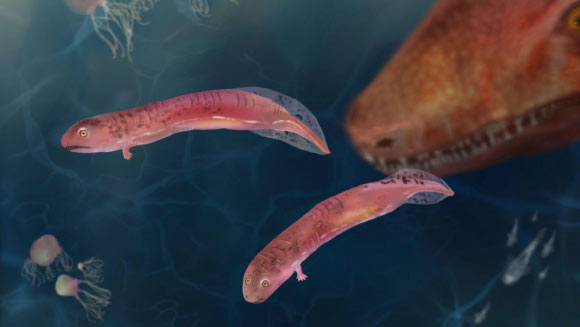
Earth’s First Land Animals May Never Have Been Amphibian-Like After All
Les premiers animaux terrestres de la Terre n’ont peut-être jamais ressemblé à des amphibiens après tout
prédateur musée Carbonifère évolution
Les paléontologues du Field Museum of Natural History ont décrit les restes fossilisés de bébés embolomères, des prédateurs ressemblant à des crocodiles qui rôdaient dans d'anciennes rivières et marécages il y a entre 350 et 280 millions d'années. L’article Les premiers animaux terrestres de la Terre n’ont peut-être jamais ressemblé à des amphibiens après tout, apparu en premier sur Sci.News : Breaking Science News.
19/06/2026 sci-news ⚙ Traduction automatique
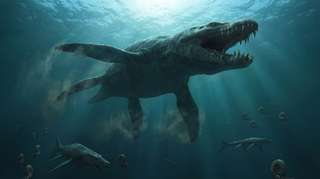
On le croyait roi des océans au Jurassique : une vertèbre percée raconte un combat d’une violence extrême
os dent vertèbre chasse musée Jurassique fossile Ichthyosauria Ichthyosaurus Pliosaurus comportement
Oublié pendant plus d’un siècle dans les tiroirs d’un musée, un fossile refait aujourd’hui surface et raconte une scène de violence extrême dans les océans du Jurassique. Une vertèbre d’ichtyosaure, marquée par l’impact d’une dent brisée, révèle peut-être l’attaque d’un des plus redoutables...
17/06/2026 futura-terre
Un superbe crâne de théropode exposé
musée fossile Tyrannosaurus crâne
Lors d'une visite au Museum für Naturkunde (Berlin) nous en avons profité pour photographier le magnifique crâne de Tristan le Tyrannosaurus rex.  Le crâne est l’un des crânes de tyrannosaure les plus complets et les mieux conservés connus de la science.  Les fossiles de T. rex, exposés à côté du crâne, ont été nommés Tristan Otto.  À
12/06/2026 everythingdinosaur ⚙ Traduction automatique
1 2 3 4 5 6 7