musée

Type de contenu

359 image(s) · 14 Actualités

Galerie d'images

Diversity of Marginocephalians. Psittacosaurus, Pachycephalosaurus, Protoceratops, Triceratops, Stegoceras and Prenoceratops.

Diversity of Marginocephalians. Psittacosaurus, Pachycephalosaurus, Protoceratops, Triceratops, Stegoceras and Prenoceratops.

musée Marginocephalia Neornithischia Pachycephalosauria +5
Cast of Ceratosaurus from the Cleveland Lloyd Quarry, Utah, on display at the Natural History Museum of Utah, Salt Lake City.

Cast of Ceratosaurus from the Cleveland Lloyd Quarry, Utah, on display at the Natural History Museum of Utah, Salt Lake City.

musée moulage Averostra Ceratosauria
A photograph of Coelophysis bauri taken at the Denver Museum of Nature and Science in 2007.

A photograph of Coelophysis bauri taken at the Denver Museum of Nature and Science in 2007.

musée Denver Coelophysis Neotheropoda
Acrocanthosaurus, North Carolina Museum of Natural Sciences.

Acrocanthosaurus, North Carolina Museum of Natural Sciences.

musée Acrocanthosaurus Neotheropoda
The Chicago specimen of Archaeopteryx (PA 830), a well-preserved fossil highlighting the transitional features between non-avian dinosaurs and birds, housed at the Field Museum of Natural History.

The Chicago specimen of Archaeopteryx (PA 830), a well-preserved fossil highlighting the transitional features between non-avian dinosaurs and birds, housed at the Field Museum of Natural History.

musée fossile spécimen Archaeopteryx +2
Fossil of Anhanguera, an extinct reptile-- Took the photo at Natural History Museum, London

Fossil of Anhanguera, an extinct reptile-- Took the photo at Natural History Museum, London

musée fossile Anhanguera
A cast replica of a skeletal mount of the prehistoric pterosaur Anhanguera blittersdorffi on display at Melbourne Museum in Victoria, Australia.

A cast replica of a skeletal mount of the prehistoric pterosaur Anhanguera blittersdorffi on display at Melbourne Museum in Victoria, Australia.

musée Australie moulage Anhanguera +1
Anhanguera skeleton, North American Museum of Ancient Life.

Anhanguera skeleton, North American Museum of Ancient Life.

musée États-Unis Anhanguera squelette
A photograph of partial specimen American Museum of Natural History (AMNH) 22555, skull without mandible, of Anhanguera sp. (formerly often assigned to Anhanguera santanae),[1] from the Early Cretaceous Romualdo Formation (former Romualdo Member of the Santana Formation) of NE Brazil in right lateral view.

A photograph of partial specimen American Museum of Natural History (AMNH) 22555, skull without mandible, of Anhanguera sp. (formerly often assigned to Anhanguera santanae),[1] from the Early Cretaceous Romualdo Formation (former Romualdo Member of the Santana Formation) of NE Brazil in right lateral view.

musée Brésil Conway Romualdo +7
A photograph of partial specimen American Museum of Natural History (AMNH) 22555, anterior dorsal vertebrae, dorsal ribs and partial shoulder girdle (at least right scapula) of Anhanguera sp. (formerly often assigned to Anhanguera santanae),[1] from the Early Cretaceous Romualdo Formation (former Romualdo Member of the Santana Formation) of NE Brazil in dorsal view.

A photograph of partial specimen American Museum of Natural History (AMNH) 22555, anterior dorsal vertebrae, dorsal ribs and partial shoulder girdle (at least right scapula) of Anhanguera sp. (formerly often assigned to Anhanguera santanae),[1] from the Early Cretaceous Romualdo Formation (former Romualdo Member of the Santana Formation) of NE Brazil in dorsal view.

musée Brésil Conway Romualdo +6
A photograph of partial specimen American Museum of Natural History (AMNH) 22555, posterior dorsal vertebrae, and the sacrum and pelvis (both iliae, and right ischium and pubis) of Anhanguera sp. (formerly often assigned to Anhanguera santanae),[1] from the Early Cretaceous Romualdo Formation (former Romualdo Member of the Santana Formation) of NE Brazil in dorsal view.
Taxons Anhanguera

A photograph of partial specimen American Museum of Natural History (AMNH) 22555, posterior dorsal vertebrae, and the sacrum and pelvis (both iliae, and right ischium and pubis) of Anhanguera sp. (formerly often assigned to Anhanguera santanae),[1] from the Early Cretaceous Romualdo Formation (former Romualdo Member of the Santana Formation) of NE Brazil in dorsal view.

bassin musée Brésil Conway +7
The Tyrannosaurus rex, Dromaeosaurus, Triceratops, and Struthiomimus diorama in the Third Planet exhibit at the Milwaukee Public Museum in Milwaukee, Wisconsin (United States).

The Tyrannosaurus rex, Dromaeosaurus, Triceratops, and Struthiomimus diorama in the Third Planet exhibit at the Milwaukee Public Museum in Milwaukee, Wisconsin (United States).

musée États-Unis Dromaeosauria Struthiomimus +2
The Tyrannosaurus rex, Dromaeosaurus, Triceratops, and Struthiomimus diorama in the Third Planet exhibit at the Milwaukee Public Museum in Milwaukee, Wisconsin (United States).

The Tyrannosaurus rex, Dromaeosaurus, Triceratops, and Struthiomimus diorama in the Third Planet exhibit at the Milwaukee Public Museum in Milwaukee, Wisconsin (United States).

musée États-Unis Dromaeosauria Struthiomimus +2
The Tyrannosaurus rex, Dromaeosaurus, Triceratops, and Struthiomimus diorama in the Third Planet exhibit at the Milwaukee Public Museum in Milwaukee, Wisconsin (United States).

The Tyrannosaurus rex, Dromaeosaurus, Triceratops, and Struthiomimus diorama in the Third Planet exhibit at the Milwaukee Public Museum in Milwaukee, Wisconsin (United States).

musée États-Unis Dromaeosauria Struthiomimus +2
Triceratops mounted skeleton at Los Angeles Museum of Natural History, Los Angeles, United States of America

Triceratops mounted skeleton at Los Angeles Museum of Natural History, Los Angeles, United States of America

musée États-Unis Triceratops squelette
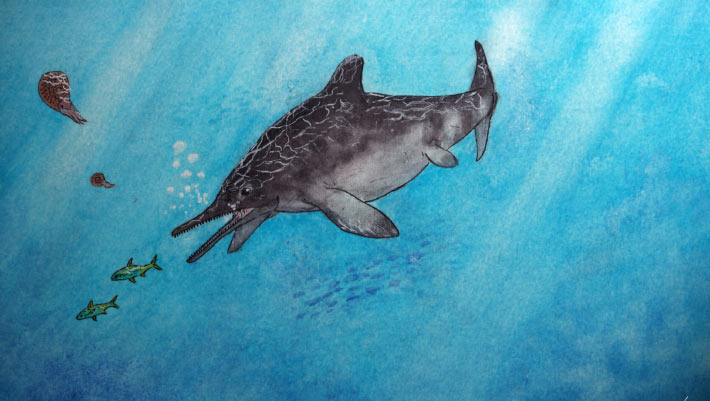
Ichthyosaur Skeleton, Platypterygius longmani, in The Museum and Art Gallery of the Northern Territory at Darwin.
Taxons Platypterygius

Ichthyosaur Skeleton, Platypterygius longmani, in The Museum and Art Gallery of the Northern Territory at Darwin.

musée Ichthyosauria Platypterygius squelette
1 2 3 4 5 6 7 8 9 10 11 12 13 14 15 16 17 18 19 20 21 22 23

Actualités

Ce « crocodile terroriste » de 31 pieds mangeait des dinosaures. Maintenant c'est de retour
prédateur musée États-Unis Dinosauria squelette
Un énorme « crocodile terroriste » de la taille d’un bus qui s’attaquait autrefois aux dinosaures a été ramené à la vie avec des détails époustouflants grâce au premier squelette complet scientifiquement précis de Deinosuchus schwimmeri. S'étendant sur plus de 9 mètres de long, cet ancien prédateur suprême régnait sur le sud-est des États-Unis il y a plus de 75 millions d'années. Les visiteurs peuvent désormais le voir de près au Tellus Science Museum, le seul endroit au monde à posséder cette réplique.
15/04/2026 sciencedaily ⚙ Traduction automatique
Cet étrange serpent ancien se cachait dans un musée depuis des décennies
os musée fossile découverte
Un étrange petit fossile de serpent trouvé sur la côte sud de l’Angleterre a enfin révélé ses secrets, plus de 40 ans après sa découverte. Le nouveau Paradoxophidion richardoweni vivait il y a environ 37 millions d’années, à une époque où la Grande-Bretagne était plus chaude et regorgeait de reptiles. Bien que connu uniquement à partir de minuscules os de la colonne vertébrale, ce « serpent paradoxal » présente un mélange surprenant de traits observés chez les serpents modernes, le plaçant près des racines mêmes du groupe de serpents le plus diversifié d’aujourd’hui.
31/12/2025 sciencedaily ⚙ Traduction automatique
Cet os rare résout enfin le mystère du Nanotyrannus
os croissance musée fossile spécimen Nanotyrannus Tyrannosaurus découverte
Les scientifiques ont confirmé que Nanotyrannus était une espèce mature et non un jeune T. rex. Un examen microscopique de son os hyoïde a fourni la preuve clé, correspondant aux signaux de croissance observés dans les spécimens connus de T. rex. Cette découverte suggère un écosystème de tyrannosaures plus riche et plus compétitif qu’on ne le pensait auparavant. Il montre également comment les fossiles de musée et les analyses de pointe peuvent réécrire l’histoire préhistorique.
09/12/2025 sciencedaily ⚙ Traduction automatique
Langebaanweg Partie 3 – Une archive animale
musée fossile
Bien que nous ayons discuté de l'importance du Langebaanweg en termes de sa position géologique et de son histoire, ce qui le rend vraiment célèbre est l'incroyable taille et la diversité de son assemblage de fossiles. Au cours des 60 dernières années, les collections du musée Iziko du Cap ont été remplies d'un [&hellip
22/08/2025 palaeocast ⚙ Traduction automatique
1 2 3