←

partiel

Type de vue

44 image(s) · 5 Actualités

Galerie d'images

Montanoceratops cerorhynchus (Brown & Schlaikjer, 1942) - fossil ceratopsian dinosaur skeleton from the Cretaceous of Montana, USA. (MOR 542, Museum of the Rockies, Bozeman, Montana, USA)
The species name is sometimes incorrectly spelled "cerorhynchos".  The original publication spells it "cerorhynchus".  The genus name is sometimes incorrectly spelled "Montanaceratops".
Ceratopsians are the "horned dinosaurs".  They were large, quadrupedal, herbivorous dinosaurs having a beaked skull and a frill - an extension of bone behind the skull that partially covered the neck.  Ceratopsian dinosaurs are known from the Jurassic and Cretaceous.  The last members of the group died out at the Cretaceous-Tertiary boundary, 65 million years ago.
This is a partial skeleton of a juvenile Montanoceratops, a ceratopsian from the near-latest Cretaceous of western North America.  This type of ceratopsian lacked facial horns.


From exhibit signage:
Sixty-eight million years ago, when the horned dinosaurs Triceratops and Torosaurus inhabited the coastal plain near the inland ocean, primitive "horned" dinosaurs named Montanoceratops lived in uplands near the young Rocky Mountains.  These little protoceratopsians fed on plants with slicing teeth and narrow beaks similar to their giant three-horned relatives.


Classification: Animalia, Chordata, Vertebrata, Reptilia, Archosauria, Dinosauria, Ornithischia, Marginocephalia, Ceratopsia, Leptoceratopsidae
Stratigraphy: St. Mary River Formation, Maastrichtian Stage, Upper Cretaceous
Locality: Little Rocky Coulee, north of the town of Cut Bank, eastern Glacier County, northwestern Montana, USA


Info. at:

en.wikipedia.org/wiki/Montanoceratops
Taxons Montanoceratops

Montanoceratops cerorhynchus (Brown & Schlaikjer, 1942) - fossil ceratopsian dinosaur skeleton from the Cretaceous of Montana, USA. (MOR 542, Museum of the Rockies, Bozeman, Montana, USA) The species name is sometimes incorrectly spelled "cerorhynchos". The original publication spells it "cerorhynchus". The genus name is sometimes incorrectly spelled "Montanaceratops". Ceratopsians are the "horned dinosaurs". They were large, quadrupedal, herbivorous dinosaurs having a beaked skull and a frill - an extension of bone behind the skull that partially covered the neck. Ceratopsian dinosaurs are known from the Jurassic and Cretaceous. The last members of the group died out at the Cretaceous-Tertiary boundary, 65 million years ago. This is a partial skeleton of a juvenile Montanoceratops, a ceratopsian from the near-latest Cretaceous of western North America. This type of ceratopsian lacked facial horns. From exhibit signage: Sixty-eight million years ago, when the horned dinosaurs Triceratops and Torosaurus inhabited the coastal plain near the inland ocean, primitive "horned" dinosaurs named Montanoceratops lived in uplands near the young Rocky Mountains. These little protoceratopsians fed on plants with slicing teeth and narrow beaks similar to their giant three-horned relatives. Classification: Animalia, Chordata, Vertebrata, Reptilia, Archosauria, Dinosauria, Ornithischia, Marginocephalia, Ceratopsia, Leptoceratopsidae Stratigraphy: St. Mary River Formation, Maastrichtian Stage, Upper Cretaceous Locality: Little Rocky Coulee, north of the town of Cut Bank, eastern Glacier County, northwestern Montana, USA Info. at: en.wikipedia.org/wiki/Montanoceratops

os musée États-Unis Crétacé +17
Partial skeleton of Claosaurus agilis (holotype YPM 1190).

(A) Right ilium in lateral view. (B) Partial postorbital in lateral view. (C) Distal process of the right ischium in lateral view. (D) Mounted partial skeleton of YPM 1190. (E) Coronoid process of the right dentary in lateral view. (F) Fragment of maxilla in lateral view. (G) Detail of the maxillary tooth crowns in (F). (H) Fragment of maxilla in lateral view. (I) Detail of a maxillary tooth crown in (H).
Taxons Claosaurus

Partial skeleton of Claosaurus agilis (holotype YPM 1190). (A) Right ilium in lateral view. (B) Partial postorbital in lateral view. (C) Distal process of the right ischium in lateral view. (D) Mounted partial skeleton of YPM 1190. (E) Coronoid process of the right dentary in lateral view. (F) Fragment of maxilla in lateral view. (G) Detail of the maxillary tooth crowns in (F). (H) Fragment of maxilla in lateral view. (I) Detail of a maxillary tooth crown in (H).

dent holotype Claosaurus partiel +1
Rhomboid distal nasal process of the crest of Tsintaosaurus spinorhinus.

A. Partial distal nasal process of IVPP V725 in right lateral view. B. Lateral view of composite skull (reversed). C. partial premaxillonasal complex of IVPP V829 in right lateral view. D. Line drawing of (C) showing nasal-premaxilla articulation, and the displacement (arrow) experienced by the distal nasal process relative to its articular position. E. Mounted holotype skull (IVPP V725) of T. spinorhinus in left lateral view (reversed). F. Partial right distal nasal process (although catalogued as IVPP V725, this element corresponds to a different specimen than the type; reversed).
Taxons Tsintaosaurus

Rhomboid distal nasal process of the crest of Tsintaosaurus spinorhinus. A. Partial distal nasal process of IVPP V725 in right lateral view. B. Lateral view of composite skull (reversed). C. partial premaxillonasal complex of IVPP V829 in right lateral view. D. Line drawing of (C) showing nasal-premaxilla articulation, and the displacement (arrow) experienced by the distal nasal process relative to its articular position. E. Mounted holotype skull (IVPP V725) of T. spinorhinus in left lateral view (reversed). F. Partial right distal nasal process (although catalogued as IVPP V725, this element corresponds to a different specimen than the type; reversed).

crête dessin holotype spécimen +3
"Postcranial sauropod remains from the Arruda Sub-basin: 1-6 and 8-17, lectotype material of Lourinhasaurus alenquerensis (Moinho do Carmo), middle-to-posterior cervical centrum (MG 30373) in left view (1), fused sacral neural spines (MG 30376) in left view (2), dorsal centrum (MG 4956) in left view (3), anterior caudal neural spine (MG 30374) in posterior (4) and anterior (5) views, anterior caudal centrum (MG 4956) in anterior view (6), middle dorsal neural spine (MG 30384) in posterior view (8), left ischium (MG 4957) in lateral view (9), posterior cervical neural spine (MG 30379) in right view (10), left scapula and coracoids (MG 5780) in lateral view (11), left astragalus (MG 30375) in proximal view (12), left pubis (MG 4970) in lateral view (13), left tibia (MG 4983) in anterior view (14), left fibula (MG 4984) in lateral view (15), left humerus (MG 2) in anterior view (16) and left femur (MG 4931) in posterior view (17); 7, Neosauropoda indet., partial dorsal centrum (MG 4799, Castanheira) in right view. Black scale bar: 10 cm. See Anatomical abbreviations for abbreviations."
Taxons Lourinhasaurus

"Postcranial sauropod remains from the Arruda Sub-basin: 1-6 and 8-17, lectotype material of Lourinhasaurus alenquerensis (Moinho do Carmo), middle-to-posterior cervical centrum (MG 30373) in left view (1), fused sacral neural spines (MG 30376) in left view (2), dorsal centrum (MG 4956) in left view (3), anterior caudal neural spine (MG 30374) in posterior (4) and anterior (5) views, anterior caudal centrum (MG 4956) in anterior view (6), middle dorsal neural spine (MG 30384) in posterior view (8), left ischium (MG 4957) in lateral view (9), posterior cervical neural spine (MG 30379) in right view (10), left scapula and coracoids (MG 5780) in lateral view (11), left astragalus (MG 30375) in proximal view (12), left pubis (MG 4970) in lateral view (13), left tibia (MG 4983) in anterior view (14), left fibula (MG 4984) in lateral view (15), left humerus (MG 2) in anterior view (16) and left femur (MG 4931) in posterior view (17); 7, Neosauropoda indet., partial dorsal centrum (MG 4799, Castanheira) in right view. Black scale bar: 10 cm. See Anatomical abbreviations for abbreviations."

humérus écaille Lourinhasaurus Neosauropoda +1
Type (a) and paratype (b) partial eggs of Stillatuberoolithus storrsi. Cropped from Figure 2 of Oser et al. (2021). These eggs are housed in Denver Museum of Nature and Science, specimen numbers EPV.65602 and EPV.128286 respectively.
Taxons Stillatuberoolithus

Type (a) and paratype (b) partial eggs of Stillatuberoolithus storrsi. Cropped from Figure 2 of Oser et al. (2021). These eggs are housed in Denver Museum of Nature and Science, specimen numbers EPV.65602 and EPV.128286 respectively.

musée Denver spécimen Stillatuberoolithus +1
Ornithischian dinosaur Stenopelix valdensis Meyer, 1857, holotype (GZG 741/2, formerly GPI Gö 741−2), from the Obernkirchen Sandstone (Early
Cretaceous: Berriasian), near Bückeburg, Niedersachsen, Germany. A. Large sandstone slab. B. Interpretative outline drawing of large latex cast (prepared
from large sandstone slab), showing majority of postcranial skeleton in dorsal view. C. Small sandstone slab. D. Interpretative outline drawing of small la−
tex cast (prepared from small sandstone slab), showing sacrum and caudals, pelvic region and partial hindlimbs in ventral view. For clarity elements in and
around the sacral region have not been labelled—these areas are shown in greater detail in Fig. 3. Roman numerals II–IV correspond to respective digits.

Abbreviations: mt, metatarsals; f, femur; ?, unidentified element.
Taxons Stenopelix

Ornithischian dinosaur Stenopelix valdensis Meyer, 1857, holotype (GZG 741/2, formerly GPI Gö 741−2), from the Obernkirchen Sandstone (Early Cretaceous: Berriasian), near Bückeburg, Niedersachsen, Germany. A. Large sandstone slab. B. Interpretative outline drawing of large latex cast (prepared from large sandstone slab), showing majority of postcranial skeleton in dorsal view. C. Small sandstone slab. D. Interpretative outline drawing of small la− tex cast (prepared from small sandstone slab), showing sacrum and caudals, pelvic region and partial hindlimbs in ventral view. For clarity elements in and around the sacral region have not been labelled—these areas are shown in greater detail in Fig. 3. Roman numerals II–IV correspond to respective digits. Abbreviations: mt, metatarsals; f, femur; ?, unidentified element.

dessin Allemagne Berriasien Crétacé +8
Preserved elements of Eurazhdarcho langendorfensis re-assembled as found in partial articulation.

EME VP 312. (a) Slab and counter-slab with cervical vertebrae in dorsal view. (b) Specimen in original position with cervicals in ventral view.
Taxons Eurazhdarcho

Preserved elements of Eurazhdarcho langendorfensis re-assembled as found in partial articulation. EME VP 312. (a) Slab and counter-slab with cervical vertebrae in dorsal view. (b) Specimen in original position with cervicals in ventral view.

spécimen Eurazhdarcho partiel
Partial skull of Abrictosaurus consors in left lateral view (NHMUK RU B54)
Taxons Abrictosaurus

Partial skull of Abrictosaurus consors in left lateral view (NHMUK RU B54)

Abrictosaurus partiel crâne
Partial skeleton of the heterodontosaurid Tianyulong confuciusi from the Lower Cretaceous Jehol Group of China. Partial skeleton mainly in right lateral view (IVPP V17090). Enlargements of subsequent figures are shown in red. Scale bar equals 10 cm.
Taxons Tianyulong

Partial skeleton of the heterodontosaurid Tianyulong confuciusi from the Lower Cretaceous Jehol Group of China. Partial skeleton mainly in right lateral view (IVPP V17090). Enlargements of subsequent figures are shown in red. Scale bar equals 10 cm.

écaille Chine Crétacé Heterodontosauridae +3
Skeletal diagram of Zuolong salleei, based on related basal coelurosaurs. Scale bar = 1 meter. Light colours indicate known material (white is known external bones, light grey is either palate, braincase, or sacrum). Dark colours indicate unknown material (partial bones or unknown braincase)
Taxons Zuolong

Skeletal diagram of Zuolong salleei, based on related basal coelurosaurs. Scale bar = 1 meter. Light colours indicate known material (white is known external bones, light grey is either palate, braincase, or sacrum). Dark colours indicate unknown material (partial bones or unknown braincase)

os écaille Coelurosauria Zuolong +1
Partial wing of a czech pterosaur Cretornis hlavaci, discovered in 1880 near Choceň. National Museum in Prague.
Taxons Cretornis

Partial wing of a czech pterosaur Cretornis hlavaci, discovered in 1880 near Choceň. National Museum in Prague.

musée Cretornis Pterosauria partiel
Squelette partiel de Wulatesaurus.
Taxons Bannykus

Squelette partiel de Wulatesaurus.

Japon Bannykus partiel squelette
Holotype of Jakapil kaniukura (MPCA-PV-630), postcranial bones. Speculative silhouette showing preserved elements (a); osteoderm distribution is speculative and partial to show non-osteodermal elements); dorsal vertebra elements in dorsal (b), right lateral (c) and anterior (d,e) views; sacral vertebra in left lateral view (f); mid-caudal vertebra in left lateral view (g); fragment of the mid-shaft of a dorsal rib in posterior view (the enlarged, broken posterior edge is highlighted (h); expanded distal ends of two dorsal ribs (i); left scapula in lateral view (j); right scapula in lateral view (k); right coracoid in lateral view (l); left and right humeri in anterior view (m); probable right ulna in lateral view (n); metacarpals, non-ungual and ungual phalanx in dorsal views (o); left femur elements in anterior view (p); proximal end of the right fibula in lateral view (q); distal end of the left tibia in anterior view (r); ischial elements in side view (s); cervical osteoderms in dorsal view (t), flat scutes in dorsal view (u), spine-like osteoderm in side view (v) and ossicle in dorsal view (w). ac acromial crest, aco asymmetrical cervical osteoderm, alp anterolateral process, ap acromial process, at anterior trochanter, bb basal bone, ebr expanded broken rib edge, di diapophysis, dpc deltopectoral crest, ft fourth trochanter, gl glenoid, mc metacarpals, nc neural canal, ncs neurocentral suture, ph non-ungual phalanx, pp pubic peduncle, poz postzygapophyses, rug marginal rugosities, sb scapular blade, sc scute, tp transverse process, uph ungual phalanx.
Taxons Jakapil

Holotype of Jakapil kaniukura (MPCA-PV-630), postcranial bones. Speculative silhouette showing preserved elements (a); osteoderm distribution is speculative and partial to show non-osteodermal elements); dorsal vertebra elements in dorsal (b), right lateral (c) and anterior (d,e) views; sacral vertebra in left lateral view (f); mid-caudal vertebra in left lateral view (g); fragment of the mid-shaft of a dorsal rib in posterior view (the enlarged, broken posterior edge is highlighted (h); expanded distal ends of two dorsal ribs (i); left scapula in lateral view (j); right scapula in lateral view (k); right coracoid in lateral view (l); left and right humeri in anterior view (m); probable right ulna in lateral view (n); metacarpals, non-ungual and ungual phalanx in dorsal views (o); left femur elements in anterior view (p); proximal end of the right fibula in lateral view (q); distal end of the left tibia in anterior view (r); ischial elements in side view (s); cervical osteoderms in dorsal view (t), flat scutes in dorsal view (u), spine-like osteoderm in side view (v) and ossicle in dorsal view (w). ac acromial crest, aco asymmetrical cervical osteoderm, alp anterolateral process, ap acromial process, at anterior trochanter, bb basal bone, ebr expanded broken rib edge, di diapophysis, dpc deltopectoral crest, ft fourth trochanter, gl glenoid, mc metacarpals, nc neural canal, ncs neurocentral suture, ph non-ungual phalanx, pp pubic peduncle, poz postzygapophyses, rug marginal rugosities, sb scapular blade, sc scute, tp transverse process, uph ungual phalanx.

os crête vertèbre holotype +2
(A) View of the original downside in the field and the best preserved side as it experienced the least disruption by scavenging sharks. (B) Detail of midbody region showing the large gastroliths that settled downwards onto the inside of the right, dorsal ribs. This region was hit by the excavator bucket with the partial loss of ribs and an unknown number of gastroliths. Fortuitously, the broken blocks hosting gastroliths can be removed and their contents inspected from several sides. Scalebar is 10 cm. Source credit: Sue Sabrowski, Royal Tyrrell Museum of Palaeontology.
Taxons Albertonectes

(A) View of the original downside in the field and the best preserved side as it experienced the least disruption by scavenging sharks. (B) Detail of midbody region showing the large gastroliths that settled downwards onto the inside of the right, dorsal ribs. This region was hit by the excavator bucket with the partial loss of ribs and an unknown number of gastroliths. Fortuitously, the broken blocks hosting gastroliths can be removed and their contents inspected from several sides. Scalebar is 10 cm. Source credit: Sue Sabrowski, Royal Tyrrell Museum of Palaeontology.

musée Albertonectes partiel
Partial skull and anterior cervical vertebrae of unidentified pliosaurid plesiosaurian (MPPL 18797) from the uppermost Callovian–middle Oxfordian of Kaberlaba (Asiago, Italy), in left lateral view. Photograph (A) and explanatory drawing (B). White, preserved bone surfaces; dark grey, preserved margins of skull fenestrae; light grey, eroded bone surface; cross hatching, broken bone.
Taxons Anguanax

Partial skull and anterior cervical vertebrae of unidentified pliosaurid plesiosaurian (MPPL 18797) from the uppermost Callovian–middle Oxfordian of Kaberlaba (Asiago, Italy), in left lateral view. Photograph (A) and explanatory drawing (B). White, preserved bone surfaces; dark grey, preserved margins of skull fenestrae; light grey, eroded bone surface; cross hatching, broken bone.

os dessin Italie Callovien +6
Photo of the partial holotype skeleton of the ornithomimosaur Garudimimus brevipes, as mounted in the Mongolian Natural History Museum. Scan of physical photograph.
Taxons Garudimimus

Photo of the partial holotype skeleton of the ornithomimosaur Garudimimus brevipes, as mounted in the Mongolian Natural History Museum. Scan of physical photograph.

musée holotype Garudimimus Ornithomimosauria +2
1 2 3

Actualités

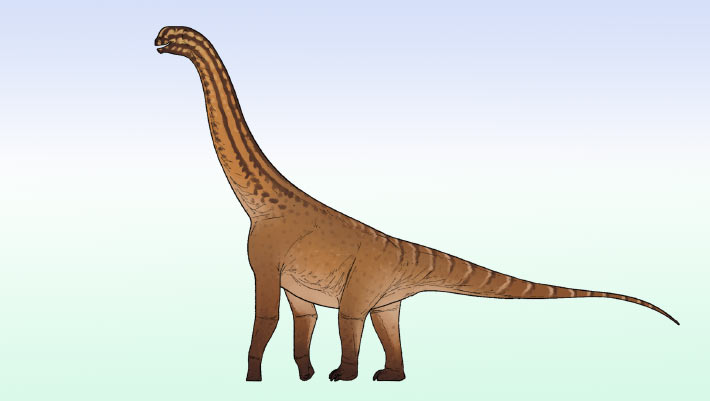
Small Sauropod Dinosaur from Jurassic Period Discovered in India
Un petit dinosaure sauropode du Jurassique découvert en Inde
bassin Inde Jurassique Jurassique moyen Dinosauria partiel squelette
Des paléontologues indiens ont mis au jour un squelette partiel d’un petit dinosaure néosauropode jusqu’alors inconnu dans les roches du Jurassique moyen du bassin de Kachchh, dans le Gujarat. L'article Petit dinosaure sauropode de la période jurassique découvert en Inde apparaît en premier sur Sci.News : Breaking Science News.
21/07/2026 sci-news ⚙ Traduction automatique
Description d'un nouveau dinosaure à quatre ailes en provenance de Chine
plume membre description Chine Crétacé Crétacé inférieur fossile Dinosauria Microraptorinae nouvelle espèce partiel
Les paléontologues ont décrit une nouvelle espèce de théropode microraptorine du nord-ouest de la Chine. Nommé Jian changmaensis, ce petit dinosaure à plumes planait probablement sur quatre ailes. Le fossile fournit de nouvelles informations sur les écosystèmes du Crétacé inférieur et étend l’aire de répartition connue des Microraptorinae. Le matériau fossile est constitué d'une ceinture pectorale gauche partielle articulée et d'un membre antérieur. Il
08/06/2026 everythingdinosaur ⚙ Traduction automatique
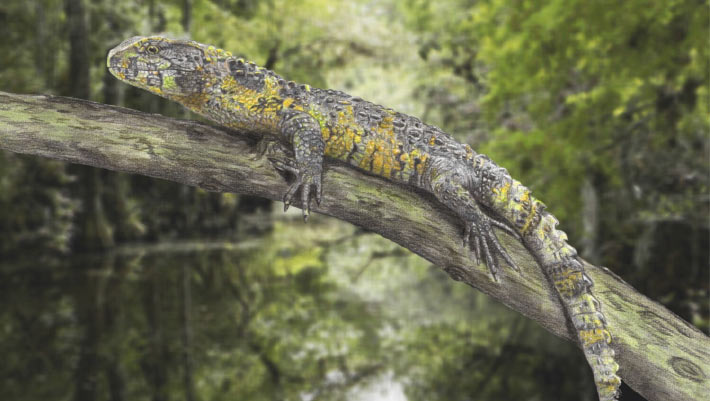
83-Million-Year-Old Crocodile Lizard Fossil Unearthed in France
Un fossile de lézard crocodile vieux de 83 millions d'années découvert en France
mâchoire France fossile découverte nouvelle espèce partiel
Les paléontologues ont identifié un nouveau genre et une nouvelle espèce de lézard pan-shinisaure à partir d'une mâchoire supérieure partielle découverte dans le sud de la France, repoussant la présence de sa lignée en Europe d'au moins 30 millions d'années. L'article Un fossile de lézard crocodile vieux de 83 millions d'années découvert en France est apparu en premier sur Sci.News : Breaking Science News.
22/05/2026 sci-news ⚙ Traduction automatique
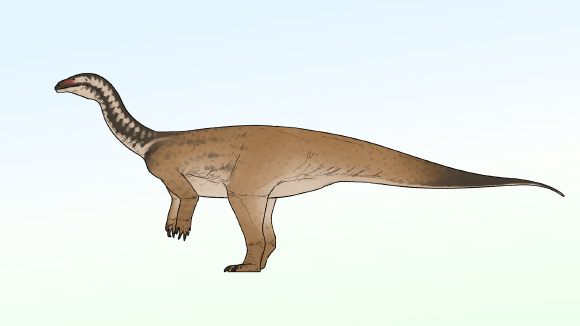
Early Sauropodomorph Dinosaur Unearthed in China
Un dinosaure sauropodomorphe découvert en Chine
Chine Jurassique inférieur Jurassique Dinosauria Massopoda nouvelle espèce partiel squelette
Un nouveau genre et une nouvelle espèce de sauropodomorphe massopodan qui vivaient au début du Jurassique ont été identifiés à partir d'un squelette partiel découvert dans le sud-ouest de la Chine. L'article Les premiers dinosaures sauropodomorphes découverts en Chine est apparu en premier sur Sci.News : Breaking Science News.
04/05/2026 sci-news ⚙ Traduction automatique
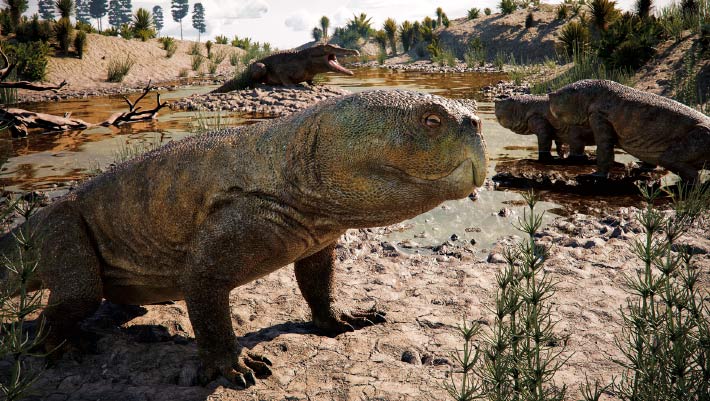
New Fossil from Brazil Reveals Unexpected Diversity among Pre-Dinosaur Herbivores
Un nouveau fossile du Brésil révèle une diversité inattendue parmi les herbivores pré-dinosaures
mâchoire Brésil Trias fossile Dinosauria nouvelle espèce partiel crâne
Des paléontologues du Brésil ont identifié un nouveau genre et une nouvelle espèce de rhynchosaure hyperodapédontique – une lignée éteinte de reptiles herbivores à bec – sur la base d'un crâne partiel et de mâchoires inférieures récupérés dans des roches du Trias. L'article Un nouveau fossile du Brésil révèle une diversité inattendue parmi les herbivores pré-dinosaures est apparu en premier sur Sci.News : Breaking Science News.
23/04/2026 sci-news ⚙ Traduction automatique