←

feather

Anatomical part

18 image(s) · 13 News

Image gallery

Norellraptor is a microraptorian dinosaur known from a specimen with exceptionally well-preserved feathers. Its discovery supports evidence that gliding and flight-related traits evolved independently in multiple dinosaur groups. Norellraptor had long feathers on its arms and legs, typical of microraptorians, resulting in a four-winged body plan.
Taxa Norellraptor

Norellraptor is a microraptorian dinosaur known from a specimen with exceptionally well-preserved feathers. Its discovery supports evidence that gliding and flight-related traits evolved independently in multiple dinosaur groups. Norellraptor had long feathers on its arms and legs, typical of microraptorians, resulting in a four-winged body plan.

feather flight specimen Dinosauria +2
Fossil includes two tail feathers at the left of the image.
Taxa Wulong

Fossil includes two tail feathers at the left of the image.

feather fossil Wulong
Fujianvenator is an anchiornithid avialan from the Late Jurassic of China, whose discovery gave important insight to the evolution of birds. It had proportionately long legs, with the tibia twice the length of the femur. This suggests it may have been a strong runner, and possibly had a terrestrial or wading lifestyle. Fujianvenator was a small dinosaur, weighing about 640 g. As an avialan, it was almost certainly covered in feathers, though it does not seem likely to have been capable of flight.
Taxa Fujianvenator

Fujianvenator is an anchiornithid avialan from the Late Jurassic of China, whose discovery gave important insight to the evolution of birds. It had proportionately long legs, with the tibia twice the length of the femur. This suggests it may have been a strong runner, and possibly had a terrestrial or wading lifestyle. Fujianvenator was a small dinosaur, weighing about 640 g. As an avialan, it was almost certainly covered in feathers, though it does not seem likely to have been capable of flight.

feather flight China Jurassic +7
Caihong juji holotype specimen (PMoL-B00175). Photographs of the slab (a) and counter slab (b) and line drawing (c) of the specimen based on both slabs. Photograph (d) and line drawing (e) of a composite of the rostrum of the skull and mandible exposed on the counter slab and the post-rostrum cranium exposed on the slab. Arrows indicate lacrimal crests. Question mark indicates uncertain identification. Scale bars: 10 cm a–c, 1 cm d and e. aof antorbital fenestra, cav caudal vertebra, cev cervical vertebra, dr dorsal rib, dv dorsal vertebra, ect ectopterygoid, emf external mandibular fenestra, en external naris, f feather, fu furcula, ga gastralia, hy hyoid, il ilium, is ischium, la left angular, lar left articular, lc left coracoid, lcr lacrimal crest, ld left dentary, lf left, frontal, lfe left femur, lh left humerus, lj left jugal, ll left lacrimal, lma left maxilla, lm left manus, ln left nasal, lp left pes, lpa left palatine, lpo left postorbital, lq left quadrate, lqj left quadratojugal, lr left radius, ls left scapula, lsp left splenial, lsa left surangular, lsq left squamosal, lt left tibiotarsus, lu left ulna, ma mandible, mf maxillary fenestra, o orbit, p parietal, pm premaxilla, pt pterygoid, pu pubis, rar right articular, rc right coracoid, rd right dentary, rfe right femur, rh right humerus, rm right manus, rp right pes, rpra right prearticular, rq right quadrate, rr right radius, rs right scapula, rt right tibiotarsus, ru right ulna, scl sclerotic bones, sk skull, sy synsacrum
Taxa Caihong

Caihong juji holotype specimen (PMoL-B00175). Photographs of the slab (a) and counter slab (b) and line drawing (c) of the specimen based on both slabs. Photograph (d) and line drawing (e) of a composite of the rostrum of the skull and mandible exposed on the counter slab and the post-rostrum cranium exposed on the slab. Arrows indicate lacrimal crests. Question mark indicates uncertain identification. Scale bars: 10 cm a–c, 1 cm d and e. aof antorbital fenestra, cav caudal vertebra, cev cervical vertebra, dr dorsal rib, dv dorsal vertebra, ect ectopterygoid, emf external mandibular fenestra, en external naris, f feather, fu furcula, ga gastralia, hy hyoid, il ilium, is ischium, la left angular, lar left articular, lc left coracoid, lcr lacrimal crest, ld left dentary, lf left, frontal, lfe left femur, lh left humerus, lj left jugal, ll left lacrimal, lma left maxilla, lm left manus, ln left nasal, lp left pes, lpa left palatine, lpo left postorbital, lq left quadrate, lqj left quadratojugal, lr left radius, ls left scapula, lsp left splenial, lsa left surangular, lsq left squamosal, lt left tibiotarsus, lu left ulna, ma mandible, mf maxillary fenestra, o orbit, p parietal, pm premaxilla, pt pterygoid, pu pubis, rar right articular, rc right coracoid, rd right dentary, rfe right femur, rh right humerus, rm right manus, rp right pes, rpra right prearticular, rq right quadrate, rr right radius, rs right scapula, rt right tibiotarsus, ru right ulna, scl sclerotic bones, sk skull, sy synsacrum

bone crest feather humerus +8
Restoration of Lucianovenator bonoi based on images of known remains and related genera. Proto-feathers for insulation in coelophysids and other early theropods have been supported by this study:[1]
Taxa Lucianovenator

Restoration of Lucianovenator bonoi based on images of known remains and related genera. Proto-feathers for insulation in coelophysids and other early theropods have been supported by this study:[1]

feather Coelophysidae Lucianovenator study
Jian is a microraptorine dromaeosaur, and the only non-avian dinosaur so far discovered from the Xiagou Formation of what is now China. Typical of microraptorinae, Jian had long pennaceous feathers growing from its arms as well as its legs, and was small in size, growing to approximately 1 m in total body length.
Taxa Jian

Jian is a microraptorine dromaeosaur, and the only non-avian dinosaur so far discovered from the Xiagou Formation of what is now China. Typical of microraptorinae, Jian had long pennaceous feathers growing from its arms as well as its legs, and was small in size, growing to approximately 1 m in total body length.

feather China Dinosauria Dromaeosauria +3
Atrociraptor marshalli restoration. Follows elements depicted in original description:[1] Unknown parts restored after relatives with preserved feathers, such as described in:[2]

Atrociraptor marshalli restoration. Follows elements depicted in original description:[1] Unknown parts restored after relatives with preserved feathers, such as described in:[2]

feather description Atrociraptor
Baminornis is the oldest known bird with a fused pygostyle, a skeletal feature that implies tail feathers. Its discovery pushed back current understanding of bird evolution and global distribution by 20 million years. Baminornis was about 15 cm in length, had many features in common with modern birds, including the capability for powered flight.
Taxa Baminornis

Baminornis is the oldest known bird with a fused pygostyle, a skeletal feature that implies tail feathers. Its discovery pushed back current understanding of bird evolution and global distribution by 20 million years. Baminornis was about 15 cm in length, had many features in common with modern birds, including the capability for powered flight.

feather flight Baminornis bird +2
Life reconstruction of Heyuannia yanshini, depicting a male with a tail-feather fan

Life reconstruction of Heyuannia yanshini, depicting a male with a tail-feather fan

feather Heyuannia Ingenia
Life reconstruction of Heyuannia yanshini, depicting a male with a tail-feather fan displaying for an onlooking female.

Life reconstruction of Heyuannia yanshini, depicting a male with a tail-feather fan displaying for an onlooking female.

feather Heyuannia Ingenia
The "dromaeo-avemorphs", as they are informally known (Paul, 2002), represent a group of early paravian theropods with asymmetrical feathers and an Archaeopteryx-like body. According to Hartman et al. (2019), the animals shown in this image might, together, form a clade (monophyletic group) without modern birds.

The "dromaeo-avemorphs", as they are informally known (Paul, 2002), represent a group of early paravian theropods with asymmetrical feathers and an Archaeopteryx-like body. According to Hartman et al. (2019), the animals shown in this image might, together, form a clade (monophyletic group) without modern birds.

feather Archaeopteryx Paraves bird
Diuqin is an unenlagiine dinosaur from the Late Cretaceous of what is now Argentina. Unenlagiines, known exclusively from South America, are usually classified as dromaeosaurs though this is sometimes debated. Like dromaeosaurs, they were covered in feathers, carnivorous, and had the large sickle-like claw on the inner toe of each foot. Unique to unenlagiines is their elongated snout, suggesting a piscivorous diet. Diuqin was a medium-sized unenlagiine, at about 4 m in length.

Diuqin is an unenlagiine dinosaur from the Late Cretaceous of what is now Argentina. Unenlagiines, known exclusively from South America, are usually classified as dromaeosaurs though this is sometimes debated. Like dromaeosaurs, they were covered in feathers, carnivorous, and had the large sickle-like claw on the inner toe of each foot. Unique to unenlagiines is their elongated snout, suggesting a piscivorous diet. Diuqin was a medium-sized unenlagiine, at about 4 m in length.

claw feather Argentina Cretaceous +5
Simplified cladogram of Dinosauria with the distribution of feathers according to the fossil record. Despite its more ancient origin, it
was only in maniraptoriformes that modern-type feathers (pennaceous feathers) have arisen (Based in Xu & Guo, 2009; Clarke,

2013; Godefroit et al., 2013; Han et al., 2014; Koshchowitz et al., 2014).

Simplified cladogram of Dinosauria with the distribution of feathers according to the fossil record. Despite its more ancient origin, it was only in maniraptoriformes that modern-type feathers (pennaceous feathers) have arisen (Based in Xu & Guo, 2009; Clarke, 2013; Godefroit et al., 2013; Han et al., 2014; Koshchowitz et al., 2014).

feather fossil Dinosauria Maniraptoriformes +1
Life restoration of Pampadromaeus barberenai based on known skeletal remains. Colours speculative, feathers based on presumed presence within all Ornithodira.

Life restoration of Pampadromaeus barberenai based on known skeletal remains. Colours speculative, feathers based on presumed presence within all Ornithodira.

feather Pampadromaeus
Anzu is a fairly large caenagnathid oviraptorosaurian dinosaur that grew to nearly 4 m in length, and weighed 200-300 kg. It was a bipedal dinosaur and was covered in feathers, with a large sloping crest atop its head. Typical of oviraptorosaurs, Anzu had a short toothless beak, an adaptation that suggests it was most likely herbivorous or possibly omnivorous.

Anzu is a fairly large caenagnathid oviraptorosaurian dinosaur that grew to nearly 4 m in length, and weighed 200-300 kg. It was a bipedal dinosaur and was covered in feathers, with a large sloping crest atop its head. Typical of oviraptorosaurs, Anzu had a short toothless beak, an adaptation that suggests it was most likely herbivorous or possibly omnivorous.

crest feather Anzu Caenagnathidae +2
Euryapteryx gravis restored based on skeletons and preserved moa feathers.
Taxa Ageroolithus

Euryapteryx gravis restored based on skeletons and preserved moa feathers.

feather Ageroolithus skeleton
1 2

News

66-million-year-old feather in dinosaur poop may reveal why birds survived the asteroid
feather Dinosauria bird
A feather discovered inside 66-million-year-old fossilized dinosaur poop may help explain why modern birds survived the asteroid catastrophe. The extinct bird it came from had more primitive insulating feathers, suggesting superior plumage may have helped the ancestors of living birds endure the deadly impact winter.
11/09/2026 sciencedaily
Ils ont retrouvé une crotte de dinosaure : une minuscule plume pourrait expliquer pourquoi certains oiseaux ont survécu
They found dinosaur droppings: a tiny feather could explain why some birds survived
feather fossil Dinosauria
What if simple feathers, trapped for 66 million years in dinosaur droppings, held part of the answer to one of the great enigmas in the history of birds? Exceptionally well-preserved fossils have just revealed a difference that might have helped...
11/09/2026 futura-terre ⚙ Auto-translated
Exceptionally Preserved Bird Feathers Found in 66-Million-Year-Old Dinosaur Coprolite
feather Dinosauria bird
Paleontologists in Montana have discovered remarkably preserved feathers of an ancient aquatic bird inside a fossilized dinosaur dropping, offering rare insight into why certain birds survived the asteroid strike that wiped out the dinosaurs 66 million years ago. The post Exceptionally Preserved Bird Feathers Found in 66-Million-Year-Old Dinosaur Coprolite appeared first on Sci.News: Breaking Science News.
10/09/2026 sci-news
Le Krakatau offre des images spectaculaires : une nuit de feu au-dessus de l’un des volcans les plus puissants du monde
Krakatau offers spectacular images: a night of fire above one of the most powerful volcanoes in the world
feather
An eruptive paroxysm occurred on the famous Indonesian volcano Krakatau on September 4 and 5. A powerful lava fountain formed a voluminous plume of ash which reached 15 kilometers in altitude, for impressive images! Rain of volcanic projections, dark night in...
09/09/2026 futura-terre ⚙ Auto-translated
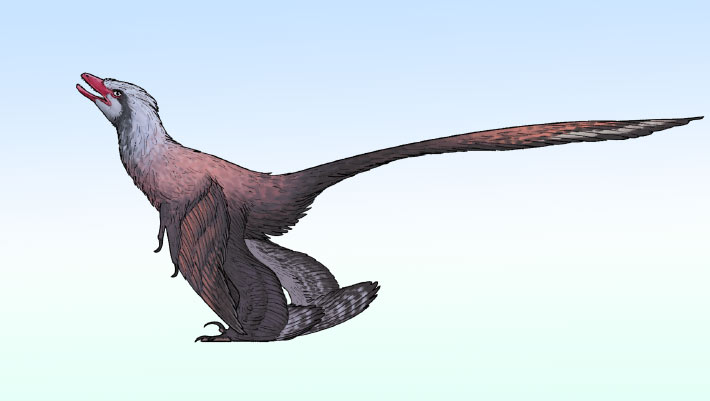
New Feathered Dinosaur from China Had Peacock-Like Tail
feather China Cretaceous Early Cretaceous Dinosauria bird evolution new species
A new genus and species of four-winged pennaraptoran dinosaur from the Early Cretaceous of northern China is adding another twist to the story of how birds evolved from their dinosaur ancestors. The post New Feathered Dinosaur from China Had Peacock-Like Tail appeared first on Sci.News: Breaking Science News.
23/06/2026 sci-news
1 2 3