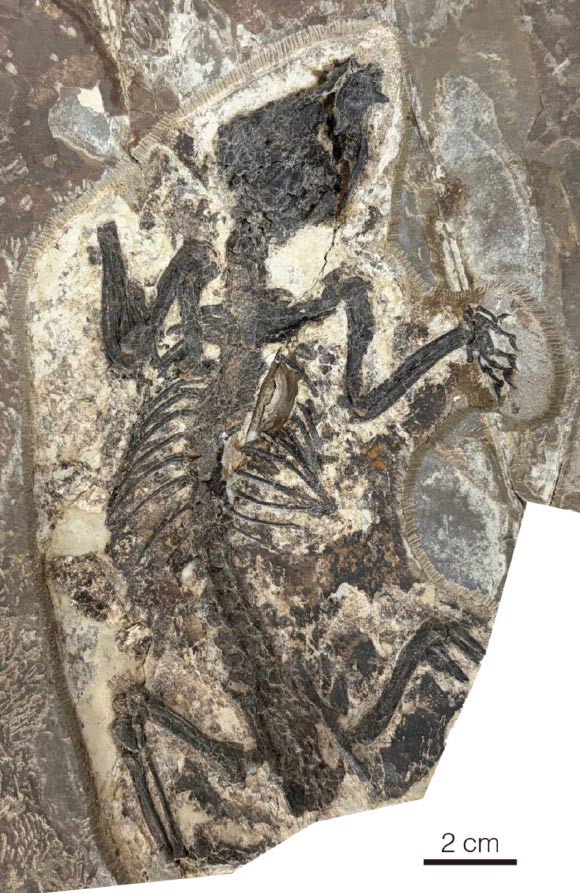
fossile

Nature du spécimen

183 image(s) · 103 Actualités

Galerie d'images

Illustration of a fossil of Chubutisaurus
Taxons Chubutisaurus

Illustration of a fossil of Chubutisaurus

fossile Chubutisaurus
Illustration of a fossil of Plateosauravus
Taxons Plateosauravus

Illustration of a fossil of Plateosauravus

fossile Plateosauravus
Fossil of Nannopterygius, an extinct reptile-- Took the photo at Natural History Museum, London
Taxons Nannopterygius

Fossil of Nannopterygius, an extinct reptile-- Took the photo at Natural History Museum, London

musée fossile Nannopterygius Paraophthalmosaurus
Fossil of Nannopterygius, an extinct reptile-- Took the photo at Natural History Museum, London
Taxons Paraophthalmosaurus

Fossil of Nannopterygius, an extinct reptile-- Took the photo at Natural History Museum, London

musée fossile Nannopterygius Paraophthalmosaurus
Fossil of Macropterygius, an extinct reptile--
Taxons Aegirosaurus

Fossil of Macropterygius, an extinct reptile--

fossile Aegirosaurus
Cast of a Scaphognathus crassirostris, a kind of pterosaur. On display as part of the exhibit "Pterosaurs: Flight in the Age of Dinosaurs" at the Cleveland Natural History Museum in Cleveland, Ohio, in the United States.
This animal lived about 150 million years ago. This fossil was found in the Solnhofen formation in Germany. This is a cast; the fossil itself is held by the Institute of Geology and Paleontology at the University of Bonn.
Taxons Scaphognathus

Cast of a Scaphognathus crassirostris, a kind of pterosaur. On display as part of the exhibit "Pterosaurs: Flight in the Age of Dinosaurs" at the Cleveland Natural History Museum in Cleveland, Ohio, in the United States. This animal lived about 150 million years ago. This fossil was found in the Solnhofen formation in Germany. This is a cast; the fossil itself is held by the Institute of Geology and Paleontology at the University of Bonn.

vol musée Allemagne États-Unis +7
Fossil specimen of early Cretaceous pterosaur Sinopterus dongi, which is collected from Chaoyang, Liaoning, China. The specimen (BMNHC Ph773) is a collection of Beijing Museum of Natural History and was on display in the National Museum of Natural Science (Taichung, Taiwan) during a special exhibition.
Taxons Sinopterus

Fossil specimen of early Cretaceous pterosaur Sinopterus dongi, which is collected from Chaoyang, Liaoning, China. The specimen (BMNHC Ph773) is a collection of Beijing Museum of Natural History and was on display in the National Museum of Natural Science (Taichung, Taiwan) during a special exhibition.

musée Chine Taïwan Crétacé +6
Fossil specimen of early Cretaceous pterosaur Sinopterus dongi, which is collected from Chaoyang, Liaoning, China. The specimen (BMNHC Ph773) is a collection of Beijing Museum of Natural History and was on display in the National Museum of Natural Science (Taichung, Taiwan) during a special exhibition.
Taxons Huaxiapterus

Fossil specimen of early Cretaceous pterosaur Sinopterus dongi, which is collected from Chaoyang, Liaoning, China. The specimen (BMNHC Ph773) is a collection of Beijing Museum of Natural History and was on display in the National Museum of Natural Science (Taichung, Taiwan) during a special exhibition.

musée Chine Taïwan Crétacé +6
A diagram of the dromaeosaurid dinosaur Pyroraptor olympius with selected fossil elements that can be reliably scaled using measurements given by Allain & Taquet (2000) to produce a realistic estimate of the taxon's size and proportions in life. This silhouette is based on the supposition of the missing elements of Pyroraptor's skeleton having fairly generalized dromaeosaurid proportions.
Taxons Pyroraptor

A diagram of the dromaeosaurid dinosaur Pyroraptor olympius with selected fossil elements that can be reliably scaled using measurements given by Allain & Taquet (2000) to produce a realistic estimate of the taxon's size and proportions in life. This silhouette is based on the supposition of the missing elements of Pyroraptor's skeleton having fairly generalized dromaeosaurid proportions.

fossile Dinosauria Dromaeosauridae Pyroraptor +1
Sinornithosaurus millenii fossil displayed in Hong Kong Science Museum
Taxons Sinornithosaurus

Sinornithosaurus millenii fossil displayed in Hong Kong Science Museum

musée fossile Sinornithosaurus
Fossiles de Variraptor présentés lors de l'exposition "Sur les traces des dinosaures de la montagne Sainte-Victoire"
Taxons Variraptor

Fossiles de Variraptor présentés lors de l'exposition "Sur les traces des dinosaures de la montagne Sainte-Victoire"

fossile Dinosauria Variraptor
Fossil specimen of Anchiornis huxleyi on display at the Beijing Museum of Natural History.
Taxons Anchiornis

Fossil specimen of Anchiornis huxleyi on display at the Beijing Museum of Natural History.

musée fossile spécimen Anchiornis
Title: The dinosaur book : the ruling reptiles and their relatives
Identifier: bookruli00colb (find matches)
Year: 1951 (1950s)
Authors: Colbert, Edwin H. (Edwin Harris), 1905-2001; Knight, Charles Robert, 1874-1953; American Museum of Natural History
Subjects: Dinosaurs; Reptiles, Fossil
Publisher: New York : Published for the American Museum of Natural History by McGraw-Hill
Contributing Library: American Museum of Natural History Library
Digitizing Sponsor: IMLS / LSTA / METRO

View Book Page: Book Viewer
About This Book: Catalog Entry
View All Images: All Images From Book
Click here to view book online to see this illustration in context in a browseable online version of this book.

Text Appearing Before Image: 
'
Text Appearing After Image: 
bone A typical example of the parts usually found fossilized: portions of the skeleton of a small dinosaur from Mongolia A.M.N.H. photographs One of the rarest fossils: a dino- saur egg over 60 million years old, compared with a hen's egg (left) and an alligator egg (right)

Note About Images

Please note that these images are extracted from scanned page images that may have been digitally enhanced for readability - coloration and appearance of these illustrations may not perfectly resemble the original work.
Taxons Oviraptor

Title: The dinosaur book : the ruling reptiles and their relatives Identifier: bookruli00colb (find matches) Year: 1951 (1950s) Authors: Colbert, Edwin H. (Edwin Harris), 1905-2001; Knight, Charles Robert, 1874-1953; American Museum of Natural History Subjects: Dinosaurs; Reptiles, Fossil Publisher: New York : Published for the American Museum of Natural History by McGraw-Hill Contributing Library: American Museum of Natural History Library Digitizing Sponsor: IMLS / LSTA / METRO View Book Page: Book Viewer About This Book: Catalog Entry View All Images: All Images From Book Click here to view book online to see this illustration in context in a browseable online version of this book. Text Appearing Before Image: ' Text Appearing After Image: bone A typical example of the parts usually found fossilized: portions of the skeleton of a small dinosaur from Mongolia A.M.N.H. photographs One of the rarest fossils: a dino- saur egg over 60 million years old, compared with a hen's egg (left) and an alligator egg (right) Note About Images Please note that these images are extracted from scanned page images that may have been digitally enhanced for readability - coloration and appearance of these illustrations may not perfectly resemble the original work.

os musée Mongolie fossile +4
Title: The dinosaur book : the ruling reptiles and their relatives
Identifier: bookruli00colb (find matches)
Year: 1951 (1950s)
Authors: Colbert, Edwin H. (Edwin Harris), 1905-2001; Knight, Charles Robert, 1874-1953; American Museum of Natural History
Subjects: Dinosaurs; Reptiles, Fossil
Publisher: New York : Published for the American Museum of Natural History by McGraw-Hill
Contributing Library: American Museum of Natural History Library
Digitizing Sponsor: IMLS / LSTA / METRO

View Book Page: Book Viewer
About This Book: Catalog Entry
View All Images: All Images From Book
Click here to view book online to see this illustration in context in a browseable online version of this book.

Text Appearing Before Image: 
'
Text Appearing After Image: 
bone A typical example of the parts usually found fossilized: portions of the skeleton of a small dinosaur from Mongolia A.M.N.H. photographs One of the rarest fossils: a dino- saur egg over 60 million years old, compared with a hen's egg (left) and an alligator egg (right)

Note About Images

Please note that these images are extracted from scanned page images that may have been digitally enhanced for readability - coloration and appearance of these illustrations may not perfectly resemble the original work.
Taxons Fenestrosaurus

Title: The dinosaur book : the ruling reptiles and their relatives Identifier: bookruli00colb (find matches) Year: 1951 (1950s) Authors: Colbert, Edwin H. (Edwin Harris), 1905-2001; Knight, Charles Robert, 1874-1953; American Museum of Natural History Subjects: Dinosaurs; Reptiles, Fossil Publisher: New York : Published for the American Museum of Natural History by McGraw-Hill Contributing Library: American Museum of Natural History Library Digitizing Sponsor: IMLS / LSTA / METRO View Book Page: Book Viewer About This Book: Catalog Entry View All Images: All Images From Book Click here to view book online to see this illustration in context in a browseable online version of this book. Text Appearing Before Image: ' Text Appearing After Image: bone A typical example of the parts usually found fossilized: portions of the skeleton of a small dinosaur from Mongolia A.M.N.H. photographs One of the rarest fossils: a dino- saur egg over 60 million years old, compared with a hen's egg (left) and an alligator egg (right) Note About Images Please note that these images are extracted from scanned page images that may have been digitally enhanced for readability - coloration and appearance of these illustrations may not perfectly resemble the original work.

os musée Mongolie fossile +4
Montanoceratops cerorhynchus (Brown & Schlaikjer, 1942) - fossil ceratopsian dinosaur skeleton from the Cretaceous of Montana, USA. (MOR 542, Museum of the Rockies, Bozeman, Montana, USA)
The species name is sometimes incorrectly spelled "cerorhynchos".  The original publication spells it "cerorhynchus".  The genus name is sometimes incorrectly spelled "Montanaceratops".
Ceratopsians are the "horned dinosaurs".  They were large, quadrupedal, herbivorous dinosaurs having a beaked skull and a frill - an extension of bone behind the skull that partially covered the neck.  Ceratopsian dinosaurs are known from the Jurassic and Cretaceous.  The last members of the group died out at the Cretaceous-Tertiary boundary, 65 million years ago.
This is a partial skeleton of a juvenile Montanoceratops, a ceratopsian from the near-latest Cretaceous of western North America.  This type of ceratopsian lacked facial horns.


From exhibit signage:
Sixty-eight million years ago, when the horned dinosaurs Triceratops and Torosaurus inhabited the coastal plain near the inland ocean, primitive "horned" dinosaurs named Montanoceratops lived in uplands near the young Rocky Mountains.  These little protoceratopsians fed on plants with slicing teeth and narrow beaks similar to their giant three-horned relatives.


Classification: Animalia, Chordata, Vertebrata, Reptilia, Archosauria, Dinosauria, Ornithischia, Marginocephalia, Ceratopsia, Leptoceratopsidae
Stratigraphy: St. Mary River Formation, Maastrichtian Stage, Upper Cretaceous
Locality: Little Rocky Coulee, north of the town of Cut Bank, eastern Glacier County, northwestern Montana, USA


Info. at:

en.wikipedia.org/wiki/Montanoceratops
Taxons Montanoceratops

Montanoceratops cerorhynchus (Brown & Schlaikjer, 1942) - fossil ceratopsian dinosaur skeleton from the Cretaceous of Montana, USA. (MOR 542, Museum of the Rockies, Bozeman, Montana, USA) The species name is sometimes incorrectly spelled "cerorhynchos". The original publication spells it "cerorhynchus". The genus name is sometimes incorrectly spelled "Montanaceratops". Ceratopsians are the "horned dinosaurs". They were large, quadrupedal, herbivorous dinosaurs having a beaked skull and a frill - an extension of bone behind the skull that partially covered the neck. Ceratopsian dinosaurs are known from the Jurassic and Cretaceous. The last members of the group died out at the Cretaceous-Tertiary boundary, 65 million years ago. This is a partial skeleton of a juvenile Montanoceratops, a ceratopsian from the near-latest Cretaceous of western North America. This type of ceratopsian lacked facial horns. From exhibit signage: Sixty-eight million years ago, when the horned dinosaurs Triceratops and Torosaurus inhabited the coastal plain near the inland ocean, primitive "horned" dinosaurs named Montanoceratops lived in uplands near the young Rocky Mountains. These little protoceratopsians fed on plants with slicing teeth and narrow beaks similar to their giant three-horned relatives. Classification: Animalia, Chordata, Vertebrata, Reptilia, Archosauria, Dinosauria, Ornithischia, Marginocephalia, Ceratopsia, Leptoceratopsidae Stratigraphy: St. Mary River Formation, Maastrichtian Stage, Upper Cretaceous Locality: Little Rocky Coulee, north of the town of Cut Bank, eastern Glacier County, northwestern Montana, USA Info. at: en.wikipedia.org/wiki/Montanoceratops

os musée États-Unis Crétacé +10
Various fossils pertaining to the holotype of the Triassic ichthyosaur Toretocnemus californicus. This image is derived from plate 24 in Merriam (1903), done by an uncredited artist. The arrangement of the individual figures has been modified from the original.
Original description:
Toretocnemus californicus n. gen. and sp.
Figures reproduced natural size from the type specimen.

Fig. 1. — Inferior side of right posterior limb. t, tibia.
Fig. 2. — Right anterior limb. r, radius.
Fig. 3.— Pelvic arch.
Fig. 4. — Middle dorsal vertebrae and a rib from the same region.
Taxons Toretocnemus

Various fossils pertaining to the holotype of the Triassic ichthyosaur Toretocnemus californicus. This image is derived from plate 24 in Merriam (1903), done by an uncredited artist. The arrangement of the individual figures has been modified from the original. Original description: Toretocnemus californicus n. gen. and sp. Figures reproduced natural size from the type specimen. Fig. 1. — Inferior side of right posterior limb. t, tibia. Fig. 2. — Right anterior limb. r, radius. Fig. 3.— Pelvic arch. Fig. 4. — Middle dorsal vertebrae and a rib from the same region.

membre description Trias fossile +5
1 2 3 4 5 6 7 8 9 10 11 12

Actualités

Le nouveau crocodylomorphe anglais rend hommage à un professeur de gallois
Trias supérieur Trias fossile nouvelle espèce
Les scientifiques ont identifié une nouvelle espèce d'ancien crocodylomorphe dans les roches du Trias supérieur du sud-ouest de l'Angleterre. L'espèce nouvellement nommée, Galahadosuchus jonesi, vivait il y a environ 215 millions d'années et représente la deuxième espèce de crocodylomorphe non crocodyliforme décrite dans les fissures du Trias supérieur de la région du canal de Bristol. Du matériel fossile de crocodylomorphe non crocodyliforme est connu de
01/06/2026 everythingdinosaur ⚙ Traduction automatique
Geosternbergia: Beast of the Week
Geosternbergia : la bête de la semaine
fossile Geosternbergia Pteranodon Pterosauria taxonomie
 Cette semaine, nous regardons un célèbre ptérosaure.  Découvrez Geosternbergia sterngergi !  Je vais commencer cet article en soulignant que Geosternbergia est considérée comme simplement une espèce distincte au sein du genre Pteranodon, par de nombreux experts, ce qui donnerait son nom Pteranodon sternbergi.  Ceci étant dit, puisque j'ai déjà fait un article sur Pteranodon longiceps, je choisis d'appeler ce ptérosaure Geosternbergia.  (la taxonomie est compliquée et également sujette à changement, notamment avec les fossiles)
31/05/2026 prehistoricbeastoftheweek ⚙ Traduction automatique
490-Million-Year-Old Arthropod Fossil Fills Puzzling Gap in Fossil Record
Un fossile d'arthropode vieux de 490 millions d'années comble une lacune déroutante dans les archives fossiles
Canada Cambrien Furongien fossile spécimen nouvelle espèce
Une nouvelle espèce d'arthropode corcoraniidé ayant vécu à l'époque furongienne, il y a entre 497 et 487 millions d'années, a été identifiée à partir d'un spécimen exceptionnellement préservé trouvé près de Québec, au Canada. L'article Un fossile d'arthropode vieux de 490 millions d'années comble une lacune déroutante dans les archives fossiles est apparu en premier sur Sci.News : Breaking Science News.
29/05/2026 sci-news ⚙ Traduction automatique
Encore plus redoutable que le T. rex : ce mosasaure géant, de la taille d'un bus, est le plus féroce jamais découvert
prédateur fossile Mosasaurus étude
Il régnait sur les mers il y a 80 millions d’années, mesurait plus de 13 mètres de long et semblait bien plus violent que les autres prédateurs marins de son époque. Une nouvelle étude vient de révéler l’existence d’un gigantesque mosasaure jusque-là mal identifié, dont les fossiles racontent...
26/05/2026 futura-terre
Une nouvelle espèce d’énorme mosasaure est décrite
prédateur Campanien Crétacé Crétacé supérieur fossile Mosasaurus Tylosaurus nouvelle espèce
Une espèce géante de Tylosaurus nouvellement nommée a été nommée par les chercheurs.  La nouvelle espèce de Tylosaurus a été érigée sur la base de fossiles trouvés dans le nord du Texas. Cet énorme prédateur régnait sur les mers anciennes il y a environ 80 millions d’années (stade faunique campanien du Crétacé supérieur).  L'article scientifique a été publié dans le Bulletin of the American
26/05/2026 everythingdinosaur ⚙ Traduction automatique
1 2 3 4 5 6 7 8 9 10 11 12 13 14 15 16 17 18 19 20 21