←

fossil

Specimen nature

248 image(s) · 268 News

Image gallery

Glyptostrobus europaeus fossil leaves of Burdigalian stage in the early Miocene epoch, from a brown coal mine in Bilina, Czech Republic.

Glyptostrobus europaeus fossil leaves of Burdigalian stage in the early Miocene epoch, from a brown coal mine in Bilina, Czech Republic.

Czech Republic Burdigalian Miocene fossil
Brachipotherium aurelianense, from Rubí. Fossils. Collection of paleontology of the Geological Museum of the Barcelona Seminari (Museu Geològic del Seminari de Barcelona).

Brachipotherium aurelianense, from Rubí. Fossils. Collection of paleontology of the Geological Museum of the Barcelona Seminari (Museu Geològic del Seminari de Barcelona).

museum fossil
Ficus truncata fossil leaf from the early Miocene epoch 20 Ma, of the Třetihorní flóra from Bílina, Czech Republic.

Ficus truncata fossil leaf from the early Miocene epoch 20 Ma, of the Třetihorní flóra from Bílina, Czech Republic.

Czech Republic Miocene fossil
Comptonia acutiloba fossil leaves from the early Miocene epoch 20 Ma, of the Třetihorní flóra from Bílina, Czech Republic.

Comptonia acutiloba fossil leaves from the early Miocene epoch 20 Ma, of the Třetihorní flóra from Bílina, Czech Republic.

Czech Republic Miocene fossil
Berberis berberidifolia fossil leaf of Burdigalian stage in the early Miocene epoch, from a brown coal mine in Bilina, Czech Republic.
Intervals Burdigalian

Berberis berberidifolia fossil leaf of Burdigalian stage in the early Miocene epoch, from a brown coal mine in Bilina, Czech Republic.

Czech Republic Burdigalian Miocene fossil
Sable riche en coquilles fossiles provenant de l'intérieur de puits de dissolution du site de l'Ariey. On y voit des coraux, oursins plats (Amphiope), gastéropodes (Melongena, Conus, Cypraea) et des bivalves (Lucina & Barbatia)

Sable riche en coquilles fossiles provenant de l'intérieur de puits de dissolution du site de l'Ariey. On y voit des coraux, oursins plats (Amphiope), gastéropodes (Melongena, Conus, Cypraea) et des bivalves (Lucina & Barbatia)

fossil
Figure 1. Evolution of macroecological traits in Dinosauria. Large scale event in dinosaur evolution (a); the origin of dinosaurs (star), hyperthermals (volcano), the earliest fossil Avialae (bird), the earliest fossil angiosperm (flower), the Cretaceous/Palaeogene mass extinction (asteroid). Phylogeny of dinosaurs (b) redrawn from Sereno and adapted to the current consensus and upon which an ancestral state reconstruction of temperature niche (mean annual temperature) after Chiarenza et al. is plotted; Mesozoic palaeogeographies (c) for Triassic (T), Jurassic (J) and Cretaceous (K). Silhouette colours symbolize body mass for each of the taxa represented; information on dietary habits are plotted after Barrett and Zanno & Makovicky; numbers represent clades discussed through this study: 1, Ornithischia; 2, Thyreophora; 3, Ornithopoda; 4, Hadrosauroidea; 5, Marginocephalia; 6, Ceratopsia; 7, Saurischia; 8, Sauropodomorpha; 9, Sauropoda; 10, Theropoda; 11, Ceratosauria; 12, Tetanurae; 13, Coelurosauria; 14, Maniraptoriformes; 15, Maniraptora; 16, Deinonychosauria; 17, Avialae; 18, Ornithothoraces. Palaeogeographies modified from original plots via R package ‘mapast’ using plate models by Scotese.

Figure 1. Evolution of macroecological traits in Dinosauria. Large scale event in dinosaur evolution (a); the origin of dinosaurs (star), hyperthermals (volcano), the earliest fossil Avialae (bird), the earliest fossil angiosperm (flower), the Cretaceous/Palaeogene mass extinction (asteroid). Phylogeny of dinosaurs (b) redrawn from Sereno and adapted to the current consensus and upon which an ancestral state reconstruction of temperature niche (mean annual temperature) after Chiarenza et al. is plotted; Mesozoic palaeogeographies (c) for Triassic (T), Jurassic (J) and Cretaceous (K). Silhouette colours symbolize body mass for each of the taxa represented; information on dietary habits are plotted after Barrett and Zanno & Makovicky; numbers represent clades discussed through this study: 1, Ornithischia; 2, Thyreophora; 3, Ornithopoda; 4, Hadrosauroidea; 5, Marginocephalia; 6, Ceratopsia; 7, Saurischia; 8, Sauropodomorpha; 9, Sauropoda; 10, Theropoda; 11, Ceratosauria; 12, Tetanurae; 13, Coelurosauria; 14, Maniraptoriformes; 15, Maniraptora; 16, Deinonychosauria; 17, Avialae; 18, Ornithothoraces. Palaeogeographies modified from original plots via R package ‘mapast’ using plate models by Scotese.

scale Cretaceous Jurassic Mesozoic +23
Simplified cladogram of Dinosauria with the distribution of feathers according to the fossil record. Despite its more ancient origin, it
was only in maniraptoriformes that modern-type feathers (pennaceous feathers) have arisen (Based in Xu & Guo, 2009; Clarke,

2013; Godefroit et al., 2013; Han et al., 2014; Koshchowitz et al., 2014).

Simplified cladogram of Dinosauria with the distribution of feathers according to the fossil record. Despite its more ancient origin, it was only in maniraptoriformes that modern-type feathers (pennaceous feathers) have arisen (Based in Xu & Guo, 2009; Clarke, 2013; Godefroit et al., 2013; Han et al., 2014; Koshchowitz et al., 2014).

feather fossil Dinosauria Maniraptoriformes +1
Photographer: User:Ballista

Edited in Adobe PhotoShop: User:Firsfron
Photographed object is in fact a cast of a real fossil. It's part of a hands-on exhibit of the NHM in London.

Photographer: User:Ballista Edited in Adobe PhotoShop: User:Firsfron Photographed object is in fact a cast of a real fossil. It's part of a hands-on exhibit of the NHM in London.

cast fossil Neotheropoda
The Chicago specimen of Archaeopteryx (PA 830), a well-preserved fossil highlighting the transitional features between non-avian dinosaurs and birds, housed at the Field Museum of Natural History.

The Chicago specimen of Archaeopteryx (PA 830), a well-preserved fossil highlighting the transitional features between non-avian dinosaurs and birds, housed at the Field Museum of Natural History.

museum fossil specimen Archaeopteryx +2
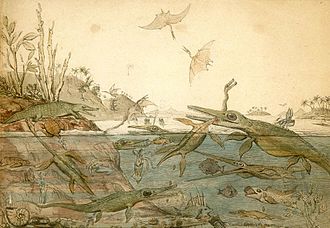
1830 watercolor by the geologist Henry de la Beche depicting life in ancient Dorset based on fossils found by Mary Anning.

1830 watercolor by the geologist Henry de la Beche depicting life in ancient Dorset based on fossils found by Mary Anning.

old school fossil Ichthyosaurus Plesiosaurus +1
Geographic and geologic map showing the location and involved strata of the studied fossil sites in the Xinhe Formation. (A, B) location of the fossiliferous localities in the Gansu Province. (C) Geological map of the involved strata of the studied fossil site (from State Bureau of Surveying and Mapping, GS (2016)2884). White star=Jinchuanloong niedu. Black star=plesiosaur fossils. (D) Stratigraphic chart of the Jurassic at the localities.

Geographic and geologic map showing the location and involved strata of the studied fossil sites in the Xinhe Formation. (A, B) location of the fossiliferous localities in the Gansu Province. (C) Geological map of the involved strata of the studied fossil site (from State Bureau of Surveying and Mapping, GS (2016)2884). White star=Jinchuanloong niedu. Black star=plesiosaur fossils. (D) Stratigraphic chart of the Jurassic at the localities.

Jurassic fossil Jinchuanloong Plesiosauria +1
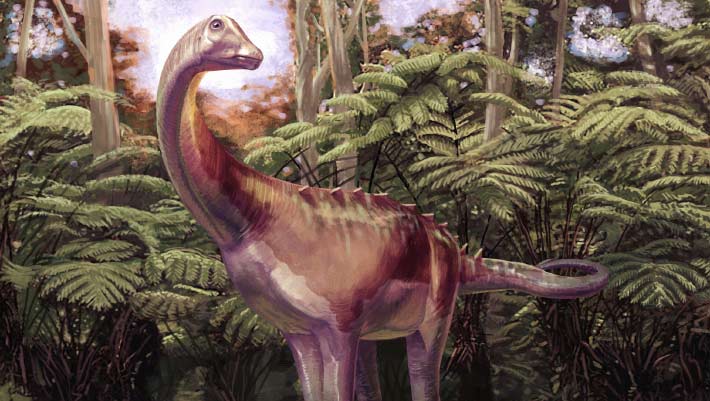
Jinchuanloong is a relatively basal sauropod that measured an estimated 10 m in length. Sauropod skulls typically don't preserve well in the fossil record, but Jinchuanloong is known mainly from the skull, and parts of the neck and tail. Like all sauropods, Jinchuanloong was a quadrupedal herbivore that used its long neck to reach the vegetation that it fed on.

Jinchuanloong is a relatively basal sauropod that measured an estimated 10 m in length. Sauropod skulls typically don't preserve well in the fossil record, but Jinchuanloong is known mainly from the skull, and parts of the neck and tail. Like all sauropods, Jinchuanloong was a quadrupedal herbivore that used its long neck to reach the vegetation that it fed on.

fossil Jinchuanloong skull
Artists’ reconstruction of the living Sarabosaurus dahli swimming with ammonites and fish in southern Utah, 94 million years ago. Artwork by Andrey Atuchin. On June 23, 2023, the following link will go live for more information, www.blm.gov/press-release/94-million-year-old-fossil-prov...

Artists’ reconstruction of the living Sarabosaurus dahli swimming with ammonites and fish in southern Utah, 94 million years ago. Artwork by Andrey Atuchin. On June 23, 2023, the following link will go live for more information, www.blm.gov/press-release/94-million-year-old-fossil-prov...

fossil Sarabosaurus Selmasaurini
Various fossils pertaining to the holotype of the Triassic ichthyosaur Toretocnemus (originally Leptocheirus, also Merriamia) zitteli. This image is derived from plate 23 in Merriam (1903), done by an uncredited artist. The arrangement of the individual figures has been modified from the original (most notably, figures 3 and 4 were swapped to minimize confusion).
Original description:
Leptocheirus zitteli n. gen. and sp.
Figures reproduced natural size from the type specimen.

Fig. 1.— Right side of skull.
Fig. 2. — Cross-section of posterior portion of the lower jaw, taken above the point marked A on the lateral view of the skull.
Fig. 3. — Cross-section of the upper and lower jaws, taken at the break immediately behind the point marked Sp on the lateral view of the skull.
Fig. 4. — Lateral view of an anterior caudal centrum.
Legend (modified from original):

Ar - articular
A - angular
D - dentary
J - jugal
L - lacrimal
Mx - maxilla
Po - postorbital
Sa - surangular
Se - sclerotic ring
Sp - spenial
T - cross-section of tooth
X - doubtful element

Various fossils pertaining to the holotype of the Triassic ichthyosaur Toretocnemus (originally Leptocheirus, also Merriamia) zitteli. This image is derived from plate 23 in Merriam (1903), done by an uncredited artist. The arrangement of the individual figures has been modified from the original (most notably, figures 3 and 4 were swapped to minimize confusion). Original description: Leptocheirus zitteli n. gen. and sp. Figures reproduced natural size from the type specimen. Fig. 1.— Right side of skull. Fig. 2. — Cross-section of posterior portion of the lower jaw, taken above the point marked A on the lateral view of the skull. Fig. 3. — Cross-section of the upper and lower jaws, taken at the break immediately behind the point marked Sp on the lateral view of the skull. Fig. 4. — Lateral view of an anterior caudal centrum. Legend (modified from original): Ar - articular A - angular D - dentary J - jugal L - lacrimal Mx - maxilla Po - postorbital Sa - surangular Se - sclerotic ring Sp - spenial T - cross-section of tooth X - doubtful element

description Triassic fossil holotype +7
Photograph of a fossil cast of a Tanycolagreus topwilsoni skeleton taken at the North American Museum of Ancient Life.

Photograph of a fossil cast of a Tanycolagreus topwilsoni skeleton taken at the North American Museum of Ancient Life.

museum cast fossil Coeluridae +2
1 2 3 4 5 6 7 8 9 10 11 12 13 14 15 16

News

Ancient bees turned tooth sockets into tiny nurseries 20,000 years ago
bone tooth nest fossil bird discovery insect mammals
A stunning fossil discovery shows that ancient bees used the empty tooth sockets of mammal bones as tiny nests after owls scattered the bones across a cave floor 20,000 years ago. It's the first known evidence of bees nesting inside animal bones, revealing an astonishingly creative survival strategy.
05/07/2026 sciencedaily
83-Million-Year-Old Fossil Rewrites Timeline of Antarctica’s First Dinosaur Discovery
vertebra Antarctica fossil Dinosauria Titanosauria discovery
A small fossil collected on an Antarctic island more than four decades ago is a tail vertebra of a titanosaurian sauropod dinosaur that roamed Antarctica roughly 83 million years ago, according to a new paper in the journal Acta Palaeontologica Polonica. The post 83-Million-Year-Old Fossil Rewrites Timeline of Antarctica’s First Dinosaur Discovery appeared first on Sci.News: Breaking Science News.
01/07/2026 sci-news
Cet os oublié dans un tiroir depuis 40 ans vient de révéler le tout premier dinosaure découvert en Antarctique !
This bone forgotten in a drawer for 40 years has just revealed the very first dinosaur discovered in Antarctica!
bone vertebra Antarctica Late Cretaceous fossil Dinosauria Titanosauria discovery
For almost forty years, it remained forgotten in a drawer in the British Antarctic Survey. This fossil, discovered in Antarctica in 1985, has just been identified as the very first dinosaur fossil ever unearthed on the white continent. A discovery which also sheds light on...
01/07/2026 futura-terre ⚙ Auto-translated
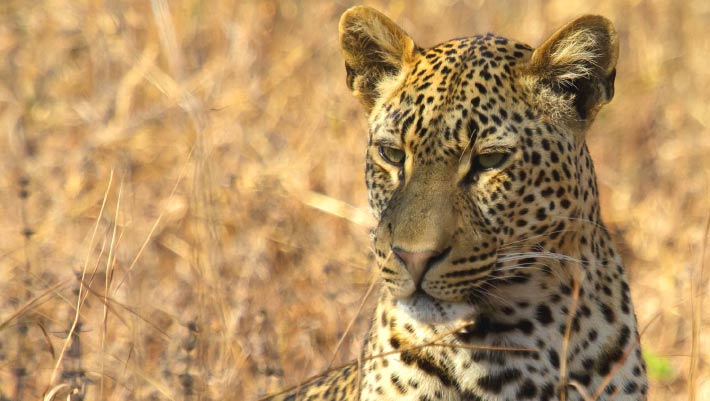
Fossils from German Quarry Reveal New Subspecies of European Leopard
Germany Quaternary fossil mammals new species
Named Panthera pardus burgtonnae, the newly-identified leopard subspecies roamed Europe during the Eemian interglacial period and was far more heavily built than modern leopards. The post Fossils from German Quarry Reveal New Subspecies of European Leopard appeared first on Sci.News: Breaking Science News.
30/06/2026 sci-news
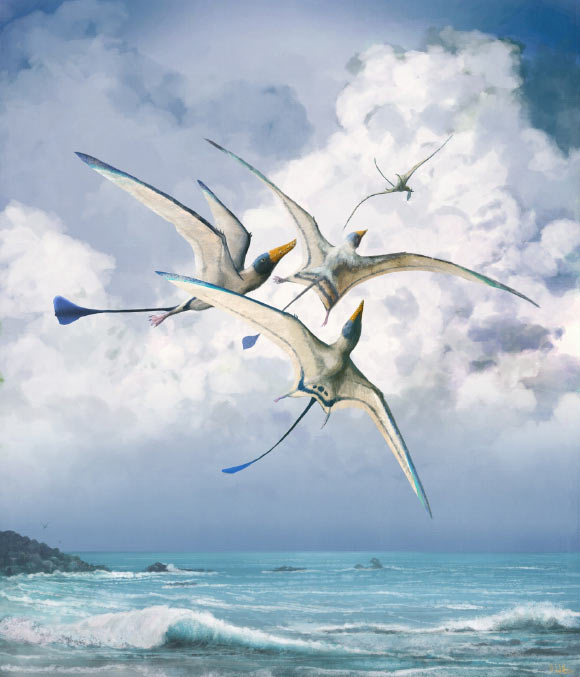
Pterosaurs May Have Sported Far More Varied Wings than Paleontologists Imagined
flight fossil Pterosauria biomechanics evolution
New research from the University of Bristol suggests that pterosaurs -- the first vertebrates to achieve powered flight -- probably displayed a much wider array of wing shapes and flying styles than fossil-based reconstructions have depicted. The post Pterosaurs May Have Sported Far More Varied Wings than Paleontologists Imagined appeared first on Sci.News: Breaking Science News.
30/06/2026 sci-news
1 2 3 4 5 6 7 8 9 10 11 12 13 14 15 16 17 18 19 20 21 22 23 24 25 26 27 28 29 30 31 32 33 34 35 36 37 38 39 40 41 42 43 44 45 46 47 48 49 50 51 52 53 54