fossile

Nature du spécimen

267 image(s) · 171 Actualités

Galerie d'images

Jinchuanloong is a relatively basal sauropod that measured an estimated 10 m in length. Sauropod skulls typically don't preserve well in the fossil record, but Jinchuanloong is known mainly from the skull, and parts of the neck and tail. Like all sauropods, Jinchuanloong was a quadrupedal herbivore that used its long neck to reach the vegetation that it fed on.

Jinchuanloong is a relatively basal sauropod that measured an estimated 10 m in length. Sauropod skulls typically don't preserve well in the fossil record, but Jinchuanloong is known mainly from the skull, and parts of the neck and tail. Like all sauropods, Jinchuanloong was a quadrupedal herbivore that used its long neck to reach the vegetation that it fed on.

fossile Jinchuanloong crâne
Fossil of Quetzalcoatlus, an extinct pterosaur- Took the photo at Senckenberg Museum of Frankfurt

Fossil of Quetzalcoatlus, an extinct pterosaur- Took the photo at Senckenberg Museum of Frankfurt

musée fossile Pterosauria Quetzalcoatlus
Artists’ reconstruction of the living Sarabosaurus dahli swimming with ammonites and fish in southern Utah, 94 million years ago. Artwork by Andrey Atuchin. On June 23, 2023, the following link will go live for more information, www.blm.gov/press-release/94-million-year-old-fossil-prov...

Artists’ reconstruction of the living Sarabosaurus dahli swimming with ammonites and fish in southern Utah, 94 million years ago. Artwork by Andrey Atuchin. On June 23, 2023, the following link will go live for more information, www.blm.gov/press-release/94-million-year-old-fossil-prov...

fossile Sarabosaurus Selmasaurini
Various fossils pertaining to the holotype of the Triassic ichthyosaur Toretocnemus (originally Leptocheirus, also Merriamia) zitteli. This image is derived from plate 23 in Merriam (1903), done by an uncredited artist. The arrangement of the individual figures has been modified from the original (most notably, figures 3 and 4 were swapped to minimize confusion).
Original description:
Leptocheirus zitteli n. gen. and sp.
Figures reproduced natural size from the type specimen.

Fig. 1.— Right side of skull.
Fig. 2. — Cross-section of posterior portion of the lower jaw, taken above the point marked A on the lateral view of the skull.
Fig. 3. — Cross-section of the upper and lower jaws, taken at the break immediately behind the point marked Sp on the lateral view of the skull.
Fig. 4. — Lateral view of an anterior caudal centrum.
Legend (modified from original):

Ar - articular
A - angular
D - dentary
J - jugal
L - lacrimal
Mx - maxilla
Po - postorbital
Sa - surangular
Se - sclerotic ring
Sp - spenial
T - cross-section of tooth
X - doubtful element

Various fossils pertaining to the holotype of the Triassic ichthyosaur Toretocnemus (originally Leptocheirus, also Merriamia) zitteli. This image is derived from plate 23 in Merriam (1903), done by an uncredited artist. The arrangement of the individual figures has been modified from the original (most notably, figures 3 and 4 were swapped to minimize confusion). Original description: Leptocheirus zitteli n. gen. and sp. Figures reproduced natural size from the type specimen. Fig. 1.— Right side of skull. Fig. 2. — Cross-section of posterior portion of the lower jaw, taken above the point marked A on the lateral view of the skull. Fig. 3. — Cross-section of the upper and lower jaws, taken at the break immediately behind the point marked Sp on the lateral view of the skull. Fig. 4. — Lateral view of an anterior caudal centrum. Legend (modified from original): Ar - articular A - angular D - dentary J - jugal L - lacrimal Mx - maxilla Po - postorbital Sa - surangular Se - sclerotic ring Sp - spenial T - cross-section of tooth X - doubtful element

description Trias fossile holotype +7
Various fossils pertaining to the holotype of the Triassic ichthyosaur Toretocnemus californicus. This image is derived from plate 24 in Merriam (1903), done by an uncredited artist. The arrangement of the individual figures has been modified from the original.
Original description:
Toretocnemus californicus n. gen. and sp.
Figures reproduced natural size from the type specimen.

Fig. 1. — Inferior side of right posterior limb. t, tibia.
Fig. 2. — Right anterior limb. r, radius.
Fig. 3.— Pelvic arch.
Fig. 4. — Middle dorsal vertebrae and a rib from the same region.

Various fossils pertaining to the holotype of the Triassic ichthyosaur Toretocnemus californicus. This image is derived from plate 24 in Merriam (1903), done by an uncredited artist. The arrangement of the individual figures has been modified from the original. Original description: Toretocnemus californicus n. gen. and sp. Figures reproduced natural size from the type specimen. Fig. 1. — Inferior side of right posterior limb. t, tibia. Fig. 2. — Right anterior limb. r, radius. Fig. 3.— Pelvic arch. Fig. 4. — Middle dorsal vertebrae and a rib from the same region.

membre description Trias fossile +6
Photograph of a fossil cast of a Tanycolagreus topwilsoni skeleton taken at the North American Museum of Ancient Life.

Photograph of a fossil cast of a Tanycolagreus topwilsoni skeleton taken at the North American Museum of Ancient Life.

musée moulage fossile Coeluridae +2
Tanycolagreus fossil holotype TPII 2000-09-29, North American Museum of Ancient Life.

Tanycolagreus fossil holotype TPII 2000-09-29, North American Museum of Ancient Life.

musée États-Unis fossile holotype +2
Diagram of the skull of Taniwhasaurus antarcticus, the areas in black being the known fossil material.
Reference source:

Álvarez–Herrera, Agnolin & Novas (2020) "A rostral neurovascular system in the mosasaur Taniwhasaurus antarcticus"

Diagram of the skull of Taniwhasaurus antarcticus, the areas in black being the known fossil material. Reference source: Álvarez–Herrera, Agnolin & Novas (2020) "A rostral neurovascular system in the mosasaur Taniwhasaurus antarcticus"

fossile Plioplatecarpinae Taniwhasaurus crâne
Fossil skeleton of Guaibasaurus, a basal Saurischian dinosaur genus

Fossil skeleton of Guaibasaurus, a basal Saurischian dinosaur genus

fossile Dinosauria Guaibasauridae Guaibasaurus +2
Ctenochasma elegans (syn. Pterodactylus elegans) fossil from Solnhofen, Germany

American Museum of Natural History, New York, FR-5147
Received in exchange from the Paläontologisches Museum München, 1909
Taxons Gnathosaurinae

Ctenochasma elegans (syn. Pterodactylus elegans) fossil from Solnhofen, Germany American Museum of Natural History, New York, FR-5147 Received in exchange from the Paläontologisches Museum München, 1909

musée Allemagne fossile Ctenochasma +5
Ctenochasma elegans (syn. Pterodactylus elegans) fossil from Solnhofen, Germany

American Museum of Natural History, New York, FR-5147
Received in exchange from the Paläontologisches Museum München, 1909
Taxons Moganopterinae

Ctenochasma elegans (syn. Pterodactylus elegans) fossil from Solnhofen, Germany American Museum of Natural History, New York, FR-5147 Received in exchange from the Paläontologisches Museum München, 1909

musée Allemagne fossile Ctenochasma +5
Ctenochasma elegans (syn. Pterodactylus elegans) fossil from Solnhofen, Germany

American Museum of Natural History, New York, FR-5147
Received in exchange from the Paläontologisches Museum München, 1909
Taxons Ctenochasmatinae

Ctenochasma elegans (syn. Pterodactylus elegans) fossil from Solnhofen, Germany American Museum of Natural History, New York, FR-5147 Received in exchange from the Paläontologisches Museum München, 1909

musée Allemagne fossile Ctenochasma +5
fossil of henodus

fossil of henodus

fossile Cyamodontoidea Henodontidae Henodus
Fossil of Halisaurus, an extinct reptile- Took the picture at Muse (Trento)
Taxons Halisaurini

Fossil of Halisaurus, an extinct reptile- Took the picture at Muse (Trento)

fossile Halisaurinae Halisaurini Halisauromorpha +2
Fossil of Halisaurus, an extinct reptile- Took the picture at Muse (Trento)
Taxons Pluridensini

Fossil of Halisaurus, an extinct reptile- Took the picture at Muse (Trento)

fossile Halisaurinae Halisaurini Halisauromorpha +2
Fossil of Halisaurus, an extinct reptile- Took the picture at Muse (Trento)
Taxons Halisauromorpha

Fossil of Halisaurus, an extinct reptile- Took the picture at Muse (Trento)

fossile Halisaurinae Halisaurini Halisauromorpha +2
1 2 3 4 5 6 7 8 9 10 11 12 13 14 15 16 17

Actualités

Un nouvel ichtyosaure du Jurassique supérieur des gisements allemands de Plattenkalk
Allemagne Jurassique Jurassique supérieur Tithonien fossile Aegirosaurus Ichthyosauria Jabalisaurus nouvelle espèce
Les scientifiques ont décrit une nouvelle espèce d’ichtyosaure jurassique du sud de l’Allemagne. La nouvelle espèce nommée Jabalisaurus tethyensis vivait il y a environ 149 millions d’années au Jurassique supérieur (stade faunique Tithonien). Remarquablement, certains fossiles attribués à Jabalisaurus tethyensis avaient déjà été classés comme Aegirosaurus. La recherche met en évidence la diversité cachée des ichtyosaures dans la célèbre
17/08/2026 everythingdinosaur ⚙ Traduction automatique
De minuscules fossiles vieux de 1,7 milliard d’années pourraient révéler l’origine complexe de la vie
fossile
Les scientifiques recherchent dans certaines des roches les plus anciennes de la Terre de minuscules fossiles qui pourraient révéler comment une vie microbienne simple a fait un bond extraordinaire vers les plantes, les animaux et d’autres organismes complexes. Résoudre cet ancien mystère pourrait également aider à déterminer si une vie complexe pourrait émerger sur des mondes au-delà de la Terre.
17/08/2026 sciencedaily-paleo ⚙ Traduction automatique
Une nouvelle espèce de la période glaciaire se cachait dans les fossiles des fosses de la Brea depuis des décennies
os Pléistocène fossile découverte nouvelle espèce
Les scientifiques ont découvert une nouvelle espèce d’amphibien éteinte cachée dans les collections de fossiles de La Brea Tar Pits à Los Angeles. Nommé Spea labreae, le crapaud de la période glaciaire est une découverte exceptionnellement rare : un seul autre amphibien éteint du Pléistocène a jamais été identifié en Amérique du Nord. Ses ossements étaient conservés dans des collections depuis les années 1950 avant qu'un chercheur ne remarque des caractéristiques qui le distinguaient des espèces connues.
16/08/2026 sciencedaily-paleo ⚙ Traduction automatique
Un fossile vieux de 30 ans cachait les os d'un mystérieux monstre marin ancien
os mâchoire Crétacé fossile Mosasaurus nouvelle espèce crâne
Des fossiles collectés à Osaka il y a plus de 30 ans ont révélé une surprise cachée à la vue de tous : quatre os jusqu'alors méconnus provenant d'un mosasaure géant du Crétacé. Parmi eux se trouve le premier prémaxillaire confirmé – l’os le plus en avant de la mâchoire supérieure – jamais identifié dans un fossile de mosasaure japonais. Plus intrigant encore, certaines parties du crâne présentent des caractéristiques anatomiques inhabituelles qui ne correspondent pas aux mosasaures connus, ce qui laisse penser que les restes appartiennent à une espèce entièrement nouvelle.
15/08/2026 sciencedaily ⚙ Traduction automatique
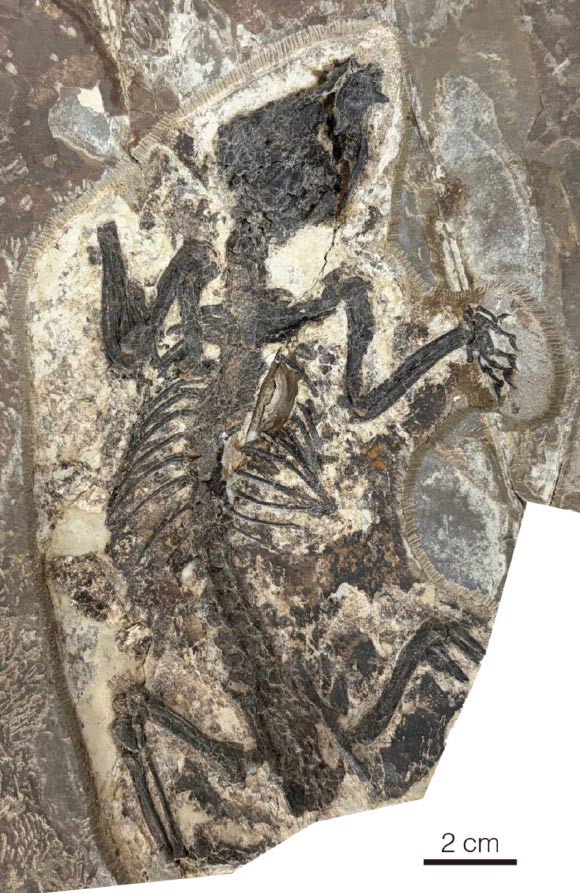
La paléontologie est ébranlée par des molécules organiques découvertes dans des os de dinosaures vieux de 66 millions d'années
os collagène protéine fossile Dinosauria découverte évolution
Les chercheurs ont trouvé des preuves solides que le collagène original peut survivre à l’intérieur des fossiles de dinosaures pendant des dizaines de millions d’années, renversant ainsi une hypothèse de longue date concernant la fossilisation. Cette découverte pourrait révéler des indices moléculaires cachés sur la biologie des dinosaures, leur évolution et la façon dont d’anciennes protéines ont réussi à survivre aussi longtemps.
14/08/2026 sciencedaily ⚙ Traduction automatique
1 2 3 4 5 6 7 8 9 10 11 12 13 14 15 16 17 18 19 20 21 22 23 24 25 26 27 28 29 30 31 32 33 34 35