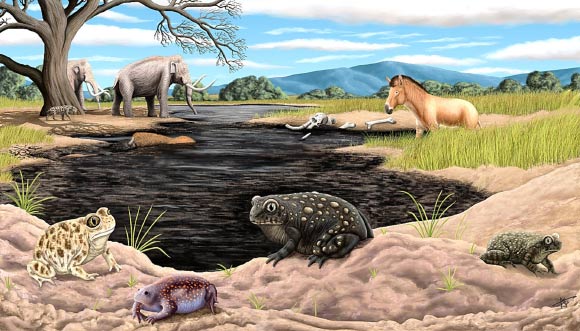
fossile

Nature du spécimen

267 image(s) · 171 Actualités

Galerie d'images

Jinchuanloong is a relatively basal sauropod that measured an estimated 10 m in length. Sauropod skulls typically don't preserve well in the fossil record, but Jinchuanloong is known mainly from the skull, and parts of the neck and tail. Like all sauropods, Jinchuanloong was a quadrupedal herbivore that used its long neck to reach the vegetation that it fed on.

Jinchuanloong is a relatively basal sauropod that measured an estimated 10 m in length. Sauropod skulls typically don't preserve well in the fossil record, but Jinchuanloong is known mainly from the skull, and parts of the neck and tail. Like all sauropods, Jinchuanloong was a quadrupedal herbivore that used its long neck to reach the vegetation that it fed on.

fossile Jinchuanloong crâne
Fossil of Quetzalcoatlus, an extinct pterosaur- Took the photo at Senckenberg Museum of Frankfurt

Fossil of Quetzalcoatlus, an extinct pterosaur- Took the photo at Senckenberg Museum of Frankfurt

musée fossile Pterosauria Quetzalcoatlus
Artists’ reconstruction of the living Sarabosaurus dahli swimming with ammonites and fish in southern Utah, 94 million years ago. Artwork by Andrey Atuchin. On June 23, 2023, the following link will go live for more information, www.blm.gov/press-release/94-million-year-old-fossil-prov...

Artists’ reconstruction of the living Sarabosaurus dahli swimming with ammonites and fish in southern Utah, 94 million years ago. Artwork by Andrey Atuchin. On June 23, 2023, the following link will go live for more information, www.blm.gov/press-release/94-million-year-old-fossil-prov...

fossile Sarabosaurus Selmasaurini
Various fossils pertaining to the holotype of the Triassic ichthyosaur Toretocnemus (originally Leptocheirus, also Merriamia) zitteli. This image is derived from plate 23 in Merriam (1903), done by an uncredited artist. The arrangement of the individual figures has been modified from the original (most notably, figures 3 and 4 were swapped to minimize confusion).
Original description:
Leptocheirus zitteli n. gen. and sp.
Figures reproduced natural size from the type specimen.

Fig. 1.— Right side of skull.
Fig. 2. — Cross-section of posterior portion of the lower jaw, taken above the point marked A on the lateral view of the skull.
Fig. 3. — Cross-section of the upper and lower jaws, taken at the break immediately behind the point marked Sp on the lateral view of the skull.
Fig. 4. — Lateral view of an anterior caudal centrum.
Legend (modified from original):

Ar - articular
A - angular
D - dentary
J - jugal
L - lacrimal
Mx - maxilla
Po - postorbital
Sa - surangular
Se - sclerotic ring
Sp - spenial
T - cross-section of tooth
X - doubtful element

Various fossils pertaining to the holotype of the Triassic ichthyosaur Toretocnemus (originally Leptocheirus, also Merriamia) zitteli. This image is derived from plate 23 in Merriam (1903), done by an uncredited artist. The arrangement of the individual figures has been modified from the original (most notably, figures 3 and 4 were swapped to minimize confusion). Original description: Leptocheirus zitteli n. gen. and sp. Figures reproduced natural size from the type specimen. Fig. 1.— Right side of skull. Fig. 2. — Cross-section of posterior portion of the lower jaw, taken above the point marked A on the lateral view of the skull. Fig. 3. — Cross-section of the upper and lower jaws, taken at the break immediately behind the point marked Sp on the lateral view of the skull. Fig. 4. — Lateral view of an anterior caudal centrum. Legend (modified from original): Ar - articular A - angular D - dentary J - jugal L - lacrimal Mx - maxilla Po - postorbital Sa - surangular Se - sclerotic ring Sp - spenial T - cross-section of tooth X - doubtful element

description Trias fossile holotype +7
Various fossils pertaining to the holotype of the Triassic ichthyosaur Toretocnemus californicus. This image is derived from plate 24 in Merriam (1903), done by an uncredited artist. The arrangement of the individual figures has been modified from the original.
Original description:
Toretocnemus californicus n. gen. and sp.
Figures reproduced natural size from the type specimen.

Fig. 1. — Inferior side of right posterior limb. t, tibia.
Fig. 2. — Right anterior limb. r, radius.
Fig. 3.— Pelvic arch.
Fig. 4. — Middle dorsal vertebrae and a rib from the same region.

Various fossils pertaining to the holotype of the Triassic ichthyosaur Toretocnemus californicus. This image is derived from plate 24 in Merriam (1903), done by an uncredited artist. The arrangement of the individual figures has been modified from the original. Original description: Toretocnemus californicus n. gen. and sp. Figures reproduced natural size from the type specimen. Fig. 1. — Inferior side of right posterior limb. t, tibia. Fig. 2. — Right anterior limb. r, radius. Fig. 3.— Pelvic arch. Fig. 4. — Middle dorsal vertebrae and a rib from the same region.

membre description Trias fossile +6
Photograph of a fossil cast of a Tanycolagreus topwilsoni skeleton taken at the North American Museum of Ancient Life.

Photograph of a fossil cast of a Tanycolagreus topwilsoni skeleton taken at the North American Museum of Ancient Life.

musée moulage fossile Coeluridae +2
Tanycolagreus fossil holotype TPII 2000-09-29, North American Museum of Ancient Life.

Tanycolagreus fossil holotype TPII 2000-09-29, North American Museum of Ancient Life.

musée États-Unis fossile holotype +2
Diagram of the skull of Taniwhasaurus antarcticus, the areas in black being the known fossil material.
Reference source:

Álvarez–Herrera, Agnolin & Novas (2020) "A rostral neurovascular system in the mosasaur Taniwhasaurus antarcticus"

Diagram of the skull of Taniwhasaurus antarcticus, the areas in black being the known fossil material. Reference source: Álvarez–Herrera, Agnolin & Novas (2020) "A rostral neurovascular system in the mosasaur Taniwhasaurus antarcticus"

fossile Plioplatecarpinae Taniwhasaurus crâne
Fossil skeleton of Guaibasaurus, a basal Saurischian dinosaur genus

Fossil skeleton of Guaibasaurus, a basal Saurischian dinosaur genus

fossile Dinosauria Guaibasauridae Guaibasaurus +2
Ctenochasma elegans (syn. Pterodactylus elegans) fossil from Solnhofen, Germany

American Museum of Natural History, New York, FR-5147
Received in exchange from the Paläontologisches Museum München, 1909
Taxons Gnathosaurinae

Ctenochasma elegans (syn. Pterodactylus elegans) fossil from Solnhofen, Germany American Museum of Natural History, New York, FR-5147 Received in exchange from the Paläontologisches Museum München, 1909

musée Allemagne fossile Ctenochasma +5
Ctenochasma elegans (syn. Pterodactylus elegans) fossil from Solnhofen, Germany

American Museum of Natural History, New York, FR-5147
Received in exchange from the Paläontologisches Museum München, 1909
Taxons Moganopterinae

Ctenochasma elegans (syn. Pterodactylus elegans) fossil from Solnhofen, Germany American Museum of Natural History, New York, FR-5147 Received in exchange from the Paläontologisches Museum München, 1909

musée Allemagne fossile Ctenochasma +5
Ctenochasma elegans (syn. Pterodactylus elegans) fossil from Solnhofen, Germany

American Museum of Natural History, New York, FR-5147
Received in exchange from the Paläontologisches Museum München, 1909
Taxons Ctenochasmatinae

Ctenochasma elegans (syn. Pterodactylus elegans) fossil from Solnhofen, Germany American Museum of Natural History, New York, FR-5147 Received in exchange from the Paläontologisches Museum München, 1909

musée Allemagne fossile Ctenochasma +5
fossil of henodus

fossil of henodus

fossile Cyamodontoidea Henodontidae Henodus
Fossil of Halisaurus, an extinct reptile- Took the picture at Muse (Trento)
Taxons Halisaurini

Fossil of Halisaurus, an extinct reptile- Took the picture at Muse (Trento)

fossile Halisaurinae Halisaurini Halisauromorpha +2
Fossil of Halisaurus, an extinct reptile- Took the picture at Muse (Trento)
Taxons Pluridensini

Fossil of Halisaurus, an extinct reptile- Took the picture at Muse (Trento)

fossile Halisaurinae Halisaurini Halisauromorpha +2
Fossil of Halisaurus, an extinct reptile- Took the picture at Muse (Trento)
Taxons Halisauromorpha

Fossil of Halisaurus, an extinct reptile- Took the picture at Muse (Trento)

fossile Halisaurinae Halisaurini Halisauromorpha +2
1 2 3 4 5 6 7 8 9 10 11 12 13 14 15 16 17

Actualités

New Species of Ancient Bear-Dog Identified in Spain
Nouvelle espèce d'ancien chien-ours identifiée en Espagne
bassin Espagne fossile spécimen mammifères nouvelle espèce
Les paléontologues ont identifié une espèce jusqu'alors inconnue d'amphicyonidés - la famille éteinte de mammifères carnivores communément connue sous le nom de chiens-ours - à partir de deux spécimens découverts sur un riche site fossile du bassin du Vallès-Penedès, près de Barcelone, en Espagne. L'article Nouvelle espèce d'ancien chien-ours identifié en Espagne est apparu en premier sur Sci.News : Breaking Science News.
11/06/2026 sci-news ⚙ Traduction automatique
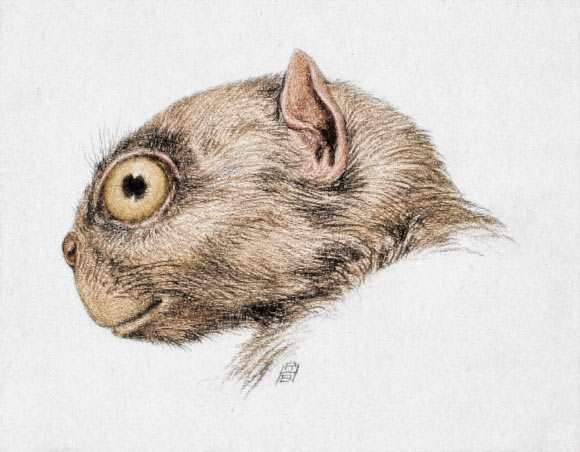
Earth’s Earliest Animals May Have Thrived Too Easily to Evolve
Les premiers animaux de la Terre ont peut-être prospéré trop facilement pour évoluer
reproduction Édiacarien fossile datation évolution
Les fossiles de certains des animaux les plus anciens connus sur Terre, datant d'il y a 574 millions d'années (période Édiacarienne), suggèrent que le clonage, et non la compétition, a dominé les mers de l'Édiacarien, ralentissant l'évolution jusqu'à ce que le stress environnemental contribue à l'essor de la reproduction sexuée et à un éclatement de la biodiversité. L’article Les premiers animaux de la Terre ont peut-être prospéré trop facilement pour évoluer est apparu en premier sur Sci.News : Breaking Science News.
10/06/2026 sci-news ⚙ Traduction automatique
Description d'un fossile de dinosaure rare du groupe de Nanaimo du Crétacé supérieur
os vertèbre description Canada Colombie Crétacé Crétacé supérieur fossile Dinosauria Ornithomimosauria
Les chercheurs ont décrit une seule vertèbre caudale de dinosaure (coccyx) de l'île Denman (Colombie-Britannique, Canada).  Il a été identifié comme une vertèbre caudale d'ornithomimosaure. Le fossile, censé représenter un os de la partie médiane de la queue, n'est que le deuxième fossile de dinosaure identifié dans le groupe de Nanaimo du Crétacé supérieur. De plus, il
10/06/2026 everythingdinosaur ⚙ Traduction automatique
Fossil Discovery in Patagonia Reveals New Species of Horned Turtle
La découverte de fossiles en Patagonie révèle de nouvelles espèces de tortues à cornes
Argentine Maastrichtien fossile Dinosauria découverte extinction nouvelle espèce autres reptiles
Les paléontologues ont identifié une nouvelle espèce de tortue méiolaniforme du nord de la Patagonie, en Argentine, qui vivait à l'époque maastrichtienne, juste avant l'extinction massive déclenchée par un astéroïde qui a anéanti tous les dinosaures non aviaires. L'article La découverte de fossiles en Patagonie révèle de nouvelles espèces de tortues à cornes apparaît en premier sur Sci.News : Breaking Science News.
09/06/2026 sci-news ⚙ Traduction automatique
Description d'un nouveau dinosaure à quatre ailes en provenance de Chine
plume membre description Chine Crétacé Crétacé inférieur fossile Dinosauria Microraptorinae nouvelle espèce partiel
Les paléontologues ont décrit une nouvelle espèce de théropode microraptorine du nord-ouest de la Chine. Nommé Jian changmaensis, ce petit dinosaure à plumes planait probablement sur quatre ailes. Le fossile fournit de nouvelles informations sur les écosystèmes du Crétacé inférieur et étend l’aire de répartition connue des Microraptorinae. Le matériau fossile est constitué d'une ceinture pectorale gauche partielle articulée et d'un membre antérieur. Il
08/06/2026 everythingdinosaur ⚙ Traduction automatique
1 2 3 4 5 6 7 8 9 10 11 12 13 14 15 16 17 18 19 20 21 22 23 24 25 26 27 28 29 30 31 32 33 34 35