Australie

Pays

23 image(s) · 12 Actualités

Galerie d'images

Wide angle photo from the visitor’s walkway inside Lark Quarry Dinosaur Trackways, Australia. Here, the camera is pointing towards the south west corner of the building. On the top (in the far corner) is the natural landscape. In the middle ground of the photo, some of the overburden has been cleared. In the foreground is the dinosaur tracks.

Wide angle photo from the visitor’s walkway inside Lark Quarry Dinosaur Trackways, Australia. Here, the camera is pointing towards the south west corner of the building. On the top (in the far corner) is the natural landscape. In the middle ground of the photo, some of the overburden has been cleared. In the foreground is the dinosaur tracks.

Australie empreintes Dinosauria
Buttons, a species of Leptorhynchos. Traralgon, Latrobe Valley, Victoria Australia, September 2011.

Buttons, a species of Leptorhynchos. Traralgon, Latrobe Valley, Victoria Australia, September 2011.

Australie Leptorhynchos
Buttons, a species of Leptorhynchos. Traralgon, Latrobe Valley, Victoria Australia, September 2011.

Buttons, a species of Leptorhynchos. Traralgon, Latrobe Valley, Victoria Australia, September 2011.

Australie Leptorhynchos
A cast replica of a skeletal mount of the prehistoric pterosaur Anhanguera blittersdorffi on display at Melbourne Museum in Victoria, Australia.

A cast replica of a skeletal mount of the prehistoric pterosaur Anhanguera blittersdorffi on display at Melbourne Museum in Victoria, Australia.

musée Australie moulage Anhanguera +1
Specimens of Galleonosaurus dorisae n. gen. n. sp. from the Flat Rocks Sandstone in the upper Barremian, Wonthaggi Formation, Gippsland Basin, southeastern Australia: (1–2) holotype (NMV P229196), left maxilla in lateral (1) and medial (2) views; (3) NMV P208178, left maxilla in lateral view; (4) NMV P212845, left maxilla in lateral view; (5) NMV P209977, left maxilla in lateral view; (6) NMV P186440, left maxilla in lateral view; (7) NMV 208113, right maxillary tooth in labial view. Scale bars = 10 mm (1–6); 1 mm (7).
Taxons Galleonosaurus

Specimens of Galleonosaurus dorisae n. gen. n. sp. from the Flat Rocks Sandstone in the upper Barremian, Wonthaggi Formation, Gippsland Basin, southeastern Australia: (1–2) holotype (NMV P229196), left maxilla in lateral (1) and medial (2) views; (3) NMV P208178, left maxilla in lateral view; (4) NMV P212845, left maxilla in lateral view; (5) NMV P209977, left maxilla in lateral view; (6) NMV P186440, left maxilla in lateral view; (7) NMV 208113, right maxillary tooth in labial view. Scale bars = 10 mm (1–6); 1 mm (7).

écaille dent Australie Barrémien +4
Muttaburrasaurus
The plants, animals and climate of the Australian continent have changed dramatically over long periods of time. Imagine this giant creature roaming the luxuriant wet forests that covered parts of the continent in the Cretaceous period, about 100-110 million years ago. The Muttaburrasaurus ambled along on all four legs or stood on its hind legs. Its large teeth were well adapted to eat tough vegetation such as the leathery foliage of the evergreen forests of Araucaria trees, ancient relatives of the bunya pine of south-eastern Queensland.
In 1963, grazier Doug Langdon discovered the fossilised bones of a dinosaur on his property near Muttaburra in central-west Queensland. It was one of the most complete dinosaur skeletons found in Australia. The bones belonged to a new species of ornithopod and palaeontologists named it Muttaburrasaurus langdoni.

Cast of Muttaburresaurus langdoni 1987 made by Queensland Museum, Brisbane National Museum of Australia
Taxons Muttaburrasaurus

Muttaburrasaurus The plants, animals and climate of the Australian continent have changed dramatically over long periods of time. Imagine this giant creature roaming the luxuriant wet forests that covered parts of the continent in the Cretaceous period, about 100-110 million years ago. The Muttaburrasaurus ambled along on all four legs or stood on its hind legs. Its large teeth were well adapted to eat tough vegetation such as the leathery foliage of the evergreen forests of Araucaria trees, ancient relatives of the bunya pine of south-eastern Queensland. In 1963, grazier Doug Langdon discovered the fossilised bones of a dinosaur on his property near Muttaburra in central-west Queensland. It was one of the most complete dinosaur skeletons found in Australia. The bones belonged to a new species of ornithopod and palaeontologists named it Muttaburrasaurus langdoni. Cast of Muttaburresaurus langdoni 1987 made by Queensland Museum, Brisbane National Museum of Australia

os musée Australie Crétacé +5
Restoration of the skeleton, Age of Dinosaur Museum, Winton, Australia

Restoration of the skeleton, Age of Dinosaur Museum, Winton, Australia

musée Australie Winton Australovenator +2
100_6837
Taxons Metriacanthosaurinae

100_6837

Australie Metriacanthosauridae Metriacanthosaurinae Sinraptor
1 2

Actualités

Un fossile d'ichthyosaure du Queensland fournit la première preuve mondiale de prédation sur un ptérosaure
prédateur proie Australie Toolebuc Crétacé Crétacé inférieur fossile Ichthyosauria Pterosauria formation
Un fossile extraordinaire provenant du Queensland, en Australie, a fourni la preuve d'une chaîne alimentaire préhistorique. Les scientifiques ont identifié la première preuve définitive qu'un ichtyosaure a consommé un ptérosaure. De plus, le reptile marin est devenu plus tard la proie de l’un des plus grands prédateurs de l’ancienne mer d’Eromanga. Le fossile spectaculaire provient de la Formation de Toolebuc du Crétacé inférieur
28/07/2026 everythingdinosaur ⚙ Traduction automatique
Early Miocene Fossil Rewrites Family Tree of Little Carnivorous Marsupials
Un fossile du début du Miocène réécrit l’arbre généalogique des petits marsupiaux carnivores
Australie Miocène fossile nouvelle espèce
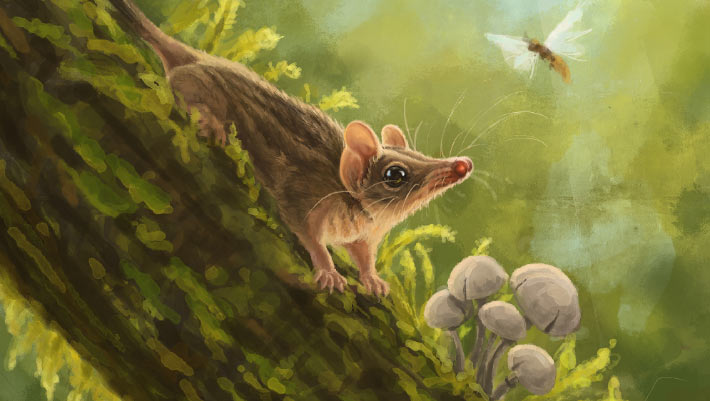
Des paléontologues de l'Université de Nouvelle-Galles du Sud ont décrit un nouveau genre et une nouvelle espèce de marsupial dasyurid du Miocène inférieur d'Australie, offrant ainsi la première preuve solide que la famille des Dasyuridae - qui comprend aujourd'hui les quolls, les diables de Tasmanie et les minuscules antéchines - existait bien avant que les scientifiques n'en aient la preuve dans les archives fossiles. L'article Un fossile du début du Miocène réécrit l'arbre généalogique des petits marsupiaux carnivores apparaît en premier sur Sci.News : Breaking Science News.
24/07/2026 sci-news ⚙ Traduction automatique
Des scientifiques viennent de découvrir une branche perdue de marsupiaux d’Australie
Australie fossile découverte évolution mammifères
Des fossiles du Queensland suggèrent qu'un ordre de marsupiaux nouvellement reconnu pourrait avoir survécu en Australie pendant environ 35 millions d'années, réécrivant une partie de l'histoire de l'évolution des mammifères uniques du continent. Cette découverte remet en question l'idée selon laquelle les marsupiaux d'Australie seraient tous issus d'une seule lignée ancestrale.
19/07/2026 sciencedaily ⚙ Traduction automatique
Examen du remarquable lion marsupial australien – un super prédateur venu d’Australie
prédateur Australie anatomie mammifères étude
L'étude de l'anatomie de Thylacoleo carnifex a révélé l'un des mammifères prédateurs les plus inhabituels connus de la science. Souvent appelé « lion marsupial », ce prédateur suprême ne faisait pas partie de la famille des chats.  En effet, ses plus proches parents vivants sont les wombats et les koalas. Bien qu'il soit issu d'ancêtres principalement herbivores, Thylacoleo carnifex est devenu une espèce hautement spécialisée.
09/07/2026 everythingdinosaur ⚙ Traduction automatique
New Marsupial Lineage Emerges from Australian Fossils
Une nouvelle lignée marsupiale émerge des fossiles australiens
Australie Miocène fossile insecte mammifères nouvelle espèce
Les paléontologues ont décrit un nouveau genre et trois nouvelles espèces de petits marsupiaux insectivores provenant des dépôts du Miocène inférieur de la zone du patrimoine mondial de Riversleigh, dans le nord-ouest du Queensland, l'un des sites fossilifères les plus riches d'Australie. L'article Une nouvelle lignée marsupiale émerge des fossiles australiens apparaît en premier sur Sci.News : Breaking Science News.
15/06/2026 sci-news ⚙ Traduction automatique
1 2 3