←

vertèbre

Partie anatomique

70 image(s) · 12 Actualités

Galerie d'images

Entire skeleton of Jidapterus edentus (RCPS-030366CY) preserved in a slab mostly in right lateral view.

Abbreviations: aa, the atlas-axis complex; bo, basioccipital; br, braincase; cve, cervical vertebrae; cv3, the third cervical vertebra; cv8, the eighth cervical vertebra; ds, dentaries; dv, dorsal vertebra; dve, dorsal vertebrae; ep, epiphysis; j, jugal; lc, left carpus; lf, left femur; li, left ilium; lis, left ischium; lm, left manual digits; lp, left pubis; lpe, left pes; lpt, left pteroid; lr, left radius; lsc, left scapula-coracoid; lt, left tibia; lta, left tarsus; lu, left ulna; lwmc, left wing metacarpal; lwp1–4; left wing phalanges 1–4; p, pterygoid; pp, postacetabular process of the right ilium; q, quadrate; rc, right carpus; rh, right humerus; rf, right femur; rfi, right fibula; ribs, ribs; ris, right ischium; rm, right manual digits; rmcI, right metacarpal I; rp, right pubis; rpe, right pes; rpt, right pteroid; rr, right radius; rsc, right scapula-coracoid; rt, right tibia; ru, right ulna; rwmc, right wing metacarpal; rwp1–4, right wing phalanges 1–4; rostrum, rostrum; st, sternum; sv, sacral vertebra; sve, sacral vertebrae. Gray shaded areas bound by solid lines indicate preserved bones, dashed lines indicate bones with margins discerned by impression, and lack of lines indicate missing bone or displacement along cracks in the slab.
Taxons Chaoyangopteridae

Entire skeleton of Jidapterus edentus (RCPS-030366CY) preserved in a slab mostly in right lateral view. Abbreviations: aa, the atlas-axis complex; bo, basioccipital; br, braincase; cve, cervical vertebrae; cv3, the third cervical vertebra; cv8, the eighth cervical vertebra; ds, dentaries; dv, dorsal vertebra; dve, dorsal vertebrae; ep, epiphysis; j, jugal; lc, left carpus; lf, left femur; li, left ilium; lis, left ischium; lm, left manual digits; lp, left pubis; lpe, left pes; lpt, left pteroid; lr, left radius; lsc, left scapula-coracoid; lt, left tibia; lta, left tarsus; lu, left ulna; lwmc, left wing metacarpal; lwp1–4; left wing phalanges 1–4; p, pterygoid; pp, postacetabular process of the right ilium; q, quadrate; rc, right carpus; rh, right humerus; rf, right femur; rfi, right fibula; ribs, ribs; ris, right ischium; rm, right manual digits; rmcI, right metacarpal I; rp, right pubis; rpe, right pes; rpt, right pteroid; rr, right radius; rsc, right scapula-coracoid; rt, right tibia; ru, right ulna; rwmc, right wing metacarpal; rwp1–4, right wing phalanges 1–4; rostrum, rostrum; st, sternum; sv, sacral vertebra; sve, sacral vertebrae. Gray shaded areas bound by solid lines indicate preserved bones, dashed lines indicate bones with margins discerned by impression, and lack of lines indicate missing bone or displacement along cracks in the slab.

os humérus vertèbre Chaoyangopteridae +3
Entire skeleton of Jidapterus edentus (RCPS-030366CY) preserved in a slab mostly in right lateral view.

Abbreviations: aa, the atlas-axis complex; bo, basioccipital; br, braincase; cve, cervical vertebrae; cv3, the third cervical vertebra; cv8, the eighth cervical vertebra; ds, dentaries; dv, dorsal vertebra; dve, dorsal vertebrae; ep, epiphysis; j, jugal; lc, left carpus; lf, left femur; li, left ilium; lis, left ischium; lm, left manual digits; lp, left pubis; lpe, left pes; lpt, left pteroid; lr, left radius; lsc, left scapula-coracoid; lt, left tibia; lta, left tarsus; lu, left ulna; lwmc, left wing metacarpal; lwp1–4; left wing phalanges 1–4; p, pterygoid; pp, postacetabular process of the right ilium; q, quadrate; rc, right carpus; rh, right humerus; rf, right femur; rfi, right fibula; ribs, ribs; ris, right ischium; rm, right manual digits; rmcI, right metacarpal I; rp, right pubis; rpe, right pes; rpt, right pteroid; rr, right radius; rsc, right scapula-coracoid; rt, right tibia; ru, right ulna; rwmc, right wing metacarpal; rwp1–4, right wing phalanges 1–4; rostrum, rostrum; st, sternum; sv, sacral vertebra; sve, sacral vertebrae. Gray shaded areas bound by solid lines indicate preserved bones, dashed lines indicate bones with margins discerned by impression, and lack of lines indicate missing bone or displacement along cracks in the slab.
Taxons Chaoyangopterinae

Entire skeleton of Jidapterus edentus (RCPS-030366CY) preserved in a slab mostly in right lateral view. Abbreviations: aa, the atlas-axis complex; bo, basioccipital; br, braincase; cve, cervical vertebrae; cv3, the third cervical vertebra; cv8, the eighth cervical vertebra; ds, dentaries; dv, dorsal vertebra; dve, dorsal vertebrae; ep, epiphysis; j, jugal; lc, left carpus; lf, left femur; li, left ilium; lis, left ischium; lm, left manual digits; lp, left pubis; lpe, left pes; lpt, left pteroid; lr, left radius; lsc, left scapula-coracoid; lt, left tibia; lta, left tarsus; lu, left ulna; lwmc, left wing metacarpal; lwp1–4; left wing phalanges 1–4; p, pterygoid; pp, postacetabular process of the right ilium; q, quadrate; rc, right carpus; rh, right humerus; rf, right femur; rfi, right fibula; ribs, ribs; ris, right ischium; rm, right manual digits; rmcI, right metacarpal I; rp, right pubis; rpe, right pes; rpt, right pteroid; rr, right radius; rsc, right scapula-coracoid; rt, right tibia; ru, right ulna; rwmc, right wing metacarpal; rwp1–4, right wing phalanges 1–4; rostrum, rostrum; st, sternum; sv, sacral vertebra; sve, sacral vertebrae. Gray shaded areas bound by solid lines indicate preserved bones, dashed lines indicate bones with margins discerned by impression, and lack of lines indicate missing bone or displacement along cracks in the slab.

os humérus vertèbre Chaoyangopteridae +3
Ceratosaurian theropod Camarillasaurus cirugedae gen. et sp. nov. from the Camarillas Formation of Camarillas, Soria Province, Spain, presacral vertebra, MPG-KPC9,  in anterior (A), left lateral (B), and posterior (C) views; possible neural spine tips, MPG1116, 32, 33 in ?posterior (D) and transverse (E) views; and presacral rib MPG-KPC7, in ventral view (F) and detail of its proximal end (G). Scale bars are 10 mm (A-C, G), 20 mm (D-E) and 100 mm (F).

Ceratosaurian theropod Camarillasaurus cirugedae gen. et sp. nov. from the Camarillas Formation of Camarillas, Soria Province, Spain, presacral vertebra, MPG-KPC9, in anterior (A), left lateral (B), and posterior (C) views; possible neural spine tips, MPG1116, 32, 33 in ?posterior (D) and transverse (E) views; and presacral rib MPG-KPC7, in ventral view (F) and detail of its proximal end (G). Scale bars are 10 mm (A-C, G), 20 mm (D-E) and 100 mm (F).

écaille vertèbre Espagne Camarillas +3
Becklespinax altispinax holotype BMNH R1828 (originally assigned to Megalosaurus bucklandii). Owen's description follows:
Three anterior dorsal vertebræ : p, parapophysis, or lower transverse process: t, accessory tubercle contributing some attachment to the head of the rib : d, diapophyses, or upper transverse process, fractured, which gave attachment to the tubercle of the rib: b, oblique buttress extending from the parapophysis to the diapophysis, and contributing to the support of the neural platform : z, the prozygapophysis, z', the zygapophysis, forming the ends of the neural platform and articulating the neural arches of the vertebræ with each other, ns, the neural spine of the foremost of these vertebras, ns', the neural spine of the second vertebra; it expands at its extremity, overhangs the anterior shorter spine, and developes a strong bony plate from its back part which fixes it to n", the similarly developed and modified spine of the third vertebra.
The extraordinary size and strength of the spines of these anterior dorsal vertebræ, indicate the great force with which the head and jaws of the Megalosaurus must have been used.

From the Wealden, near Battle. In the Museum of Samuel H. Beckles, Esq., F.G.S.
Taxons Becklespinax

Becklespinax altispinax holotype BMNH R1828 (originally assigned to Megalosaurus bucklandii). Owen's description follows: Three anterior dorsal vertebræ : p, parapophysis, or lower transverse process: t, accessory tubercle contributing some attachment to the head of the rib : d, diapophyses, or upper transverse process, fractured, which gave attachment to the tubercle of the rib: b, oblique buttress extending from the parapophysis to the diapophysis, and contributing to the support of the neural platform : z, the prozygapophysis, z', the zygapophysis, forming the ends of the neural platform and articulating the neural arches of the vertebræ with each other, ns, the neural spine of the foremost of these vertebras, ns', the neural spine of the second vertebra; it expands at its extremity, overhangs the anterior shorter spine, and developes a strong bony plate from its back part which fixes it to n", the similarly developed and modified spine of the third vertebra. The extraordinary size and strength of the spines of these anterior dorsal vertebræ, indicate the great force with which the head and jaws of the Megalosaurus must have been used. From the Wealden, near Battle. In the Museum of Samuel H. Beckles, Esq., F.G.S.

vertèbre description musée Foremost +4
Becklespinax altispinax holotype BMNH R1828 (originally assigned to Megalosaurus bucklandii). Owen's description follows:
Three anterior dorsal vertebræ : p, parapophysis, or lower transverse process: t, accessory tubercle contributing some attachment to the head of the rib : d, diapophyses, or upper transverse process, fractured, which gave attachment to the tubercle of the rib: b, oblique buttress extending from the parapophysis to the diapophysis, and contributing to the support of the neural platform : z, the prozygapophysis, z', the zygapophysis, forming the ends of the neural platform and articulating the neural arches of the vertebræ with each other, ns, the neural spine of the foremost of these vertebras, ns', the neural spine of the second vertebra; it expands at its extremity, overhangs the anterior shorter spine, and developes a strong bony plate from its back part which fixes it to n", the similarly developed and modified spine of the third vertebra.
The extraordinary size and strength of the spines of these anterior dorsal vertebræ, indicate the great force with which the head and jaws of the Megalosaurus must have been used.

From the Wealden, near Battle. In the Museum of Samuel H. Beckles, Esq., F.G.S.
Taxons Altispinax

Becklespinax altispinax holotype BMNH R1828 (originally assigned to Megalosaurus bucklandii). Owen's description follows: Three anterior dorsal vertebræ : p, parapophysis, or lower transverse process: t, accessory tubercle contributing some attachment to the head of the rib : d, diapophyses, or upper transverse process, fractured, which gave attachment to the tubercle of the rib: b, oblique buttress extending from the parapophysis to the diapophysis, and contributing to the support of the neural platform : z, the prozygapophysis, z', the zygapophysis, forming the ends of the neural platform and articulating the neural arches of the vertebræ with each other, ns, the neural spine of the foremost of these vertebras, ns', the neural spine of the second vertebra; it expands at its extremity, overhangs the anterior shorter spine, and developes a strong bony plate from its back part which fixes it to n", the similarly developed and modified spine of the third vertebra. The extraordinary size and strength of the spines of these anterior dorsal vertebræ, indicate the great force with which the head and jaws of the Megalosaurus must have been used. From the Wealden, near Battle. In the Museum of Samuel H. Beckles, Esq., F.G.S.

vertèbre description musée Foremost +4
Bones referred to Ibirania parva, A. Middle caudal vertebra (MPMA 08-0060-07) referred to I. parva. B. Views of partial right ulna (LPP-PV-0202) of the I. parva holotype. According to Navarro et al. (2022).

Bones referred to Ibirania parva, A. Middle caudal vertebra (MPMA 08-0060-07) referred to I. parva. B. Views of partial right ulna (LPP-PV-0202) of the I. parva holotype. According to Navarro et al. (2022).

os vertèbre holotype Ibirania +1
Representative taxa from the Santonian Iharkút fauna from the Csehbánya Formation, Bakony Mountains, western Hungary. A Pannoniasaurus inexpectatus (Squamata, Mosasauroidea), dorsal vertebra (MTM uncatalogued) in dorsal view (photo by Réka Kalmár) B Foxemys trabanti (Pleurodira, Bothremydidae), skull (MTM V 2010.215.1.) in dorsal view (photo by Márton Rabi). C Bicuspidon aff. hatzegiensis (Squamata, Borioteiioidea), left dentary (MTM 2006.112.1.) in medial view (photo by László Makádi) D Basal tetanuran (Theropoda, Tetanurae), tooth (MTM V.01.54) in ?lingual view E Indeterminate abelisaurid (Theropoda, Abelisauridae), pedal ungual phalanx (MTM V 2008.43.1.) in lateral view F Pneumatoraptor fodori (Theropoda, Paraves), left scapulocoracoid (holotype, MTM V 2008.38.1.) in lateral view G Mochlodon vorosi (Ornithopoda, Rhabdodontidae), left dentary (holotype, MTM V 2010.105.1) in lateral view H Bakonydraco galaczi (Pterosauria, Azhdarchidae), mandible (holotype, MTM 2007.110.1) in dorsal view I Iharkutosuchus makadii (Eusuchia, Hylaeochampsidae), skull (holotype, MTM 2006.52.1) in dorsal view J Hungarosaurus tormai (Ankylosauria, Nodosauridae), right dentary (MTM 2007.25.2) in lateral view K Bauxitornis mindszentyae (Aves, Enantiornithes), left tarsometatarsus (holotype, MTM V 2009.38.1) in anterior view L Ajkaceratops kozmai (Ceratopsia), fused rostral and premaxillae (holotype, MTM V 2009.192.1) in lateral view. Scale bars: 2 cm in A, V, G, H, I, J; 1 cm in D, E, F, K, L; 1 mm in C.

Representative taxa from the Santonian Iharkút fauna from the Csehbánya Formation, Bakony Mountains, western Hungary. A Pannoniasaurus inexpectatus (Squamata, Mosasauroidea), dorsal vertebra (MTM uncatalogued) in dorsal view (photo by Réka Kalmár) B Foxemys trabanti (Pleurodira, Bothremydidae), skull (MTM V 2010.215.1.) in dorsal view (photo by Márton Rabi). C Bicuspidon aff. hatzegiensis (Squamata, Borioteiioidea), left dentary (MTM 2006.112.1.) in medial view (photo by László Makádi) D Basal tetanuran (Theropoda, Tetanurae), tooth (MTM V.01.54) in ?lingual view E Indeterminate abelisaurid (Theropoda, Abelisauridae), pedal ungual phalanx (MTM V 2008.43.1.) in lateral view F Pneumatoraptor fodori (Theropoda, Paraves), left scapulocoracoid (holotype, MTM V 2008.38.1.) in lateral view G Mochlodon vorosi (Ornithopoda, Rhabdodontidae), left dentary (holotype, MTM V 2010.105.1) in lateral view H Bakonydraco galaczi (Pterosauria, Azhdarchidae), mandible (holotype, MTM 2007.110.1) in dorsal view I Iharkutosuchus makadii (Eusuchia, Hylaeochampsidae), skull (holotype, MTM 2006.52.1) in dorsal view J Hungarosaurus tormai (Ankylosauria, Nodosauridae), right dentary (MTM 2007.25.2) in lateral view K Bauxitornis mindszentyae (Aves, Enantiornithes), left tarsometatarsus (holotype, MTM V 2009.38.1) in anterior view L Ajkaceratops kozmai (Ceratopsia), fused rostral and premaxillae (holotype, MTM V 2009.192.1) in lateral view. Scale bars: 2 cm in A, V, G, H, I, J; 1 cm in D, E, F, K, L; 1 mm in C.

dent vertèbre Hongrie Santonien +15
MRF 319, a partial oviraptorosaurian skeleton referred to Anzu wyliei. 
(A) Skeletal reconstruction in left lateral view, with preserved bones in gray and bones represented in other Anzu specimens in white (hatching indicates heavily reconstructed portions of the ilia of CM 78001). Middle-posterior (ninth?) cervical vertebra in (B) anterior, (C) left lateral, and (D) dorsal views. Posterior (11th?) cervical vertebra in (E) anterior, (F) left lateral, and (G) dorsal views. Posterior (12th?) cervical vertebra in (H) anterior, (I) left lateral, and (J) dorsal views. Anteroposteriorly crushed left radius in lateral (K) and anterior (L) views. Mediolaterally crushed left ulna in lateral (M) and anterior (N) views. (O) Partial left scapulocoracoid in lateral view. Dorsal rib in anterior (P) and posterior (Q) views. Abbreviations: acr, acromial process; cr, cervical rib; dip, distal processes; pat, pathology; pf, pneumatic fossa. Scale bars = 50 cm in A; 1 cm in B–Q.

MRF 319, a partial oviraptorosaurian skeleton referred to Anzu wyliei. (A) Skeletal reconstruction in left lateral view, with preserved bones in gray and bones represented in other Anzu specimens in white (hatching indicates heavily reconstructed portions of the ilia of CM 78001). Middle-posterior (ninth?) cervical vertebra in (B) anterior, (C) left lateral, and (D) dorsal views. Posterior (11th?) cervical vertebra in (E) anterior, (F) left lateral, and (G) dorsal views. Posterior (12th?) cervical vertebra in (H) anterior, (I) left lateral, and (J) dorsal views. Anteroposteriorly crushed left radius in lateral (K) and anterior (L) views. Mediolaterally crushed left ulna in lateral (M) and anterior (N) views. (O) Partial left scapulocoracoid in lateral view. Dorsal rib in anterior (P) and posterior (Q) views. Abbreviations: acr, acromial process; cr, cervical rib; dip, distal processes; pat, pathology; pf, pneumatic fossa. Scale bars = 50 cm in A; 1 cm in B–Q.

os écaille vertèbre pathologie +5
Plate XII(XIX).
Fig. 1. Coelophysis bauri COPE. Sacrum, consisting of three vertebrae and last dorsal vertebra. COPE’s original. Triassic, New Mexico. Preserved in American Museum of Natural History, New York. Nat. size, from a cast in Tübingen. a, right lateral view; b, left lateral view; c, ventral view.
Fig. 2. Thecodontosaurus skirtopodus SEELEY sp. Right humerus. Original in Vienna Hofmuseum (Coll. ADLER 1886). Upper Karroo, Cape Colony, South Africa. 1/2 nat. size, from a cast in Tübingen.
Fig. 3. Same. Ditto. Proximal end of a right humerus in posterior view. 1/2 nat. size (the lateral part is missing).
Fig. 4. Same. Ditto. Distal end of a left humerus in anterior view. 1/2 nat. size.
Fig. 5. Same. Ditto. Distal end of a left femur in posterior view. 1/2 nat. size.
Fig. 6. Same. Ditto. Proximal end of a left tibia, lateral view. 1/2 nat. size.
Fig. 7. Thecodontosaurus browni SEELEY sp. Left femur in posterior view. SEELEY’s original. From the Stormberg Beds of the Telle River near Aliwal North, Cape Colony, South Africa. (From casts in the British Museum and Tübingen.) 1/2 nat. size.

Fig. 8. Same. Ditto. Right femur, medial view.

Plate XII(XIX). Fig. 1. Coelophysis bauri COPE. Sacrum, consisting of three vertebrae and last dorsal vertebra. COPE’s original. Triassic, New Mexico. Preserved in American Museum of Natural History, New York. Nat. size, from a cast in Tübingen. a, right lateral view; b, left lateral view; c, ventral view. Fig. 2. Thecodontosaurus skirtopodus SEELEY sp. Right humerus. Original in Vienna Hofmuseum (Coll. ADLER 1886). Upper Karroo, Cape Colony, South Africa. 1/2 nat. size, from a cast in Tübingen. Fig. 3. Same. Ditto. Proximal end of a right humerus in posterior view. 1/2 nat. size (the lateral part is missing). Fig. 4. Same. Ditto. Distal end of a left humerus in anterior view. 1/2 nat. size. Fig. 5. Same. Ditto. Distal end of a left femur in posterior view. 1/2 nat. size. Fig. 6. Same. Ditto. Proximal end of a left tibia, lateral view. 1/2 nat. size. Fig. 7. Thecodontosaurus browni SEELEY sp. Left femur in posterior view. SEELEY’s original. From the Stormberg Beds of the Telle River near Aliwal North, Cape Colony, South Africa. (From casts in the British Museum and Tübingen.) 1/2 nat. size. Fig. 8. Same. Ditto. Right femur, medial view.

humérus vertèbre musée Mexique +8
Complete specimen, excellent mineralization. Presented with a base (exceptional, very good condition)).	
Skull length 18,9 inch ( 28,3 inch with vertebras)

Complete specimen, excellent mineralization. Presented with a base (exceptional, very good condition)). Skull length 18,9 inch ( 28,3 inch with vertebras)

vertèbre spécimen Platecarpus crâne
Dorsal vertebra of platecarpus, a cretaceous. Mosasaur from the Niobrara Chalk of Kansas etc.

General Collections
Keywords: prehistoric archaeology; Paleopathology; Moodie, Roy Lee
Taxons Platecarpus

Dorsal vertebra of platecarpus, a cretaceous. Mosasaur from the Niobrara Chalk of Kansas etc. General Collections Keywords: prehistoric archaeology; Paleopathology; Moodie, Roy Lee

vertèbre Niobrara Crétacé Platecarpus
Anterior dorsal vertebra of the sauropod dinosaur Tendaguria tanzaniensis.
Taxons Tendaguria

Anterior dorsal vertebra of the sauropod dinosaur Tendaguria tanzaniensis.

vertèbre Dinosauria Tendaguria Tendaguriidae
Anterior dorsal vertebra of the sauropod dinosaur Tendaguria tanzaniensis.
Taxons Tendaguriidae

Anterior dorsal vertebra of the sauropod dinosaur Tendaguria tanzaniensis.

vertèbre Dinosauria Tendaguria Tendaguriidae
1 2 3 4 5

Actualités

Cet os oublié dans un tiroir depuis 40 ans vient de révéler le tout premier dinosaure découvert en Antarctique !
os vertèbre Antarctique Crétacé supérieur fossile Dinosauria Titanosauria découverte
Pendant près de quarante ans, il est resté oublié dans un tiroir du British Antarctic Survey. Ce fossile, découvert en Antarctique en 1985, vient pourtant d'être identifié comme le tout premier fossile de dinosaure jamais mis au jour sur le continent blanc. Une découverte qui éclaire aussi les...
01/07/2026 futura-terre
Des scientifiques décrivent officiellement le premier fossile de dinosaure découvert en Antarctique
vertèbre Antarctique Crétacé Crétacé supérieur fossile Dinosauria Titanosauria découverte
Les scientifiques ont officiellement décrit le premier fossile de dinosaure découvert en Antarctique. La découverte remarquable est une seule vertèbre provenant d’un titanosaure du Crétacé supérieur. Bien que le fossile ait été collecté il y a plus de quarante ans, les chercheurs n’ont confirmé son identité que récemment.  Le premier fossile de dinosaure découvert en Antarctique est décrit dans la revue Acta Palaeontologica Polonica.
29/06/2026 everythingdinosaur ⚙ Traduction automatique
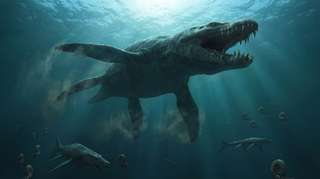
On le croyait roi des océans au Jurassique : une vertèbre percée raconte un combat d’une violence extrême
os dent vertèbre chasse musée Jurassique fossile Ichthyosauria Ichthyosaurus Pliosaurus comportement
Oublié pendant plus d’un siècle dans les tiroirs d’un musée, un fossile refait aujourd’hui surface et raconte une scène de violence extrême dans les océans du Jurassique. Une vertèbre d’ichtyosaure, marquée par l’impact d’une dent brisée, révèle peut-être l’attaque d’un des plus redoutables...
17/06/2026 futura-terre
Description d'un fossile de dinosaure rare du groupe de Nanaimo du Crétacé supérieur
os vertèbre description Canada Colombie Crétacé Crétacé supérieur fossile Dinosauria Ornithomimosauria
Les chercheurs ont décrit une seule vertèbre caudale de dinosaure (coccyx) de l'île Denman (Colombie-Britannique, Canada).  Il a été identifié comme une vertèbre caudale d'ornithomimosaure. Le fossile, censé représenter un os de la partie médiane de la queue, n'est que le deuxième fossile de dinosaure identifié dans le groupe de Nanaimo du Crétacé supérieur. De plus, il
10/06/2026 everythingdinosaur ⚙ Traduction automatique
Ce rapace récemment découvert aurait chassé comme un héron géant
vertèbre prédateur Dinosauria Kank
Un dinosaure ressemblant à un rapace récemment découvert en Patagonie change la façon dont les scientifiques perçoivent les anciens prédateurs. Nommé Kank australis, ce dinosaure vieux de 70 millions d'années semble avoir chassé le poisson un peu comme les hérons modernes, en utilisant un cou long et flexible et des vertèbres spécialisées adaptées pour des mouvements rapides et précis.
29/05/2026 sciencedaily ⚙ Traduction automatique
1 2 3