←

musée

Type de contenu

449 image(s) · 46 Actualités

Galerie d'images

Diversity of Marginocephalians. Psittacosaurus, Pachycephalosaurus, Protoceratops, Triceratops, Stegoceras and Prenoceratops.

Diversity of Marginocephalians. Psittacosaurus, Pachycephalosaurus, Protoceratops, Triceratops, Stegoceras and Prenoceratops.

musée Marginocephalia Neornithischia Pachycephalosauria +5
Cast of Ceratosaurus from the Cleveland Lloyd Quarry, Utah, on display at the Natural History Museum of Utah, Salt Lake City.
Taxons Ceratosaurus

Cast of Ceratosaurus from the Cleveland Lloyd Quarry, Utah, on display at the Natural History Museum of Utah, Salt Lake City.

musée moulage Averostra Ceratosauria
A photograph of Coelophysis bauri taken at the Denver Museum of Nature and Science in 2007.

A photograph of Coelophysis bauri taken at the Denver Museum of Nature and Science in 2007.

musée Denver Coelophysis Neotheropoda
Acrocanthosaurus, North Carolina Museum of Natural Sciences.

Acrocanthosaurus, North Carolina Museum of Natural Sciences.

musée Acrocanthosaurus Neotheropoda
The Chicago specimen of Archaeopteryx (PA 830), a well-preserved fossil highlighting the transitional features between non-avian dinosaurs and birds, housed at the Field Museum of Natural History.

The Chicago specimen of Archaeopteryx (PA 830), a well-preserved fossil highlighting the transitional features between non-avian dinosaurs and birds, housed at the Field Museum of Natural History.

musée fossile spécimen Archaeopteryx +2
A photograph of partial specimen American Museum of Natural History (AMNH) 22555, skull without mandible, of Anhanguera sp. (formerly often assigned to Anhanguera santanae),[1] from the Early Cretaceous Romualdo Formation (former Romualdo Member of the Santana Formation) of NE Brazil in right lateral view.

A photograph of partial specimen American Museum of Natural History (AMNH) 22555, skull without mandible, of Anhanguera sp. (formerly often assigned to Anhanguera santanae),[1] from the Early Cretaceous Romualdo Formation (former Romualdo Member of the Santana Formation) of NE Brazil in right lateral view.

musée Brésil Conway Romualdo +7
A photograph of partial specimen American Museum of Natural History (AMNH) 22555, anterior dorsal vertebrae, dorsal ribs and partial shoulder girdle (at least right scapula) of Anhanguera sp. (formerly often assigned to Anhanguera santanae),[1] from the Early Cretaceous Romualdo Formation (former Romualdo Member of the Santana Formation) of NE Brazil in dorsal view.

A photograph of partial specimen American Museum of Natural History (AMNH) 22555, anterior dorsal vertebrae, dorsal ribs and partial shoulder girdle (at least right scapula) of Anhanguera sp. (formerly often assigned to Anhanguera santanae),[1] from the Early Cretaceous Romualdo Formation (former Romualdo Member of the Santana Formation) of NE Brazil in dorsal view.

musée Brésil Conway Romualdo +6
A photograph of partial specimen American Museum of Natural History (AMNH) 22555, posterior dorsal vertebrae, and the sacrum and pelvis (both iliae, and right ischium and pubis) of Anhanguera sp. (formerly often assigned to Anhanguera santanae),[1] from the Early Cretaceous Romualdo Formation (former Romualdo Member of the Santana Formation) of NE Brazil in dorsal view.

A photograph of partial specimen American Museum of Natural History (AMNH) 22555, posterior dorsal vertebrae, and the sacrum and pelvis (both iliae, and right ischium and pubis) of Anhanguera sp. (formerly often assigned to Anhanguera santanae),[1] from the Early Cretaceous Romualdo Formation (former Romualdo Member of the Santana Formation) of NE Brazil in dorsal view.

bassin musée Brésil Conway +7
The Tyrannosaurus rex, Dromaeosaurus, Triceratops, and Struthiomimus diorama in the Third Planet exhibit at the Milwaukee Public Museum in Milwaukee, Wisconsin (United States).

The Tyrannosaurus rex, Dromaeosaurus, Triceratops, and Struthiomimus diorama in the Third Planet exhibit at the Milwaukee Public Museum in Milwaukee, Wisconsin (United States).

musée États-Unis Dromaeosauria Struthiomimus +2
The Tyrannosaurus rex, Dromaeosaurus, Triceratops, and Struthiomimus diorama in the Third Planet exhibit at the Milwaukee Public Museum in Milwaukee, Wisconsin (United States).

The Tyrannosaurus rex, Dromaeosaurus, Triceratops, and Struthiomimus diorama in the Third Planet exhibit at the Milwaukee Public Museum in Milwaukee, Wisconsin (United States).

musée États-Unis Dromaeosauria Struthiomimus +2
Triceratops mounted skeleton at Los Angeles Museum of Natural History, Los Angeles, United States of America
Taxons Triceratops

Triceratops mounted skeleton at Los Angeles Museum of Natural History, Los Angeles, United States of America

musée États-Unis Triceratops squelette
Sue - Tyrannosaurus Rex Dinosaur - Field Museum of Natural History, Chicago by Joy of Museums, for more information, see: www.joyofmuseums.com

Sue - Tyrannosaurus Rex Dinosaur - Field Museum of Natural History, Chicago by Joy of Museums, for more information, see: www.joyofmuseums.com

musée Dinosauria Tyrannosaurus
Sue - Tyrannosaurus Rex Dinosaur - Field Museum of Natural History, Chicago by Joy of Museums, for more information, see: www.joyofmuseums.com

Sue - Tyrannosaurus Rex Dinosaur - Field Museum of Natural History, Chicago by Joy of Museums, for more information, see: www.joyofmuseums.com

musée Dinosauria Tyrannosaurus
Illustration of a juvenile Tyrannosaurus rex.
Most of this restoration is mostly inspired from the models of 1-year old Tyrannosaurus from the exhibition "T.rex: The Ultimate Predator" at American Museum of Natural History, New York (2019-2021).[1]
[2] and the juvenile Tarbosaurus MPC-D 107/7 (2-3 years old at death).[3]

References

↑ [1]

↑ [2]

↑ Tsuihiji T et.al (2011). "Cranial osteology of a juvenile specimen of Tarbosaurus bataar (Theropoda, Tyrannosauridae) from the Nemegt Formation (Upper Cretaceous) of Bugin Tsav, Mongolia". Journal of Vertebrate Paleontology 31(3): p. 497-517

Illustration of a juvenile Tyrannosaurus rex. Most of this restoration is mostly inspired from the models of 1-year old Tyrannosaurus from the exhibition "T.rex: The Ultimate Predator" at American Museum of Natural History, New York (2019-2021).[1] [2] and the juvenile Tarbosaurus MPC-D 107/7 (2-3 years old at death).[3] References ↑ [1] ↑ [2] ↑ Tsuihiji T et.al (2011). "Cranial osteology of a juvenile specimen of Tarbosaurus bataar (Theropoda, Tyrannosauridae) from the Nemegt Formation (Upper Cretaceous) of Bugin Tsav, Mongolia". Journal of Vertebrate Paleontology 31(3): p. 497-517

prédateur musée Mongolie Crétacé +8
Dictyoolithidae indet. (eggs in middle), from Lishui, Zhejiang Museum of Natural History (Hangzhou)
Taxons Dictyoolithidae

Dictyoolithidae indet. (eggs in middle), from Lishui, Zhejiang Museum of Natural History (Hangzhou)

musée Dictyoolithidae
1 2 3 4 5 6 7 8 9 10 11 12 13 14 15 16 17 18 19 20 21 22 23 24 25 26 27 28 29

Actualités

De nouvelles galeries remarquables du Musée de la Nature de Berlin ouvertes aux visiteurs
musée crâne
Deux remarquables galeries du Museum für Naturkunde Berlin sont ouvertes pour la première fois aux visiteurs. Les nouvelles galeries « Crânes de mammifères » et « Cerfs et animaux à cornes » accueilleront le public lors de la Longue Nuit des Musées le samedi 29 août. Jusqu'à présent, ces collections étaient réservées exclusivement aux chercheurs. Leur
28/08/2026 everythingdinosaur ⚙ Traduction automatique
Nouvelles lignes directrices importantes pour les collections d’histoire naturelle coloniale
musée spécimen
Le Museum für Naturkunde Berlin a publié de nouvelles directives concernant les collections d'histoire naturelle coloniale. La publication examine comment les musées et autres institutions peuvent travailler de manière responsable avec des spécimens et des objets provenant d'anciens territoires coloniaux. Les collections d'histoire naturelle constituent une ressource inestimable pour les scientifiques. Cependant, les spécimens acquis pendant les périodes coloniales peuvent aussi refléter des inégalités historiques, des rapports de pouvoir
22/08/2026 everythingdinosaur ⚙ Traduction automatique
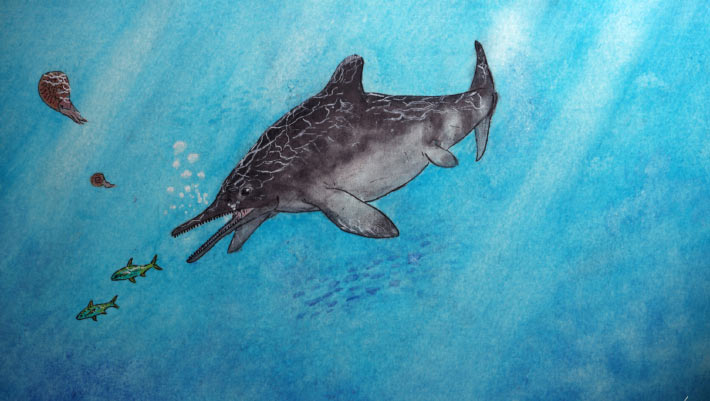
Germany’s Famous Fossil Beds Yield New Species of Jurassic Ichthyosaur
Les célèbres gisements de fossiles d’Allemagne donnent naissance à de nouvelles espèces d’ichtyosaures jurassiques
musée Allemagne Jurassique fossile Ichthyosauria Ichthyosaurus Jabalisaurus nouvelle espèce
Le Dr Erin Maxwell du Staatliches Museum für Naturkunde Stuttgart et ses collègues ont identifié une deuxième espèce dans les gisements calcaires allemands de Plattenkalk : Jabalisaurus tethyensis. L’article Les célèbres gisements de fossiles d’Allemagne produisent de nouvelles espèces d’ichtyosaures jurassiques est apparu en premier sur Sci.News : Breaking Science News.
11/08/2026 sci-news ⚙ Traduction automatique
Des scientifiques redécouvrent des fossiles perdus de Megalodon et révèlent un géant de 79 pieds
vertèbre musée fossile
Plusieurs énormes vertèbres de Megalodon, qui auraient été détruites en 1989, ont été retrouvées inaperçues sur une étagère de musée. Leur analyse renforce la preuve que le requin géant pourrait dépasser 24 mètres (79 pieds) de longueur et vivre près d'un siècle. Les chercheurs estiment également que ses nouveau-nés auraient pu mesurer une taille étonnante de 3,6 mètres (12 pieds).
07/08/2026 sciencedaily ⚙ Traduction automatique
Ce « crocodile terroriste » de la taille d’un autobus scolaire a mangé des dinosaures. Maintenant c'est de retour
musée fossile Dinosauria Géorgie squelette
Un crocodile massif capable d'attaquer les dinosaures a été ramené à la vie en tant que premier squelette monté scientifiquement précis de Deinosuchus schwimmeri. La réplique de 31 pieds du Tellus Science Museum de Géorgie a été construite à partir d’analyses détaillées de fossiles et de plus de 40 ans de recherches menées par le paléontologue Dr David Schwimmer, en l’honneur duquel l’espèce doit son nom.
05/08/2026 sciencedaily ⚙ Traduction automatique
1 2 3 4 5 6 7 8 9 10