←

musée

Type de contenu

449 image(s) · 46 Actualités

Galerie d'images

Diversity of Marginocephalians. Psittacosaurus, Pachycephalosaurus, Protoceratops, Triceratops, Stegoceras and Prenoceratops.

Diversity of Marginocephalians. Psittacosaurus, Pachycephalosaurus, Protoceratops, Triceratops, Stegoceras and Prenoceratops.

musée Marginocephalia Neornithischia Pachycephalosauria +5
Cast of Ceratosaurus from the Cleveland Lloyd Quarry, Utah, on display at the Natural History Museum of Utah, Salt Lake City.
Taxons Ceratosaurus

Cast of Ceratosaurus from the Cleveland Lloyd Quarry, Utah, on display at the Natural History Museum of Utah, Salt Lake City.

musée moulage Averostra Ceratosauria
A photograph of Coelophysis bauri taken at the Denver Museum of Nature and Science in 2007.

A photograph of Coelophysis bauri taken at the Denver Museum of Nature and Science in 2007.

musée Denver Coelophysis Neotheropoda
Acrocanthosaurus, North Carolina Museum of Natural Sciences.

Acrocanthosaurus, North Carolina Museum of Natural Sciences.

musée Acrocanthosaurus Neotheropoda
The Chicago specimen of Archaeopteryx (PA 830), a well-preserved fossil highlighting the transitional features between non-avian dinosaurs and birds, housed at the Field Museum of Natural History.

The Chicago specimen of Archaeopteryx (PA 830), a well-preserved fossil highlighting the transitional features between non-avian dinosaurs and birds, housed at the Field Museum of Natural History.

musée fossile spécimen Archaeopteryx +2
A photograph of partial specimen American Museum of Natural History (AMNH) 22555, skull without mandible, of Anhanguera sp. (formerly often assigned to Anhanguera santanae),[1] from the Early Cretaceous Romualdo Formation (former Romualdo Member of the Santana Formation) of NE Brazil in right lateral view.

A photograph of partial specimen American Museum of Natural History (AMNH) 22555, skull without mandible, of Anhanguera sp. (formerly often assigned to Anhanguera santanae),[1] from the Early Cretaceous Romualdo Formation (former Romualdo Member of the Santana Formation) of NE Brazil in right lateral view.

musée Brésil Conway Romualdo +7
A photograph of partial specimen American Museum of Natural History (AMNH) 22555, anterior dorsal vertebrae, dorsal ribs and partial shoulder girdle (at least right scapula) of Anhanguera sp. (formerly often assigned to Anhanguera santanae),[1] from the Early Cretaceous Romualdo Formation (former Romualdo Member of the Santana Formation) of NE Brazil in dorsal view.

A photograph of partial specimen American Museum of Natural History (AMNH) 22555, anterior dorsal vertebrae, dorsal ribs and partial shoulder girdle (at least right scapula) of Anhanguera sp. (formerly often assigned to Anhanguera santanae),[1] from the Early Cretaceous Romualdo Formation (former Romualdo Member of the Santana Formation) of NE Brazil in dorsal view.

musée Brésil Conway Romualdo +6
A photograph of partial specimen American Museum of Natural History (AMNH) 22555, posterior dorsal vertebrae, and the sacrum and pelvis (both iliae, and right ischium and pubis) of Anhanguera sp. (formerly often assigned to Anhanguera santanae),[1] from the Early Cretaceous Romualdo Formation (former Romualdo Member of the Santana Formation) of NE Brazil in dorsal view.

A photograph of partial specimen American Museum of Natural History (AMNH) 22555, posterior dorsal vertebrae, and the sacrum and pelvis (both iliae, and right ischium and pubis) of Anhanguera sp. (formerly often assigned to Anhanguera santanae),[1] from the Early Cretaceous Romualdo Formation (former Romualdo Member of the Santana Formation) of NE Brazil in dorsal view.

bassin musée Brésil Conway +7
The Tyrannosaurus rex, Dromaeosaurus, Triceratops, and Struthiomimus diorama in the Third Planet exhibit at the Milwaukee Public Museum in Milwaukee, Wisconsin (United States).

The Tyrannosaurus rex, Dromaeosaurus, Triceratops, and Struthiomimus diorama in the Third Planet exhibit at the Milwaukee Public Museum in Milwaukee, Wisconsin (United States).

musée États-Unis Dromaeosauria Struthiomimus +2
The Tyrannosaurus rex, Dromaeosaurus, Triceratops, and Struthiomimus diorama in the Third Planet exhibit at the Milwaukee Public Museum in Milwaukee, Wisconsin (United States).

The Tyrannosaurus rex, Dromaeosaurus, Triceratops, and Struthiomimus diorama in the Third Planet exhibit at the Milwaukee Public Museum in Milwaukee, Wisconsin (United States).

musée États-Unis Dromaeosauria Struthiomimus +2
Triceratops mounted skeleton at Los Angeles Museum of Natural History, Los Angeles, United States of America
Taxons Triceratops

Triceratops mounted skeleton at Los Angeles Museum of Natural History, Los Angeles, United States of America

musée États-Unis Triceratops squelette
Sue - Tyrannosaurus Rex Dinosaur - Field Museum of Natural History, Chicago by Joy of Museums, for more information, see: www.joyofmuseums.com

Sue - Tyrannosaurus Rex Dinosaur - Field Museum of Natural History, Chicago by Joy of Museums, for more information, see: www.joyofmuseums.com

musée Dinosauria Tyrannosaurus
Sue - Tyrannosaurus Rex Dinosaur - Field Museum of Natural History, Chicago by Joy of Museums, for more information, see: www.joyofmuseums.com

Sue - Tyrannosaurus Rex Dinosaur - Field Museum of Natural History, Chicago by Joy of Museums, for more information, see: www.joyofmuseums.com

musée Dinosauria Tyrannosaurus
Illustration of a juvenile Tyrannosaurus rex.
Most of this restoration is mostly inspired from the models of 1-year old Tyrannosaurus from the exhibition "T.rex: The Ultimate Predator" at American Museum of Natural History, New York (2019-2021).[1]
[2] and the juvenile Tarbosaurus MPC-D 107/7 (2-3 years old at death).[3]

References

↑ [1]

↑ [2]

↑ Tsuihiji T et.al (2011). "Cranial osteology of a juvenile specimen of Tarbosaurus bataar (Theropoda, Tyrannosauridae) from the Nemegt Formation (Upper Cretaceous) of Bugin Tsav, Mongolia". Journal of Vertebrate Paleontology 31(3): p. 497-517

Illustration of a juvenile Tyrannosaurus rex. Most of this restoration is mostly inspired from the models of 1-year old Tyrannosaurus from the exhibition "T.rex: The Ultimate Predator" at American Museum of Natural History, New York (2019-2021).[1] [2] and the juvenile Tarbosaurus MPC-D 107/7 (2-3 years old at death).[3] References ↑ [1] ↑ [2] ↑ Tsuihiji T et.al (2011). "Cranial osteology of a juvenile specimen of Tarbosaurus bataar (Theropoda, Tyrannosauridae) from the Nemegt Formation (Upper Cretaceous) of Bugin Tsav, Mongolia". Journal of Vertebrate Paleontology 31(3): p. 497-517

prédateur musée Mongolie Crétacé +8
Dictyoolithidae indet. (eggs in middle), from Lishui, Zhejiang Museum of Natural History (Hangzhou)
Taxons Dictyoolithidae

Dictyoolithidae indet. (eggs in middle), from Lishui, Zhejiang Museum of Natural History (Hangzhou)

musée Dictyoolithidae
1 2 3 4 5 6 7 8 9 10 11 12 13 14 15 16 17 18 19 20 21 22 23 24 25 26 27 28 29

Actualités

L’audition sous-marine des phoques expliquée par de nouvelles recherches
musée évolution mammifères étude
Une équipe de scientifiques internationaux a découvert le mécanisme remarquable derrière l’audition sous-marine des phoques. Une nouvelle étude, menée par des chercheurs du Musée d'histoire naturelle de Londres, révèle que les phoques existants entendent aussi bien dans l'air que sous l'eau. Les résultats aident à expliquer un mystère évolutif de longue date et pourraient soutenir les futurs efforts de conservation. La recherche, publiée
16/07/2026 everythingdinosaur ⚙ Traduction automatique
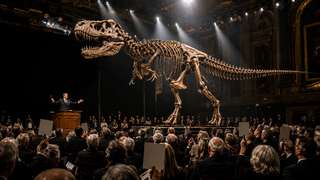
Il devient le dinosaure le plus cher du monde en 10 minutes : voici l’incroyable histoire de Gus
musée Dinosauria Tyrannosaurus squelette
Il a traversé 67 millions d’années enfoui dans le sol avant de faire trembler une salle des ventes. Le squelette de Tyrannosaurus rex surnommé "Gus" a été adjugé 50,13 millions de dollars chez Sotheby’s, à New York. Un record absolu pour un dinosaure, qui ravive le débat sur la privatisation des...
15/07/2026 futura-terre
L'évolution des yeux d'araignée explorée dans une nouvelle étude
chasse musée anatomie évolution étude
Une nouvelle étude scientifique a fourni des informations fascinantes sur l’évolution des yeux d’araignée. Une équipe internationale de chercheurs a découvert que les araignées chasseuses évoluaient indépendamment dans la disposition de leurs yeux orientés vers l'avant. L'étude, dirigée par Atal Pande du Museum für Naturkunde Berlin, démontre que les systèmes visuels des araignées sont très flexibles. Leurs yeux peuvent évoluer séparément
07/07/2026 everythingdinosaur ⚙ Traduction automatique
Un nouveau projet de recherche sur les collections coloniales examine des spécimens de musée du Togo et du Ghana
musée Ghana Togo spécimen étude
Un nouveau projet de recherche sur les collections coloniales a été lancé avec la participation de plusieurs grands musées berlinois. Les chercheurs étudieront les origines et l’histoire d’importantes collections d’histoire naturelle et culturelles rassemblées pendant la période coloniale allemande. Pour la première fois, des institutions berlinoises travaillent ensemble pour étudier les collections liées à l'ancienne colonie allemande du Togo. À
04/07/2026 everythingdinosaur ⚙ Traduction automatique
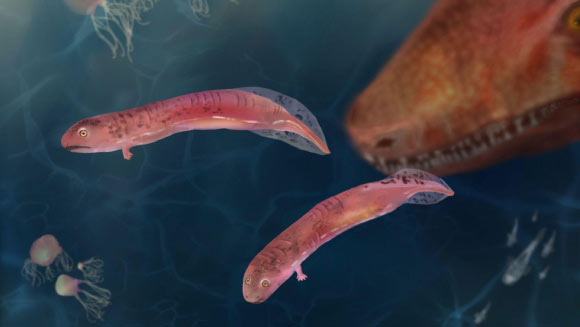
Earth’s First Land Animals May Never Have Been Amphibian-Like After All
Les premiers animaux terrestres de la Terre n’ont peut-être jamais ressemblé à des amphibiens après tout
prédateur musée Carbonifère évolution
Les paléontologues du Field Museum of Natural History ont décrit les restes fossilisés de bébés embolomères, des prédateurs ressemblant à des crocodiles qui rôdaient dans d'anciennes rivières et marécages il y a entre 350 et 280 millions d'années. L’article Les premiers animaux terrestres de la Terre n’ont peut-être jamais ressemblé à des amphibiens après tout, apparu en premier sur Sci.News : Breaking Science News.
19/06/2026 sci-news ⚙ Traduction automatique
1 2 3 4 5 6 7 8 9 10