←

musée

Type de contenu

449 image(s) · 46 Actualités

Galerie d'images

Rahonavis in Royal Ontario Museum.
Taxons Rahonavis

Rahonavis in Royal Ontario Museum.

musée Rahonavis
Diagram depicting the currently named Dinosauria from the Late Cretaceous Allen Formation of Argentina. Dinosaur taxa:
Aeolosaurus sp. → Salitral Moreno locality, Río Negro Province.[1] Length = 15 meters.[2]
Austroraptor cabazai → Santa Rosa Basin locality, Río Negro Province.[3][4] Length = 6 meters.[2]
Bonapartenykus ultimus → Salitral Ojo de Agua locality, Río Negro Province.[5] Length = 2.5 meters.[5]
Bonapartesaurus rionegrensis → Salitral Moreno locality, Río Negro Province.[6] Length = ∼6 meters.[1]
Bonatitan reigi → Salitral de Santa Rosa locality, Río Negro Province.[7] Length = Extrapolated after relatives.
 Kelumapusaura machi → Cerro Matadero locality, Río Negro Province.[8] 9 meters.[8]
Lamarqueavis australis → Cerro Tortugas locality, Río Negro Province.[9] Length = ∼House sparrow-sized.[9]
Lapampasaurus cholinoi → Islas Malvinas locality, La Pampa Province.[10] Length = ∼7 meters.[2]
Limenavis patagonica → Salitral Moreno locality, Río Negro Province.[11] Length = Extrapolated after relatives.
Menucocelsior arriagadai → Salitral Ojo de Agua locality, Río Negro Province.
Niebla antiqua → Cerro Matadero locality, Río Negro Province.[12] Length = 4.5 meters.[12]
Panamericansaurus schroederi → Bodega Familia Schroeder locality, Neuquén Province.[13] Length = 11 meters.[2]
Patagopelta cristata → Salitral Moreno locality, Río Negro Province.
Quilmesaurus curriei → Salitral Ojo de Agua locality, Río Negro Province.[14] Length = 5.3 meters.[12]
Rocasaurus muniozi → Salitral Moreno locality, Río Negro Province.[15] Length = Extrapolated after relatives.
Excluded taxa: 

Willinakaqe salitralensis is considered a nomen dubium,[16] and its paratype has been reassigned to Bonapartesaurus rionegrensis.[6]
Laplatasaurus araukanicus has been restricted to its lectotype which hails from the Anacleto Formation.[17]
Abelisaurus comahuensis could either belong to the Allen or Anacleto formations.[12]
Pellegrinisaurus powelli could either belong to the Allen or Anacleto formations.[18][19]
References

↑  (2013). "The titanosaur sauropods from the late Campanian-early Maastrichtian Allen Formation of Salitral Moreno, Río Negro, Argentina". Acta Palaeontologica Polonica 58 (2): 269–284. DOI:10.4202/app.2011.0055.

↑ a b c (2007)  Dinosaurs: The Most Complete, Up-to-Date Encyclopedia for Dinosaur Lovers of All Ages, Random House  ISBN:  9780375824197.  Genus List for Holtz 2012  Weight Information

↑ (2008). "A bizarre Cretaceous theropod dinosaur from Patagonia and the evolution of Gondwanan dromaeosaurids". Proceedings of the Royal Society B: Biological Sciences 276 (1659): 1101–7. DOI:10.1098/rspb.2008.1554. ISSN 1471-2954.

↑  (2012). "A New Specimen of Austroraptor cabazai Novas, Pol, Canale, Porfiri and Calvo, 2008 (Dinosauria, Theropoda, Unenlagiidae) from the Latest Cretaceous (Maastrichtian) of Río Negro, Argentina". Ameghiniana 49 (4): 662–667. DOI:10.5710/AMGH.30.8.2012.574.

↑ a b Federico L. Agnolin (2012). "New alvarezsaurid (Dinosauria, Theropoda) from uppermost Cretaceous of north-western Patagonia with associated eggs". Cretaceous Research 35: 33–56. DOI:10.1016/j.cretres.2011.11.014.

↑ a b  (2017). "Bonapartesaurus rionegrensis, a new hadrosaurine dinosaur from South America: implications for phylogenetic and biogeographic relations with North America". Journal of Vertebrate Paleontology 37 (2): 1–16. DOI:10.1080/02724634.2017.1289381.

↑ Salgado L., Gallina P.A. and Paulina Carabajal A. 2014. "Redescription of Bonatitan reigi (Sauropoda: Titanosauria), from the Campanian–Maastrichtian of the Río Negro Province (Argentina)". Historical Biology: An International Journal of Paleobiology 27(5): 525-548

↑ a b  (2022). "A new hadrosaurid (Dinosauria: Ornithischia) from the Late Cretaceous of northern Patagonia and the radiation of South American hadrosaurids". Journal of Systematic Palaeontology. DOI:10.1080/14772019.2021.2020917.

↑ a b (2010). "[https://pdfs.semanticscholar.org/f6f4/c6eb05d224719916c0b20634f54dfeb37d3f.pdf An avian coracoid from the Upper
Cretaceous of Patagonia, Argentina]". Studia Geologica Salmanticensia 46 (2): 99-119. ISSN 0211-8327.

↑ Rodolfo A. Coria, Bernardo González Riga and Silvio Casadío (2012). "Un nuevo hadrosáurido (Dinosauria, Ornithopoda) de la Formación Allen, provincia de La Pampa, Argentina". Ameghiniana 49 (4): 552–572.

↑ Clarke and Chiappe, 2001. A new carinate bird from the Late Cretaceous of Patagonia (Argentina). American Museum Novitates. 3323, 1-23.

↑ a b c d (in English) Aranciaga Rolando, Mauro (2020). "A new medium-sized abelisaurid (Theropoda, Dinosauria) from the late cretaceous (Maastrichtian) Allen Formation of Northern Patagonia, Argentina". Journal of South American Earth Sciences: 102915. DOI:10.1016/j.jsames.2020.102915. ISSN 0895-9811.

↑ (2010). "Panamericansaurus schroederi gen. nov. sp. nov. Un nuevo Sauropoda (Titanosauridae-Aeolosaurini) de la Provincia del Neuquén, Cretácico Superior de Patagonia, Argentina". Brazilian Geographical Journal: Geosciences and Humanities research medium 1: 100–115.

↑ Coria, R.A. (2001) "A new theropod from the Late Cretaceous of Patagonia" in Tanke, Darren H., ed.    Mesozoic Vertebrate Life, Life of the Past, Indiana University Press, pp. 3–9  ISBN:  978-0-253-33907-2. 

↑ Salgado, L. and C. Azpilicueta. 2000. Un nuevo saltasaurino (Sauropoda, Titanosauridae) de la provincia de Río Negro (Formacíon Allen, Cretácico Superior), Patagonia, Argentina archive copy at the Wayback Machine. Ameghiniana 37 (3):259-264.

↑  (2016). "Revisiting the hadrosaurid diversity of the Allen Fm.: Re-evaluation of the taxonomic validity of Willinakaqe salitralensis (Ornithopoda, Hadrosauridae) from Salitral Moreno, Río Negro Province, Argentina". Ameghiniana 53 (2): 231–237. DOI:10.5710/AMGH.25.09.2015.2943.

↑ Pablo A. Gallina & Alejandro Otero (2015) Reassessment of Laplatasaurus araukanicus (SAUROPODA: TITANOSAURIA), from the Late Cretaceous of Patagonia, Argentina. Ameghiniana 52 (5):487–501. doi:10.5710/AMGH.08.06.2015.2911.

↑ (1996). "Pellegrinisaurus powelli nov. gen. et sp. (Sauropoda, Titanosauridae) from the Upper Cretaceous of Lago Pellegrini, Northwestern Patagonia, Argentina". Ameghiniana 33 (4): 355–365. ISSN 1851-8044.

↑ Heredia, S., & Salgado, L. (2014). Posición estratigráfica de los estratos supracretácicos portadores de dinosaurios en Lago Pellegrini, Patagonia septentrional, Argentina. Ameghiniana, 36(2), 229-234.

Diagram depicting the currently named Dinosauria from the Late Cretaceous Allen Formation of Argentina. Dinosaur taxa: Aeolosaurus sp. → Salitral Moreno locality, Río Negro Province.[1] Length = 15 meters.[2] Austroraptor cabazai → Santa Rosa Basin locality, Río Negro Province.[3][4] Length = 6 meters.[2] Bonapartenykus ultimus → Salitral Ojo de Agua locality, Río Negro Province.[5] Length = 2.5 meters.[5] Bonapartesaurus rionegrensis → Salitral Moreno locality, Río Negro Province.[6] Length = ∼6 meters.[1] Bonatitan reigi → Salitral de Santa Rosa locality, Río Negro Province.[7] Length = Extrapolated after relatives. Kelumapusaura machi → Cerro Matadero locality, Río Negro Province.[8] 9 meters.[8] Lamarqueavis australis → Cerro Tortugas locality, Río Negro Province.[9] Length = ∼House sparrow-sized.[9] Lapampasaurus cholinoi → Islas Malvinas locality, La Pampa Province.[10] Length = ∼7 meters.[2] Limenavis patagonica → Salitral Moreno locality, Río Negro Province.[11] Length = Extrapolated after relatives. Menucocelsior arriagadai → Salitral Ojo de Agua locality, Río Negro Province. Niebla antiqua → Cerro Matadero locality, Río Negro Province.[12] Length = 4.5 meters.[12] Panamericansaurus schroederi → Bodega Familia Schroeder locality, Neuquén Province.[13] Length = 11 meters.[2] Patagopelta cristata → Salitral Moreno locality, Río Negro Province. Quilmesaurus curriei → Salitral Ojo de Agua locality, Río Negro Province.[14] Length = 5.3 meters.[12] Rocasaurus muniozi → Salitral Moreno locality, Río Negro Province.[15] Length = Extrapolated after relatives. Excluded taxa: Willinakaqe salitralensis is considered a nomen dubium,[16] and its paratype has been reassigned to Bonapartesaurus rionegrensis.[6] Laplatasaurus araukanicus has been restricted to its lectotype which hails from the Anacleto Formation.[17] Abelisaurus comahuensis could either belong to the Allen or Anacleto formations.[12] Pellegrinisaurus powelli could either belong to the Allen or Anacleto formations.[18][19] References ↑ (2013). "The titanosaur sauropods from the late Campanian-early Maastrichtian Allen Formation of Salitral Moreno, Río Negro, Argentina". Acta Palaeontologica Polonica 58 (2): 269–284. DOI:10.4202/app.2011.0055. ↑ a b c (2007) Dinosaurs: The Most Complete, Up-to-Date Encyclopedia for Dinosaur Lovers of All Ages, Random House ISBN: 9780375824197. Genus List for Holtz 2012 Weight Information ↑ (2008). "A bizarre Cretaceous theropod dinosaur from Patagonia and the evolution of Gondwanan dromaeosaurids". Proceedings of the Royal Society B: Biological Sciences 276 (1659): 1101–7. DOI:10.1098/rspb.2008.1554. ISSN 1471-2954. ↑ (2012). "A New Specimen of Austroraptor cabazai Novas, Pol, Canale, Porfiri and Calvo, 2008 (Dinosauria, Theropoda, Unenlagiidae) from the Latest Cretaceous (Maastrichtian) of Río Negro, Argentina". Ameghiniana 49 (4): 662–667. DOI:10.5710/AMGH.30.8.2012.574. ↑ a b Federico L. Agnolin (2012). "New alvarezsaurid (Dinosauria, Theropoda) from uppermost Cretaceous of north-western Patagonia with associated eggs". Cretaceous Research 35: 33–56. DOI:10.1016/j.cretres.2011.11.014. ↑ a b (2017). "Bonapartesaurus rionegrensis, a new hadrosaurine dinosaur from South America: implications for phylogenetic and biogeographic relations with North America". Journal of Vertebrate Paleontology 37 (2): 1–16. DOI:10.1080/02724634.2017.1289381. ↑ Salgado L., Gallina P.A. and Paulina Carabajal A. 2014. "Redescription of Bonatitan reigi (Sauropoda: Titanosauria), from the Campanian–Maastrichtian of the Río Negro Province (Argentina)". Historical Biology: An International Journal of Paleobiology 27(5): 525-548 ↑ a b (2022). "A new hadrosaurid (Dinosauria: Ornithischia) from the Late Cretaceous of northern Patagonia and the radiation of South American hadrosaurids". Journal of Systematic Palaeontology. DOI:10.1080/14772019.2021.2020917. ↑ a b (2010). "[https://pdfs.semanticscholar.org/f6f4/c6eb05d224719916c0b20634f54dfeb37d3f.pdf An avian coracoid from the Upper Cretaceous of Patagonia, Argentina]". Studia Geologica Salmanticensia 46 (2): 99-119. ISSN 0211-8327. ↑ Rodolfo A. Coria, Bernardo González Riga and Silvio Casadío (2012). "Un nuevo hadrosáurido (Dinosauria, Ornithopoda) de la Formación Allen, provincia de La Pampa, Argentina". Ameghiniana 49 (4): 552–572. ↑ Clarke and Chiappe, 2001. A new carinate bird from the Late Cretaceous of Patagonia (Argentina). American Museum Novitates. 3323, 1-23. ↑ a b c d (in English) Aranciaga Rolando, Mauro (2020). "A new medium-sized abelisaurid (Theropoda, Dinosauria) from the late cretaceous (Maastrichtian) Allen Formation of Northern Patagonia, Argentina". Journal of South American Earth Sciences: 102915. DOI:10.1016/j.jsames.2020.102915. ISSN 0895-9811. ↑ (2010). "Panamericansaurus schroederi gen. nov. sp. nov. Un nuevo Sauropoda (Titanosauridae-Aeolosaurini) de la Provincia del Neuquén, Cretácico Superior de Patagonia, Argentina". Brazilian Geographical Journal: Geosciences and Humanities research medium 1: 100–115. ↑ Coria, R.A. (2001) "A new theropod from the Late Cretaceous of Patagonia" in Tanke, Darren H., ed. Mesozoic Vertebrate Life, Life of the Past, Indiana University Press, pp. 3–9 ISBN: 978-0-253-33907-2. ↑ Salgado, L. and C. Azpilicueta. 2000. Un nuevo saltasaurino (Sauropoda, Titanosauridae) de la provincia de Río Negro (Formacíon Allen, Cretácico Superior), Patagonia, Argentina archive copy at the Wayback Machine. Ameghiniana 37 (3):259-264. ↑ (2016). "Revisiting the hadrosaurid diversity of the Allen Fm.: Re-evaluation of the taxonomic validity of Willinakaqe salitralensis (Ornithopoda, Hadrosauridae) from Salitral Moreno, Río Negro Province, Argentina". Ameghiniana 53 (2): 231–237. DOI:10.5710/AMGH.25.09.2015.2943. ↑ Pablo A. Gallina & Alejandro Otero (2015) Reassessment of Laplatasaurus araukanicus (SAUROPODA: TITANOSAURIA), from the Late Cretaceous of Patagonia, Argentina. Ameghiniana 52 (5):487–501. doi:10.5710/AMGH.08.06.2015.2911. ↑ (1996). "Pellegrinisaurus powelli nov. gen. et sp. (Sauropoda, Titanosauridae) from the Upper Cretaceous of Lago Pellegrini, Northwestern Patagonia, Argentina". Ameghiniana 33 (4): 355–365. ISSN 1851-8044. ↑ Heredia, S., & Salgado, L. (2014). Posición estratigráfica de los estratos supracretácicos portadores de dinosaurios en Lago Pellegrini, Patagonia septentrional, Argentina. Ameghiniana, 36(2), 229-234.

musée Argentine Allen Anacleto +39
Holotype specimen (GMV2128) of Dendrorhynchoides curvidentatus on display at the Geological Museum of China.
Taxons Dendrorhynchoides

Holotype specimen (GMV2128) of Dendrorhynchoides curvidentatus on display at the Geological Museum of China.

musée Chine holotype spécimen +1
Changchengopterus pani, Liaoning Palaeontological Museum
Taxons Changchengopterus

Changchengopterus pani, Liaoning Palaeontological Museum

musée Changchengopterus
Anhui Geological Museum, Hefei. Complete indexed photo collection at WorldHistoryPics.com.
Taxons Chilantaisaurus

Anhui Geological Museum, Hefei. Complete indexed photo collection at WorldHistoryPics.com.

musée Chilantaisaurus
Fossil of Santanadactylus pricei and Anhanguera santanae, an extinct pterosaur- Took the photo at Senckenberg Museum of Frankfurt
Taxons Santanadactylus

Fossil of Santanadactylus pricei and Anhanguera santanae, an extinct pterosaur- Took the photo at Senckenberg Museum of Frankfurt

musée fossile Anhanguera Pterosauria +1
Lonchodraco giganteus comb. n. Lectotype NHMUK PV 39412 (Cenomanian / Turonian, Chalk Formation). A–F articulated anterior parts of the rostrum and mandible A right lateral view B respective line drawing C left lateral view D respective line drawing E anterior view F respective line drawing G associated scapulocoracoid in posterior view. Abbreviations: ch – choanae, cor – coracoid, d – dentary, dcr – dentary crest, m – maxillae, pl – palatine, pm – premaxillae, pmcr – premaxillaery crest, prid – palatal ridge, sca – scapula. Arrows indicate alveoli or teeth. Scale bar = 10 mm. Photos courtesy of The Natural History Museum.
Taxons Lonchodraco

Lonchodraco giganteus comb. n. Lectotype NHMUK PV 39412 (Cenomanian / Turonian, Chalk Formation). A–F articulated anterior parts of the rostrum and mandible A right lateral view B respective line drawing C left lateral view D respective line drawing E anterior view F respective line drawing G associated scapulocoracoid in posterior view. Abbreviations: ch – choanae, cor – coracoid, d – dentary, dcr – dentary crest, m – maxillae, pl – palatine, pm – premaxillae, pmcr – premaxillaery crest, prid – palatal ridge, sca – scapula. Arrows indicate alveoli or teeth. Scale bar = 10 mm. Photos courtesy of The Natural History Museum.

crête écaille dessin musée +4
The "Big Mama" Citipati osmolskae skeleton (IGM 100/979) on display at the American Museum of Natural History.
Taxons Citipati

The "Big Mama" Citipati osmolskae skeleton (IGM 100/979) on display at the American Museum of Natural History.

musée Citipati squelette
Cast of the skull of Parapsicephalus purdoni (specimen AMNH 1694) in the American Museum of Natural History.
Taxons Parapsicephalus

Cast of the skull of Parapsicephalus purdoni (specimen AMNH 1694) in the American Museum of Natural History.

musée moulage spécimen Parapsicephalus +1
Holotype skull of Plesiotylosaurus crassidens (LACM 2759) on display at the Natural History Museum of Los Angeles County.
Taxons Plesiotylosaurus

Holotype skull of Plesiotylosaurus crassidens (LACM 2759) on display at the Natural History Museum of Los Angeles County.

musée holotype Plesiotylosaurus crâne
Chaoyangopterus zhangi, Liaoning Palaeontological Museum

Chaoyangopterus zhangi, Liaoning Palaeontological Museum

musée Chaoyangopterus
Dinos at Courtenay Museum -20090628-7
Taxons Kourisodon

Dinos at Courtenay Museum -20090628-7

musée Canada Kourisodon
Fossil specimen of Anchiornis huxleyi on display at the Beijing Museum of Natural History.
Taxons Anchiornis

Fossil specimen of Anchiornis huxleyi on display at the Beijing Museum of Natural History.

musée fossile spécimen Anchiornis
Puntledge River elasmosaur[1], Canadian Museum of Nature, Ottawa, Ontario, Canada
Taxons Traskasaura

Puntledge River elasmosaur[1], Canadian Museum of Nature, Ottawa, Ontario, Canada

musée Canada Traskasaura
Alioramus altai skull in the exhibit, T. rex, The Ultimate Predator, in the American Museum of Natural History (with permission by Ben Miller).
Taxons Alioramini

Alioramus altai skull in the exhibit, T. rex, The Ultimate Predator, in the American Museum of Natural History (with permission by Ben Miller).

prédateur musée Alioramini Alioramus +1
I took the picture at the limited exhibition event in National Museum of Nature and Science
Taxons Phosphorosaurus

I took the picture at the limited exhibition event in National Museum of Nature and Science

musée Phosphorosaurus
1 2 3 4 5 6 7 8 9 10 11 12 13 14 15 16 17 18 19 20 21 22 23 24 25 26 27 28 29

Actualités

L’audition sous-marine des phoques expliquée par de nouvelles recherches
musée évolution mammifères étude
Une équipe de scientifiques internationaux a découvert le mécanisme remarquable derrière l’audition sous-marine des phoques. Une nouvelle étude, menée par des chercheurs du Musée d'histoire naturelle de Londres, révèle que les phoques existants entendent aussi bien dans l'air que sous l'eau. Les résultats aident à expliquer un mystère évolutif de longue date et pourraient soutenir les futurs efforts de conservation. La recherche, publiée
16/07/2026 everythingdinosaur ⚙ Traduction automatique
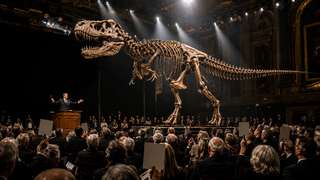
Il devient le dinosaure le plus cher du monde en 10 minutes : voici l’incroyable histoire de Gus
musée Dinosauria Tyrannosaurus squelette
Il a traversé 67 millions d’années enfoui dans le sol avant de faire trembler une salle des ventes. Le squelette de Tyrannosaurus rex surnommé "Gus" a été adjugé 50,13 millions de dollars chez Sotheby’s, à New York. Un record absolu pour un dinosaure, qui ravive le débat sur la privatisation des...
15/07/2026 futura-terre
L'évolution des yeux d'araignée explorée dans une nouvelle étude
chasse musée anatomie évolution étude
Une nouvelle étude scientifique a fourni des informations fascinantes sur l’évolution des yeux d’araignée. Une équipe internationale de chercheurs a découvert que les araignées chasseuses évoluaient indépendamment dans la disposition de leurs yeux orientés vers l'avant. L'étude, dirigée par Atal Pande du Museum für Naturkunde Berlin, démontre que les systèmes visuels des araignées sont très flexibles. Leurs yeux peuvent évoluer séparément
07/07/2026 everythingdinosaur ⚙ Traduction automatique
Un nouveau projet de recherche sur les collections coloniales examine des spécimens de musée du Togo et du Ghana
musée Ghana Togo spécimen étude
Un nouveau projet de recherche sur les collections coloniales a été lancé avec la participation de plusieurs grands musées berlinois. Les chercheurs étudieront les origines et l’histoire d’importantes collections d’histoire naturelle et culturelles rassemblées pendant la période coloniale allemande. Pour la première fois, des institutions berlinoises travaillent ensemble pour étudier les collections liées à l'ancienne colonie allemande du Togo. À
04/07/2026 everythingdinosaur ⚙ Traduction automatique
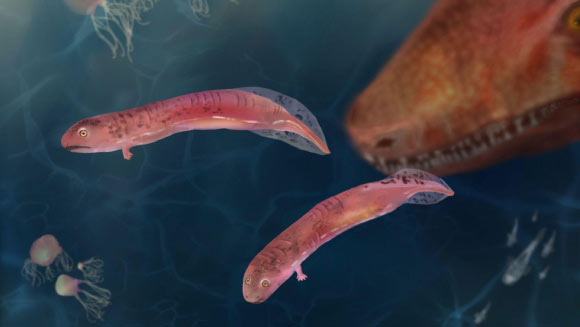
Earth’s First Land Animals May Never Have Been Amphibian-Like After All
Les premiers animaux terrestres de la Terre n’ont peut-être jamais ressemblé à des amphibiens après tout
prédateur musée Carbonifère évolution
Les paléontologues du Field Museum of Natural History ont décrit les restes fossilisés de bébés embolomères, des prédateurs ressemblant à des crocodiles qui rôdaient dans d'anciennes rivières et marécages il y a entre 350 et 280 millions d'années. L’article Les premiers animaux terrestres de la Terre n’ont peut-être jamais ressemblé à des amphibiens après tout, apparu en premier sur Sci.News : Breaking Science News.
19/06/2026 sci-news ⚙ Traduction automatique
1 2 3 4 5 6 7 8 9 10