←

fossile

Nature du spécimen

226 image(s) · 215 Actualités

Galerie d'images

Reprodução a partir da gravura original do Holótipo, Hybodus acutus Agassiz, 1837, na publicação e prancha: L. Agassiz. 1837. Recherches sur les poissons fossiles Vol.3 (Atlas); Tab 10

Reprodução a partir da gravura original do Holótipo, Hybodus acutus Agassiz, 1837, na publicação e prancha: L. Agassiz. 1837. Recherches sur les poissons fossiles Vol.3 (Atlas); Tab 10

fossile poisson
Graph of relative Dinosaur fossil populations from each period of geologic time in the Mesozoic, ordered by major clade

Graph of relative Dinosaur fossil populations from each period of geologic time in the Mesozoic, ordered by major clade

Mésozoïque fossile Dinosauria
Fossil of the Decapod Cycleryon

Fossil of the Decapod Cycleryon

fossile
Fig 2. Geological section of the “Mittlerer Kimmeridge”.
This figure is based on Fischer and modified from Lallensack et al. Beds yielding terrestrial fossils are listed.

Fig 2. Geological section of the “Mittlerer Kimmeridge”. This figure is based on Fischer and modified from Lallensack et al. Beds yielding terrestrial fossils are listed.

fossile
Fossil shell of Aulacostephanus yo from France, on display at Gallery of Paleontology and Comparative Anatomy, Paris.
Intervalles Kimmeridgian

Fossil shell of Aulacostephanus yo from France, on display at Gallery of Paleontology and Comparative Anatomy, Paris.

France fossile anatomie
The GSSP for the Hirnantian stage in the ICS geological timescale (uppermost Ordovician stage), located in the Wangjiawan profile (an outcrop of black shale, brownishly weathered siliceous shale and chert layers of the Wufeng Formation) along the G241 road, about 40 km north of Yichang, Hubei, China. An exact golden spike is missing in the profile (2025) but a memorial plague marks the place. The GSSP occurs at the first appearance of fossils of the graptolite species Normalograptus extraordinarius. It was ratified in 2006.

The GSSP for the Hirnantian stage in the ICS geological timescale (uppermost Ordovician stage), located in the Wangjiawan profile (an outcrop of black shale, brownishly weathered siliceous shale and chert layers of the Wufeng Formation) along the G241 road, about 40 km north of Yichang, Hubei, China. An exact golden spike is missing in the profile (2025) but a memorial plague marks the place. The GSSP occurs at the first appearance of fossils of the graptolite species Normalograptus extraordinarius. It was ratified in 2006.

Chine Hirnantien Ordovicien fossile +1
Crioceratites fabreae fossils on display at the French National Museum of Natural History in Paris, France.

Crioceratites fabreae fossils on display at the French National Museum of Natural History in Paris, France.

musée France fossile
Crioceratites duvali fossil on display at the French National Museum of Natural History in Paris, France.

Crioceratites duvali fossil on display at the French National Museum of Natural History in Paris, France.

musée France fossile
“Sternberger Kuchen” (“Sternberg cake”), a large late Pleistocene glaciofluvial pebble of a highly fossiliferous, shallow marine sandstone of the North German Paleogene (Sülstorf beds, formerly known as “Sternberg rock”, Chattian, Oligocene, about 25 million years old). The fossil content is mainly made up of mollusks (pelecypods, gastropods, scaphopods). Provenance: Sternberg, Mecklenburg-Vorpommern, Northeast Germany.

“Sternberger Kuchen” (“Sternberg cake”), a large late Pleistocene glaciofluvial pebble of a highly fossiliferous, shallow marine sandstone of the North German Paleogene (Sülstorf beds, formerly known as “Sternberg rock”, Chattian, Oligocene, about 25 million years old). The fossil content is mainly made up of mollusks (pelecypods, gastropods, scaphopods). Provenance: Sternberg, Mecklenburg-Vorpommern, Northeast Germany.

Allemagne Chattien Pléistocène supérieur Oligocène +3
Fossil of Cainotherium, an extinct mammal https://hdl.handle.net/21.12123/66925 in ferruginous rock of Oligocene (Chattian) age from Ingolstadt in Bavaria, Germany - Took the photo at Museon museum, Den Haag
Intervalles Chattian

Fossil of Cainotherium, an extinct mammal https://hdl.handle.net/21.12123/66925 in ferruginous rock of Oligocene (Chattian) age from Ingolstadt in Bavaria, Germany - Took the photo at Museon museum, Den Haag

musée Allemagne Chattien Oligocène +1
A fossil tree from the Coal Creek region, Fruitland Formation, latest Cretaceous (Late Campanian), San Juan Basin, New Mexico

A fossil tree from the Coal Creek region, Fruitland Formation, latest Cretaceous (Late Campanian), San Juan Basin, New Mexico

Mexique Fruitland Campanien Crétacé +2
Glyptostrobus europaeus fossil leaves of Burdigalian stage in the early Miocene epoch, from a brown coal mine in Bilina, Czech Republic.

Glyptostrobus europaeus fossil leaves of Burdigalian stage in the early Miocene epoch, from a brown coal mine in Bilina, Czech Republic.

Tchéquie Burdigalien Miocène fossile
Brachipotherium aurelianense, from Rubí. Fossils. Collection of paleontology of the Geological Museum of the Barcelona Seminari (Museu Geològic del Seminari de Barcelona).

Brachipotherium aurelianense, from Rubí. Fossils. Collection of paleontology of the Geological Museum of the Barcelona Seminari (Museu Geològic del Seminari de Barcelona).

musée fossile
Ficus truncata fossil leaf from the early Miocene epoch 20 Ma, of the Třetihorní flóra from Bílina, Czech Republic.

Ficus truncata fossil leaf from the early Miocene epoch 20 Ma, of the Třetihorní flóra from Bílina, Czech Republic.

Tchéquie Miocène fossile
Comptonia acutiloba fossil leaves from the early Miocene epoch 20 Ma, of the Třetihorní flóra from Bílina, Czech Republic.

Comptonia acutiloba fossil leaves from the early Miocene epoch 20 Ma, of the Třetihorní flóra from Bílina, Czech Republic.

Tchéquie Miocène fossile
Berberis berberidifolia fossil leaf of Burdigalian stage in the early Miocene epoch, from a brown coal mine in Bilina, Czech Republic.
Intervalles Burdigalian

Berberis berberidifolia fossil leaf of Burdigalian stage in the early Miocene epoch, from a brown coal mine in Bilina, Czech Republic.

Tchéquie Burdigalien Miocène fossile
1 2 3 4 5 6 7 8 9 10 11 12 13 14 15

Actualités

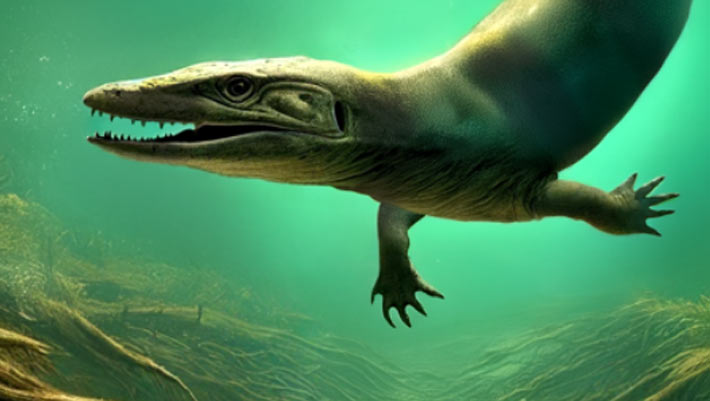
New Species of Freshwater Mosasaur Identified in France
De nouvelles espèces de mosasaures d'eau douce identifiées en France
France fossile Mosasaurus nouvelle espèce
Des fossiles du sud-est de la France révèlent un mosasaure téthysaurine jusqu'alors inconnu, d'environ 2,5 mètres de long, qui semble avoir vécu dans un lac d'eau douce et non dans la mer. L'article Nouvelle espèce de mosasaure d'eau douce identifiée en France apparaît en premier sur Sci.News : Breaking Science News.
05/10/2026 sci-news ⚙ Traduction automatique
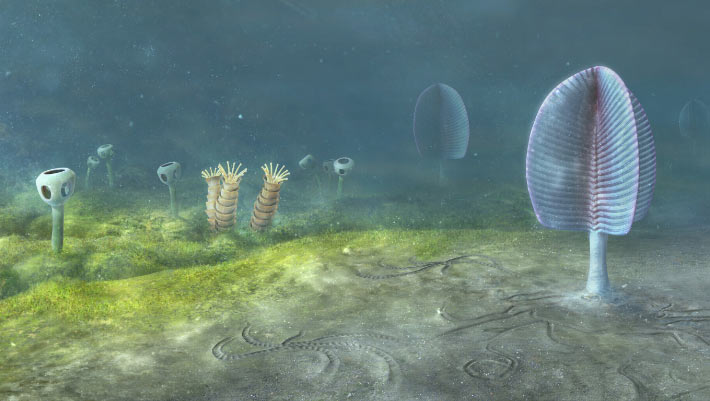
First Animals May Have Appeared 200 Million Years Earlier than Their Oldest Fossils Suggest
Les premiers animaux pourraient être apparus 200 millions d’années plus tôt que ne le suggèrent leurs plus anciens fossiles
Édiacarien fossile évolution
Les plus anciens fossiles d'animaux incontestés, provenant du biote de l'Édiacarien, datent d'environ 574 millions d'années, mais les traces chimiques laissées par les éponges, connues sous le nom de biomarqueurs lipidiques, suggèrent que les animaux existaient il y a avant 635 millions d'années. L’article Les premiers animaux pourraient être apparus 200 millions d’années plus tôt que ne le suggèrent leurs plus anciens fossiles est apparu en premier sur Sci.News : Breaking Science News.
02/10/2026 sci-news ⚙ Traduction automatique
Des fossiles vieux de 97 millions d’années révèlent le premier « GPS » animal connu
fossile
De mystérieux fossiles magnétiques vieux de 97 millions d’années pourraient être la preuve la plus ancienne d’un animal utilisant le champ magnétique terrestre comme un GPS intégré. Leur structure magnétique sophistiquée aurait pu aider une créature océanique inconnue à parcourir des milliers de kilomètres avec une précision surprenante.
02/10/2026 sciencedaily-paleo ⚙ Traduction automatique
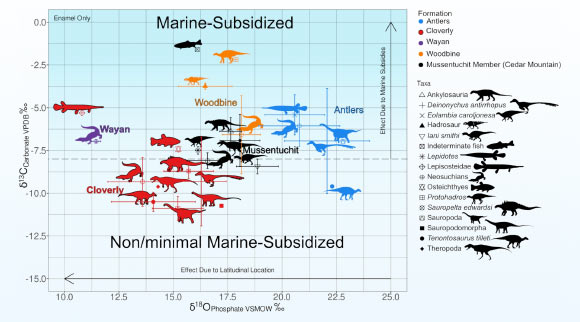
Dinosaurs May Have Dined on Seaweed, Study Suggests
Les dinosaures auraient pu manger des algues, selon une étude
Crétacé fossile Dinosauria isotope étude
Les paléontologues qui étudient les fossiles du Crétacé ont découvert à plusieurs reprises que les dents de nombreux animaux anciens contiennent davantage d'un isotope de carbone plus lourd, le carbone 13, que ce que leur régime alimentaire présumé à base de plantes laisserait présager. L'article Les dinosaures ont peut-être dîné d'algues, selon une étude, est apparu en premier sur Sci.News : Breaking Science News.
01/10/2026 sci-news ⚙ Traduction automatique
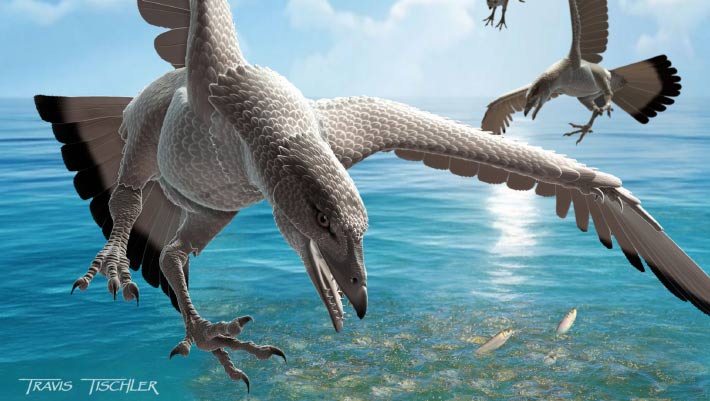
New Enantiornithine Bird Joins Australia’s Sparse Fossil Record
Un nouvel oiseau énantiornithine rejoint le record australien de fossiles clairsemés
Australie Crétacé fossile oiseau
Tenuicruris piscanexum n'est que la deuxième espèce d'oiseau du Crétacé nommée sur le continent australien. L’article Un nouvel oiseau énantiornithine rejoint le record australien de fossiles clairsemés est apparu en premier sur Sci.News : Breaking Science News.
30/09/2026 sci-news ⚙ Traduction automatique
1 2 3 4 5 6 7 8 9 10 11 12 13 14 15 16 17 18 19 20 21 22 23 24 25 26 27 28 29 30 31 32 33 34 35 36 37 38 39 40 41 42 43