←

fossile

Nature du spécimen

226 image(s) · 215 Actualités

Galerie d'images

Reprodução a partir da gravura original do Holótipo, Hybodus acutus Agassiz, 1837, na publicação e prancha: L. Agassiz. 1837. Recherches sur les poissons fossiles Vol.3 (Atlas); Tab 10

Reprodução a partir da gravura original do Holótipo, Hybodus acutus Agassiz, 1837, na publicação e prancha: L. Agassiz. 1837. Recherches sur les poissons fossiles Vol.3 (Atlas); Tab 10

fossile poisson
Graph of relative Dinosaur fossil populations from each period of geologic time in the Mesozoic, ordered by major clade

Graph of relative Dinosaur fossil populations from each period of geologic time in the Mesozoic, ordered by major clade

Mésozoïque fossile Dinosauria
Fossil of the Decapod Cycleryon

Fossil of the Decapod Cycleryon

fossile
Fig 2. Geological section of the “Mittlerer Kimmeridge”.
This figure is based on Fischer and modified from Lallensack et al. Beds yielding terrestrial fossils are listed.

Fig 2. Geological section of the “Mittlerer Kimmeridge”. This figure is based on Fischer and modified from Lallensack et al. Beds yielding terrestrial fossils are listed.

fossile
Fossil shell of Aulacostephanus yo from France, on display at Gallery of Paleontology and Comparative Anatomy, Paris.
Intervalles Kimmeridgian

Fossil shell of Aulacostephanus yo from France, on display at Gallery of Paleontology and Comparative Anatomy, Paris.

France fossile anatomie
The GSSP for the Hirnantian stage in the ICS geological timescale (uppermost Ordovician stage), located in the Wangjiawan profile (an outcrop of black shale, brownishly weathered siliceous shale and chert layers of the Wufeng Formation) along the G241 road, about 40 km north of Yichang, Hubei, China. An exact golden spike is missing in the profile (2025) but a memorial plague marks the place. The GSSP occurs at the first appearance of fossils of the graptolite species Normalograptus extraordinarius. It was ratified in 2006.

The GSSP for the Hirnantian stage in the ICS geological timescale (uppermost Ordovician stage), located in the Wangjiawan profile (an outcrop of black shale, brownishly weathered siliceous shale and chert layers of the Wufeng Formation) along the G241 road, about 40 km north of Yichang, Hubei, China. An exact golden spike is missing in the profile (2025) but a memorial plague marks the place. The GSSP occurs at the first appearance of fossils of the graptolite species Normalograptus extraordinarius. It was ratified in 2006.

Chine Hirnantien Ordovicien fossile +1
Crioceratites fabreae fossils on display at the French National Museum of Natural History in Paris, France.

Crioceratites fabreae fossils on display at the French National Museum of Natural History in Paris, France.

musée France fossile
Crioceratites duvali fossil on display at the French National Museum of Natural History in Paris, France.

Crioceratites duvali fossil on display at the French National Museum of Natural History in Paris, France.

musée France fossile
“Sternberger Kuchen” (“Sternberg cake”), a large late Pleistocene glaciofluvial pebble of a highly fossiliferous, shallow marine sandstone of the North German Paleogene (Sülstorf beds, formerly known as “Sternberg rock”, Chattian, Oligocene, about 25 million years old). The fossil content is mainly made up of mollusks (pelecypods, gastropods, scaphopods). Provenance: Sternberg, Mecklenburg-Vorpommern, Northeast Germany.

“Sternberger Kuchen” (“Sternberg cake”), a large late Pleistocene glaciofluvial pebble of a highly fossiliferous, shallow marine sandstone of the North German Paleogene (Sülstorf beds, formerly known as “Sternberg rock”, Chattian, Oligocene, about 25 million years old). The fossil content is mainly made up of mollusks (pelecypods, gastropods, scaphopods). Provenance: Sternberg, Mecklenburg-Vorpommern, Northeast Germany.

Allemagne Chattien Pléistocène supérieur Oligocène +3
Fossil of Cainotherium, an extinct mammal https://hdl.handle.net/21.12123/66925 in ferruginous rock of Oligocene (Chattian) age from Ingolstadt in Bavaria, Germany - Took the photo at Museon museum, Den Haag
Intervalles Chattian

Fossil of Cainotherium, an extinct mammal https://hdl.handle.net/21.12123/66925 in ferruginous rock of Oligocene (Chattian) age from Ingolstadt in Bavaria, Germany - Took the photo at Museon museum, Den Haag

musée Allemagne Chattien Oligocène +1
A fossil tree from the Coal Creek region, Fruitland Formation, latest Cretaceous (Late Campanian), San Juan Basin, New Mexico

A fossil tree from the Coal Creek region, Fruitland Formation, latest Cretaceous (Late Campanian), San Juan Basin, New Mexico

Mexique Fruitland Campanien Crétacé +2
Glyptostrobus europaeus fossil leaves of Burdigalian stage in the early Miocene epoch, from a brown coal mine in Bilina, Czech Republic.

Glyptostrobus europaeus fossil leaves of Burdigalian stage in the early Miocene epoch, from a brown coal mine in Bilina, Czech Republic.

Tchéquie Burdigalien Miocène fossile
Brachipotherium aurelianense, from Rubí. Fossils. Collection of paleontology of the Geological Museum of the Barcelona Seminari (Museu Geològic del Seminari de Barcelona).

Brachipotherium aurelianense, from Rubí. Fossils. Collection of paleontology of the Geological Museum of the Barcelona Seminari (Museu Geològic del Seminari de Barcelona).

musée fossile
Ficus truncata fossil leaf from the early Miocene epoch 20 Ma, of the Třetihorní flóra from Bílina, Czech Republic.

Ficus truncata fossil leaf from the early Miocene epoch 20 Ma, of the Třetihorní flóra from Bílina, Czech Republic.

Tchéquie Miocène fossile
Comptonia acutiloba fossil leaves from the early Miocene epoch 20 Ma, of the Třetihorní flóra from Bílina, Czech Republic.

Comptonia acutiloba fossil leaves from the early Miocene epoch 20 Ma, of the Třetihorní flóra from Bílina, Czech Republic.

Tchéquie Miocène fossile
Berberis berberidifolia fossil leaf of Burdigalian stage in the early Miocene epoch, from a brown coal mine in Bilina, Czech Republic.
Intervalles Burdigalian

Berberis berberidifolia fossil leaf of Burdigalian stage in the early Miocene epoch, from a brown coal mine in Bilina, Czech Republic.

Tchéquie Burdigalien Miocène fossile
1 2 3 4 5 6 7 8 9 10 11 12 13 14 15

Actualités

Un fossile vieux de 240 millions d’années vient de changer la chronologie des dinosaures
Tanzanie fossile Dinosauria découverte évolution phylogénie
Un animal âgé de 240 millions d’années récemment identifié en Tanzanie oblige les scientifiques à repenser la chronologie des premiers dinosaures. Dinodontosaurus isiyavamanda appartient à un groupe auparavant connu uniquement en Amérique du Sud, reliant les gisements de fossiles des deux continents. Ce lien suggère que les fossiles de dinosaures les plus anciens de Tanzanie pourraient en réalité être des millions d’années plus jeunes qu’on ne le pensait auparavant.
16/09/2026 sciencedaily ⚙ Traduction automatique
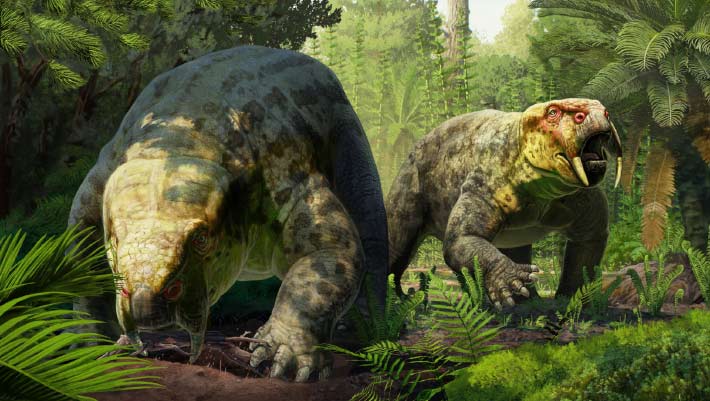
New Dicynodont Species from Tanzania Suggests Younger Age for Rocks Tied to Earliest Dinosaurs
Une nouvelle espèce de dicynodonte de Tanzanie suggère un âge plus jeune pour les roches liées aux premiers dinosaures
Tanzanie fossile spécimen Dinosauria nouvelle espèce
Les paléontologues ont identifié une nouvelle espèce de mammifère ancien et éloigné à partir de deux spécimens fossiles trouvés à des décennies d'intervalle dans les lits Manda de Tanzanie. L'article Une nouvelle espèce de dicynodonte de Tanzanie suggère un âge plus jeune pour les roches liées aux premiers dinosaures apparaît en premier sur Sci.News : Breaking Science News.
15/09/2026 sci-news ⚙ Traduction automatique
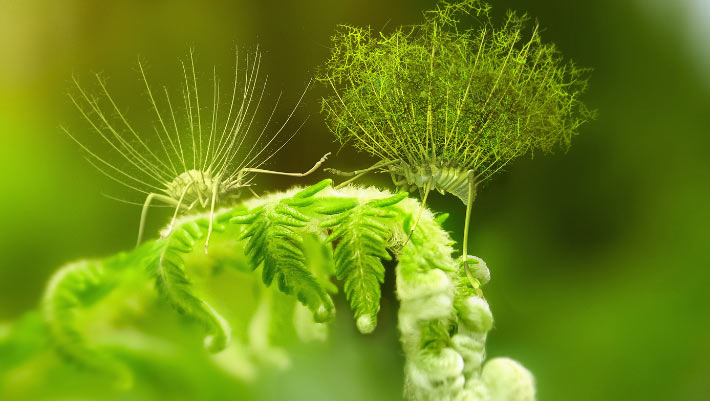
La lumière UV révèle un possible camouflage sur un crocodile vieux de 125 millions d'années
peau fossile
Un fossile de crocodile vieux de 125 millions d'années a révélé une peau préservée, d'éventuels organes sensoriels, des structures respiratoires sophistiquées et un motif inattendu sur sa queue. La lumière ultraviolette a exposé des bandes alternées qui peuvent représenter un camouflage ancien, préservant potentiellement la plus ancienne coloration connue chez un crocodylomorphe.
15/09/2026 sciencedaily ⚙ Traduction automatique
Spanish Amber Deposit Offers Rare Window into Cretaceous Life
Le gisement d'ambre espagnol offre une rare fenêtre sur la vie du Crétacé
Espagne Crétacé fossile
El Soplao, un site fossile niché dans les collines de Cantabrie, dans le nord de l'Espagne, se distingue par la production de morceaux d'ambre avec une teinte bleu-violet et d'abondantes bioinclusions, selon un nouvel article de synthèse. Le post Le gisement d'ambre espagnol offre une fenêtre rare sur la vie du Crétacé apparaît en premier sur Sci.News : Breaking Science News.
14/09/2026 sci-news ⚙ Traduction automatique
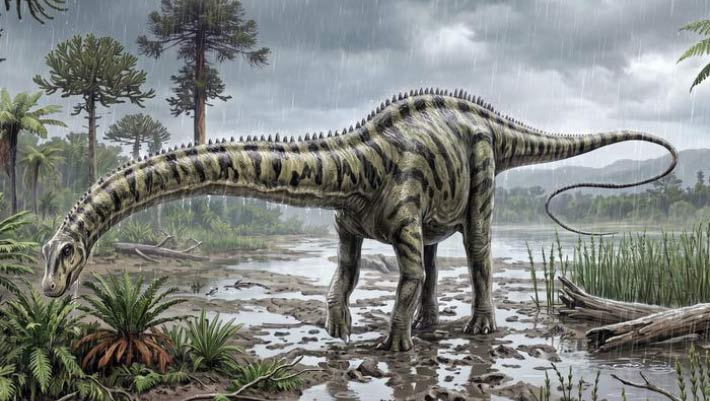
Diplodocus, Long Thought Exclusively American, Turns Up in Spain
Diplodocus, longtemps considéré comme exclusivement américain, débarque en Espagne
Espagne fossile Diplodocia Diplodocus
Les paléontologues de la Fundación Dinópolis ont identifié les premiers fossiles confirmés du genre Diplodocus trouvés en dehors de l'Amérique du Nord. L'article Diplodocus, longtemps pensé exclusivement américain, apparaît en Espagne en premier sur Sci.News : Breaking Science News.
14/09/2026 sci-news ⚙ Traduction automatique
1 2 3 4 5 6 7 8 9 10 11 12 13 14 15 16 17 18 19 20 21 22 23 24 25 26 27 28 29 30 31 32 33 34 35 36 37 38 39 40 41 42 43