fossile

Nature du spécimen

267 image(s) · 171 Actualités

Galerie d'images

Fossil skull of Luskhan

Fossil skull of Luskhan

fossile Luskhan crâne
Fossil material of the Jormungandr holotype (Nicknamed Eustace)
Taxons Jormungandr

Fossil material of the Jormungandr holotype (Nicknamed Eustace)

fossile holotype Jormungandr
Reconstruction of Makhaira rossica based on Late Jurassic pliosaurids and mid-Cretaceos brachauchenines; the orange coloured parts indicate fossils preserved in YKM 68249/1-10.
Taxons Makhaira

Reconstruction of Makhaira rossica based on Late Jurassic pliosaurids and mid-Cretaceos brachauchenines; the orange coloured parts indicate fossils preserved in YKM 68249/1-10.

Jurassique Jurassique supérieur fossile Makhaira +1
Chert & phosphorite in the Permian of Wyoming, USA.
The Permian-aged Phosphoria Formation has a significant component of phosphorite, a scarce, phosphate-rich sedimentary rock.  This material is mined in southern Idaho as a source of phosphorus for the fertilizer industry, the fireworks industry, and other uses.
Phosphorites are generally considered to have >15-20% phosphate content.  Texturally, phosphorites can be obviously granular, with fossil fragments or oolites or peloids or lithic fragments, or they can be composed of extremely fine-grained, phosphate-rich mud.  Compositionally, the phosphate component in phosphorites is principally a mix of apatite minerals: chlorapatite (Ca5(PO4)3Cl), fluorapatite (Ca5(PO4)3F), hydroxyapatite (Ca5(PO4)3OH)), and carbonate fluorapatite (Ca10(PO4,CO3)6F2-3).
Phosphorites are generally marine sedimentary rocks.  They range in age from Precambrian to Holocene.  In modern oceans, they tend to occur along the eastern margins of some ocean basins where deep-water upwelling occurs under areas of high biologic productivity.
Stratigraphy: Rex Chert Member over Meade Peak Member, Phosphoria Formation, Roadian Stage to Wordian Stage, lower Guadalupian Series, mid-Permian

Locality: roadcut on the northern side of Route 26/Route 89 at the town of Astoria Hot Springs, Snake River Canyon, southern Teton County, northwestern Wyoming, USA

Chert & phosphorite in the Permian of Wyoming, USA. The Permian-aged Phosphoria Formation has a significant component of phosphorite, a scarce, phosphate-rich sedimentary rock. This material is mined in southern Idaho as a source of phosphorus for the fertilizer industry, the fireworks industry, and other uses. Phosphorites are generally considered to have >15-20% phosphate content. Texturally, phosphorites can be obviously granular, with fossil fragments or oolites or peloids or lithic fragments, or they can be composed of extremely fine-grained, phosphate-rich mud. Compositionally, the phosphate component in phosphorites is principally a mix of apatite minerals: chlorapatite (Ca5(PO4)3Cl), fluorapatite (Ca5(PO4)3F), hydroxyapatite (Ca5(PO4)3OH)), and carbonate fluorapatite (Ca10(PO4,CO3)6F2-3). Phosphorites are generally marine sedimentary rocks. They range in age from Precambrian to Holocene. In modern oceans, they tend to occur along the eastern margins of some ocean basins where deep-water upwelling occurs under areas of high biologic productivity. Stratigraphy: Rex Chert Member over Meade Peak Member, Phosphoria Formation, Roadian Stage to Wordian Stage, lower Guadalupian Series, mid-Permian Locality: roadcut on the northern side of Route 26/Route 89 at the town of Astoria Hot Springs, Snake River Canyon, southern Teton County, northwestern Wyoming, USA

États-Unis Guadalupien Holocène Permien +5
Elasmobranchs teeth from the Thanetian phosphatic serie of Jebel Dyr (Algerian-Tunisian border area); 14. Nebrius bequaerti; 15. Archaeomanta priemi; 16. Burnhamia daviesi; 17. Ginglymostoma subafricanum; 18. Myliobatis sulcidens; 21. Hemiscyllium daimeriesi; 23. Squatiscyllium nigeriensis. a: labial; b: lingual; c: lateral; d: occlusal; e: oral; f: basilar views.

Elasmobranchs teeth from the Thanetian phosphatic serie of Jebel Dyr (Algerian-Tunisian border area); 14. Nebrius bequaerti; 15. Archaeomanta priemi; 16. Burnhamia daviesi; 17. Ginglymostoma subafricanum; 18. Myliobatis sulcidens; 21. Hemiscyllium daimeriesi; 23. Squatiscyllium nigeriensis. a: labial; b: lingual; c: lateral; d: occlusal; e: oral; f: basilar views.

Thanétien fossile poisson géologie
Elasmobranchs teeth from the Thanetian phosphatic serie of Jebel Dyr (Algerian-Tunisian border area); 7. Brachycarcharias lerichei; 8. Anomotodon novus; 9. Mustelus biddlei 10. Brachycarcharias lerichei; 11. Mennerotodus sp; 12. Abdounia beaugei; 13. Galeorhinus mesetaensis. a: labial; b: lingual; c: lateral views.

Elasmobranchs teeth from the Thanetian phosphatic serie of Jebel Dyr (Algerian-Tunisian border area); 7. Brachycarcharias lerichei; 8. Anomotodon novus; 9. Mustelus biddlei 10. Brachycarcharias lerichei; 11. Mennerotodus sp; 12. Abdounia beaugei; 13. Galeorhinus mesetaensis. a: labial; b: lingual; c: lateral views.

Thanétien fossile poisson géologie
Elasmobranchs teeth from the Thanetian phosphatic serie of Jebel Dyr (Algerian-Tunisian border area); 1. Abdounia beaugei; 2. Palaoegaleus vincenti; 3. Galeorhinus mesetaensis; 4. Delpitoscyllium africanum; 5. Squatina prima; 6. Brachycarcharias lerichei. a: labial; b: lingual; c: lateral; d: occlusal views.

Elasmobranchs teeth from the Thanetian phosphatic serie of Jebel Dyr (Algerian-Tunisian border area); 1. Abdounia beaugei; 2. Palaoegaleus vincenti; 3. Galeorhinus mesetaensis; 4. Delpitoscyllium africanum; 5. Squatina prima; 6. Brachycarcharias lerichei. a: labial; b: lingual; c: lateral; d: occlusal views.

Thanétien fossile poisson géologie
Elasmobranchs teeth and vertebrae from the Thanetian phosphatic serie of Jebel Dyr (Algerian-Tunisian border area); 23. Raja sp.; 24. Heterodontus sp.; 25. Dasyatis hexagonalis; 26. Abdounia beaugei; 27. Physogaleus secundus; 28. Carcharias hopei; 29-30. Cretalamna appendiculata; 31. Brachycarcharias lerichei; 32. Isurolamna affinis; 33-36. Sectioned fossil vertebral centrum of sharks. a: labial; b: lingual; c: lateral; d: occlusal; e: oral views.
Intervalles Thanetian

Elasmobranchs teeth and vertebrae from the Thanetian phosphatic serie of Jebel Dyr (Algerian-Tunisian border area); 23. Raja sp.; 24. Heterodontus sp.; 25. Dasyatis hexagonalis; 26. Abdounia beaugei; 27. Physogaleus secundus; 28. Carcharias hopei; 29-30. Cretalamna appendiculata; 31. Brachycarcharias lerichei; 32. Isurolamna affinis; 33-36. Sectioned fossil vertebral centrum of sharks. a: labial; b: lingual; c: lateral; d: occlusal; e: oral views.

Thanétien fossile poisson géologie
Dinosaur National Monument is a United States National Monument located on the southeast flank of the Uinta Mountains on the border between Colorado and Utah at the confluence of the Green and Yampa Rivers. Although most of the monument area is in Moffat County, Colorado, the Dinosaur Quarry is located in Utah just to the north of the town of Jensen, Utah.
The nearest communities are Jensen, Utah, and Dinosaur, Colorado. The park contains over 800 paleontological sites and has fossils of dinosaurs including Allosaurus, Deinonychus, Abydosaurus (a nearly complete skull, lower jaws and first four neck vertebrae of the specimen DINO 16488 found here at the base of the Mussentuchit Member of the Cedar Mountain Formation is the holotype for the description) and various long-neck, long-tail sauropods. It was declared a National Monument on October 4, 1915.
The rock layer enclosing the fossils is a sandstone and conglomerate bed of alluvial or river bed origin known as the Morrison Formation from the Jurassic Period some 150 million years old. The dinosaurs and other ancient animals were carried by the river system which eventually entombed their remains in Utah.
The pile of sediments were later buried and lithified into solid rock. The layers of rock were later uplifted and tilted to their present angle by the mountain building forces that formed the Uintas during the Laramide orogeny. The relentless forces of erosion exposed the layers at the surface to be found by paleontologists.
The dinosaur fossil beds (bone beds) were discovered in 1909 by Earl Douglass, a paleontologist working and collecting for the Carnegie Museum of Natural History. He and his crews excavated thousands of fossils and shipped them back to the museum in Pittsburgh, Pennsylvania for study and display. President Woodrow Wilson proclaimed the dinosaur beds as Dinosaur National Monument in 1915. The monument boundaries were expanded in 1938 from the original 80-acre (320,000 m2) tract surrounding the dinosaur quarry in Utah, to its present extent of over 200,000 acres (800 km²) in Utah and Colorado, encompassing the spectacular river canyons of the Green and Yampa.
Though lesser-known than the fossil beds, the petroglyphs in Dinosaur National Monument are another treasure the monument holds. Due to problems with vandals, many of the sites are not listed on area maps.
The "Wall of Bones" located within the Dinosaur Quarry building in the park consists of a steeply tilted (67° from horizontal) rock layer which contains hundreds of dinosaur fossils. The enclosing rock has been chipped away to reveal the fossil bones intact for public viewing. In July 2006, the Quarry Visitor Center was closed due to structural problems that since 1957 had plagued the building because it was built on unstable clay. The decision was made to build a new facility elsewhere in the monument to house the visitor center and administrative functions, making it easier to resolve the structural problems of the quarry building while still retaining a portion of the historic Mission 66 era exhibit hall. It was announced in April 2009 that Dinosaur National Monument would receive $13.1 million to refurbish and reopen the gallery as part of the Obama administration's $750 billion stimulus plan. The Park Service successfully rebuilt the Quarry Exhibit Hall, supporting its weight on 70-foot steel micropile columns that extend to the bedrock below the unstable clay. The Dinosaur Quarry was reopened in Fall 2011.
en.wikipedia.org/wiki/Dinosaur_National_Monument

en.wikipedia.org/wiki/Wikipedia:Text_of_Creative_Commons_...
Taxons Abydosaurus

Dinosaur National Monument is a United States National Monument located on the southeast flank of the Uinta Mountains on the border between Colorado and Utah at the confluence of the Green and Yampa Rivers. Although most of the monument area is in Moffat County, Colorado, the Dinosaur Quarry is located in Utah just to the north of the town of Jensen, Utah. The nearest communities are Jensen, Utah, and Dinosaur, Colorado. The park contains over 800 paleontological sites and has fossils of dinosaurs including Allosaurus, Deinonychus, Abydosaurus (a nearly complete skull, lower jaws and first four neck vertebrae of the specimen DINO 16488 found here at the base of the Mussentuchit Member of the Cedar Mountain Formation is the holotype for the description) and various long-neck, long-tail sauropods. It was declared a National Monument on October 4, 1915. The rock layer enclosing the fossils is a sandstone and conglomerate bed of alluvial or river bed origin known as the Morrison Formation from the Jurassic Period some 150 million years old. The dinosaurs and other ancient animals were carried by the river system which eventually entombed their remains in Utah. The pile of sediments were later buried and lithified into solid rock. The layers of rock were later uplifted and tilted to their present angle by the mountain building forces that formed the Uintas during the Laramide orogeny. The relentless forces of erosion exposed the layers at the surface to be found by paleontologists. The dinosaur fossil beds (bone beds) were discovered in 1909 by Earl Douglass, a paleontologist working and collecting for the Carnegie Museum of Natural History. He and his crews excavated thousands of fossils and shipped them back to the museum in Pittsburgh, Pennsylvania for study and display. President Woodrow Wilson proclaimed the dinosaur beds as Dinosaur National Monument in 1915. The monument boundaries were expanded in 1938 from the original 80-acre (320,000 m2) tract surrounding the dinosaur quarry in Utah, to its present extent of over 200,000 acres (800 km²) in Utah and Colorado, encompassing the spectacular river canyons of the Green and Yampa. Though lesser-known than the fossil beds, the petroglyphs in Dinosaur National Monument are another treasure the monument holds. Due to problems with vandals, many of the sites are not listed on area maps. The "Wall of Bones" located within the Dinosaur Quarry building in the park consists of a steeply tilted (67° from horizontal) rock layer which contains hundreds of dinosaur fossils. The enclosing rock has been chipped away to reveal the fossil bones intact for public viewing. In July 2006, the Quarry Visitor Center was closed due to structural problems that since 1957 had plagued the building because it was built on unstable clay. The decision was made to build a new facility elsewhere in the monument to house the visitor center and administrative functions, making it easier to resolve the structural problems of the quarry building while still retaining a portion of the historic Mission 66 era exhibit hall. It was announced in April 2009 that Dinosaur National Monument would receive $13.1 million to refurbish and reopen the gallery as part of the Obama administration's $750 billion stimulus plan. The Park Service successfully rebuilt the Quarry Exhibit Hall, supporting its weight on 70-foot steel micropile columns that extend to the bedrock below the unstable clay. The Dinosaur Quarry was reopened in Fall 2011. en.wikipedia.org/wiki/Dinosaur_National_Monument en.wikipedia.org/wiki/Wikipedia:Text_of_Creative_Commons_...

os description musée États-Unis +13
The Pectinida fossil Neithea in Lower Santonian bioclastic limestone. Found near Les Âges in the commune of Saint-Crépin-de-Richemont, Dordogne, France.
Intervalles Santonian

The Pectinida fossil Neithea in Lower Santonian bioclastic limestone. Found near Les Âges in the commune of Saint-Crépin-de-Richemont, Dordogne, France.

France Santonien fossile
Crommium angustatum Grateloup, 1827 fossil snail shell (apical view) from the Oligocene of France. (42 mm across at its widest)
Of all the molluscs, the gastropods (snails) have made the most ecological adaptations.  They can be found in almost all fundamental environments: marine, freshwater, terrestrial.  Most gastropods live in the ocean, and have a single, asymmetrically coiled, external shell of calcium carbonate (CaCO3 - usually aragonite).  The hard calcareous shell is the most easily fossilized part of the gastropod.  The soft parts of a snail (the “slug” portion) include a well developed head having eyes, tentacles, and a mouth, and a well developed, strong, muscular foot used principally for locomotion.  The shell is carried upright on the snail’s back, or is partially dragged behind.  When threatened by a predator, many snails can retract their soft parts into the shell’s interior for protection.
Many fossil snails in the Paleozoic rock record are often not well preserved, or are preserved as internal molds.  The original aragonite of many gastropod shells is not stable on geologic time scales, and often recrystallizes or dissolves completely away.  Fossil snail shells in Mesozoic and Cenozoic rocks are usually better preserved.
Classification: Animalia, Mollusca, Gastropoda, Naticoidea, Ampullinidae
Age: Rupelian Stage (Stampian Stage), Lower Oligocene

Locality: Gaas, Landes Department, Aquitaine, southwestern France

Crommium angustatum Grateloup, 1827 fossil snail shell (apical view) from the Oligocene of France. (42 mm across at its widest) Of all the molluscs, the gastropods (snails) have made the most ecological adaptations. They can be found in almost all fundamental environments: marine, freshwater, terrestrial. Most gastropods live in the ocean, and have a single, asymmetrically coiled, external shell of calcium carbonate (CaCO3 - usually aragonite). The hard calcareous shell is the most easily fossilized part of the gastropod. The soft parts of a snail (the “slug” portion) include a well developed head having eyes, tentacles, and a mouth, and a well developed, strong, muscular foot used principally for locomotion. The shell is carried upright on the snail’s back, or is partially dragged behind. When threatened by a predator, many snails can retract their soft parts into the shell’s interior for protection. Many fossil snails in the Paleozoic rock record are often not well preserved, or are preserved as internal molds. The original aragonite of many gastropod shells is not stable on geologic time scales, and often recrystallizes or dissolves completely away. Fossil snail shells in Mesozoic and Cenozoic rocks are usually better preserved. Classification: Animalia, Mollusca, Gastropoda, Naticoidea, Ampullinidae Age: Rupelian Stage (Stampian Stage), Lower Oligocene Locality: Gaas, Landes Department, Aquitaine, southwestern France

écaille locomotion prédateur France +6
Crommium angustatum Grateloup, 1827 fossil snail shell (apical view) from the Oligocene of France. (42 mm across at its widest)
Of all the molluscs, the gastropods (snails) have made the most ecological adaptations.  They can be found in almost all fundamental environments: marine, freshwater, terrestrial.  Most gastropods live in the ocean, and have a single, asymmetrically coiled, external shell of calcium carbonate (CaCO3 - usually aragonite).  The hard calcareous shell is the most easily fossilized part of the gastropod.  The soft parts of a snail (the “slug” portion) include a well developed head having eyes, tentacles, and a mouth, and a well developed, strong, muscular foot used principally for locomotion.  The shell is carried upright on the snail’s back, or is partially dragged behind.  When threatened by a predator, many snails can retract their soft parts into the shell’s interior for protection.
Many fossil snails in the Paleozoic rock record are often not well preserved, or are preserved as internal molds.  The original aragonite of many gastropod shells is not stable on geologic time scales, and often recrystallizes or dissolves completely away.  Fossil snail shells in Mesozoic and Cenozoic rocks are usually better preserved.
Classification: Animalia, Mollusca, Gastropoda, Naticoidea, Ampullinidae
Age: Rupelian Stage (Stampian Stage), Lower Oligocene

Locality: Gaas, Landes Department, Aquitaine, southwestern France

Crommium angustatum Grateloup, 1827 fossil snail shell (apical view) from the Oligocene of France. (42 mm across at its widest) Of all the molluscs, the gastropods (snails) have made the most ecological adaptations. They can be found in almost all fundamental environments: marine, freshwater, terrestrial. Most gastropods live in the ocean, and have a single, asymmetrically coiled, external shell of calcium carbonate (CaCO3 - usually aragonite). The hard calcareous shell is the most easily fossilized part of the gastropod. The soft parts of a snail (the “slug” portion) include a well developed head having eyes, tentacles, and a mouth, and a well developed, strong, muscular foot used principally for locomotion. The shell is carried upright on the snail’s back, or is partially dragged behind. When threatened by a predator, many snails can retract their soft parts into the shell’s interior for protection. Many fossil snails in the Paleozoic rock record are often not well preserved, or are preserved as internal molds. The original aragonite of many gastropod shells is not stable on geologic time scales, and often recrystallizes or dissolves completely away. Fossil snail shells in Mesozoic and Cenozoic rocks are usually better preserved. Classification: Animalia, Mollusca, Gastropoda, Naticoidea, Ampullinidae Age: Rupelian Stage (Stampian Stage), Lower Oligocene Locality: Gaas, Landes Department, Aquitaine, southwestern France

écaille locomotion prédateur France +6
Crommium angustatum Grateloup, 1827 fossil snail shell (abapertural view) from the Oligocene of France. (57 mm tall)
Of all the molluscs, the gastropods (snails) have made the most ecological adaptations.  They can be found in almost all fundamental environments: marine, freshwater, terrestrial.  Most gastropods live in the ocean, and have a single, asymmetrically coiled, external shell of calcium carbonate (CaCO3 - usually aragonite).  The hard calcareous shell is the most easily fossilized part of the gastropod.  The soft parts of a snail (the “slug” portion) include a well developed head having eyes, tentacles, and a mouth, and a well developed, strong, muscular foot used principally for locomotion.  The shell is carried upright on the snail’s back, or is partially dragged behind.  When threatened by a predator, many snails can retract their soft parts into the shell’s interior for protection.
Many fossil snails in the Paleozoic rock record are often not well preserved, or are preserved as internal molds.  The original aragonite of many gastropod shells is not stable on geologic time scales, and often recrystallizes or dissolves completely away.  Fossil snail shells in Mesozoic and Cenozoic rocks are usually better preserved.
Classification: Animalia, Mollusca, Gastropoda, Naticoidea, Ampullinidae
Age: Rupelian Stage (Stampian Stage), Lower Oligocene

Locality: Gaas, Landes Department, Aquitaine, southwestern France

Crommium angustatum Grateloup, 1827 fossil snail shell (abapertural view) from the Oligocene of France. (57 mm tall) Of all the molluscs, the gastropods (snails) have made the most ecological adaptations. They can be found in almost all fundamental environments: marine, freshwater, terrestrial. Most gastropods live in the ocean, and have a single, asymmetrically coiled, external shell of calcium carbonate (CaCO3 - usually aragonite). The hard calcareous shell is the most easily fossilized part of the gastropod. The soft parts of a snail (the “slug” portion) include a well developed head having eyes, tentacles, and a mouth, and a well developed, strong, muscular foot used principally for locomotion. The shell is carried upright on the snail’s back, or is partially dragged behind. When threatened by a predator, many snails can retract their soft parts into the shell’s interior for protection. Many fossil snails in the Paleozoic rock record are often not well preserved, or are preserved as internal molds. The original aragonite of many gastropod shells is not stable on geologic time scales, and often recrystallizes or dissolves completely away. Fossil snail shells in Mesozoic and Cenozoic rocks are usually better preserved. Classification: Animalia, Mollusca, Gastropoda, Naticoidea, Ampullinidae Age: Rupelian Stage (Stampian Stage), Lower Oligocene Locality: Gaas, Landes Department, Aquitaine, southwestern France

écaille locomotion prédateur France +6
Permineralized Jurassic fern rhizome from Korsaröd (Sweden) of Osmundastrum pulchellum. It has preserved Nuclei and Chromosomes, a fine subcellular detail has rarely been documented in fossils. It´s Rooted in DNA content was used to extrapolate relative genome, finding relationships with extant Osmundastrum cinnamomeum, and confirmed a monophyletic Osmunda. Osmundastrum pulchellum is one of the earliest fossil Osmundastrum rhizomes known so far, and the first of its kind from the Mesozoic of Europe. Its impressive preservation has lead to know even the biotic interactions with the Plant. It also has recovered the only know case know to preserve the ongoing mitosis processes in plant cells via calcification from volcanic hydrothermal brine.

Permineralized Jurassic fern rhizome from Korsaröd (Sweden) of Osmundastrum pulchellum. It has preserved Nuclei and Chromosomes, a fine subcellular detail has rarely been documented in fossils. It´s Rooted in DNA content was used to extrapolate relative genome, finding relationships with extant Osmundastrum cinnamomeum, and confirmed a monophyletic Osmunda. Osmundastrum pulchellum is one of the earliest fossil Osmundastrum rhizomes known so far, and the first of its kind from the Mesozoic of Europe. Its impressive preservation has lead to know even the biotic interactions with the Plant. It also has recovered the only know case know to preserve the ongoing mitosis processes in plant cells via calcification from volcanic hydrothermal brine.

ADN Suède Jurassique Mésozoïque +1
Reprodução a partir da gravura original do Holótipo, Hybodus acutus Agassiz, 1837, na publicação e prancha: L. Agassiz. 1837. Recherches sur les poissons fossiles Vol.3 (Atlas); Tab 10

Reprodução a partir da gravura original do Holótipo, Hybodus acutus Agassiz, 1837, na publicação e prancha: L. Agassiz. 1837. Recherches sur les poissons fossiles Vol.3 (Atlas); Tab 10

fossile poisson
Graph of relative Dinosaur fossil populations from each period of geologic time in the Mesozoic, ordered by major clade

Graph of relative Dinosaur fossil populations from each period of geologic time in the Mesozoic, ordered by major clade

Mésozoïque fossile Dinosauria
1 2 3 4 5 6 7 8 9 10 11 12 13 14 15 16 17

Actualités

Ce « crocodile terroriste » de la taille d’un autobus scolaire a mangé des dinosaures. Maintenant c'est de retour
musée fossile Dinosauria Géorgie squelette
Un crocodile massif capable d'attaquer les dinosaures a été ramené à la vie en tant que premier squelette monté scientifiquement précis de Deinosuchus schwimmeri. La réplique de 31 pieds du Tellus Science Museum de Géorgie a été construite à partir d’analyses détaillées de fossiles et de plus de 40 ans de recherches menées par le paléontologue Dr David Schwimmer, en l’honneur duquel l’espèce doit son nom.
05/08/2026 sciencedaily ⚙ Traduction automatique
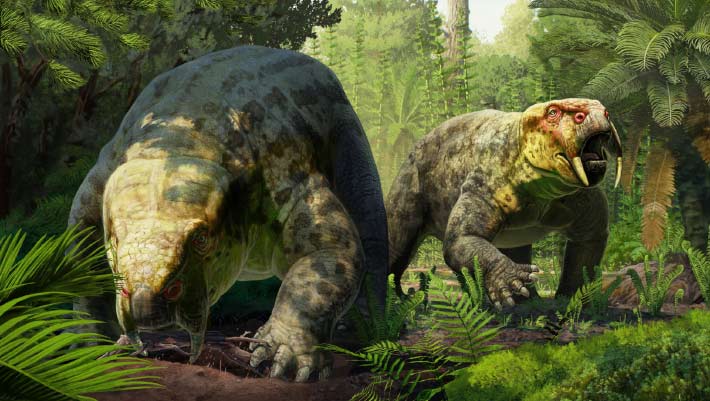
Fossil Find in China Reveals Dinosaur Family Never Before Seen in East Asia
Une découverte de fossiles en Chine révèle une famille de dinosaures jamais vue auparavant en Asie de l'Est
Chine fossile Dinosauria découverte nouvelle espèce
Des paléontologues travaillant dans le sud de la Chine ont identifié une nouvelle espèce de dinosaure sauropode qui semble appartenir à un groupe jamais documenté auparavant en Asie de l'Est. L'article Une découverte de fossiles en Chine révèle une famille de dinosaures jamais vue auparavant en Asie de l'Est est apparu en premier sur Sci.News : Breaking Science News.
04/08/2026 sci-news ⚙ Traduction automatique
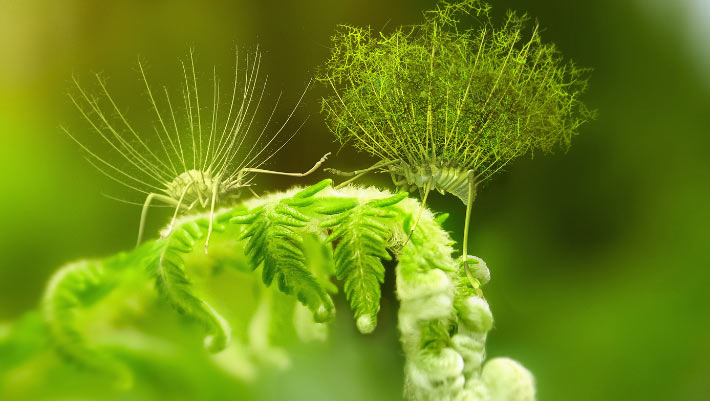
244-Million-Year-Old Fossil Preserves Earliest Reptilian Digestive System
Un fossile vieux de 244 millions d’années préserve le premier système digestif reptilien
Chine Trias fossile spécimen
Un spécimen superbement conservé d'Austronaga minuta, un petit reptile marin au long cou du Trias chinois, contient un estomac, un foie et des intestins fossilisés, offrant aux paléontologues leur plus ancien aperçu détaillé de la façon dont les premiers reptiles digéraient la nourriture. L'article Un fossile vieux de 244 millions d'années préserve le premier système digestif reptilien est apparu en premier sur Sci.News : Breaking Science News.
04/08/2026 sci-news ⚙ Traduction automatique
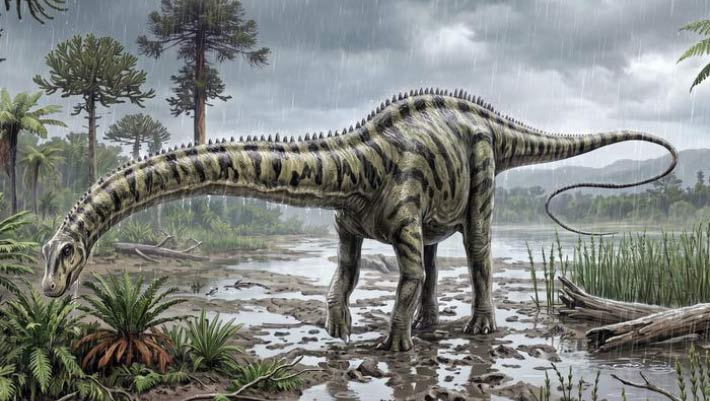
Une créature vieille de 518 millions d'années révèle les origines des crocs d'araignée
membre tissus fossile
Une minuscule créature marine vieille de 518 millions d’années a révélé les premières preuves connues des structures qui sont finalement devenues des crocs d’araignées. Cachés à l’intérieur du fossile se trouvaient des membres en forme de pinces et des tissus mous préservés qui aident à expliquer comment les ancêtres des araignées et des scorpions sont devenus de redoutables chasseurs.
04/08/2026 sciencedaily-paleo ⚙ Traduction automatique
Les fossiles remarquables d'Eoceras shaanxiense réécrivent l'évolution des céphalopodes
Chine Cambrien Étage 3 du Cambrien fossile évolution formation
Les chercheurs ont identifié de minuscules fossiles de la formation Shuijingtuo (stade cambrien 3) du sud de la Chine qui pourraient transformer notre compréhension de l'évolution des céphalopodes. L'espèce nouvellement décrite, Eoceras shaanxiense, fournit la plus ancienne preuve connue d'un siphoncle primordial, une caractéristique anatomique cruciale qui a permis aux céphalopodes de réguler la flottabilité et de devenir finalement certains des océans.
03/08/2026 everythingdinosaur ⚙ Traduction automatique
1 2 3 4 5 6 7 8 9 10 11 12 13 14 15 16 17 18 19 20 21 22 23 24 25 26 27 28 29 30 31 32 33 34 35