←

fossile

Nature du spécimen

226 image(s) · 215 Actualités

Galerie d'images

Fossil of Suevoleviathan- Took the picture at Museum am Lowentor, Stuttgart

Fossil of Suevoleviathan- Took the picture at Museum am Lowentor, Stuttgart

musée fossile Suevoleviathan
Fossil of Suevoleviathan- Took the picture at Museum am Lowentor, Stuttgart

Fossil of Suevoleviathan- Took the picture at Museum am Lowentor, Stuttgart

musée fossile Suevoleviathan
Fossil of Suevoleviathan, an extinct reptile- Took the picture at Museum of Paleontology at Tuebingen

Fossil of Suevoleviathan, an extinct reptile- Took the picture at Museum of Paleontology at Tuebingen

musée fossile Suevoleviathan
Fossil of Suevoleviathan, an extinct reptile- Took the picture at Museum of Paleontology at Tuebingen

Fossil of Suevoleviathan, an extinct reptile- Took the picture at Museum of Paleontology at Tuebingen

musée fossile Suevoleviathan
The Naturmuseum Senckenberg in Frankfurt is the second largest museum of natural history in Germany. It is particularly popular with children, who enjoy the extensive collection of dinosaur skeletons: Senckenberg boasts the largest exhibition of large dinosaurs in Europe. One particular treasure is a dinosaur fossil with unique, preserved scaled skin. The museum contains the world's largest and most diverse collection of stuffed birds with about 2000 specimens.

The Naturmuseum Senckenberg in Frankfurt is the second largest museum of natural history in Germany. It is particularly popular with children, who enjoy the extensive collection of dinosaur skeletons: Senckenberg boasts the largest exhibition of large dinosaurs in Europe. One particular treasure is a dinosaur fossil with unique, preserved scaled skin. The museum contains the world's largest and most diverse collection of stuffed birds with about 2000 specimens.

musée Allemagne fossile spécimen +4
Fossil in the Oxford University natural history museum

Fossil in the Oxford University natural history museum

musée Pérou fossile Peloneustes
Identifier: catalogueoffossi02bri (find matches)
Title: Catalogue of the fossil Reptilia and Amphibia in the British Museum (Natural history) ... By Richard Lydekker ..
Year: 1888 (1880s)
Authors:  British Museum (Natural History). Dept. of Geology Lydekker, Richard, 1849-1915
Subjects:  Reptiles, Fossil Amphibians, Fossil
Publisher:  London, Printed by order of the Trustees
Contributing Library:  Smithsonian Libraries
Digitizing Sponsor:  Biodiversity Heritage Library

View Book Page: Book Viewer
About This Book: Catalog Entry
View All Images: All Images From Book
Click here to view book online to see this illustration in context in a browseable online version of this book.

Text Appearing Before Image:
rface smooth; their terminal faces onlyslightly cupped, transversely ellipsoidal, and somewhat angulatod.Dorsals with longer centra, having nearly flat terminal faces, andforward overhang of upper part. Pectoral girdle of the general typeof Pliosaurus, with a small triangular omostornum between theventral plates of the scapula) (fig. 48), which have a strong ridge 1 Quart. Journ. Geol. Soc. vol. xlv. p. 49 (1889). 152 SATJKOPTERYGTA. dividing the ventral from the dorsal portion, and are thus more ofthe type of Thaumatosaurus. Pelvis (figs. 53, 54) like that ofPliosaurus, the pubis and ischium uniting to form an obturatorforamen. Relative lengths of humerus and femur unknown.Humerus articulating distally with only the radius and ulna, whichare relatively short, and separated only by a small interval (fig. 52) ;ulna and fibula subreniform, the former being considerably thelarger of the two. This genus may have been directly derived from the Longiros-trine group of Plesiosaurus. Fig. 49.
Text Appearing After Image:
Peloneustes philarchus.—Dorsal aspect of the coracoids; from the Oxford Clay of Bedford. Reduced, gl, glenoid cavity. (This and the preceding figure from the Quart. Joum. Geol. Soc.) Peloneustes sequalis (Phillips1). Syn. Pliosaurus cequalis, Phillips2.Pliosaurus sterrodirus, Seeley3. Imperfectly known. Cervical vertebrae with the neural canal•sunk into the centrum, and the pectorals with distinctly concaveterminal faces. Larger than typical examples of the next species. This species was founded upon a femur (fig. 50) from the Kime-ridge Clay of Oxfordshire, which so closely resembles the corre-sponding bone of P.jihilarchus as to indicate its generic identity; the 1 Geology of Oxford, p. 365 (1871).—Plesiosaurus. 2 Loc. cit. 3 Index to Ayes &c. in Cambridge Museum, p. 98 (1869).—No description. PLESI0SATJKIDJE, 153 length of this specimen is 0,572 (23 inches). The undermentionedvertebrae agree in relative size with this femur, and in genericcharacters with those of the ty

Note About Images

Please note that these images are extracted from scanned page images that may have been digitally enhanced for readability - coloration and appearance of these illustrations may not perfectly resemble the original work.

Identifier: catalogueoffossi02bri (find matches) Title: Catalogue of the fossil Reptilia and Amphibia in the British Museum (Natural history) ... By Richard Lydekker .. Year: 1888 (1880s) Authors: British Museum (Natural History). Dept. of Geology Lydekker, Richard, 1849-1915 Subjects: Reptiles, Fossil Amphibians, Fossil Publisher: London, Printed by order of the Trustees Contributing Library: Smithsonian Libraries Digitizing Sponsor: Biodiversity Heritage Library View Book Page: Book Viewer About This Book: Catalog Entry View All Images: All Images From Book Click here to view book online to see this illustration in context in a browseable online version of this book. Text Appearing Before Image: rface smooth; their terminal faces onlyslightly cupped, transversely ellipsoidal, and somewhat angulatod.Dorsals with longer centra, having nearly flat terminal faces, andforward overhang of upper part. Pectoral girdle of the general typeof Pliosaurus, with a small triangular omostornum between theventral plates of the scapula) (fig. 48), which have a strong ridge 1 Quart. Journ. Geol. Soc. vol. xlv. p. 49 (1889). 152 SATJKOPTERYGTA. dividing the ventral from the dorsal portion, and are thus more ofthe type of Thaumatosaurus. Pelvis (figs. 53, 54) like that ofPliosaurus, the pubis and ischium uniting to form an obturatorforamen. Relative lengths of humerus and femur unknown.Humerus articulating distally with only the radius and ulna, whichare relatively short, and separated only by a small interval (fig. 52) ;ulna and fibula subreniform, the former being considerably thelarger of the two. This genus may have been directly derived from the Longiros-trine group of Plesiosaurus. Fig. 49. Text Appearing After Image: Peloneustes philarchus.—Dorsal aspect of the coracoids; from the Oxford Clay of Bedford. Reduced, gl, glenoid cavity. (This and the preceding figure from the Quart. Joum. Geol. Soc.) Peloneustes sequalis (Phillips1). Syn. Pliosaurus cequalis, Phillips2.Pliosaurus sterrodirus, Seeley3. Imperfectly known. Cervical vertebrae with the neural canal•sunk into the centrum, and the pectorals with distinctly concaveterminal faces. Larger than typical examples of the next species. This species was founded upon a femur (fig. 50) from the Kime-ridge Clay of Oxfordshire, which so closely resembles the corre-sponding bone of P.jihilarchus as to indicate its generic identity; the 1 Geology of Oxford, p. 365 (1871).—Plesiosaurus. 2 Loc. cit. 3 Index to Ayes &c. in Cambridge Museum, p. 98 (1869).—No description. PLESI0SATJKIDJE, 153 length of this specimen is 0,572 (23 inches). The undermentionedvertebrae agree in relative size with this femur, and in genericcharacters with those of the ty Note About Images Please note that these images are extracted from scanned page images that may have been digitally enhanced for readability - coloration and appearance of these illustrations may not perfectly resemble the original work.

musée fossile Peloneustes Pliosaurus +1
Identifier: catalogueoffossi02bri (find matches)
Title: Catalogue of the fossil Reptilia and Amphibia in the British Museum (Natural history) ... By Richard Lydekker ..
Year: 1888 (1880s)
Authors:  British Museum (Natural History). Dept. of Geology Lydekker, Richard, 1849-1915
Subjects:  Reptiles, Fossil Amphibians, Fossil
Publisher:  London, Printed by order of the Trustees
Contributing Library:  Smithsonian Libraries
Digitizing Sponsor:  Biodiversity Heritage Library

View Book Page: Book Viewer
About This Book: Catalog Entry
View All Images: All Images From Book
Click here to view book online to see this illustration in context in a browseable online version of this book.

Text Appearing Before Image:
pterygian; from theKimeridge Clay of Ely. \. a, proximal, b, distal epiphysis ; c, shaft. 46792. Two still smaller specimens; from the Kimeridge Clay ofDevizes, Wiltshire. Cunnington Collection. R. 400. Two phalangeals; from the Oxford Clay of Weymouth,Dorsetshire. Presented by C. Westendarp, Esq., 1884. 150 SAUEOPTERIGIA. R. 1381. One longitudinal half of the humerus or femur of a me- (Ficj.) dium-sized form, with the inner surface cut and polished; from the Kimeridge Clay of Ely. This specimen is figured in the woodcut on the preceding page, and shows the two epiphyses almost meeting in the middle of the shaft. No history. R. 1381 a. The proximal half of a larger humerus or femur, longitu-dinally bisected; from the Kimeridge Clay of Ely. Thecontour of the proximal epiphysis is well displayed. No history. 46912. The proximal portion of a still larger humerus or femur,longitudinally bisected; from Shotover. The whole ofthe proximal epiphysis is displayed, of which the terminal Kg. 47.
Text Appearing After Image:
Sauropterygian mandibles.—A. Peloneustesphilarchus; from the Oxford Clay.\. B. Thaitmatosaurus indicus; from the Upper Jurassic of India. ).0. Pksiosaimcs dolichodirus; from the Lower Lias. f. (From the Kec.Geol. Surv. Ind.) PLESI0SAURID2E. 151 extremity appears to have been separated by a small va-cuity from that of the distal epiphysis. No history. 42097. One lateral half of a humerus or femur, with the inner sur- face cut; from the Neocomian bone-bed of Potton, Bed-fordshire. The extremity of one epiphysis is entire anddetached from the shaft, while a section is shown of thatat the opposite end. Purchased, 1870. 42098. A small imperfect femur, with the proximal epiphysis de- tached and lying loose in the cup of the shaft; fromPotton. Purchased, 1870. Genus PELONEUSTES, Lydekker \ Skull and teeth of the general type of Pliosaurus, but the mandible(fig. 47, A) with a longer symphysis, which includes more than adozen teeth. Neck short, with the anterior vertebras relativelyshort. Ve

Note About Images

Please note that these images are extracted from scanned page images that may have been digitally enhanced for readability - coloration and appearance of these illustrations may not perfectly resemble the original work.

Identifier: catalogueoffossi02bri (find matches) Title: Catalogue of the fossil Reptilia and Amphibia in the British Museum (Natural history) ... By Richard Lydekker .. Year: 1888 (1880s) Authors: British Museum (Natural History). Dept. of Geology Lydekker, Richard, 1849-1915 Subjects: Reptiles, Fossil Amphibians, Fossil Publisher: London, Printed by order of the Trustees Contributing Library: Smithsonian Libraries Digitizing Sponsor: Biodiversity Heritage Library View Book Page: Book Viewer About This Book: Catalog Entry View All Images: All Images From Book Click here to view book online to see this illustration in context in a browseable online version of this book. Text Appearing Before Image: pterygian; from theKimeridge Clay of Ely. \. a, proximal, b, distal epiphysis ; c, shaft. 46792. Two still smaller specimens; from the Kimeridge Clay ofDevizes, Wiltshire. Cunnington Collection. R. 400. Two phalangeals; from the Oxford Clay of Weymouth,Dorsetshire. Presented by C. Westendarp, Esq., 1884. 150 SAUEOPTERIGIA. R. 1381. One longitudinal half of the humerus or femur of a me- (Ficj.) dium-sized form, with the inner surface cut and polished; from the Kimeridge Clay of Ely. This specimen is figured in the woodcut on the preceding page, and shows the two epiphyses almost meeting in the middle of the shaft. No history. R. 1381 a. The proximal half of a larger humerus or femur, longitu-dinally bisected; from the Kimeridge Clay of Ely. Thecontour of the proximal epiphysis is well displayed. No history. 46912. The proximal portion of a still larger humerus or femur,longitudinally bisected; from Shotover. The whole ofthe proximal epiphysis is displayed, of which the terminal Kg. 47. Text Appearing After Image: Sauropterygian mandibles.—A. Peloneustesphilarchus; from the Oxford Clay.\. B. Thaitmatosaurus indicus; from the Upper Jurassic of India. ).0. Pksiosaimcs dolichodirus; from the Lower Lias. f. (From the Kec.Geol. Surv. Ind.) PLESI0SAURID2E. 151 extremity appears to have been separated by a small va-cuity from that of the distal epiphysis. No history. 42097. One lateral half of a humerus or femur, with the inner sur- face cut; from the Neocomian bone-bed of Potton, Bed-fordshire. The extremity of one epiphysis is entire anddetached from the shaft, while a section is shown of thatat the opposite end. Purchased, 1870. 42098. A small imperfect femur, with the proximal epiphysis de- tached and lying loose in the cup of the shaft; fromPotton. Purchased, 1870. Genus PELONEUSTES, Lydekker \ Skull and teeth of the general type of Pliosaurus, but the mandible(fig. 47, A) with a longer symphysis, which includes more than adozen teeth. Neck short, with the anterior vertebras relativelyshort. Ve Note About Images Please note that these images are extracted from scanned page images that may have been digitally enhanced for readability - coloration and appearance of these illustrations may not perfectly resemble the original work.

musée Oxford Clay fossile spécimen +2
Title: A descriptive catalogue of the marine reptiles of the Oxford clay. Based on the Leeds Collection in the British Museum (Natural History), London ..
Identifier: descriptivecatal02brit (find matches)
Year: 1910 (1910s)
Authors: British Museum (Natural History). Dept. of Geology; Andrews, Charles William, 1866-1924
Subjects: Reptiles, Fossil
Publisher: London, Printed by order of the Trustees
Contributing Library: Smithsonian Libraries
Digitizing Sponsor: Biodiversity Heritage Library

View Book Page: Book Viewer
About This Book: Catalog Entry
View All Images: All Images From Book
Click here to view book online to see this illustration in context in a browseable online version of this book.

Text Appearing Before Image: 
78 MAEINE EEPTILES OF THE OXEOED CLAT. Test-fig. 30.
Text Appearing After Image: 
aa. Coracoids of Peloneustes evansi: A, from front; B, from above. (E. 3897, 1 nat. size.)  glenoid facet; p.e.a., postero-esternal angle; sc.f., facet for scapula; sym., symphysial surface.

Note About Images

Please note that these images are extracted from scanned page images that may have been digitally enhanced for readability - coloration and appearance of these illustrations may not perfectly resemble the original work.

Title: A descriptive catalogue of the marine reptiles of the Oxford clay. Based on the Leeds Collection in the British Museum (Natural History), London .. Identifier: descriptivecatal02brit (find matches) Year: 1910 (1910s) Authors: British Museum (Natural History). Dept. of Geology; Andrews, Charles William, 1866-1924 Subjects: Reptiles, Fossil Publisher: London, Printed by order of the Trustees Contributing Library: Smithsonian Libraries Digitizing Sponsor: Biodiversity Heritage Library View Book Page: Book Viewer About This Book: Catalog Entry View All Images: All Images From Book Click here to view book online to see this illustration in context in a browseable online version of this book. Text Appearing Before Image: 78 MAEINE EEPTILES OF THE OXEOED CLAT. Test-fig. 30. Text Appearing After Image: aa. Coracoids of Peloneustes evansi: A, from front; B, from above. (E. 3897, 1 nat. size.) glenoid facet; p.e.a., postero-esternal angle; sc.f., facet for scapula; sym., symphysial surface. Note About Images Please note that these images are extracted from scanned page images that may have been digitally enhanced for readability - coloration and appearance of these illustrations may not perfectly resemble the original work.

musée Oxford Clay fossile Peloneustes +1
Title: A descriptive catalogue of the marine reptiles of the Oxford clay. Based on the Leeds Collection in the British Museum (Natural History), London ..
Identifier: descriptivecatal02brit (find matches)
Year: 1910 (1910s)
Authors: British Museum (Natural History). Dept. of Geology; Andrews, Charles William, 1866-1924
Subjects: Reptiles, Fossil
Publisher: London, Printed by order of the Trustees
Contributing Library: Smithsonian Libraries
Digitizing Sponsor: Biodiversity Heritage Library

View Book Page: Book Viewer
About This Book: Catalog Entry
View All Images: All Images From Book
Click here to view book online to see this illustration in context in a browseable online version of this book.

Text Appearing Before Image: 
CATAL,MARINE REPT. OXFORD CLAY. PART II. PLATE IV. col. — v.orb.
Text Appearing After Image: 
pas par. G.M.Woodward Aei.et litli. West.Newznsr. imp. PEEONEUSTES philarghus.

Note About Images

Please note that these images are extracted from scanned page images that may have been digitally enhanced for readability - coloration and appearance of these illustrations may not perfectly resemble the original work.

Title: A descriptive catalogue of the marine reptiles of the Oxford clay. Based on the Leeds Collection in the British Museum (Natural History), London .. Identifier: descriptivecatal02brit (find matches) Year: 1910 (1910s) Authors: British Museum (Natural History). Dept. of Geology; Andrews, Charles William, 1866-1924 Subjects: Reptiles, Fossil Publisher: London, Printed by order of the Trustees Contributing Library: Smithsonian Libraries Digitizing Sponsor: Biodiversity Heritage Library View Book Page: Book Viewer About This Book: Catalog Entry View All Images: All Images From Book Click here to view book online to see this illustration in context in a browseable online version of this book. Text Appearing Before Image: CATAL,MARINE REPT. OXFORD CLAY. PART II. PLATE IV. col. — v.orb. Text Appearing After Image: pas par. G.M.Woodward Aei.et litli. West.Newznsr. imp. PEEONEUSTES philarghus. Note About Images Please note that these images are extracted from scanned page images that may have been digitally enhanced for readability - coloration and appearance of these illustrations may not perfectly resemble the original work.

musée Oxford Clay fossile Peloneustes +1
Title: A descriptive catalogue of the marine reptiles of the Oxford clay. Based on the Leeds Collection in the British Museum (Natural History), London ..
Identifier: descriptivecatal02brit (find matches)
Year: 1910 (1910s)
Authors: British Museum (Natural History). Dept. of Geology; Andrews, Charles William, 1866-1924
Subjects: Reptiles, Fossil
Publisher: London, Printed by order of the Trustees
Contributing Library: Smithsonian Libraries
Digitizing Sponsor: Biodiversity Heritage Library

View Book Page: Book Viewer
About This Book: Catalog Entry
View All Images: All Images From Book
Click here to view book online to see this illustration in context in a browseable online version of this book.

Text Appearing Before Image: 
CATAL.MARINE REPT. OXFORD CLAY. PART II. FLATE II.
Text Appearing After Image: 
G.M.Woodwa/p& del.etlitfL PLIOSAURUS PEROX. West, Newman imp.

Note About Images

Please note that these images are extracted from scanned page images that may have been digitally enhanced for readability - coloration and appearance of these illustrations may not perfectly resemble the original work.

Title: A descriptive catalogue of the marine reptiles of the Oxford clay. Based on the Leeds Collection in the British Museum (Natural History), London .. Identifier: descriptivecatal02brit (find matches) Year: 1910 (1910s) Authors: British Museum (Natural History). Dept. of Geology; Andrews, Charles William, 1866-1924 Subjects: Reptiles, Fossil Publisher: London, Printed by order of the Trustees Contributing Library: Smithsonian Libraries Digitizing Sponsor: Biodiversity Heritage Library View Book Page: Book Viewer About This Book: Catalog Entry View All Images: All Images From Book Click here to view book online to see this illustration in context in a browseable online version of this book. Text Appearing Before Image: CATAL.MARINE REPT. OXFORD CLAY. PART II. FLATE II. Text Appearing After Image: G.M.Woodwa/p& del.etlitfL PLIOSAURUS PEROX. West, Newman imp. Note About Images Please note that these images are extracted from scanned page images that may have been digitally enhanced for readability - coloration and appearance of these illustrations may not perfectly resemble the original work.

musée Oxford Clay fossile Liopleurodon +2
Title: A descriptive catalogue of the marine reptiles of the Oxford clay. Based on the Leeds Collection in the British Museum (Natural History), London ..
Identifier: descriptivecatal02brit (find matches)
Year: 1910 (1910s)
Authors: British Museum (Natural History). Dept. of Geology; Andrews, Charles William, 1866-1924
Subjects: Reptiles, Fossil
Publisher: London, Printed by order of the Trustees
Contributing Library: Smithsonian Libraries
Digitizing Sponsor: Biodiversity Heritage Library

View Book Page: Book Viewer
About This Book: Catalog Entry
View All Images: All Images From Book
Click here to view book online to see this illustration in context in a browseable online version of this book.

Text Appearing Before Image: 
CATAL.MARINE KEPT. OXFORD CLAY. PART II. PLATE I. pmcc.
Text Appearing After Image: 
>p77ia:. G.M.Woodward del. etlibh. West, Newman imp. PLIOSAURUS FEROX.

Note About Images

Please note that these images are extracted from scanned page images that may have been digitally enhanced for readability - coloration and appearance of these illustrations may not perfectly resemble the original work.
Taxons Liopleurodon

Title: A descriptive catalogue of the marine reptiles of the Oxford clay. Based on the Leeds Collection in the British Museum (Natural History), London .. Identifier: descriptivecatal02brit (find matches) Year: 1910 (1910s) Authors: British Museum (Natural History). Dept. of Geology; Andrews, Charles William, 1866-1924 Subjects: Reptiles, Fossil Publisher: London, Printed by order of the Trustees Contributing Library: Smithsonian Libraries Digitizing Sponsor: Biodiversity Heritage Library View Book Page: Book Viewer About This Book: Catalog Entry View All Images: All Images From Book Click here to view book online to see this illustration in context in a browseable online version of this book. Text Appearing Before Image: CATAL.MARINE KEPT. OXFORD CLAY. PART II. PLATE I. pmcc. Text Appearing After Image: >p77ia:. G.M.Woodward del. etlibh. West, Newman imp. PLIOSAURUS FEROX. Note About Images Please note that these images are extracted from scanned page images that may have been digitally enhanced for readability - coloration and appearance of these illustrations may not perfectly resemble the original work.

musée Oxford Clay fossile Liopleurodon +2
Fossil - Took The picture at Royal Belgian Institute of Natural Sciences, Brussels

Fossil - Took The picture at Royal Belgian Institute of Natural Sciences, Brussels

fossile Hainosaurus
Fossil - Took The picture at Royal Belgian Institute of Natural Sciences, Brussels

Fossil - Took The picture at Royal Belgian Institute of Natural Sciences, Brussels

fossile Hainosaurus
Fossil - Took The picture at Royal Belgian Institute of Natural Sciences, Brussels

Fossil - Took The picture at Royal Belgian Institute of Natural Sciences, Brussels

fossile Hainosaurus
Fossil of Anhanguera, an extinct reptile-- Took the photo at Natural History Museum, London

Fossil of Anhanguera, an extinct reptile-- Took the photo at Natural History Museum, London

musée fossile Anhanguera
1 2 3 4 5 6 7 8 9 10 11 12 13 14 15

Actualités

Un fossile vieux de 240 millions d’années vient de changer la chronologie des dinosaures
Tanzanie fossile Dinosauria découverte évolution phylogénie
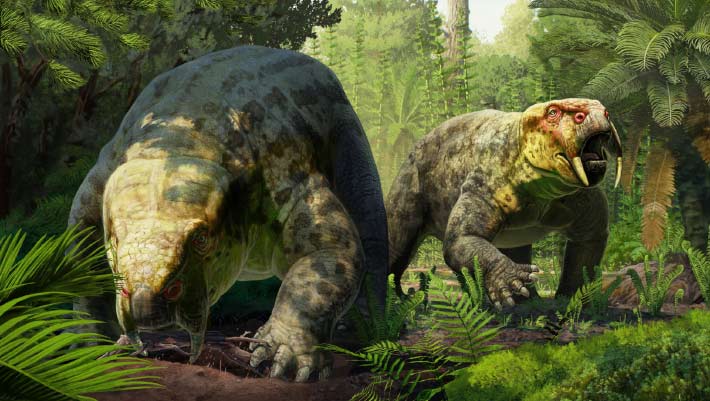
Un animal âgé de 240 millions d’années récemment identifié en Tanzanie oblige les scientifiques à repenser la chronologie des premiers dinosaures. Dinodontosaurus isiyavamanda appartient à un groupe auparavant connu uniquement en Amérique du Sud, reliant les gisements de fossiles des deux continents. Ce lien suggère que les fossiles de dinosaures les plus anciens de Tanzanie pourraient en réalité être des millions d’années plus jeunes qu’on ne le pensait auparavant.
16/09/2026 sciencedaily ⚙ Traduction automatique
New Dicynodont Species from Tanzania Suggests Younger Age for Rocks Tied to Earliest Dinosaurs
Une nouvelle espèce de dicynodonte de Tanzanie suggère un âge plus jeune pour les roches liées aux premiers dinosaures
Tanzanie fossile spécimen Dinosauria nouvelle espèce
Les paléontologues ont identifié une nouvelle espèce de mammifère ancien et éloigné à partir de deux spécimens fossiles trouvés à des décennies d'intervalle dans les lits Manda de Tanzanie. L'article Une nouvelle espèce de dicynodonte de Tanzanie suggère un âge plus jeune pour les roches liées aux premiers dinosaures apparaît en premier sur Sci.News : Breaking Science News.
15/09/2026 sci-news ⚙ Traduction automatique
La lumière UV révèle un possible camouflage sur un crocodile vieux de 125 millions d'années
peau fossile
Un fossile de crocodile vieux de 125 millions d'années a révélé une peau préservée, d'éventuels organes sensoriels, des structures respiratoires sophistiquées et un motif inattendu sur sa queue. La lumière ultraviolette a exposé des bandes alternées qui peuvent représenter un camouflage ancien, préservant potentiellement la plus ancienne coloration connue chez un crocodylomorphe.
15/09/2026 sciencedaily ⚙ Traduction automatique
Spanish Amber Deposit Offers Rare Window into Cretaceous Life
Le gisement d'ambre espagnol offre une rare fenêtre sur la vie du Crétacé
Espagne Crétacé fossile
El Soplao, un site fossile niché dans les collines de Cantabrie, dans le nord de l'Espagne, se distingue par la production de morceaux d'ambre avec une teinte bleu-violet et d'abondantes bioinclusions, selon un nouvel article de synthèse. Le post Le gisement d'ambre espagnol offre une fenêtre rare sur la vie du Crétacé apparaît en premier sur Sci.News : Breaking Science News.
14/09/2026 sci-news ⚙ Traduction automatique
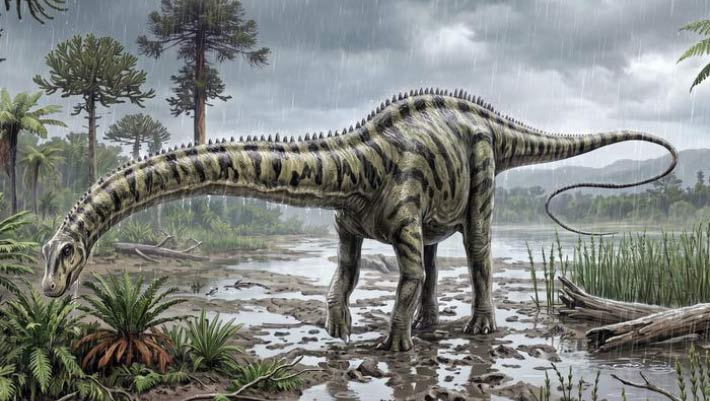
Diplodocus, Long Thought Exclusively American, Turns Up in Spain
Diplodocus, longtemps considéré comme exclusivement américain, débarque en Espagne
Espagne fossile Diplodocia Diplodocus
Les paléontologues de la Fundación Dinópolis ont identifié les premiers fossiles confirmés du genre Diplodocus trouvés en dehors de l'Amérique du Nord. L'article Diplodocus, longtemps pensé exclusivement américain, apparaît en Espagne en premier sur Sci.News : Breaking Science News.
14/09/2026 sci-news ⚙ Traduction automatique
1 2 3 4 5 6 7 8 9 10 11 12 13 14 15 16 17 18 19 20 21 22 23 24 25 26 27 28 29 30 31 32 33 34 35 36 37 38 39 40 41 42 43