←

fossile

Nature du spécimen

248 image(s) · 265 Actualités

Galerie d'images

Taken at the Minnosota Science Museum: Dinosaurs and Fossils Gallery.

Creative Commons licensed photo by ideonexus.com. Please feel free to take and reuse for any purpose.
Taxons Prognathodontini

Taken at the Minnosota Science Museum: Dinosaurs and Fossils Gallery. Creative Commons licensed photo by ideonexus.com. Please feel free to take and reuse for any purpose.

musée fossile Dinosauria Mosasaurinae +1
Montage of six dinosaur fossils: (clockwise from top left) Deinonychus antirrhopus, Buitreraptor gonzalezorum, Velociraptor mongoliensis, Microraptor gui, Halszkaraptor escuilliei, and Zhenyuanlong suni. This is a collection of six different works already found in Wikimedia Commons:
File:Deinonychus FMNH.jpg
File:Buitreraptor FMNH.jpg
File:Velociraptor Wyoming Dinosaur Center.jpg
File:MicroraptorGui-PaleozoologicalMuseumOfChina-May23-08.jpg
File:Halszkaraptor escuilliei.jpg
File:Zhenyuanlong.jpg
All of them are either under a free license already in Wikimedia Commons or in the public domain
Taxons Dromaeosauridae

Montage of six dinosaur fossils: (clockwise from top left) Deinonychus antirrhopus, Buitreraptor gonzalezorum, Velociraptor mongoliensis, Microraptor gui, Halszkaraptor escuilliei, and Zhenyuanlong suni. This is a collection of six different works already found in Wikimedia Commons: File:Deinonychus FMNH.jpg File:Buitreraptor FMNH.jpg File:Velociraptor Wyoming Dinosaur Center.jpg File:MicroraptorGui-PaleozoologicalMuseumOfChina-May23-08.jpg File:Halszkaraptor escuilliei.jpg File:Zhenyuanlong.jpg All of them are either under a free license already in Wikimedia Commons or in the public domain

fossile Buitreraptor Deinonychus Dinosauria +8
Montage of six dinosaur fossils: (clockwise from top left) Deinonychus antirrhopus, Buitreraptor gonzalezorum, Velociraptor mongoliensis, Microraptor gui, Halszkaraptor escuilliei, and Zhenyuanlong suni. This is a collection of six different works already found in Wikimedia Commons:
File:Deinonychus FMNH.jpg
File:Buitreraptor FMNH.jpg
File:Velociraptor Wyoming Dinosaur Center.jpg
File:MicroraptorGui-PaleozoologicalMuseumOfChina-May23-08.jpg
File:Halszkaraptor escuilliei.jpg
File:Zhenyuanlong.jpg
All of them are either under a free license already in Wikimedia Commons or in the public domain
Taxons Itemiridae

Montage of six dinosaur fossils: (clockwise from top left) Deinonychus antirrhopus, Buitreraptor gonzalezorum, Velociraptor mongoliensis, Microraptor gui, Halszkaraptor escuilliei, and Zhenyuanlong suni. This is a collection of six different works already found in Wikimedia Commons: File:Deinonychus FMNH.jpg File:Buitreraptor FMNH.jpg File:Velociraptor Wyoming Dinosaur Center.jpg File:MicroraptorGui-PaleozoologicalMuseumOfChina-May23-08.jpg File:Halszkaraptor escuilliei.jpg File:Zhenyuanlong.jpg All of them are either under a free license already in Wikimedia Commons or in the public domain

fossile Buitreraptor Deinonychus Dinosauria +8
Montage of six dinosaur fossils: (clockwise from top left) Deinonychus antirrhopus, Buitreraptor gonzalezorum, Velociraptor mongoliensis, Microraptor gui, Halszkaraptor escuilliei, and Zhenyuanlong suni. This is a collection of six different works already found in Wikimedia Commons:
File:Deinonychus FMNH.jpg
File:Buitreraptor FMNH.jpg
File:Velociraptor Wyoming Dinosaur Center.jpg
File:MicroraptorGui-PaleozoologicalMuseumOfChina-May23-08.jpg
File:Halszkaraptor escuilliei.jpg
File:Zhenyuanlong.jpg
All of them are either under a free license already in Wikimedia Commons or in the public domain
Taxons Ornithodesmidae

Montage of six dinosaur fossils: (clockwise from top left) Deinonychus antirrhopus, Buitreraptor gonzalezorum, Velociraptor mongoliensis, Microraptor gui, Halszkaraptor escuilliei, and Zhenyuanlong suni. This is a collection of six different works already found in Wikimedia Commons: File:Deinonychus FMNH.jpg File:Buitreraptor FMNH.jpg File:Velociraptor Wyoming Dinosaur Center.jpg File:MicroraptorGui-PaleozoologicalMuseumOfChina-May23-08.jpg File:Halszkaraptor escuilliei.jpg File:Zhenyuanlong.jpg All of them are either under a free license already in Wikimedia Commons or in the public domain

fossile Buitreraptor Deinonychus Dinosauria +8
Ischyrotherium antiquus fossils.

Ischyrotherium antiquus fossils.

fossile Ischyrosaurus
Fossil of Thaisaurus - Took the picture at Museo di Storia Naturale, Milano
Taxons Thaisaurus

Fossil of Thaisaurus - Took the picture at Museo di Storia Naturale, Milano

fossile Thaisauridae Thaisaurus
Fossil of Thaisaurus - Took the picture at Museo di Storia Naturale, Milano
Taxons Thaisauridae

Fossil of Thaisaurus - Took the picture at Museo di Storia Naturale, Milano

fossile Thaisauridae Thaisaurus
Holotype fossil specimen SMNS 12591 of Procompsognathus
Taxons Procompsognathus

Holotype fossil specimen SMNS 12591 of Procompsognathus

fossile holotype spécimen Procompsognathinae +1
Holotype fossil specimen SMNS 12591 of Procompsognathus
Taxons Procompsognathinae

Holotype fossil specimen SMNS 12591 of Procompsognathus

fossile holotype spécimen Procompsognathinae +1
Artistic reconstruction of the head of an early ceratopsian Xuanhuaceratops niei based on the currently known fossil material and the cranial remains of other chaoyangsaurids.
Taxons Xuanhuaceratops

Artistic reconstruction of the head of an early ceratopsian Xuanhuaceratops niei based on the currently known fossil material and the cranial remains of other chaoyangsaurids.

fossile Ceratopsia Chaoyangsauridae Xuanhuaceratops +1
Artistic reconstruction of the head of an early ceratopsian Xuanhuaceratops niei based on the currently known fossil material and the cranial remains of other chaoyangsaurids.
Taxons Xuanhuasaurus

Artistic reconstruction of the head of an early ceratopsian Xuanhuaceratops niei based on the currently known fossil material and the cranial remains of other chaoyangsaurids.

fossile Ceratopsia Chaoyangsauridae Xuanhuaceratops +1
1865.. 
WHITAKEE BXrCKlNGHAM CHALK, 
399 
I cannot give the thickness with accuraC3\ I will now give a short 
account of each, beginning with the lowest. 
(g). Chalk-marl. — A 
rather brownish-white, 
slightly sandy, clayey 
chalk, fissile, with stony 
layers here and there, and 
often with fossils (notably 
fish-scales). This is per- 
haps 80 feet thick, and 
mostly causes a rise of the 
ground above the sloping 
plain of the Upper Green- 
sand. 
(/). Totfernlioe Stone.- 
At the top of the Chalk- 
marl in this district there 
are generally two layers 
of rathersandy limestone, 
separated by a little marl, 
and which are more dis- 
tinct further north-east- 
ward (in Bedfordshire), 
where they are each about 
3 feet thick. One bed is 
always here present, but 
I did not always see the 
two. This stone mostly 
yields fossils, amongst 
which Ammonites vai'ians 
and an Inoceramus are 
abundant, and small, 
hard,dark-brown nodules, 
most likely coprolitic : it 
is harder and darker than 
common chalk, and con- 
tains many small dark 
grains ; and was once 
largely quarried, for build- 
ing, at Totternhoe, where 
there are plentiful traces 
of the workings. Most 
of the old churches of the 
neighbourhood were built 
in great part of this pe- 
rishable stone, but I be- 
lieve that its use has been 
long discontinued. 
Details of the occur- 
rence of this bed will be 
given in the ' Gcolo- 

2 E 2

1865.. WHITAKEE BXrCKlNGHAM CHALK, 399 I cannot give the thickness with accuraC3\ I will now give a short account of each, beginning with the lowest. (g). Chalk-marl. — A rather brownish-white, slightly sandy, clayey chalk, fissile, with stony layers here and there, and often with fossils (notably fish-scales). This is per- haps 80 feet thick, and mostly causes a rise of the ground above the sloping plain of the Upper Green- sand. (/). Totfernlioe Stone.- At the top of the Chalk- marl in this district there are generally two layers of rathersandy limestone, separated by a little marl, and which are more dis- tinct further north-east- ward (in Bedfordshire), where they are each about 3 feet thick. One bed is always here present, but I did not always see the two. This stone mostly yields fossils, amongst which Ammonites vai'ians and an Inoceramus are abundant, and small, hard,dark-brown nodules, most likely coprolitic : it is harder and darker than common chalk, and con- tains many small dark grains ; and was once largely quarried, for build- ing, at Totternhoe, where there are plentiful traces of the workings. Most of the old churches of the neighbourhood were built in great part of this pe- rishable stone, but I be- lieve that its use has been long discontinued. Details of the occur- rence of this bed will be given in the ' Gcolo- 2 E 2

écaille fossile
Locality map for Australian eurypodan thyreophoran fossils.

1, Stegosaurian? footprint (QM F5701), Walloon Coal Measures, Balgowan Colliery, Balgowan (Bajocian–Bathonian); 2, Minmi paravertebra holotype (QM F10329) (Molnar, 1980), Minmi Member, Bungil Formation (Valanginian–Barremian); 3, Thyreophoran trackways, Broome Sandstone, Dampier Peninsula, Western Australia (Valanginian–Barremian); 4, Ankylosauria indet. (see Barrett et al., 2010) ‘Flat Rocks’ Wonthaggi Formation (upper Hauterivian–Albian); 5, NMV P216739, ‘Lake Copco–Dinosaur Cove’ Eumeralla Formation (middle upper Aptian to lower middle Albian) (Barrett et al., 2010); 6, QM F33286; 7, AM F119849 and AM F35259; 8, Kunbarrasaurus ieversi gen. et sp. nov. (formerly Minmi sp.) (QM F18101); 9, QM F33565 and QM F33566; 10, QM F44324-28. Legend: Dark Green, Toolebuc Formation (late middle–early late Albian); Green, Allaru Formation (upper Albian–(?)lower Cenomanian); Light green, Mackunda Formation (upper Albian–lower Cenomanian); Lightest green, Winton Formation (late Albian–early Turonian).
Formations Toolebuc

Locality map for Australian eurypodan thyreophoran fossils. 1, Stegosaurian? footprint (QM F5701), Walloon Coal Measures, Balgowan Colliery, Balgowan (Bajocian–Bathonian); 2, Minmi paravertebra holotype (QM F10329) (Molnar, 1980), Minmi Member, Bungil Formation (Valanginian–Barremian); 3, Thyreophoran trackways, Broome Sandstone, Dampier Peninsula, Western Australia (Valanginian–Barremian); 4, Ankylosauria indet. (see Barrett et al., 2010) ‘Flat Rocks’ Wonthaggi Formation (upper Hauterivian–Albian); 5, NMV P216739, ‘Lake Copco–Dinosaur Cove’ Eumeralla Formation (middle upper Aptian to lower middle Albian) (Barrett et al., 2010); 6, QM F33286; 7, AM F119849 and AM F35259; 8, Kunbarrasaurus ieversi gen. et sp. nov. (formerly Minmi sp.) (QM F18101); 9, QM F33565 and QM F33566; 10, QM F44324-28. Legend: Dark Green, Toolebuc Formation (late middle–early late Albian); Green, Allaru Formation (upper Albian–(?)lower Cenomanian); Light green, Mackunda Formation (upper Albian–lower Cenomanian); Lightest green, Winton Formation (late Albian–early Turonian).

Australie Broome Sandstone Eumeralla Toolebuc +18
Original figure caption: .mw-parser-output .smallcaps{font-variant:small-caps}The Middletown Slab covered with the Footprints of Carnivorous Dinosaurs. The tracks are in high relief. Additional notes: Most if not all of these tridactylous (i.e. three-toed) footprints/tracks (but not the actual trackmaker!) are referred to as Grallator or as Grallator-type trace fossils. “High relief” means that these are actually casts of footprints forming a positive relief on the lower surface of the sandstone slab (so-called positive hyporelief). The material that originally formed the mud over which the dinosaurs walked was too friable to be recovered from the quarry in one piece. The slab consists of so called ‘brownstone’ which is the trading name of the sandstone quarried at Middletown, Connecticut. This sandstone belongs to the Lower Jurassic Portland Formation of the Hartford Basin (“Connecticut Valley”) and thus to the upper part of the Newark Supergroup. The trackmakers probably were relatively small ‘primitive’ theropod dinosaurs (coelophysoids) such as Podokesaurus the remains of which were recovered from Lower Jurassic deposits of the Hartford Basin.
Formations Portland

Original figure caption: .mw-parser-output .smallcaps{font-variant:small-caps}The Middletown Slab covered with the Footprints of Carnivorous Dinosaurs. The tracks are in high relief. Additional notes: Most if not all of these tridactylous (i.e. three-toed) footprints/tracks (but not the actual trackmaker!) are referred to as Grallator or as Grallator-type trace fossils. “High relief” means that these are actually casts of footprints forming a positive relief on the lower surface of the sandstone slab (so-called positive hyporelief). The material that originally formed the mud over which the dinosaurs walked was too friable to be recovered from the quarry in one piece. The slab consists of so called ‘brownstone’ which is the trading name of the sandstone quarried at Middletown, Connecticut. This sandstone belongs to the Lower Jurassic Portland Formation of the Hartford Basin (“Connecticut Valley”) and thus to the upper part of the Newark Supergroup. The trackmakers probably were relatively small ‘primitive’ theropod dinosaurs (coelophysoids) such as Podokesaurus the remains of which were recovered from Lower Jurassic deposits of the Hartford Basin.

Portland Jurassique moulage fossile +4
Locality map: Grand Staircase-Escalante National Monument, southern Utah.
Map showing the Nipple Butte area (indicated by yellow star) of Grand Staircase-Escalante National Monument (GSENM). GSENM is bounded by the red rectangle and silhouetted in dark gray on the inset of Utah and surrounding states (modified from [1]).

The original map has been modified to show the Nipple Butte area instead of the Machairoceratops fossil locality as in the original source. New location based on map in A New Macrovertebrate Assemblage from the Late Cretaceous (Campanian) of Southern Utah, page 601.

Locality map: Grand Staircase-Escalante National Monument, southern Utah. Map showing the Nipple Butte area (indicated by yellow star) of Grand Staircase-Escalante National Monument (GSENM). GSENM is bounded by the red rectangle and silhouetted in dark gray on the inset of Utah and surrounding states (modified from [1]). The original map has been modified to show the Nipple Butte area instead of the Machairoceratops fossil locality as in the original source. New location based on map in A New Macrovertebrate Assemblage from the Late Cretaceous (Campanian) of Southern Utah, page 601.

Campanien Crétacé Crétacé supérieur fossile +1
(A) Map of Queensland showing the extent of Cretaceous outcrop. (B) Map of the location of Dig Site Three (type locality of Haliskia), and numerous other sites in the area from which pterosaur fossils have been collected.
Formations Griman Creek

(A) Map of Queensland showing the extent of Cretaceous outcrop. (B) Map of the location of Dig Site Three (type locality of Haliskia), and numerous other sites in the area from which pterosaur fossils have been collected.

Crétacé fossile Haliskia Pterosauria
1 2 3 4 5 6 7 8 9 10 11 12 13 14 15 16

Actualités

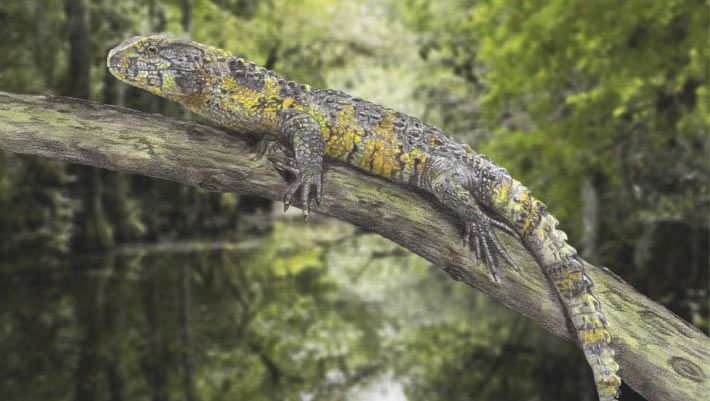
83-Million-Year-Old Crocodile Lizard Fossil Unearthed in France
Un fossile de lézard crocodile vieux de 83 millions d'années découvert en France
mâchoire France fossile découverte nouvelle espèce partiel
Les paléontologues ont identifié un nouveau genre et une nouvelle espèce de lézard pan-shinisaure à partir d'une mâchoire supérieure partielle découverte dans le sud de la France, repoussant la présence de sa lignée en Europe d'au moins 30 millions d'années. L'article Un fossile de lézard crocodile vieux de 83 millions d'années découvert en France est apparu en premier sur Sci.News : Breaking Science News.
22/05/2026 sci-news ⚙ Traduction automatique
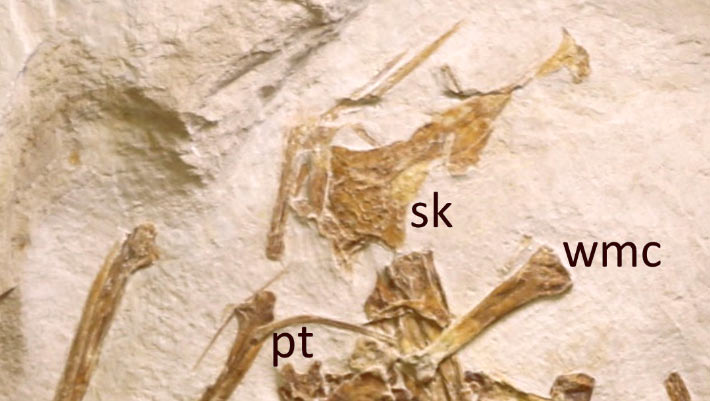
New Jurassic Pterosaur Unearthed in Germany
Un nouveau ptérosaure du Jurassique découvert en Allemagne
Allemagne Jurassique fossile Monofenestrata Pterosauria nouvelle espèce squelette
Les paléontologues ont décrit un nouveau genre et une nouvelle espèce de ptérosaure monofenestratan précoce sur la base d'un squelette fossile presque complet et bien conservé découvert en Bavière, en Allemagne. L'article Un nouveau ptérosaure jurassique découvert en Allemagne est apparu en premier sur Sci.News : Breaking Science News.
19/05/2026 sci-news ⚙ Traduction automatique
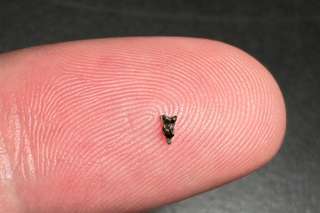
Plus petites qu’un ongle, ces dents fossiles pourraient réécrire l’histoire de nos origines
dent fossile découverte
Des dents fossiles pas plus grandes qu'un ongle de bébé viennent de réécrire les premières pages de notre histoire évolutive. En mars 2026, des paléontologues ont annoncé la découverte la plus méridionale jamais réalisée de Purgatorius, considéré comme l'ancêtre commun de tous les primates. Où...
19/05/2026 futura-terre
Il construisait un mur dans son jardin… quand une silhouette vieille de 240 millions d’années apparaît
musée fossile
Destiné à devenir un simple bloc de construction, un morceau de grès récupéré dans une carrière australienne cache en réalité un secret vieux de 240 millions d’années. Oublié pendant des décennies dans les réserves d’un musée, ce fossile exceptionnel vient seulement de révéler l’existence d’une...
18/05/2026 futura-terre
Un superbe crâne de stégosaure vieux de 150 millions d'années réécrit l'évolution des dinosaures
fossile Dacentrurus Dinosauria Stegosauria découverte évolution crâne
Une découverte spectaculaire de dinosaures en Espagne donne aux scientifiques un nouveau regard rare sur le monde des stégosaures. Les paléontologues ont découvert le crâne de stégosaure le mieux conservé jamais découvert en Europe, appartenant à l'emblématique dinosaure plaqué Dacentrurus armatus, qui parcourait la Terre il y a environ 150 millions d'années. Parce que les crânes de stégosaures sont extrêmement fragiles et ne survivent presque jamais intacts, le fossile aide les chercheurs à découvrir des détails jusqu'alors inconnus sur l'évolution de ces géants blindés.
17/05/2026 sciencedaily ⚙ Traduction automatique
1 2 3 4 5 6 7 8 9 10 11 12 13 14 15 16 17 18 19 20 21 22 23 24 25 26 27 28 29 30 31 32 33 34 35 36 37 38 39 40 41 42 43 44 45 46 47 48 49 50 51 52 53