fossile

Nature du spécimen

267 image(s) · 171 Actualités

Galerie d'images

Crâne de mosasaure d'espèce Platecarpus tympaniticus (squamates, mosasaures).
Provenance : Smoky Hill Chalk, Kansas (aux Etats-Unis).
Date : Crétacé supérieur, période du Campanien, 88 millions d'années avant notre ère.
Collections du Muséum national d'histoire naturelle de Paris (France).
Exposé à l'occasion de l'exposition "Un T-Rex à Paris" au Muséum national d'histoire naturelle de Paris (France) du 6 juin au 2 septembre 2018.

Légende du fossile dans cette exposition : "Les mosasaures ne sont pas des dinosaures mais des reptiles marins, très répandus à la fin du Crétacé. Certains genres comme Globidens et Halisaurus sont connus aussi bien aux Etats-Unis qu'au Maroc. Ces animaux étaient d'excellents nageurs, capables de traverser l'Atlantique."

Crâne de mosasaure d'espèce Platecarpus tympaniticus (squamates, mosasaures). Provenance : Smoky Hill Chalk, Kansas (aux Etats-Unis). Date : Crétacé supérieur, période du Campanien, 88 millions d'années avant notre ère. Collections du Muséum national d'histoire naturelle de Paris (France). Exposé à l'occasion de l'exposition "Un T-Rex à Paris" au Muséum national d'histoire naturelle de Paris (France) du 6 juin au 2 septembre 2018. Légende du fossile dans cette exposition : "Les mosasaures ne sont pas des dinosaures mais des reptiles marins, très répandus à la fin du Crétacé. Certains genres comme Globidens et Halisaurus sont connus aussi bien aux Etats-Unis qu'au Maroc. Ces animaux étaient d'excellents nageurs, capables de traverser l'Atlantique."

France Maroc Campanien Crétacé +8
Fragmentary fossils of various tylosaurines MCM.M0009 (A ; Taniwhasaurus 'mikasaensis'), SAM-PK-5265 (B ; Taniwhasaurus 'capensis') and MNHN 1896-15 (C ; Tylosaurus gaudryi).

Fragmentary fossils of various tylosaurines MCM.M0009 (A ; Taniwhasaurus 'mikasaensis'), SAM-PK-5265 (B ; Taniwhasaurus 'capensis') and MNHN 1896-15 (C ; Tylosaurus gaudryi).

fossile Hainosaurus Taniwhasaurus Tylosaurus
Life restoration of the mosasaurine mosasaurid Eremiasaurus, with unknown portions and soft tissues based primarily on Prognathodon and supplemented with Mosasaurus where needed.
References
Leblanc, A.R.H.; Caldwell, M.W.; Bardet, N. (2012). "A new mosasaurine from the Maastrichtian (Upper Cretaceous) phosphates of Morocco and its implications for mosasaurine systematics". Journal of Vertebrate Paleontology 32 (1): 82–104.
Lindgren, J.; Kaddumi, H.; Polcyn, M. (2013). "Soft tissue preservation in a fossil marine lizard with a bilobed tail fin". Nature Communications 4: 2423. DOI:10.1038/ncomms3423.
Konishi, T.; Brinkman, D.; Massare, J.A.; Caldwell, M.W. (2011). "New exceptional specimens of Prognathodon overtoni (Squamata, Mosasauridae) from the upper Campanian of Alberta, Canada, and the systematics and ecology of the genus". Journal of Vertebrate Paleontology 31 (5): 1026–1046.
Russell, D.A. (1967). "Systematics and morphology of American mosasaurs". Bulletin of the Peabody Museum of Natural History 23: 1–241.
Taxons Eremiasaurus

Life restoration of the mosasaurine mosasaurid Eremiasaurus, with unknown portions and soft tissues based primarily on Prognathodon and supplemented with Mosasaurus where needed. References Leblanc, A.R.H.; Caldwell, M.W.; Bardet, N. (2012). "A new mosasaurine from the Maastrichtian (Upper Cretaceous) phosphates of Morocco and its implications for mosasaurine systematics". Journal of Vertebrate Paleontology 32 (1): 82–104. Lindgren, J.; Kaddumi, H.; Polcyn, M. (2013). "Soft tissue preservation in a fossil marine lizard with a bilobed tail fin". Nature Communications 4: 2423. DOI:10.1038/ncomms3423. Konishi, T.; Brinkman, D.; Massare, J.A.; Caldwell, M.W. (2011). "New exceptional specimens of Prognathodon overtoni (Squamata, Mosasauridae) from the upper Campanian of Alberta, Canada, and the systematics and ecology of the genus". Journal of Vertebrate Paleontology 31 (5): 1026–1046. Russell, D.A. (1967). "Systematics and morphology of American mosasaurs". Bulletin of the Peabody Museum of Natural History 23: 1–241.

tissus écologie musée Canada +11
Fossil of Carinodens, an extinct mosasaur- Took the photo at Natural History Museum of Maastricht

Fossil of Carinodens, an extinct mosasaur- Took the photo at Natural History Museum of Maastricht

musée fossile Carinodens
Restoration of Ambopteryx longibrachium based on known fossil elements

Restoration of Ambopteryx longibrachium based on known fossil elements

fossile Alnashetri Ambopteryx
A hypothetical life restoration of Ampelosaurus atacis

• Ampelosaurus is known from hundreds of fossil specimens which show most of the dinosaur's osteological details, however, there are few articulated remains or reconstructions of the material so its overall proportions and life appearance are uncertain.
• Ampelosaurus is known to have supported osteoderms, only four are currently known. The number of these osteoderms that an individual Ampelosaurus would have supported in life and their and position on the body is not currently known. It's thought that due to the rarity of titanosaur osteoderms that they would be quite sparse on the body. The position and layout of the osteoderms has been loosely based on this interpretation, which is based on the work of Vidal et al 2015. [1]
Taxons Dashanpusaurus

A hypothetical life restoration of Ampelosaurus atacis • Ampelosaurus is known from hundreds of fossil specimens which show most of the dinosaur's osteological details, however, there are few articulated remains or reconstructions of the material so its overall proportions and life appearance are uncertain. • Ampelosaurus is known to have supported osteoderms, only four are currently known. The number of these osteoderms that an individual Ampelosaurus would have supported in life and their and position on the body is not currently known. It's thought that due to the rarity of titanosaur osteoderms that they would be quite sparse on the body. The position and layout of the osteoderms has been loosely based on this interpretation, which is based on the work of Vidal et al 2015. [1]

fossile spécimen Ampelosaurus Bagualosauria +6
Lower Triassic fossil footprint (ichnite) of the ichnogenus Chirotherium, probably caused by an early archosaur, and first discovered 1833 in Hildburghausen (Thuringia, Germany). This specimen, however, ist from the Helsby Sandstone of the Storeton Quarry near Liverpool. Its species name is Chirotherium storetonense.[1]
Taxons Abelichnus

Lower Triassic fossil footprint (ichnite) of the ichnogenus Chirotherium, probably caused by an early archosaur, and first discovered 1833 in Hildburghausen (Thuringia, Germany). This specimen, however, ist from the Helsby Sandstone of the Storeton Quarry near Liverpool. Its species name is Chirotherium storetonense.[1]

Allemagne Trias fossile spécimen +9
Lower Triassic fossil footprint (ichnite) of the ichnogenus Chirotherium, probably caused by an early archosaur, and first discovered 1833 in Hildburghausen (Thuringia, Germany). This specimen, however, ist from the Helsby Sandstone of the Storeton Quarry near Liverpool. Its species name is Chirotherium storetonense.[1]
Taxons Anticheiropus

Lower Triassic fossil footprint (ichnite) of the ichnogenus Chirotherium, probably caused by an early archosaur, and first discovered 1833 in Hildburghausen (Thuringia, Germany). This specimen, however, ist from the Helsby Sandstone of the Storeton Quarry near Liverpool. Its species name is Chirotherium storetonense.[1]

Allemagne Trias fossile spécimen +9
Lower Triassic fossil footprint (ichnite) of the ichnogenus Chirotherium, probably caused by an early archosaur, and first discovered 1833 in Hildburghausen (Thuringia, Germany). This specimen, however, ist from the Helsby Sandstone of the Storeton Quarry near Liverpool. Its species name is Chirotherium storetonense.[1]
Taxons Argoides

Lower Triassic fossil footprint (ichnite) of the ichnogenus Chirotherium, probably caused by an early archosaur, and first discovered 1833 in Hildburghausen (Thuringia, Germany). This specimen, however, ist from the Helsby Sandstone of the Storeton Quarry near Liverpool. Its species name is Chirotherium storetonense.[1]

Allemagne Trias fossile spécimen +9
Lower Triassic fossil footprint (ichnite) of the ichnogenus Chirotherium, probably caused by an early archosaur, and first discovered 1833 in Hildburghausen (Thuringia, Germany). This specimen, however, ist from the Helsby Sandstone of the Storeton Quarry near Liverpool. Its species name is Chirotherium storetonense.[1]
Taxons Delatorrichnus

Lower Triassic fossil footprint (ichnite) of the ichnogenus Chirotherium, probably caused by an early archosaur, and first discovered 1833 in Hildburghausen (Thuringia, Germany). This specimen, however, ist from the Helsby Sandstone of the Storeton Quarry near Liverpool. Its species name is Chirotherium storetonense.[1]

Allemagne Trias fossile spécimen +9
Lower Triassic fossil footprint (ichnite) of the ichnogenus Chirotherium, probably caused by an early archosaur, and first discovered 1833 in Hildburghausen (Thuringia, Germany). This specimen, however, ist from the Helsby Sandstone of the Storeton Quarry near Liverpool. Its species name is Chirotherium storetonense.[1]
Taxons Dinehichnus

Lower Triassic fossil footprint (ichnite) of the ichnogenus Chirotherium, probably caused by an early archosaur, and first discovered 1833 in Hildburghausen (Thuringia, Germany). This specimen, however, ist from the Helsby Sandstone of the Storeton Quarry near Liverpool. Its species name is Chirotherium storetonense.[1]

Allemagne Trias fossile spécimen +9
Lower Triassic fossil footprint (ichnite) of the ichnogenus Chirotherium, probably caused by an early archosaur, and first discovered 1833 in Hildburghausen (Thuringia, Germany). This specimen, however, ist from the Helsby Sandstone of the Storeton Quarry near Liverpool. Its species name is Chirotherium storetonense.[1]
Taxons Dromaeosauripus

Lower Triassic fossil footprint (ichnite) of the ichnogenus Chirotherium, probably caused by an early archosaur, and first discovered 1833 in Hildburghausen (Thuringia, Germany). This specimen, however, ist from the Helsby Sandstone of the Storeton Quarry near Liverpool. Its species name is Chirotherium storetonense.[1]

Allemagne Trias fossile spécimen +9
Lower Triassic fossil footprint (ichnite) of the ichnogenus Chirotherium, probably caused by an early archosaur, and first discovered 1833 in Hildburghausen (Thuringia, Germany). This specimen, however, ist from the Helsby Sandstone of the Storeton Quarry near Liverpool. Its species name is Chirotherium storetonense.[1]
Taxons Eutynichnium

Lower Triassic fossil footprint (ichnite) of the ichnogenus Chirotherium, probably caused by an early archosaur, and first discovered 1833 in Hildburghausen (Thuringia, Germany). This specimen, however, ist from the Helsby Sandstone of the Storeton Quarry near Liverpool. Its species name is Chirotherium storetonense.[1]

Allemagne Trias fossile spécimen +9
fossil Europasaurus, Aathal Dinosaur Museum.
Taxons Europasaurus

fossil Europasaurus, Aathal Dinosaur Museum.

musée fossile Dinosauria Europasaurus
Left humerus of Haestasaurus becklesii (NHMUK R1870). A, anterior view; B, posterior view; Abbreviations: af, anconeal fossa; dp, deltopectoral crest; hh, humeral head; ltf, lateral triceps fossa; mtf, medial triceps fossa.

This fossil was found in strata of the Hastings Beds (late Berriasian—Valanginian in age) on the coast near Hastings, East Sussex, England.
Taxons Haestasaurus

Left humerus of Haestasaurus becklesii (NHMUK R1870). A, anterior view; B, posterior view; Abbreviations: af, anconeal fossa; dp, deltopectoral crest; hh, humeral head; ltf, lateral triceps fossa; mtf, medial triceps fossa. This fossil was found in strata of the Hastings Beds (late Berriasian—Valanginian in age) on the coast near Hastings, East Sussex, England.

crête humérus Berriasien Valanginien +2
Holotype fossils of Glacialisaurus (PR 1823); metatarsals, tibia, fibula, ankle bones
Taxons Glacialisaurus

Holotype fossils of Glacialisaurus (PR 1823); metatarsals, tibia, fibula, ankle bones

os fossile holotype Glacialisaurus
1 2 3 4 5 6 7 8 9 10 11 12 13 14 15 16 17

Actualités

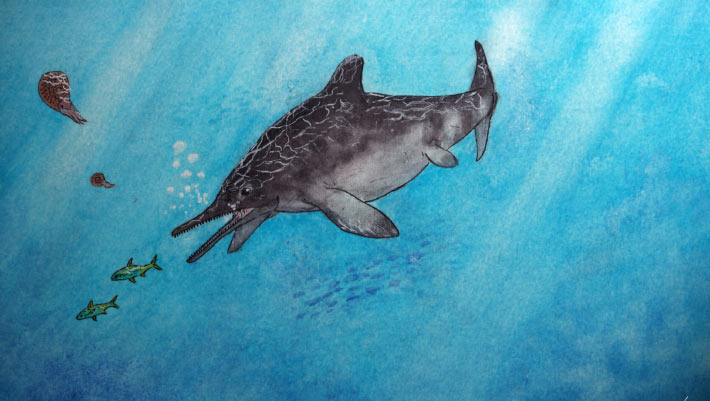
Un gigantesque « dragon des mers » vieux de 180 millions d’années découvert au Royaume-Uni
Royaume-Uni fossile Ichthyosauria découverte
180 millions d'années sous nos pieds. Un fossile d'ichtyosaure colossal vient d'être mis au jour en Angleterre, et il redessine ce que l'on croyait savoir sur ces reptiles marins préhistoriques. Une découverte qui a fait trembler le monde de la paléontologie britannique. 
16/06/2026 futura-terre
Fossils from Chinese Cave Fill Crucial Gap in History of Gigantopithecus blacki
Des fossiles provenant d'une grotte chinoise comblent une lacune cruciale dans l'histoire du Gigantopithecus blacki
dent Chine fossile origine humaine mammifères
Au fond d'une grotte calcaire du sud de la Chine, des paléontologues ont découvert un assemblage de treize dents fossilisées appartenant à Gigantopithecus blacki, la plus grande espèce de primate jamais connue. L'article Les fossiles des grottes chinoises comblent une lacune cruciale dans l'histoire de Gigantopithecus blacki apparaît en premier sur Sci.News : Breaking Science News.
15/06/2026 sci-news ⚙ Traduction automatique
New Marsupial Lineage Emerges from Australian Fossils
Une nouvelle lignée marsupiale émerge des fossiles australiens
Australie Miocène fossile insecte mammifères nouvelle espèce
Les paléontologues ont décrit un nouveau genre et trois nouvelles espèces de petits marsupiaux insectivores provenant des dépôts du Miocène inférieur de la zone du patrimoine mondial de Riversleigh, dans le nord-ouest du Queensland, l'un des sites fossilifères les plus riches d'Australie. L'article Une nouvelle lignée marsupiale émerge des fossiles australiens apparaît en premier sur Sci.News : Breaking Science News.
15/06/2026 sci-news ⚙ Traduction automatique
Un superbe crâne de théropode exposé
musée fossile Tyrannosaurus crâne
Lors d'une visite au Museum für Naturkunde (Berlin) nous en avons profité pour photographier le magnifique crâne de Tristan le Tyrannosaurus rex.  Le crâne est l’un des crânes de tyrannosaure les plus complets et les mieux conservés connus de la science.  Les fossiles de T. rex, exposés à côté du crâne, ont été nommés Tristan Otto.  À
12/06/2026 everythingdinosaur ⚙ Traduction automatique
Les cahiers disparus qui ont résolu un mystère fossile vieux de 55 millions d'années
prédateur Nouvelle-Zélande fossile découverte poisson
Un poisson fossile spectaculaire découvert sur une falaise isolée en Nouvelle-Zélande il y a près de 30 ans a enfin révélé toute son histoire grâce à une découverte inattendue : les carnets de terrain du collectionneur original, perdus depuis longtemps. Le fossile de 1,2 mètre, conservé dans des détails tridimensionnels époustouflants, appartenait à un ancien prédateur ressemblant à un tarpon qui naviguait dans les eaux néo-zélandaises il y a environ 55 millions d'années.
12/06/2026 sciencedaily ⚙ Traduction automatique
1 2 3 4 5 6 7 8 9 10 11 12 13 14 15 16 17 18 19 20 21 22 23 24 25 26 27 28 29 30 31 32 33 34 35