fossile

Nature du spécimen

267 image(s) · 171 Actualités

Galerie d'images

Fossil of the Decapod Cycleryon

Fossil of the Decapod Cycleryon

fossile
Fig 2. Geological section of the “Mittlerer Kimmeridge”.
This figure is based on Fischer and modified from Lallensack et al. Beds yielding terrestrial fossils are listed.

Fig 2. Geological section of the “Mittlerer Kimmeridge”. This figure is based on Fischer and modified from Lallensack et al. Beds yielding terrestrial fossils are listed.

fossile
Fossil shell of Aulacostephanus yo from France, on display at Gallery of Paleontology and Comparative Anatomy, Paris.
Intervalles Kimmeridgian

Fossil shell of Aulacostephanus yo from France, on display at Gallery of Paleontology and Comparative Anatomy, Paris.

France fossile anatomie
The GSSP for the Hirnantian stage in the ICS geological timescale (uppermost Ordovician stage), located in the Wangjiawan profile (an outcrop of black shale, brownishly weathered siliceous shale and chert layers of the Wufeng Formation) along the G241 road, about 40 km north of Yichang, Hubei, China. An exact golden spike is missing in the profile (2025) but a memorial plague marks the place. The GSSP occurs at the first appearance of fossils of the graptolite species Normalograptus extraordinarius. It was ratified in 2006.

The GSSP for the Hirnantian stage in the ICS geological timescale (uppermost Ordovician stage), located in the Wangjiawan profile (an outcrop of black shale, brownishly weathered siliceous shale and chert layers of the Wufeng Formation) along the G241 road, about 40 km north of Yichang, Hubei, China. An exact golden spike is missing in the profile (2025) but a memorial plague marks the place. The GSSP occurs at the first appearance of fossils of the graptolite species Normalograptus extraordinarius. It was ratified in 2006.

Chine Hirnantien Ordovicien fossile +1
Crioceratites fabreae fossils on display at the French National Museum of Natural History in Paris, France.

Crioceratites fabreae fossils on display at the French National Museum of Natural History in Paris, France.

musée France fossile
Crioceratites duvali fossil on display at the French National Museum of Natural History in Paris, France.

Crioceratites duvali fossil on display at the French National Museum of Natural History in Paris, France.

musée France fossile
“Sternberger Kuchen” (“Sternberg cake”), a large late Pleistocene glaciofluvial pebble of a highly fossiliferous, shallow marine sandstone of the North German Paleogene (Sülstorf beds, formerly known as “Sternberg rock”, Chattian, Oligocene, about 25 million years old). The fossil content is mainly made up of mollusks (pelecypods, gastropods, scaphopods). Provenance: Sternberg, Mecklenburg-Vorpommern, Northeast Germany.

“Sternberger Kuchen” (“Sternberg cake”), a large late Pleistocene glaciofluvial pebble of a highly fossiliferous, shallow marine sandstone of the North German Paleogene (Sülstorf beds, formerly known as “Sternberg rock”, Chattian, Oligocene, about 25 million years old). The fossil content is mainly made up of mollusks (pelecypods, gastropods, scaphopods). Provenance: Sternberg, Mecklenburg-Vorpommern, Northeast Germany.

Allemagne Chattien Pléistocène supérieur Oligocène +3
Fossil of Cainotherium, an extinct mammal https://hdl.handle.net/21.12123/66925 in ferruginous rock of Oligocene (Chattian) age from Ingolstadt in Bavaria, Germany - Took the photo at Museon museum, Den Haag
Intervalles Chattian

Fossil of Cainotherium, an extinct mammal https://hdl.handle.net/21.12123/66925 in ferruginous rock of Oligocene (Chattian) age from Ingolstadt in Bavaria, Germany - Took the photo at Museon museum, Den Haag

musée Allemagne Chattien Oligocène +1
A fossil tree from the Coal Creek region, Fruitland Formation, latest Cretaceous (Late Campanian), San Juan Basin, New Mexico

A fossil tree from the Coal Creek region, Fruitland Formation, latest Cretaceous (Late Campanian), San Juan Basin, New Mexico

Mexique Fruitland Campanien Crétacé +2
Glyptostrobus europaeus fossil leaves of Burdigalian stage in the early Miocene epoch, from a brown coal mine in Bilina, Czech Republic.

Glyptostrobus europaeus fossil leaves of Burdigalian stage in the early Miocene epoch, from a brown coal mine in Bilina, Czech Republic.

Tchéquie Burdigalien Miocène fossile
Brachipotherium aurelianense, from Rubí. Fossils. Collection of paleontology of the Geological Museum of the Barcelona Seminari (Museu Geològic del Seminari de Barcelona).

Brachipotherium aurelianense, from Rubí. Fossils. Collection of paleontology of the Geological Museum of the Barcelona Seminari (Museu Geològic del Seminari de Barcelona).

musée fossile
Ficus truncata fossil leaf from the early Miocene epoch 20 Ma, of the Třetihorní flóra from Bílina, Czech Republic.

Ficus truncata fossil leaf from the early Miocene epoch 20 Ma, of the Třetihorní flóra from Bílina, Czech Republic.

Tchéquie Miocène fossile
Comptonia acutiloba fossil leaves from the early Miocene epoch 20 Ma, of the Třetihorní flóra from Bílina, Czech Republic.

Comptonia acutiloba fossil leaves from the early Miocene epoch 20 Ma, of the Třetihorní flóra from Bílina, Czech Republic.

Tchéquie Miocène fossile
Berberis berberidifolia fossil leaf of Burdigalian stage in the early Miocene epoch, from a brown coal mine in Bilina, Czech Republic.
Intervalles Burdigalian

Berberis berberidifolia fossil leaf of Burdigalian stage in the early Miocene epoch, from a brown coal mine in Bilina, Czech Republic.

Tchéquie Burdigalien Miocène fossile
Sable riche en coquilles fossiles provenant de l'intérieur de puits de dissolution du site de l'Ariey. On y voit des coraux, oursins plats (Amphiope), gastéropodes (Melongena, Conus, Cypraea) et des bivalves (Lucina & Barbatia)

Sable riche en coquilles fossiles provenant de l'intérieur de puits de dissolution du site de l'Ariey. On y voit des coraux, oursins plats (Amphiope), gastéropodes (Melongena, Conus, Cypraea) et des bivalves (Lucina & Barbatia)

fossile
Fossil of Mei long (holotype), on temporary display at the Shanghai Natural History Museum as part of the exhibition "China's Dinosaur World". Shot on July 22, 2025.

Fossil of Mei long (holotype), on temporary display at the Shanghai Natural History Museum as part of the exhibition "China's Dinosaur World". Shot on July 22, 2025.

musée Chine fossile holotype +1
1 2 3 4 5 6 7 8 9 10 11 12 13 14 15 16 17

Actualités

Cet ancien parent du crocodile a grandi sur quatre pattes puis a marché sur deux
fossile Dinosauria
Un étrange parent d'un crocodile de l'époque des dinosaures réécrit ce que les scientifiques pensaient savoir sur les anciens reptiles. Cette créature de la taille d'un caniche, appelée Sonselasuchus cedrus, semble avoir commencé sa vie en marchant à quatre pattes avant de passer à une position sur deux pattes à mesure qu'elle grandissait - une transformation inhabituelle rarement observée dans les archives fossiles.
23/04/2026 sciencedaily ⚙ Traduction automatique
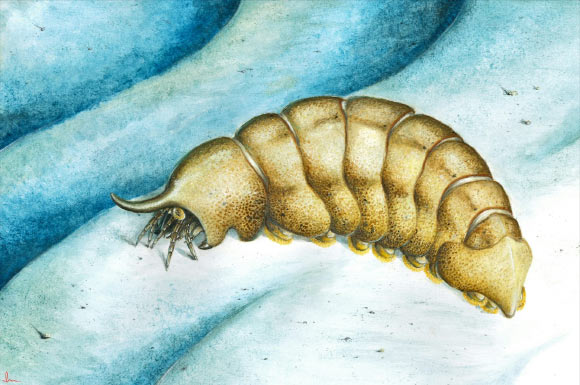
450-Million-Year-Old Fossils Reveal Strange, Tube-Dwelling Jellyfish Relative
Des fossiles vieux de 450 millions d’années révèlent un étrange parent de méduses tubicoles
Canada fossile spécimen nouvelle espèce
Les paléontologues ont identifié un nouveau genre et une nouvelle espèce de polype médusozoaire tubicole au corps mou à partir de spécimens bien conservés trouvés à environ 50 km au nord-est de la ville de Québec au Canada. L'article Des fossiles vieux de 450 millions d'années révèlent un étrange parent de méduses tubicoles apparaît en premier sur Sci.News : Breaking Science News.
21/04/2026 sci-news ⚙ Traduction automatique
Ces minuscules fossiles de dinosaures ont trompé les scientifiques pendant 20 ans
armure os croissance fossile Ankylosauria Dinosauria découverte
De minuscules fossiles de dinosaures qui ont intrigué les scientifiques pendant plus de 20 ans ont enfin révélé leur véritable identité. Plutôt que d’appartenir à une espèce miniature, ce sont en réalité des bébés ankylosaures, certains âgés de moins d’un an, y compris un possible nouveau-né. En étudiant les schémas de croissance osseuse, les chercheurs ont confirmé que ces jeunes dinosaures n’étaient pas encore devenus des adultes de grande taille. La découverte apporte un nouvel éclairage sur la façon dont les ankylosaures se sont développés, montrant qu'ils ont commencé à développer une armure étonnamment tôt.
21/04/2026 sciencedaily ⚙ Traduction automatique
Museum Fossil Reveals Triassic Crocodile Cousin with Powerful Jaws
Un fossile de musée révèle un cousin crocodile du Trias doté de mâchoires puissantes
mâchoire musée Trias supérieur Trias fossile spécimen tomographie nouvelle espèce
Les tomodensitogrammes d'un spécimen vieux de plusieurs décennies du Musée d'histoire naturelle de Yale Peabody montrent une nouvelle espèce de crocodylomorphe au museau court et aux mâchoires inhabituellement fortes, offrant un instantané rare de la spécialisation écologique à l'époque du Trias supérieur. Le post Museum Fossil révèle un cousin crocodile du Trias doté de mâchoires puissantes est apparu en premier sur Sci.News: Breaking Science News.
20/04/2026 sci-news ⚙ Traduction automatique
Les scientifiques pensaient qu'il s'agissait d'un jeune T. rex. Ils avaient tort
os croissance prédateur fossile juvénile Dinosauria Nanotyrannus
Un mystère de longue date sur les dinosaures pourrait enfin être résolu : Nanotyrannus, autrefois considéré comme un simple T. rex adolescent, semble avoir été une espèce distincte après tout. Les scientifiques ont analysé un minuscule os de la gorge du fossile original et ont découvert des schémas de croissance montrant que l'animal était déjà mature et non un géant juvénile en devenir. Ce petit prédateur, environ la moitié de la taille d'un T. rex adulte, errait probablement aux côtés de son célèbre cousin, ajoutant une nouvelle couche de complexité à l'écosystème préhistorique.
16/04/2026 sciencedaily ⚙ Traduction automatique
1 2 3 4 5 6 7 8 9 10 11 12 13 14 15 16 17 18 19 20 21 22 23 24 25 26 27 28 29 30 31 32 33 34 35