Jurassic

Geological interval

65 image(s) · 13 News

View page

Image gallery

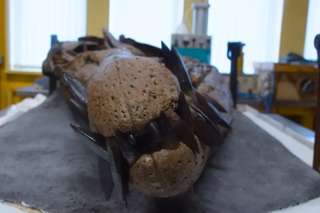
In 2000 a virtually complete Scelidosaurus skeleton was discovered in England. This fossil's hundreds of armor plates and spikes are preserved in their life positions, providing extraordinary details about how this dinosaur looked. St. George is the only place anywhere in the Western Hemisphere that the 11-foot long Scelidosaurus replica has been on display.
The St. George Dinosaur Discovery Site at Johnson Farm (St. George, Utah) is home to exceptionally well-preserved dinosaur tracks, some displaying skin impressions. These tracks, along with hundreds of fossil fish, plants, rare dinosaur remains, invertebrates traces and important sedimentary structures, show evidence that this site was produced along the western edge of a large, Early Jurassic (age between 195-198 million years ago) freshwater lake named Lake Dixie. 

Source: www.sgcity.org/dinotrax/
Taxa Scelidosaurus

In 2000 a virtually complete Scelidosaurus skeleton was discovered in England. This fossil's hundreds of armor plates and spikes are preserved in their life positions, providing extraordinary details about how this dinosaur looked. St. George is the only place anywhere in the Western Hemisphere that the 11-foot long Scelidosaurus replica has been on display. The St. George Dinosaur Discovery Site at Johnson Farm (St. George, Utah) is home to exceptionally well-preserved dinosaur tracks, some displaying skin impressions. These tracks, along with hundreds of fossil fish, plants, rare dinosaur remains, invertebrates traces and important sedimentary structures, show evidence that this site was produced along the western edge of a large, Early Jurassic (age between 195-198 million years ago) freshwater lake named Lake Dixie. Source: www.sgcity.org/dinotrax/

armor Early Jurassic Jurassic fossil +6
In 2000 a virtually complete Scelidosaurus skeleton was discovered in England. This fossil's hundreds of armor plates and spikes are preserved in their life positions, providing extraordinary details about how this dinosaur looked. St. George is the only place anywhere in the Western Hemisphere that the 11-foot long Scelidosaurus replica has been on display.
The St. George Dinosaur Discovery Site at Johnson Farm (St. George, Utah) is home to exceptionally well-preserved dinosaur tracks, some displaying skin impressions. These tracks, along with hundreds of fossil fish, plants, rare dinosaur remains, invertebrates traces and important sedimentary structures, show evidence that this site was produced along the western edge of a large, Early Jurassic (age between 195-198 million years ago) freshwater lake named Lake Dixie. 

Source: www.sgcity.org/dinotrax/
Taxa Scelidosauridae

In 2000 a virtually complete Scelidosaurus skeleton was discovered in England. This fossil's hundreds of armor plates and spikes are preserved in their life positions, providing extraordinary details about how this dinosaur looked. St. George is the only place anywhere in the Western Hemisphere that the 11-foot long Scelidosaurus replica has been on display. The St. George Dinosaur Discovery Site at Johnson Farm (St. George, Utah) is home to exceptionally well-preserved dinosaur tracks, some displaying skin impressions. These tracks, along with hundreds of fossil fish, plants, rare dinosaur remains, invertebrates traces and important sedimentary structures, show evidence that this site was produced along the western edge of a large, Early Jurassic (age between 195-198 million years ago) freshwater lake named Lake Dixie. Source: www.sgcity.org/dinotrax/

armor Early Jurassic Jurassic fossil +6
Mary Anning's plesiosaur: Plesiosaurus dolichodeirus Lower Jurassic Lyme Regis, England, UK
Taxa Plesiosaurus

Mary Anning's plesiosaur: Plesiosaurus dolichodeirus Lower Jurassic Lyme Regis, England, UK

United Kingdom Jurassic Plesiosauria
Camarasaurus lentus (Marsh, 1889) sauropod dinosaur from the Jurassic of Utah, USA (public display, CM 11338, Carnegie Museum of Natural History, Pittsburgh, Pennsylvania, USA).
This is a near-complete juvenile sauropod dinosaur in the original fluvial sandstone matrix - such skeletons are extremely rare.
Classification: Animalia, Chordata, Vertebrata, Dinosauria, Sauropodomorpha, Camarasauridae
Stratigraphy: Brushy Basin Member, Morrison Formation, Upper Jurassic, 151 Ma
Locality: Carnegie Quarry, Dinosaur National Monument, northeastern Utah, USA


Sauropod dinosaurs were the largest terrestrial animals ever.  They all have the same basic body plan: large body with four walking legs, very long neck & tail, and a small head relative to body size.  Sauropods were herbivores, and are often perceived as holding their heads & necks up high to reach vegetation normally out of reach to other organisms.  Modern reconstructions of many sauropod species depict them with heads and necks held close to the horizontal, or at low angles above the horizontal.
Taxa Camarasaurus

Camarasaurus lentus (Marsh, 1889) sauropod dinosaur from the Jurassic of Utah, USA (public display, CM 11338, Carnegie Museum of Natural History, Pittsburgh, Pennsylvania, USA). This is a near-complete juvenile sauropod dinosaur in the original fluvial sandstone matrix - such skeletons are extremely rare. Classification: Animalia, Chordata, Vertebrata, Dinosauria, Sauropodomorpha, Camarasauridae Stratigraphy: Brushy Basin Member, Morrison Formation, Upper Jurassic, 151 Ma Locality: Carnegie Quarry, Dinosaur National Monument, northeastern Utah, USA Sauropod dinosaurs were the largest terrestrial animals ever. They all have the same basic body plan: large body with four walking legs, very long neck & tail, and a small head relative to body size. Sauropods were herbivores, and are often perceived as holding their heads & necks up high to reach vegetation normally out of reach to other organisms. Modern reconstructions of many sauropod species depict them with heads and necks held close to the horizontal, or at low angles above the horizontal.

museum United States Morrison Jurassic +10
Camarasaurus lentus (Marsh, 1889) sauropod dinosaur from the Jurassic of Utah, USA (public display, CM 11338, Carnegie Museum of Natural History, Pittsburgh, Pennsylvania, USA).
This is a near-complete juvenile sauropod dinosaur in the original fluvial sandstone matrix - such skeletons are extremely rare.
Classification: Animalia, Chordata, Vertebrata, Dinosauria, Sauropodomorpha, Camarasauridae
Stratigraphy: Brushy Basin Member, Morrison Formation, Upper Jurassic, 151 Ma
Locality: Carnegie Quarry, Dinosaur National Monument, northeastern Utah, USA


Sauropod dinosaurs were the largest terrestrial animals ever.  They all have the same basic body plan: large body with four walking legs, very long neck & tail, and a small head relative to body size.  Sauropods were herbivores, and are often perceived as holding their heads & necks up high to reach vegetation normally out of reach to other organisms.  Modern reconstructions of many sauropod species depict them with heads and necks held close to the horizontal, or at low angles above the horizontal.
Taxa Camarasauridae

Camarasaurus lentus (Marsh, 1889) sauropod dinosaur from the Jurassic of Utah, USA (public display, CM 11338, Carnegie Museum of Natural History, Pittsburgh, Pennsylvania, USA). This is a near-complete juvenile sauropod dinosaur in the original fluvial sandstone matrix - such skeletons are extremely rare. Classification: Animalia, Chordata, Vertebrata, Dinosauria, Sauropodomorpha, Camarasauridae Stratigraphy: Brushy Basin Member, Morrison Formation, Upper Jurassic, 151 Ma Locality: Carnegie Quarry, Dinosaur National Monument, northeastern Utah, USA Sauropod dinosaurs were the largest terrestrial animals ever. They all have the same basic body plan: large body with four walking legs, very long neck & tail, and a small head relative to body size. Sauropods were herbivores, and are often perceived as holding their heads & necks up high to reach vegetation normally out of reach to other organisms. Modern reconstructions of many sauropod species depict them with heads and necks held close to the horizontal, or at low angles above the horizontal.

museum United States Morrison Jurassic +10
Camarasaurus lentus (Marsh, 1889) sauropod dinosaur from the Jurassic of Utah, USA (public display, CM 11338, Carnegie Museum of Natural History, Pittsburgh, Pennsylvania, USA).
This is a near-complete juvenile sauropod dinosaur in the original fluvial sandstone matrix - such skeletons are extremely rare.
Classification: Animalia, Chordata, Vertebrata, Dinosauria, Sauropodomorpha, Camarasauridae
Stratigraphy: Brushy Basin Member, Morrison Formation, Upper Jurassic, 151 Ma
Locality: Carnegie Quarry, Dinosaur National Monument, northeastern Utah, USA


Sauropod dinosaurs were the largest terrestrial animals ever.  They all have the same basic body plan: large body with four walking legs, very long neck & tail, and a small head relative to body size.  Sauropods were herbivores, and are often perceived as holding their heads & necks up high to reach vegetation normally out of reach to other organisms.  Modern reconstructions of many sauropod species depict them with heads and necks held close to the horizontal, or at low angles above the horizontal.
Taxa Camarasaurinae

Camarasaurus lentus (Marsh, 1889) sauropod dinosaur from the Jurassic of Utah, USA (public display, CM 11338, Carnegie Museum of Natural History, Pittsburgh, Pennsylvania, USA). This is a near-complete juvenile sauropod dinosaur in the original fluvial sandstone matrix - such skeletons are extremely rare. Classification: Animalia, Chordata, Vertebrata, Dinosauria, Sauropodomorpha, Camarasauridae Stratigraphy: Brushy Basin Member, Morrison Formation, Upper Jurassic, 151 Ma Locality: Carnegie Quarry, Dinosaur National Monument, northeastern Utah, USA Sauropod dinosaurs were the largest terrestrial animals ever. They all have the same basic body plan: large body with four walking legs, very long neck & tail, and a small head relative to body size. Sauropods were herbivores, and are often perceived as holding their heads & necks up high to reach vegetation normally out of reach to other organisms. Modern reconstructions of many sauropod species depict them with heads and necks held close to the horizontal, or at low angles above the horizontal.

museum United States Morrison Jurassic +10
Camarasaurus lentus (Marsh, 1889) sauropod dinosaur from the Jurassic of Utah, USA (public display, CM 11338, Carnegie Museum of Natural History, Pittsburgh, Pennsylvania, USA).
This is a near-complete juvenile sauropod dinosaur in the original fluvial sandstone matrix - such skeletons are extremely rare.
Classification: Animalia, Chordata, Vertebrata, Dinosauria, Sauropodomorpha, Camarasauridae
Stratigraphy: Brushy Basin Member, Morrison Formation, Upper Jurassic, 151 Ma
Locality: Carnegie Quarry, Dinosaur National Monument, northeastern Utah, USA


Sauropod dinosaurs were the largest terrestrial animals ever.  They all have the same basic body plan: large body with four walking legs, very long neck & tail, and a small head relative to body size.  Sauropods were herbivores, and are often perceived as holding their heads & necks up high to reach vegetation normally out of reach to other organisms.  Modern reconstructions of many sauropod species depict them with heads and necks held close to the horizontal, or at low angles above the horizontal.
Taxa Morosauridae

Camarasaurus lentus (Marsh, 1889) sauropod dinosaur from the Jurassic of Utah, USA (public display, CM 11338, Carnegie Museum of Natural History, Pittsburgh, Pennsylvania, USA). This is a near-complete juvenile sauropod dinosaur in the original fluvial sandstone matrix - such skeletons are extremely rare. Classification: Animalia, Chordata, Vertebrata, Dinosauria, Sauropodomorpha, Camarasauridae Stratigraphy: Brushy Basin Member, Morrison Formation, Upper Jurassic, 151 Ma Locality: Carnegie Quarry, Dinosaur National Monument, northeastern Utah, USA Sauropod dinosaurs were the largest terrestrial animals ever. They all have the same basic body plan: large body with four walking legs, very long neck & tail, and a small head relative to body size. Sauropods were herbivores, and are often perceived as holding their heads & necks up high to reach vegetation normally out of reach to other organisms. Modern reconstructions of many sauropod species depict them with heads and necks held close to the horizontal, or at low angles above the horizontal.

museum United States Morrison Jurassic +10
Ophthalmosaurus icenius, from the time of the Callovian period of the Middle Jurassic. This specimen was found in Oxford Clay, in Peterborough, England. Photo lightly touched up to remove lighting flares.
Taxa Ophthalmosaurus

Ophthalmosaurus icenius, from the time of the Callovian period of the Middle Jurassic. This specimen was found in Oxford Clay, in Peterborough, England. Photo lightly touched up to remove lighting flares.

Oxford Clay Callovian Jurassic Middle Jurassic +5
Ophthalmosaurus icenius, from the time of the Callovian period of the Middle Jurassic. This specimen was found in Oxford Clay, in Peterborough, England. Photo lightly touched up to remove lighting flares.
Taxa Ophthalmosauridae

Ophthalmosaurus icenius, from the time of the Callovian period of the Middle Jurassic. This specimen was found in Oxford Clay, in Peterborough, England. Photo lightly touched up to remove lighting flares.

Oxford Clay Callovian Jurassic Middle Jurassic +5
Ophthalmosaurus icenius, from the time of the Callovian period of the Middle Jurassic. This specimen was found in Oxford Clay, in Peterborough, England. Photo lightly touched up to remove lighting flares.
Taxa Ophthalmosaurinae

Ophthalmosaurus icenius, from the time of the Callovian period of the Middle Jurassic. This specimen was found in Oxford Clay, in Peterborough, England. Photo lightly touched up to remove lighting flares.

Oxford Clay Callovian Jurassic Middle Jurassic +5
Ophthalmosaurus icenius, from the time of the Callovian period of the Middle Jurassic. This specimen was found in Oxford Clay, in Peterborough, England. Photo lightly touched up to remove lighting flares.
Taxa Undorosauridae

Ophthalmosaurus icenius, from the time of the Callovian period of the Middle Jurassic. This specimen was found in Oxford Clay, in Peterborough, England. Photo lightly touched up to remove lighting flares.

Oxford Clay Callovian Jurassic Middle Jurassic +5
1 2 3 4 5

News

Oxfordshire Dinosaur Trackway Could Be the Longest Sauropod Trackway Known
Jurassic tracks Cetiosauria Dinosauria discovery
Scientists studying the famous Oxfordshire "dinosaur highway" have announced that one of the giant trackways may represent the longest known sauropod trackway discovered anywhere in the world. The remarkable sequence of footprints, uncovered at Dewars Farm Quarry, could have been made by a single Cetiosaurus as it wandered across a Jurassic mudflat around 166 million
11/06/2026 everythingdinosaur
New Jurassic Pterosaur Unearthed in Germany
Germany Jurassic fossil Monofenestrata Pterosauria new species skeleton
Paleontologists have described a new genus and species of early monofenestratan pterosaur based on a nearly complete and well-preserved fossil skeleton discovered in Bavaria, Germany. The post New Jurassic Pterosaur Unearthed in Germany appeared first on Sci.News: Breaking Science News.
19/05/2026 sci-news
This strange giant dinosaur may change what we know about Jurassic titans
Argentina Jurassic fossil Bicharracosaurus Brachiosauria Brachiosauridae Dinosauria Diplodocia evolution
A bizarre new giant dinosaur discovered in Argentina is giving paleontologists a fresh look at how Jurassic titans evolved in the Southern Hemisphere. Bicharracosaurus dionidei stretched about 20 meters long and carried a strange mix of features seen in both Diplodocus and Brachiosaurus relatives. Scientists believe it could represent the first known Jurassic brachiosaurid from South America, helping fill a major gap in the dinosaur fossil record.
12/05/2026 sciencedaily
Early Sauropodomorph Dinosaur Unearthed in China
China Early Jurassic Jurassic Dinosauria Massopoda new species partial skeleton
A new genus and species of massopodan sauropodomorph that lived during the Early Jurassic epoch has been identified from a partial skeleton unearthed in southwestern China. The post Early Sauropodomorph Dinosaur Unearthed in China appeared first on Sci.News: Breaking Science News.
04/05/2026 sci-news
Ammonite Model Proves Invaluable When on a Guided Fossil Walk
Jurassic fossil
Lyme Regis is famous for its fossils.  Indeed, thousands of tourists flock to this part of the "Jurassic Coast" on the hunt for fossils. It is sensible to book a fossil walk with an experienced guide. Our chum Brandon Lennon took the guys out from the "All the Gear" YouTube channel for a guided fossil
04/05/2026 everythingdinosaur
1 2 3