Jurassique

Intervalle géologique

107 image(s) · 21 Actualités

Voir la fiche

Galerie d'images

Figure 1: Reconstruction of the skull of Bellusaurus sui from the Middle-Late Jurassic Shishugou Formation of Xinjiang, China.
This reconstruction is a composite based on isolated holotypic and referred material. (A) Right lateral view. (B) Dorsal view. Holotypic elements are indicated in blue and referred elements are in green.
Taxons Bellusaurus

Figure 1: Reconstruction of the skull of Bellusaurus sui from the Middle-Late Jurassic Shishugou Formation of Xinjiang, China. This reconstruction is a composite based on isolated holotypic and referred material. (A) Right lateral view. (B) Dorsal view. Holotypic elements are indicated in blue and referred elements are in green.

Chine Jurassique Jurassique supérieur Bellusaurus +2
Aalenian GSSP (Lower-Middle Jurassic boundary). Golden spike ceremony: July, 28th 2016. Fuentelsaz, Guadalajara, Spain
Intervalles Aalenian

Aalenian GSSP (Lower-Middle Jurassic boundary). Golden spike ceremony: July, 28th 2016. Fuentelsaz, Guadalajara, Spain

Espagne Aalénien Jurassique Jurassique moyen
Laurasia during the closure of the Iapetus Ocean at 430 Ma.
Made using GPlates:  Citations:

Golonka, J. (2007), Late Triassic and Early Jurassic palaeogeography of the world, Palaeogeography, Palaeoclimatology, Palaeoecology, 244(1-4), 297-307.
Müller, R., M. Sdrolias, C. Gaina, and W. Roest (2008), Age, spreading rates, and spreading asymmetry of the world's ocean crust, Geochemistry, Geophysics, Geosystems, 9(Q04006), 19.
Seton, M., R. Müller, S. Zahirovic, C. Gaina, T. Torsvik, G. Shephard, A. Talsma, M. Gurnis, M. Turner, and M. Chandler (2012), Global continental and ocean basin reconstructions since 200 Ma, Earth-Science Reviews, 113(3-4), 212-270.
Torsvik, T., and R. Van de Voo (2002), Refining Gondwana and Pangea Palaeogeography: Estimates of Phanerozoic non dipole (octupole) fields, Geophysical Journal International, 151(3), 771-794.
Wright, N., S. Zahirovic, R. D. Müller, and M. Seton (2013), Towards community-driven, open-access paleogeographic reconstructions: integrating open-access paleogeographic and paleobiology data with plate tectonics, Biogeosciences, 10, 1529-1541
Intervalles Sheinwoodian

Laurasia during the closure of the Iapetus Ocean at 430 Ma. Made using GPlates: Citations: Golonka, J. (2007), Late Triassic and Early Jurassic palaeogeography of the world, Palaeogeography, Palaeoclimatology, Palaeoecology, 244(1-4), 297-307. Müller, R., M. Sdrolias, C. Gaina, and W. Roest (2008), Age, spreading rates, and spreading asymmetry of the world's ocean crust, Geochemistry, Geophysics, Geosystems, 9(Q04006), 19. Seton, M., R. Müller, S. Zahirovic, C. Gaina, T. Torsvik, G. Shephard, A. Talsma, M. Gurnis, M. Turner, and M. Chandler (2012), Global continental and ocean basin reconstructions since 200 Ma, Earth-Science Reviews, 113(3-4), 212-270. Torsvik, T., and R. Van de Voo (2002), Refining Gondwana and Pangea Palaeogeography: Estimates of Phanerozoic non dipole (octupole) fields, Geophysical Journal International, 151(3), 771-794. Wright, N., S. Zahirovic, R. D. Müller, and M. Seton (2013), Towards community-driven, open-access paleogeographic reconstructions: integrating open-access paleogeographic and paleobiology data with plate tectonics, Biogeosciences, 10, 1529-1541

Jurassique inférieur Jurassique Trias supérieur Phanérozoïque +2
Laurasia during the closure of the Iapetus Ocean at 430 Ma.
Made using GPlates:  Citations:

Golonka, J. (2007), Late Triassic and Early Jurassic palaeogeography of the world, Palaeogeography, Palaeoclimatology, Palaeoecology, 244(1-4), 297-307.
Müller, R., M. Sdrolias, C. Gaina, and W. Roest (2008), Age, spreading rates, and spreading asymmetry of the world's ocean crust, Geochemistry, Geophysics, Geosystems, 9(Q04006), 19.
Seton, M., R. Müller, S. Zahirovic, C. Gaina, T. Torsvik, G. Shephard, A. Talsma, M. Gurnis, M. Turner, and M. Chandler (2012), Global continental and ocean basin reconstructions since 200 Ma, Earth-Science Reviews, 113(3-4), 212-270.
Torsvik, T., and R. Van de Voo (2002), Refining Gondwana and Pangea Palaeogeography: Estimates of Phanerozoic non dipole (octupole) fields, Geophysical Journal International, 151(3), 771-794.
Wright, N., S. Zahirovic, R. D. Müller, and M. Seton (2013), Towards community-driven, open-access paleogeographic reconstructions: integrating open-access paleogeographic and paleobiology data with plate tectonics, Biogeosciences, 10, 1529-1541
Intervalles Homerian

Laurasia during the closure of the Iapetus Ocean at 430 Ma. Made using GPlates: Citations: Golonka, J. (2007), Late Triassic and Early Jurassic palaeogeography of the world, Palaeogeography, Palaeoclimatology, Palaeoecology, 244(1-4), 297-307. Müller, R., M. Sdrolias, C. Gaina, and W. Roest (2008), Age, spreading rates, and spreading asymmetry of the world's ocean crust, Geochemistry, Geophysics, Geosystems, 9(Q04006), 19. Seton, M., R. Müller, S. Zahirovic, C. Gaina, T. Torsvik, G. Shephard, A. Talsma, M. Gurnis, M. Turner, and M. Chandler (2012), Global continental and ocean basin reconstructions since 200 Ma, Earth-Science Reviews, 113(3-4), 212-270. Torsvik, T., and R. Van de Voo (2002), Refining Gondwana and Pangea Palaeogeography: Estimates of Phanerozoic non dipole (octupole) fields, Geophysical Journal International, 151(3), 771-794. Wright, N., S. Zahirovic, R. D. Müller, and M. Seton (2013), Towards community-driven, open-access paleogeographic reconstructions: integrating open-access paleogeographic and paleobiology data with plate tectonics, Biogeosciences, 10, 1529-1541

Jurassique inférieur Jurassique Trias supérieur Phanérozoïque +2
Original figure caption: .mw-parser-output .smallcaps{font-variant:small-caps}The Middletown Slab covered with the Footprints of Carnivorous Dinosaurs. The tracks are in high relief. Additional notes: Most if not all of these tridactylous (i.e. three-toed) footprints/tracks (but not the actual trackmaker!) are referred to as Grallator or as Grallator-type trace fossils. “High relief” means that these are actually casts of footprints forming a positive relief on the lower surface of the sandstone slab (so-called positive hyporelief). The material that originally formed the mud over which the dinosaurs walked was too friable to be recovered from the quarry in one piece. The slab consists of so called ‘brownstone’ which is the trading name of the sandstone quarried at Middletown, Connecticut. This sandstone belongs to the Lower Jurassic Portland Formation of the Hartford Basin (“Connecticut Valley”) and thus to the upper part of the Newark Supergroup. The trackmakers probably were relatively small ‘primitive’ theropod dinosaurs (coelophysoids) such as Podokesaurus the remains of which were recovered from Lower Jurassic deposits of the Hartford Basin.
Formations Portland

Original figure caption: .mw-parser-output .smallcaps{font-variant:small-caps}The Middletown Slab covered with the Footprints of Carnivorous Dinosaurs. The tracks are in high relief. Additional notes: Most if not all of these tridactylous (i.e. three-toed) footprints/tracks (but not the actual trackmaker!) are referred to as Grallator or as Grallator-type trace fossils. “High relief” means that these are actually casts of footprints forming a positive relief on the lower surface of the sandstone slab (so-called positive hyporelief). The material that originally formed the mud over which the dinosaurs walked was too friable to be recovered from the quarry in one piece. The slab consists of so called ‘brownstone’ which is the trading name of the sandstone quarried at Middletown, Connecticut. This sandstone belongs to the Lower Jurassic Portland Formation of the Hartford Basin (“Connecticut Valley”) and thus to the upper part of the Newark Supergroup. The trackmakers probably were relatively small ‘primitive’ theropod dinosaurs (coelophysoids) such as Podokesaurus the remains of which were recovered from Lower Jurassic deposits of the Hartford Basin.

Portland Jurassique moulage fossile +4
Eubrontes dinosaur track from the Jurassic of Connecticut, USA.
Trace fossils are any indirect evidence of ancient life.  They refer to features in rocks that do not represent parts of the body of a once-living organism.  Traces include footprints, tracks, trails, burrows, borings, and bitemarks.  Body fossils provide information about the morphology of ancient organisms, while trace fossils provide information about the behavior of ancient life forms.  Interpreting trace fossils and determination of the identity of a trace maker can be straightforward (for example, a dinosaur footprint represents walking behavior) or not.  Sediments that have trace fossils are said to be bioturbated.  Burrowed textures in sedimentary rocks are referred to as bioturbation.  Trace fossils have scientific names assigned to them, in the same style & manner as living organisms or body fossils.
This track was made by a theropod, a group of small to large, carnivorous, bipedal dinosaurs.  The specimen comes from a Triassic to Jurassic terrestrial sedimentary succession that filled up a half graben, many of which occur along America's eastern seaboard.  Such half-graben basins formed during the Triassic as the Pangaea supercontinent tried to rift apart, but failed.  Pangaea successfully broke apart during the Jurassic.
Stratigraphy: East Berlin Formation, Newark Supergroup, Lower Jurassic
Locality: unrecorded / undisclosed site at or near the town of Rocky Hill, central Connecticut, USA


Info. at:
mrdata.usgs.gov/geology/state/sgmc-unit.php?unit=CTJeb%3B0
and

en.wikipedia.org/wiki/Eubrontes

Eubrontes dinosaur track from the Jurassic of Connecticut, USA. Trace fossils are any indirect evidence of ancient life. They refer to features in rocks that do not represent parts of the body of a once-living organism. Traces include footprints, tracks, trails, burrows, borings, and bitemarks. Body fossils provide information about the morphology of ancient organisms, while trace fossils provide information about the behavior of ancient life forms. Interpreting trace fossils and determination of the identity of a trace maker can be straightforward (for example, a dinosaur footprint represents walking behavior) or not. Sediments that have trace fossils are said to be bioturbated. Burrowed textures in sedimentary rocks are referred to as bioturbation. Trace fossils have scientific names assigned to them, in the same style & manner as living organisms or body fossils. This track was made by a theropod, a group of small to large, carnivorous, bipedal dinosaurs. The specimen comes from a Triassic to Jurassic terrestrial sedimentary succession that filled up a half graben, many of which occur along America's eastern seaboard. Such half-graben basins formed during the Triassic as the Pangaea supercontinent tried to rift apart, but failed. Pangaea successfully broke apart during the Jurassic. Stratigraphy: East Berlin Formation, Newark Supergroup, Lower Jurassic Locality: unrecorded / undisclosed site at or near the town of Rocky Hill, central Connecticut, USA Info. at: mrdata.usgs.gov/geology/state/sgmc-unit.php?unit=CTJeb%3B0 and en.wikipedia.org/wiki/Eubrontes

États-Unis Jurassique Trias fossile +5
The type specimen of the ichnogenus Cheliceratichnus, from the Early Jurassic East Berlin Formation of Holyoke, Massachusetts.

The type specimen of the ichnogenus Cheliceratichnus, from the Early Jurassic East Berlin Formation of Holyoke, Massachusetts.

East Berlin Jurassique inférieur Jurassique spécimen +1
Bifurculapes laqueatus trackway (positive hyporelief, i.e. casts on the bottom surface of the bed) from the Early Jurassic East Berlin Formation (Hartford Basin) of Holyoke, Massachusetts (not the same specimen as this one). See coin (1 U.S. cent, 19.05 mm in diameter) for scale.

Bifurculapes laqueatus trackway (positive hyporelief, i.e. casts on the bottom surface of the bed) from the Early Jurassic East Berlin Formation (Hartford Basin) of Holyoke, Massachusetts (not the same specimen as this one). See coin (1 U.S. cent, 19.05 mm in diameter) for scale.

écaille East Berlin Jurassique inférieur Jurassique +3
Bifurculapes laqueatus trackway (positive hyporelief, i.e. casts on the bottom surface of the bed) from the Early Jurassic East Berlin Formation (Hartford Basin) of Holyoke, Massachusetts (not the same specimen as this one). See coin (1 U.S. cent, 19.05 mm in diameter) for scale.

Bifurculapes laqueatus trackway (positive hyporelief, i.e. casts on the bottom surface of the bed) from the Early Jurassic East Berlin Formation (Hartford Basin) of Holyoke, Massachusetts (not the same specimen as this one). See coin (1 U.S. cent, 19.05 mm in diameter) for scale.

écaille East Berlin Jurassique inférieur Jurassique +3
A trackway of the trace fossil Bifurculapes laqueatus (positive hyporelief, i.e. casts on the bottom surface of the bed) from the Early Jurassic East Berlin Formation (Hartford Basin) of Holyoke, Massachusetts (not the same specimen as this one). Scale is in cm.
Formations East Berlin

A trackway of the trace fossil Bifurculapes laqueatus (positive hyporelief, i.e. casts on the bottom surface of the bed) from the Early Jurassic East Berlin Formation (Hartford Basin) of Holyoke, Massachusetts (not the same specimen as this one). Scale is in cm.

écaille East Berlin Jurassique inférieur Jurassique +4
Morrison Formation (lower half), Jurassic-Cretacous boundary (K1 Unconformity) at red and orange paleosol, Cedar Mountain Formation (drab gray), and capping Naturita Formation. West of Dinosaur National Monument.

Morrison Formation (lower half), Jurassic-Cretacous boundary (K1 Unconformity) at red and orange paleosol, Cedar Mountain Formation (drab gray), and capping Naturita Formation. West of Dinosaur National Monument.

Cedar Mountain Morrison Jurassique Dinosauria +1
Paleogeography and paleoclimate of the Late Jurassic - 150 Ma with dinosaur fossil localities:
A = Tendaguru Formation, Tanzania
C1 =  Shishugou & Kalazha Formations, China
C2 =  Shangshaximiao (Upper Shaximiao) Formation, China
E1 =  Sables de Glos, Argiles d’Octeville, Marnes de Bléville, Kimmeridge Clay, Calcareous Grit, Corallian Oolite, Oxford Clay, Portland Stone, England & France
E2 = Villar del Arzobispo, Alcobaça, Guimarota, Sobral, Amoreira-Porto Novo, Bombarral, Freixial, Lourinhã Formations, Spain & Portugal
M1-6 = Morrison Formation, United States
S1 =  Toquí & Cañadón Calcáreo Formations, Chile & Argentina

Paleogeography and paleoclimate of the Late Jurassic - 150 Ma with dinosaur fossil localities: A = Tendaguru Formation, Tanzania C1 = Shishugou & Kalazha Formations, China C2 = Shangshaximiao (Upper Shaximiao) Formation, China E1 = Sables de Glos, Argiles d’Octeville, Marnes de Bléville, Kimmeridge Clay, Calcareous Grit, Corallian Oolite, Oxford Clay, Portland Stone, England & France E2 = Villar del Arzobispo, Alcobaça, Guimarota, Sobral, Amoreira-Porto Novo, Bombarral, Freixial, Lourinhã Formations, Spain & Portugal M1-6 = Morrison Formation, United States S1 = Toquí & Cañadón Calcáreo Formations, Chile & Argentina

Argentine Chili Chine France +19
San Rafael Reef, Utah, looking north from near I-70. The prominent white ridge is Jurassic Navajo Sandstone that has been warped upwards.
Formations Navajo Sandstone

San Rafael Reef, Utah, looking north from near I-70. The prominent white ridge is Jurassic Navajo Sandstone that has been warped upwards.

Navajo Sandstone Jurassique
Oxford Clay (Jurassic) exposed near Weymouth, England.

Oxford Clay (Jurassic) exposed near Weymouth, England.

Oxford Clay Jurassique
Bituminous claystone, Lower Jurassic, Hesselberg, Middle Franconia.
Sedimentary rock of very thin laminated layers (particles less than 0,0002 mm).

Rock formation is known for its rich fossil findings, ex. Ichthyosaur.

Bituminous claystone, Lower Jurassic, Hesselberg, Middle Franconia. Sedimentary rock of very thin laminated layers (particles less than 0,0002 mm). Rock formation is known for its rich fossil findings, ex. Ichthyosaur.

Jurassique fossile Ichthyosauria formation
Oxfordian (Upper Jurassic) cyclic sediments at Péry-Reuchenette, near Tavannes, kanton Bern, Switzerland. Alternating layers are limestone (light, more competent) and marl/clay; dominant cycle is the 200.000 year-cycle.
Formations Reuchenette

Oxfordian (Upper Jurassic) cyclic sediments at Péry-Reuchenette, near Tavannes, kanton Bern, Switzerland. Alternating layers are limestone (light, more competent) and marl/clay; dominant cycle is the 200.000 year-cycle.

Suisse Reuchenette Jurassique Oxfordian
1 2 3 4 5 6 7

Actualités

Cet étrange dinosaure géant pourrait changer ce que nous savons sur les titans du Jurassique
Argentine Jurassique fossile Bicharracosaurus Brachiosauria Brachiosauridae Dinosauria Diplodocia évolution
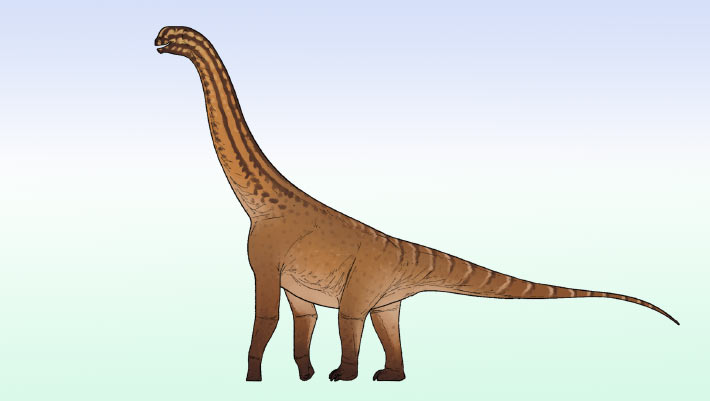
Un étrange nouveau dinosaure géant découvert en Argentine donne aux paléontologues un nouveau regard sur l'évolution des titans du Jurassique dans l'hémisphère sud. Bicharracosaurus dionidei s'étendait sur environ 20 mètres de long et présentait un étrange mélange de caractéristiques observées chez les parents du Diplodocus et du Brachiosaurus. Les scientifiques pensent qu’il pourrait s’agir du premier brachiosaure du Jurassique connu d’Amérique du Sud, contribuant ainsi à combler une lacune majeure dans les archives fossiles de dinosaures.
12/05/2026 sciencedaily ⚙ Traduction automatique
Early Sauropodomorph Dinosaur Unearthed in China
Un dinosaure sauropodomorphe découvert en Chine
Chine Jurassique inférieur Jurassique Dinosauria Massopoda nouvelle espèce partiel squelette
Un nouveau genre et une nouvelle espèce de sauropodomorphe massopodan qui vivaient au début du Jurassique ont été identifiés à partir d'un squelette partiel découvert dans le sud-ouest de la Chine. L'article Les premiers dinosaures sauropodomorphes découverts en Chine est apparu en premier sur Sci.News : Breaking Science News.
04/05/2026 sci-news ⚙ Traduction automatique
Le modèle d'ammonite s'avère inestimable lors d'une promenade guidée aux fossiles
Jurassique fossile
Lyme Regis est célèbre pour ses fossiles.  En effet, des milliers de touristes affluent dans cette partie de la « Côte Jurassique » à la recherche de fossiles. Il est judicieux de réserver une promenade aux fossiles avec un guide expérimenté. Notre ami Brandon Lennon a emmené les gars de la chaîne YouTube "All the Gear" pour un fossile guidé
04/05/2026 everythingdinosaur ⚙ Traduction automatique
Un fossile de « Sword Dragon » vieux de 190 millions d’années réécrit l’histoire des ichtyosaures
Royaume-Uni Jurassique fossile Ichthyosauria évolution squelette
Un ichtyosaure nouvellement identifié de la côte jurassique du Royaume-Uni est en train de réécrire une partie du manuel préhistorique. Surnommé le « dragon-épée du Dorset », ce reptile marin de trois mètres de long a vécu pendant une période d’évolution mal comprise, au cours de laquelle les principaux groupes d’ichtyosaures disparaissaient et de nouveaux apparaissaient. Son squelette magnifiquement préservé – doté d’un museau en forme de lame et d’un éventuel dernier repas – permet de déterminer le moment où cette transition dramatique s’est produite.
24/02/2026 sciencedaily ⚙ Traduction automatique
Torvosaurus: Beast of the Week
Torvosaurus : Bête de la semaine
os prédateur Allemagne Portugal États-Unis Jurassique Jurassique supérieur Dinosauria Torvosaurus
Aujourd'hui, nous allons nous intéresser à un énorme dinosaure prédateur du Jurassique, Torvosaurus tanneri !  Torvosaurus vivait il y a environ 150 millions d’années à la fin du Jurassique. Ses ossements ont été découverts dans le Colorado, aux États-Unis, au Portugal et peut-être en Allemagne (l'Europe et l'Amérique du Nord n'étaient pas aussi éloignées à l'époque, rappelez-vous, donc beaucoup de dinosaures présents sur chacun d'eux partageaient des ancêtres récents).  Du nez à la queue, il mesurait jusqu'à 36 pieds (environ 11 m) et aurait été parmi les plus grands,
08/02/2026 prehistoricbeastoftheweek ⚙ Traduction automatique
1 2 3 4 5