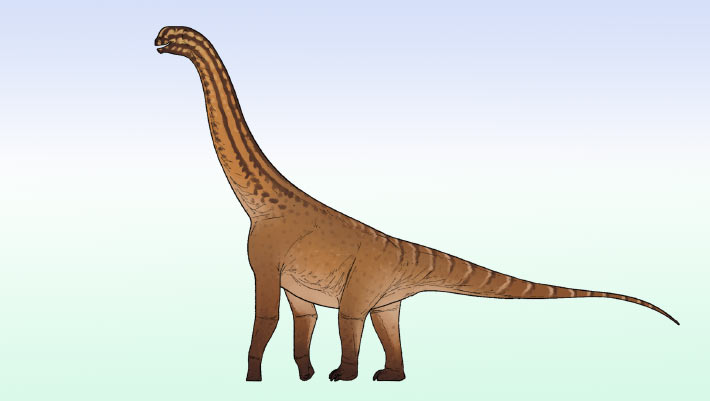
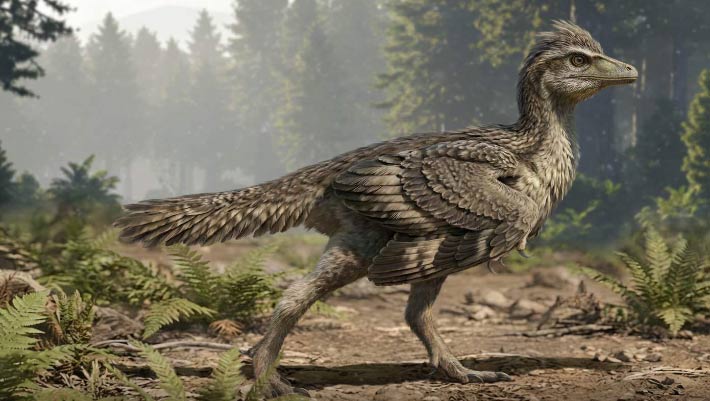
Jurassique

Intervalle géologique

65 image(s) · 13 Actualités

Voir la fiche

Galerie d'images

Attenborosaurus conybeari, a plesiosaur from the Early Jurassic of England, pencil drawing
Taxons Dactylosaurus

Attenborosaurus conybeari, a plesiosaur from the Early Jurassic of England, pencil drawing

dessin Jurassique inférieur Jurassique Attenborosaurus +5
Attenborosaurus conybeari, a plesiosaur from the Early Jurassic of England, pencil drawing
Taxons Eromangasaurus

Attenborosaurus conybeari, a plesiosaur from the Early Jurassic of England, pencil drawing

dessin Jurassique inférieur Jurassique Attenborosaurus +5
Attenborosaurus conybeari, a plesiosaur from the Early Jurassic of England, pencil drawing
Taxons Eurycleidus

Attenborosaurus conybeari, a plesiosaur from the Early Jurassic of England, pencil drawing

dessin Jurassique inférieur Jurassique Attenborosaurus +5
Pleuroceras solare, Amaltheidae; Pyritic specimen; Diameter 3.2 cm; Upper Pliensbachian, Lower Jurassic; Little Switzerland, Bavaria, Germany. own collection, therefore not geocoded.
Taxons Coralloidoolithus

Pleuroceras solare, Amaltheidae; Pyritic specimen; Diameter 3.2 cm; Upper Pliensbachian, Lower Jurassic; Little Switzerland, Bavaria, Germany. own collection, therefore not geocoded.

Allemagne Suisse Jurassique Pliensbachien +3
Pleuroceras solare, Amaltheidae; Pyritic specimen; Diameter 3.2 cm; Upper Pliensbachian, Lower Jurassic; Little Switzerland, Bavaria, Germany. own collection, therefore not geocoded.
Taxons Dispersituberoolithus

Pleuroceras solare, Amaltheidae; Pyritic specimen; Diameter 3.2 cm; Upper Pliensbachian, Lower Jurassic; Little Switzerland, Bavaria, Germany. own collection, therefore not geocoded.

Allemagne Suisse Jurassique Pliensbachien +3
Pantydraco caducus, a sauropodomorph from the Late Triassic or Early Jurassic of England, after Yates, 2003, pencil drawing, digital coloring
Taxons Pantydraco

Pantydraco caducus, a sauropodomorph from the Late Triassic or Early Jurassic of England, after Yates, 2003, pencil drawing, digital coloring

dessin Jurassique inférieur Jurassique Trias supérieur +3
Kimmerosaurus swims through a shallow jurassic reef in this reconstruction
Taxons Kimmerosaurus

Kimmerosaurus swims through a shallow jurassic reef in this reconstruction

Jurassique Kimmerosaurus
Known fossil pieces after Aviatyrannis jurassica (Dinosauria, Theropoda, Coelurosauria, Tyrannosauroidea).[1]
Sources

↑ Rauhut O.W.M. (2003), "A tyrannosaurid dinosaur from the Upper Jurassic of Portugal", Paleontology 46(5): p. 903-910.
Taxons Aviatyrannis

Known fossil pieces after Aviatyrannis jurassica (Dinosauria, Theropoda, Coelurosauria, Tyrannosauroidea).[1] Sources ↑ Rauhut O.W.M. (2003), "A tyrannosaurid dinosaur from the Upper Jurassic of Portugal", Paleontology 46(5): p. 903-910.

Portugal Jurassique fossile Aviatyrannis +5
Partial skull of Manidens condorensis from the Middle Jurassic Cañadón Asfalto Formation of Argentina. Skull reconstructions in lateral view. Dashed lines indicate estimated edges. Abbreviations: a angular antfo antorbital fossa asaf anterior surangular foramen be buccal emargination bo basioccipital bt basal tubera d dentary d1, 2, 11 dentary tooth 1, 2, 11 emfo external mandibular fossa f frontal gl glenoid gr groove j jugal jfl jugal flange jh jugal horn m maxilla m1, 11 maxillary tooth 1, 11 n nasal pd predentary pm premaxilla po postorbital pof postorbital fossa popr paroccipital process q quadrate qj quadratojugal ri ridge sa surangular sq squamosal.
Taxons Manidens

Partial skull of Manidens condorensis from the Middle Jurassic Cañadón Asfalto Formation of Argentina. Skull reconstructions in lateral view. Dashed lines indicate estimated edges. Abbreviations: a angular antfo antorbital fossa asaf anterior surangular foramen be buccal emargination bo basioccipital bt basal tubera d dentary d1, 2, 11 dentary tooth 1, 2, 11 emfo external mandibular fossa f frontal gl glenoid gr groove j jugal jfl jugal flange jh jugal horn m maxilla m1, 11 maxillary tooth 1, 11 n nasal pd predentary pm premaxilla po postorbital pof postorbital fossa popr paroccipital process q quadrate qj quadratojugal ri ridge sa surangular sq squamosal.

dent Argentine Jurassique Jurassique moyen +4
Montanoceratops cerorhynchus (Brown & Schlaikjer, 1942) - fossil ceratopsian dinosaur skeleton from the Cretaceous of Montana, USA. (MOR 542, Museum of the Rockies, Bozeman, Montana, USA)
The species name is sometimes incorrectly spelled "cerorhynchos".  The original publication spells it "cerorhynchus".  The genus name is sometimes incorrectly spelled "Montanaceratops".
Ceratopsians are the "horned dinosaurs".  They were large, quadrupedal, herbivorous dinosaurs having a beaked skull and a frill - an extension of bone behind the skull that partially covered the neck.  Ceratopsian dinosaurs are known from the Jurassic and Cretaceous.  The last members of the group died out at the Cretaceous-Tertiary boundary, 65 million years ago.
This is a partial skeleton of a juvenile Montanoceratops, a ceratopsian from the near-latest Cretaceous of western North America.  This type of ceratopsian lacked facial horns.


From exhibit signage:
Sixty-eight million years ago, when the horned dinosaurs Triceratops and Torosaurus inhabited the coastal plain near the inland ocean, primitive "horned" dinosaurs named Montanoceratops lived in uplands near the young Rocky Mountains.  These little protoceratopsians fed on plants with slicing teeth and narrow beaks similar to their giant three-horned relatives.


Classification: Animalia, Chordata, Vertebrata, Reptilia, Archosauria, Dinosauria, Ornithischia, Marginocephalia, Ceratopsia, Leptoceratopsidae
Stratigraphy: St. Mary River Formation, Maastrichtian Stage, Upper Cretaceous
Locality: Little Rocky Coulee, north of the town of Cut Bank, eastern Glacier County, northwestern Montana, USA


Info. at:

en.wikipedia.org/wiki/Montanoceratops
Taxons Montanoceratops

Montanoceratops cerorhynchus (Brown & Schlaikjer, 1942) - fossil ceratopsian dinosaur skeleton from the Cretaceous of Montana, USA. (MOR 542, Museum of the Rockies, Bozeman, Montana, USA) The species name is sometimes incorrectly spelled "cerorhynchos". The original publication spells it "cerorhynchus". The genus name is sometimes incorrectly spelled "Montanaceratops". Ceratopsians are the "horned dinosaurs". They were large, quadrupedal, herbivorous dinosaurs having a beaked skull and a frill - an extension of bone behind the skull that partially covered the neck. Ceratopsian dinosaurs are known from the Jurassic and Cretaceous. The last members of the group died out at the Cretaceous-Tertiary boundary, 65 million years ago. This is a partial skeleton of a juvenile Montanoceratops, a ceratopsian from the near-latest Cretaceous of western North America. This type of ceratopsian lacked facial horns. From exhibit signage: Sixty-eight million years ago, when the horned dinosaurs Triceratops and Torosaurus inhabited the coastal plain near the inland ocean, primitive "horned" dinosaurs named Montanoceratops lived in uplands near the young Rocky Mountains. These little protoceratopsians fed on plants with slicing teeth and narrow beaks similar to their giant three-horned relatives. Classification: Animalia, Chordata, Vertebrata, Reptilia, Archosauria, Dinosauria, Ornithischia, Marginocephalia, Ceratopsia, Leptoceratopsidae Stratigraphy: St. Mary River Formation, Maastrichtian Stage, Upper Cretaceous Locality: Little Rocky Coulee, north of the town of Cut Bank, eastern Glacier County, northwestern Montana, USA Info. at: en.wikipedia.org/wiki/Montanoceratops

os musée États-Unis Crétacé +10
Sarcosaurus diagram of known material: reconstruction based on basal Ceratosaurs (such as Berberosaurus and Saltriovenator). The Skull was made to look more generic and less like more derived Ceratosaurs such as Ceratosaurus. "Liassaurus", referred to "cf. Sarcosaurus woodi" and is smaller than the holotype: material in light grey is preserved, but to what extent is uncertain as it is not figured.
References:
Carrano and Sampson (2004). "A review of coelophysoids (Dinosauria: Theropoda) from the Early Jurassic of Europe, with comments on the late history of the Coelophysoidea." N. Jb. Geol. Palaont. Mh., 2004(9): 537-558. (for figures of the material)
theropoddatabase.com/Coelophysoidea.htm#Sarcosauruswoodi (for measurements of "Liassaurus")

Allain, Ronan & Tykoski, Ronald & Aquesbi, Najat & Jalil, Nour-Eddine & Monbaron, Michel & Russell, Dale & Taquet, Philippe. (2007). An abelisauroid (Dinosauria: Theropoda) from the Early Jurassic of the High Atlas Mountains, Morocco, and the radiation of Ceratosaurs. Journal of Vertebrate Paleontology. 27. 10.1671/0272-4634(2007)27[610:AADTFT]2.0.CO;2. (for measurements for Berberosaurus)
Taxons Sarcosaurus

Sarcosaurus diagram of known material: reconstruction based on basal Ceratosaurs (such as Berberosaurus and Saltriovenator). The Skull was made to look more generic and less like more derived Ceratosaurs such as Ceratosaurus. "Liassaurus", referred to "cf. Sarcosaurus woodi" and is smaller than the holotype: material in light grey is preserved, but to what extent is uncertain as it is not figured. References: Carrano and Sampson (2004). "A review of coelophysoids (Dinosauria: Theropoda) from the Early Jurassic of Europe, with comments on the late history of the Coelophysoidea." N. Jb. Geol. Palaont. Mh., 2004(9): 537-558. (for figures of the material) theropoddatabase.com/Coelophysoidea.htm#Sarcosauruswoodi (for measurements of "Liassaurus") Allain, Ronan & Tykoski, Ronald & Aquesbi, Najat & Jalil, Nour-Eddine & Monbaron, Michel & Russell, Dale & Taquet, Philippe. (2007). An abelisauroid (Dinosauria: Theropoda) from the Early Jurassic of the High Atlas Mountains, Morocco, and the radiation of Ceratosaurs. Journal of Vertebrate Paleontology. 27. 10.1671/0272-4634(2007)27[610:AADTFT]2.0.CO;2. (for measurements for Berberosaurus)

Maroc Jurassique inférieur Jurassique holotype +8
Lamplughsaura dharmarasensis, a basal sauropodomorph from the Lower Jurassic of India, after description by T.S. Kutty et al., 2007, pencil drawing, digital coloring
Taxons Lamplughsaura

Lamplughsaura dharmarasensis, a basal sauropodomorph from the Lower Jurassic of India, after description by T.S. Kutty et al., 2007, pencil drawing, digital coloring

description dessin Inde Jurassique +2
Germanodactylus cristatus specimen SMNK PAL 6592. Germanodactylidae; Upper Jurassic, Eichstätt, Germany; Staatliches Museum für Naturkunde Karlsruhe, Germany.
Taxons Germanodactylus

Germanodactylus cristatus specimen SMNK PAL 6592. Germanodactylidae; Upper Jurassic, Eichstätt, Germany; Staatliches Museum für Naturkunde Karlsruhe, Germany.

musée Allemagne Jurassique spécimen +2
Left ilium of Stokesosaurus clevelandi, Madsen 1974 (UMNH VP 7473), Morrison Formation, Utah, USA, Late Jurassic (early Tithonian).
Taxons Stokesosaurus

Left ilium of Stokesosaurus clevelandi, Madsen 1974 (UMNH VP 7473), Morrison Formation, Utah, USA, Late Jurassic (early Tithonian).

États-Unis Morrison Jurassique Jurassique supérieur +3
Megapnosaurus is a coelophysid theropod dinosaur from the Early Jurassic Period of Africa. It was a lightly built bipedal carnivore that grew to just over 2 m long and 13 kg in body mass. Its close relation to Coelophysis has caused some confusion in classifying the genus - it had a slender build and curved S-shaped neck, but was more robust. Comparisons between the scleral rings of Megapnosaurus and modern birds and reptiles indicate that it may have been nocturnal.
Taxons Megapnosaurus

Megapnosaurus is a coelophysid theropod dinosaur from the Early Jurassic Period of Africa. It was a lightly built bipedal carnivore that grew to just over 2 m long and 13 kg in body mass. Its close relation to Coelophysis has caused some confusion in classifying the genus - it had a slender build and curved S-shaped neck, but was more robust. Comparisons between the scleral rings of Megapnosaurus and modern birds and reptiles indicate that it may have been nocturnal.

Jurassique inférieur Jurassique Coelophysidae Coelophysis +3
Photograph of Museo civico di scienze naturali di Bergamo (MCSNB) 2888, the holotype specimen of Eudimorphodon ranzii ZAMBELLI 1973, a basal pterosaur from the Norian (middle Upper Triassic) of the Italian Alps.[1]


↑ see fig. 8A in Silvio Renesto (2006): A reappraisal of the diversity and biogeographic significance of the Norian (Late Triassic) reptiles from the Calcare di Zorzino. In: Jerry D. Harris, Spencer G. Lucas, Justin A. Spielmann, Martin G. Lockley, Andrew R.C. Milner, James I. Kirkland (eds.): The Triassic-Jurassic Terrestrial Transition. New Mexico Museum of Natural History and Science Bulletin 37:445–456 (online)
Taxons Eudimorphodon

Photograph of Museo civico di scienze naturali di Bergamo (MCSNB) 2888, the holotype specimen of Eudimorphodon ranzii ZAMBELLI 1973, a basal pterosaur from the Norian (middle Upper Triassic) of the Italian Alps.[1] ↑ see fig. 8A in Silvio Renesto (2006): A reappraisal of the diversity and biogeographic significance of the Norian (Late Triassic) reptiles from the Calcare di Zorzino. In: Jerry D. Harris, Spencer G. Lucas, Justin A. Spielmann, Martin G. Lockley, Andrew R.C. Milner, James I. Kirkland (eds.): The Triassic-Jurassic Terrestrial Transition. New Mexico Museum of Natural History and Science Bulletin 37:445–456 (online)

musée Mexique Jurassique Trias supérieur +6
1 2 3 4 5

Actualités

Épisode 170 : Cariocecus bocagei
Crétacé Jurassique Jurassique supérieur Cariocecus Iguanodontia
Les iguanodontiens constituaient un groupe incroyablement prospère au Crétacé. Ils pouvaient atteindre des tailles incroyables, les plus grandes espèces correspondant même aux proportions de certains sauropodes, et ils avaient également une incroyable répartition paléogéographique, ce qui signifie que leurs restes se trouvent aujourd'hui partout dans le monde. À la fin du Jurassique, ils étaient beaucoup moins diversifiés [&hellip
15/09/2025 palaeocast ⚙ Traduction automatique
Ceratosaurus: Beast of the Week
Ceratosaurus : Bête de la semaine
reconstitution Portugal États-Unis Jurassique Jurassique supérieur Ceratosauria Dinosauria
Cette semaine, nous allons nous intéresser à un mangeur de viande populaire doté de caractéristiques vraiment uniques.  Entrez Ceratosaurus ! Reconstitution à l'aquarelle de la vie de Ceratosaurus nascornis mangeant l'ancien poisson-poumon, Ceratodus Robustus par Christopher DiPiazza. Le Ceratosaurus était un dinosaure carnivore qui vivait à la fin du Jurassique, il y a environ 150 millions d'années, dans ce qui est aujourd'hui les États-Unis, plus précisément l'Utah et le Colorado.  Des os supposés provenir de Ceratosaurus ont également été découverts au Portugal.  En tant que
14/07/2025 prehistoricbeastoftheweek ⚙ Traduction automatique
Lepidotes: Beast of the Week
Lépidotes : la bête de la semaine
écaille reconstitution Crétacé Crétacé inférieur Jurassique inférieur Jurassique Dinosauria
 Cette fois-ci, nous examinerons une espèce unique de poissons préhistoriques qui nageaient dans les rivières et les lacs tandis que certains des plus grands dinosaures marchaient sur terre.  Découvrez Lepidotes ! Reconstitution à l'aquarelle de Lepidotes gigas par Christopher DiPiazza. Les Lepidotes étaient un genre de poissons osseux à fortes écailles qui vivaient dans ce qui est aujourd'hui l'Europe et l'Amérique du Nord au début du Jurassique, il y a entre 180 et 175 millions d'années.  Le genre a peut-être même persisté jusqu'au Crétacé inférieur, il y a seulement 115 millions d'années, mais
29/06/2025 prehistoricbeastoftheweek ⚙ Traduction automatique
1 2 3