←

Jurassique

Intervalle géologique

97 image(s) · 29 Actualités

Voir la fiche

Galerie d'images

Attenborosaurus conybeari, a plesiosaur from the Early Jurassic of England, pencil drawing
Taxons Eurycleidus

Attenborosaurus conybeari, a plesiosaur from the Early Jurassic of England, pencil drawing

dessin Jurassique inférieur Jurassique Attenborosaurus +5
Pleuroceras solare, Amaltheidae; Pyritic specimen; Diameter 3.2 cm; Upper Pliensbachian, Lower Jurassic; Little Switzerland, Bavaria, Germany. own collection, therefore not geocoded.
Taxons Coralloidoolithus

Pleuroceras solare, Amaltheidae; Pyritic specimen; Diameter 3.2 cm; Upper Pliensbachian, Lower Jurassic; Little Switzerland, Bavaria, Germany. own collection, therefore not geocoded.

Allemagne Suisse Jurassique Pliensbachien +3
Pleuroceras solare, Amaltheidae; Pyritic specimen; Diameter 3.2 cm; Upper Pliensbachian, Lower Jurassic; Little Switzerland, Bavaria, Germany. own collection, therefore not geocoded.
Taxons Dispersituberoolithus

Pleuroceras solare, Amaltheidae; Pyritic specimen; Diameter 3.2 cm; Upper Pliensbachian, Lower Jurassic; Little Switzerland, Bavaria, Germany. own collection, therefore not geocoded.

Allemagne Suisse Jurassique Pliensbachien +3
In 2000 a virtually complete Scelidosaurus skeleton was discovered in England. This fossil's hundreds of armor plates and spikes are preserved in their life positions, providing extraordinary details about how this dinosaur looked. St. George is the only place anywhere in the Western Hemisphere that the 11-foot long Scelidosaurus replica has been on display.
The St. George Dinosaur Discovery Site at Johnson Farm (St. George, Utah) is home to exceptionally well-preserved dinosaur tracks, some displaying skin impressions. These tracks, along with hundreds of fossil fish, plants, rare dinosaur remains, invertebrates traces and important sedimentary structures, show evidence that this site was produced along the western edge of a large, Early Jurassic (age between 195-198 million years ago) freshwater lake named Lake Dixie. 

Source: www.sgcity.org/dinotrax/
Taxons Scelidosaurus

In 2000 a virtually complete Scelidosaurus skeleton was discovered in England. This fossil's hundreds of armor plates and spikes are preserved in their life positions, providing extraordinary details about how this dinosaur looked. St. George is the only place anywhere in the Western Hemisphere that the 11-foot long Scelidosaurus replica has been on display. The St. George Dinosaur Discovery Site at Johnson Farm (St. George, Utah) is home to exceptionally well-preserved dinosaur tracks, some displaying skin impressions. These tracks, along with hundreds of fossil fish, plants, rare dinosaur remains, invertebrates traces and important sedimentary structures, show evidence that this site was produced along the western edge of a large, Early Jurassic (age between 195-198 million years ago) freshwater lake named Lake Dixie. Source: www.sgcity.org/dinotrax/

armure peau Jurassique inférieur Jurassique +8
In 2000 a virtually complete Scelidosaurus skeleton was discovered in England. This fossil's hundreds of armor plates and spikes are preserved in their life positions, providing extraordinary details about how this dinosaur looked. St. George is the only place anywhere in the Western Hemisphere that the 11-foot long Scelidosaurus replica has been on display.
The St. George Dinosaur Discovery Site at Johnson Farm (St. George, Utah) is home to exceptionally well-preserved dinosaur tracks, some displaying skin impressions. These tracks, along with hundreds of fossil fish, plants, rare dinosaur remains, invertebrates traces and important sedimentary structures, show evidence that this site was produced along the western edge of a large, Early Jurassic (age between 195-198 million years ago) freshwater lake named Lake Dixie. 

Source: www.sgcity.org/dinotrax/
Taxons Scelidosauridae

In 2000 a virtually complete Scelidosaurus skeleton was discovered in England. This fossil's hundreds of armor plates and spikes are preserved in their life positions, providing extraordinary details about how this dinosaur looked. St. George is the only place anywhere in the Western Hemisphere that the 11-foot long Scelidosaurus replica has been on display. The St. George Dinosaur Discovery Site at Johnson Farm (St. George, Utah) is home to exceptionally well-preserved dinosaur tracks, some displaying skin impressions. These tracks, along with hundreds of fossil fish, plants, rare dinosaur remains, invertebrates traces and important sedimentary structures, show evidence that this site was produced along the western edge of a large, Early Jurassic (age between 195-198 million years ago) freshwater lake named Lake Dixie. Source: www.sgcity.org/dinotrax/

armure peau Jurassique inférieur Jurassique +8
Camarasaurus lentus (Marsh, 1889) sauropod dinosaur from the Jurassic of Utah, USA (public display, CM 11338, Carnegie Museum of Natural History, Pittsburgh, Pennsylvania, USA).
This is a near-complete juvenile sauropod dinosaur in the original fluvial sandstone matrix - such skeletons are extremely rare.
Classification: Animalia, Chordata, Vertebrata, Dinosauria, Sauropodomorpha, Camarasauridae
Stratigraphy: Brushy Basin Member, Morrison Formation, Upper Jurassic, 151 Ma
Locality: Carnegie Quarry, Dinosaur National Monument, northeastern Utah, USA


Sauropod dinosaurs were the largest terrestrial animals ever.  They all have the same basic body plan: large body with four walking legs, very long neck & tail, and a small head relative to body size.  Sauropods were herbivores, and are often perceived as holding their heads & necks up high to reach vegetation normally out of reach to other organisms.  Modern reconstructions of many sauropod species depict them with heads and necks held close to the horizontal, or at low angles above the horizontal.
Taxons Camarasaurus

Camarasaurus lentus (Marsh, 1889) sauropod dinosaur from the Jurassic of Utah, USA (public display, CM 11338, Carnegie Museum of Natural History, Pittsburgh, Pennsylvania, USA). This is a near-complete juvenile sauropod dinosaur in the original fluvial sandstone matrix - such skeletons are extremely rare. Classification: Animalia, Chordata, Vertebrata, Dinosauria, Sauropodomorpha, Camarasauridae Stratigraphy: Brushy Basin Member, Morrison Formation, Upper Jurassic, 151 Ma Locality: Carnegie Quarry, Dinosaur National Monument, northeastern Utah, USA Sauropod dinosaurs were the largest terrestrial animals ever. They all have the same basic body plan: large body with four walking legs, very long neck & tail, and a small head relative to body size. Sauropods were herbivores, and are often perceived as holding their heads & necks up high to reach vegetation normally out of reach to other organisms. Modern reconstructions of many sauropod species depict them with heads and necks held close to the horizontal, or at low angles above the horizontal.

musée États-Unis Morrison Jurassique +10
Camarasaurus lentus (Marsh, 1889) sauropod dinosaur from the Jurassic of Utah, USA (public display, CM 11338, Carnegie Museum of Natural History, Pittsburgh, Pennsylvania, USA).
This is a near-complete juvenile sauropod dinosaur in the original fluvial sandstone matrix - such skeletons are extremely rare.
Classification: Animalia, Chordata, Vertebrata, Dinosauria, Sauropodomorpha, Camarasauridae
Stratigraphy: Brushy Basin Member, Morrison Formation, Upper Jurassic, 151 Ma
Locality: Carnegie Quarry, Dinosaur National Monument, northeastern Utah, USA


Sauropod dinosaurs were the largest terrestrial animals ever.  They all have the same basic body plan: large body with four walking legs, very long neck & tail, and a small head relative to body size.  Sauropods were herbivores, and are often perceived as holding their heads & necks up high to reach vegetation normally out of reach to other organisms.  Modern reconstructions of many sauropod species depict them with heads and necks held close to the horizontal, or at low angles above the horizontal.
Taxons Camarasauridae

Camarasaurus lentus (Marsh, 1889) sauropod dinosaur from the Jurassic of Utah, USA (public display, CM 11338, Carnegie Museum of Natural History, Pittsburgh, Pennsylvania, USA). This is a near-complete juvenile sauropod dinosaur in the original fluvial sandstone matrix - such skeletons are extremely rare. Classification: Animalia, Chordata, Vertebrata, Dinosauria, Sauropodomorpha, Camarasauridae Stratigraphy: Brushy Basin Member, Morrison Formation, Upper Jurassic, 151 Ma Locality: Carnegie Quarry, Dinosaur National Monument, northeastern Utah, USA Sauropod dinosaurs were the largest terrestrial animals ever. They all have the same basic body plan: large body with four walking legs, very long neck & tail, and a small head relative to body size. Sauropods were herbivores, and are often perceived as holding their heads & necks up high to reach vegetation normally out of reach to other organisms. Modern reconstructions of many sauropod species depict them with heads and necks held close to the horizontal, or at low angles above the horizontal.

musée États-Unis Morrison Jurassique +10
Camarasaurus lentus (Marsh, 1889) sauropod dinosaur from the Jurassic of Utah, USA (public display, CM 11338, Carnegie Museum of Natural History, Pittsburgh, Pennsylvania, USA).
This is a near-complete juvenile sauropod dinosaur in the original fluvial sandstone matrix - such skeletons are extremely rare.
Classification: Animalia, Chordata, Vertebrata, Dinosauria, Sauropodomorpha, Camarasauridae
Stratigraphy: Brushy Basin Member, Morrison Formation, Upper Jurassic, 151 Ma
Locality: Carnegie Quarry, Dinosaur National Monument, northeastern Utah, USA


Sauropod dinosaurs were the largest terrestrial animals ever.  They all have the same basic body plan: large body with four walking legs, very long neck & tail, and a small head relative to body size.  Sauropods were herbivores, and are often perceived as holding their heads & necks up high to reach vegetation normally out of reach to other organisms.  Modern reconstructions of many sauropod species depict them with heads and necks held close to the horizontal, or at low angles above the horizontal.
Taxons Camarasaurinae

Camarasaurus lentus (Marsh, 1889) sauropod dinosaur from the Jurassic of Utah, USA (public display, CM 11338, Carnegie Museum of Natural History, Pittsburgh, Pennsylvania, USA). This is a near-complete juvenile sauropod dinosaur in the original fluvial sandstone matrix - such skeletons are extremely rare. Classification: Animalia, Chordata, Vertebrata, Dinosauria, Sauropodomorpha, Camarasauridae Stratigraphy: Brushy Basin Member, Morrison Formation, Upper Jurassic, 151 Ma Locality: Carnegie Quarry, Dinosaur National Monument, northeastern Utah, USA Sauropod dinosaurs were the largest terrestrial animals ever. They all have the same basic body plan: large body with four walking legs, very long neck & tail, and a small head relative to body size. Sauropods were herbivores, and are often perceived as holding their heads & necks up high to reach vegetation normally out of reach to other organisms. Modern reconstructions of many sauropod species depict them with heads and necks held close to the horizontal, or at low angles above the horizontal.

musée États-Unis Morrison Jurassique +10
Camarasaurus lentus (Marsh, 1889) sauropod dinosaur from the Jurassic of Utah, USA (public display, CM 11338, Carnegie Museum of Natural History, Pittsburgh, Pennsylvania, USA).
This is a near-complete juvenile sauropod dinosaur in the original fluvial sandstone matrix - such skeletons are extremely rare.
Classification: Animalia, Chordata, Vertebrata, Dinosauria, Sauropodomorpha, Camarasauridae
Stratigraphy: Brushy Basin Member, Morrison Formation, Upper Jurassic, 151 Ma
Locality: Carnegie Quarry, Dinosaur National Monument, northeastern Utah, USA


Sauropod dinosaurs were the largest terrestrial animals ever.  They all have the same basic body plan: large body with four walking legs, very long neck & tail, and a small head relative to body size.  Sauropods were herbivores, and are often perceived as holding their heads & necks up high to reach vegetation normally out of reach to other organisms.  Modern reconstructions of many sauropod species depict them with heads and necks held close to the horizontal, or at low angles above the horizontal.
Taxons Morosauridae

Camarasaurus lentus (Marsh, 1889) sauropod dinosaur from the Jurassic of Utah, USA (public display, CM 11338, Carnegie Museum of Natural History, Pittsburgh, Pennsylvania, USA). This is a near-complete juvenile sauropod dinosaur in the original fluvial sandstone matrix - such skeletons are extremely rare. Classification: Animalia, Chordata, Vertebrata, Dinosauria, Sauropodomorpha, Camarasauridae Stratigraphy: Brushy Basin Member, Morrison Formation, Upper Jurassic, 151 Ma Locality: Carnegie Quarry, Dinosaur National Monument, northeastern Utah, USA Sauropod dinosaurs were the largest terrestrial animals ever. They all have the same basic body plan: large body with four walking legs, very long neck & tail, and a small head relative to body size. Sauropods were herbivores, and are often perceived as holding their heads & necks up high to reach vegetation normally out of reach to other organisms. Modern reconstructions of many sauropod species depict them with heads and necks held close to the horizontal, or at low angles above the horizontal.

musée États-Unis Morrison Jurassique +10
Ophthalmosaurus icenius, from the time of the Callovian period of the Middle Jurassic. This specimen was found in Oxford Clay, in Peterborough, England. Photo lightly touched up to remove lighting flares.
Taxons Ophthalmosaurus

Ophthalmosaurus icenius, from the time of the Callovian period of the Middle Jurassic. This specimen was found in Oxford Clay, in Peterborough, England. Photo lightly touched up to remove lighting flares.

Oxford Clay Callovien Jurassique Jurassique moyen +5
Ophthalmosaurus icenius, from the time of the Callovian period of the Middle Jurassic. This specimen was found in Oxford Clay, in Peterborough, England. Photo lightly touched up to remove lighting flares.
Taxons Ophthalmosauridae

Ophthalmosaurus icenius, from the time of the Callovian period of the Middle Jurassic. This specimen was found in Oxford Clay, in Peterborough, England. Photo lightly touched up to remove lighting flares.

Oxford Clay Callovien Jurassique Jurassique moyen +5
Ophthalmosaurus icenius, from the time of the Callovian period of the Middle Jurassic. This specimen was found in Oxford Clay, in Peterborough, England. Photo lightly touched up to remove lighting flares.
Taxons Ophthalmosaurinae

Ophthalmosaurus icenius, from the time of the Callovian period of the Middle Jurassic. This specimen was found in Oxford Clay, in Peterborough, England. Photo lightly touched up to remove lighting flares.

Oxford Clay Callovien Jurassique Jurassique moyen +5
Ophthalmosaurus icenius, from the time of the Callovian period of the Middle Jurassic. This specimen was found in Oxford Clay, in Peterborough, England. Photo lightly touched up to remove lighting flares.
Taxons Undorosauridae

Ophthalmosaurus icenius, from the time of the Callovian period of the Middle Jurassic. This specimen was found in Oxford Clay, in Peterborough, England. Photo lightly touched up to remove lighting flares.

Oxford Clay Callovien Jurassique Jurassique moyen +5
1 2 3 4 5 6 7

Actualités

Jurassic Pliosaur Liopleurodon Was Big, but Not as Big as Once Feared
Le pliosaure jurassique Liopleurodon était gros, mais pas aussi gros qu'on le craignait autrefois
France Jurassique Liopleurodon Pliosaurus
Liopleurodon ferox est un reptile marin au cou court qui patrouillait dans les mers de ce qui est aujourd'hui l'Angleterre et la France il y a environ 163 millions d'années. L'article Jurassic Pliosaur Liopleurodon était grand, mais pas aussi gros qu'on le craignait autrefois, apparu en premier sur Sci.News : Breaking Science News.
22/07/2026 sci-news ⚙ Traduction automatique
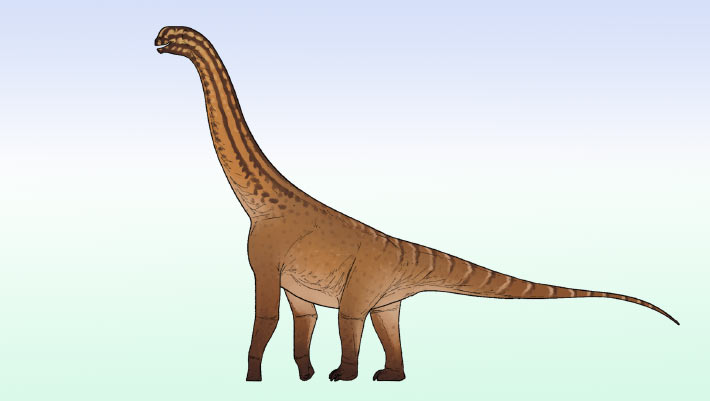
Small Sauropod Dinosaur from Jurassic Period Discovered in India
Un petit dinosaure sauropode du Jurassique découvert en Inde
bassin Inde Jurassique Jurassique moyen Dinosauria partiel squelette
Des paléontologues indiens ont mis au jour un squelette partiel d’un petit dinosaure néosauropode jusqu’alors inconnu dans les roches du Jurassique moyen du bassin de Kachchh, dans le Gujarat. L'article Petit dinosaure sauropode de la période jurassique découvert en Inde apparaît en premier sur Sci.News : Breaking Science News.
21/07/2026 sci-news ⚙ Traduction automatique
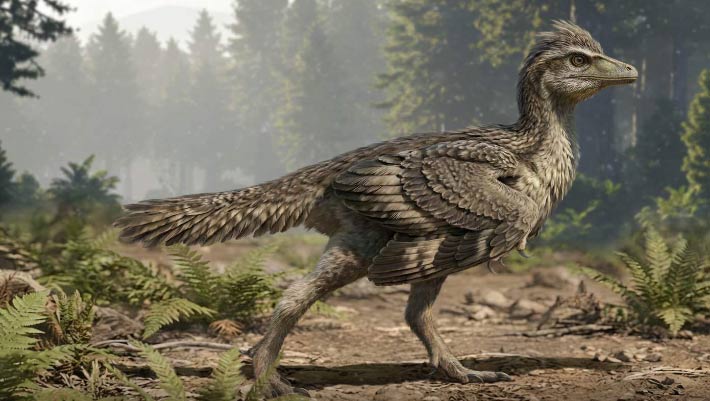
New Jurassic Fossil Reveals How Birds Lost Their Dinosaur Tails
Un nouveau fossile jurassique révèle comment les oiseaux ont perdu leur queue de dinosaure
Chine Jurassique fossile Dinosauria Zhengheornis oiseau
Des paléontologues chinois ont décrit un petit oiseau jurassique jusqu'alors inconnu dont la queue courte offre de nouvelles preuves de la façon dont les premiers oiseaux ont troqué leur longue queue semblable à celle d'un dinosaure contre le coccyx compact qui aide les oiseaux vivants à voler. L'article Un nouveau fossile du Jurassique révèle comment les oiseaux ont perdu leurs queues de dinosaures est apparu en premier sur Sci.News : Breaking Science News.
07/07/2026 sci-news ⚙ Traduction automatique
Yi: Beast of the Week
Yi : la bête de la semaine
Chine Jurassique Jurassique supérieur Dinosauria Yi évolution
 Cette semaine, nous allons découvrir un dinosaure si inhabituel qu'il a complètement changé ce que nous pensions savoir sur l'évolution des dinosaures.  Découvrez Yi qi ! (prononcé « EE-chee ») Yi était un petit dinosaure théropode qui vivait dans ce qui est aujourd'hui le Hebei, dans le nord-est de la Chine, à la fin du Jurassique, il y a environ 159 millions d'années.  Du museau à la queue, il ne mesurait qu'environ 30 cm de long et son envergure mesurait environ 60 cm de large.  Le genre est venu, "Yi" se traduit du mandarin par "aile" et
21/06/2026 prehistoricbeastoftheweek ⚙ Traduction automatique
On le croyait roi des océans au Jurassique : une vertèbre percée raconte un combat d’une violence extrême
os dent vertèbre chasse musée Jurassique fossile Ichthyosauria Ichthyosaurus Pliosaurus comportement
Oublié pendant plus d’un siècle dans les tiroirs d’un musée, un fossile refait aujourd’hui surface et raconte une scène de violence extrême dans les océans du Jurassique. Une vertèbre d’ichtyosaure, marquée par l’impact d’une dent brisée, révèle peut-être l’attaque d’un des plus redoutables...
17/06/2026 futura-terre
1 2 3 4 5 6