←

France

Pays

46 image(s) · 6 Actualités

Galerie d'images

Garamaudo bauciensis, mandible. Holotype (CD13-PAL.2018.3.1.10), Bouc-Bel-Air - Sousquières (Bouches-du-Rhône Department, Provence, southeastern France), Santonian. A-H, photographs and interpretative drawings in lateral (A-B), medial (C-D), dorsal (E-F) and ventral (G-H) views. Abbreviations: af, adductor fossa; Ang, Angular; ag, angular groove; Art, Prearticular-articular unit; cob, coronoid buttress; cos, coronoid suture; ctf, corda tympani foramen; f, fossa; g, groove; gf, glenoid fossa; mnf, mandibular nerve foramen; psf, posterior surangular foramen; ri, ridge; rp, retroarticular process; rph, retroarticular process hook; Sur, surangular; sp, surangular horizontal plateau.

Garamaudo bauciensis, mandible. Holotype (CD13-PAL.2018.3.1.10), Bouc-Bel-Air - Sousquières (Bouches-du-Rhône Department, Provence, southeastern France), Santonian. A-H, photographs and interpretative drawings in lateral (A-B), medial (C-D), dorsal (E-F) and ventral (G-H) views. Abbreviations: af, adductor fossa; Ang, Angular; ag, angular groove; Art, Prearticular-articular unit; cob, coronoid buttress; cos, coronoid suture; ctf, corda tympani foramen; f, fossa; g, groove; gf, glenoid fossa; mnf, mandibular nerve foramen; psf, posterior surangular foramen; ri, ridge; rp, retroarticular process; rph, retroarticular process hook; Sur, surangular; sp, surangular horizontal plateau.

dessin France Santonien holotype +1
Photographed at the Cité de l'Automobile, France.
Taxons Velocipes

Photographed at the Cité de l'Automobile, France.

France Velocipes
Reconstruceted skull of Dubreuillosaurus illustrating known (white) and unknown (grey) material. Scale bar is 10cm. Based of figures and description of Allain (2002) "Discovery of megalosaur (Dinosauria, Theropoda) in the middle Bathonian of Normandy (France) and its implications for the phylogeny of basal Tetanurae"
Taxons Dubreuillosaurus

Reconstruceted skull of Dubreuillosaurus illustrating known (white) and unknown (grey) material. Scale bar is 10cm. Based of figures and description of Allain (2002) "Discovery of megalosaur (Dinosauria, Theropoda) in the middle Bathonian of Normandy (France) and its implications for the phylogeny of basal Tetanurae"

écaille description France Bathonien +8
Cryonectes neustriacus MAE 2007.1.1(J), holotype; Upper Pliensbachian, Calvados,

France
Taxons Cryonectes

Cryonectes neustriacus MAE 2007.1.1(J), holotype; Upper Pliensbachian, Calvados, France

France Pliensbachien holotype Cryonectes
Fossil of Streptospondylus, a dinosaur from the Middle Jurassic period of France. Took the photo at the Gallery of Paleontology and Comparative Anatomy in the French National Museum of Natural History, Paris.
Taxons Streptospondylus

Fossil of Streptospondylus, a dinosaur from the Middle Jurassic period of France. Took the photo at the Gallery of Paleontology and Comparative Anatomy in the French National Museum of Natural History, Paris.

musée France Jurassique Jurassique moyen +4
Solitary tooth of a sauropod from Angeac-Charente in France. Based on its morphology, it is not from an unnamed titanosaur like other material from this site, but from an unnamed titanosauriform similar to Ligabuesaurus or Veneosaurus.
Taxons Ligabuesaurus

Solitary tooth of a sauropod from Angeac-Charente in France. Based on its morphology, it is not from an unnamed titanosaur like other material from this site, but from an unnamed titanosauriform similar to Ligabuesaurus or Veneosaurus.

dent France Ligabuesaurus Titanosauria +1
Atsinganosaurus velauciensis (VBN 93.01), late Campanian, Velaux-La Bastide Neuve, Bouches-de-Rhône, southern France. Posterior dorsal vertebra, right lateral view. Scale bar equals 10 cm.
Taxons Atsinganosaurus

Atsinganosaurus velauciensis (VBN 93.01), late Campanian, Velaux-La Bastide Neuve, Bouches-de-Rhône, southern France. Posterior dorsal vertebra, right lateral view. Scale bar equals 10 cm.

écaille vertèbre France Campanien +1
Fossil of Tarascosaurus salluvicus, an extinct theropod discovered in the South of France
Taxons Tarascosaurus

Fossil of Tarascosaurus salluvicus, an extinct theropod discovered in the South of France

France fossile Tarascosaurus
The making of this document was supported by Wikimédia France. (Submit your project!)
Taxons Bambiraptor

The making of this document was supported by Wikimédia France. (Submit your project!)

France Bambiraptor
Obelignathus septimanicus holotype, MDE D30 from the 'Grès à Reptiles' Formation of Montouliers, southern France. Photographs and photogrammetric models of the right dentary in dorsal (A), anterior (B), medial (C), and lateral (D) views.
Taxons Obelignathus

Obelignathus septimanicus holotype, MDE D30 from the 'Grès à Reptiles' Formation of Montouliers, southern France. Photographs and photogrammetric models of the right dentary in dorsal (A), anterior (B), medial (C), and lateral (D) views.

France holotype Obelignathus formation
this sponge of the Santonien chalk is on a flint nivel "Brasspoint" . it's probably Ventriculites - it was found in a subterranean quarry in the "Forêt de La Londe" Normandie - France (cliché Jean-Claude Staigre - CNEK 2017

this sponge of the Santonien chalk is on a flint nivel "Brasspoint" . it's probably Ventriculites - it was found in a subterranean quarry in the "Forêt de La Londe" Normandie - France (cliché Jean-Claude Staigre - CNEK 2017

France Santonien
Lower Santonian from Les Âges, commune of Saint-Crépin-de-Richemont, Dordogne, France. The limestone is very rich in bryozoans.

Lower Santonian from Les Âges, commune of Saint-Crépin-de-Richemont, Dordogne, France. The limestone is very rich in bryozoans.

France Santonien
The Pectinida fossil Neithea in Lower Santonian bioclastic limestone. Found near Les Âges in the commune of Saint-Crépin-de-Richemont, Dordogne, France.
Intervalles Santonian

The Pectinida fossil Neithea in Lower Santonian bioclastic limestone. Found near Les Âges in the commune of Saint-Crépin-de-Richemont, Dordogne, France.

France Santonien fossile
Crommium angustatum Grateloup, 1827 fossil snail shell (apical view) from the Oligocene of France. (42 mm across at its widest)
Of all the molluscs, the gastropods (snails) have made the most ecological adaptations.  They can be found in almost all fundamental environments: marine, freshwater, terrestrial.  Most gastropods live in the ocean, and have a single, asymmetrically coiled, external shell of calcium carbonate (CaCO3 - usually aragonite).  The hard calcareous shell is the most easily fossilized part of the gastropod.  The soft parts of a snail (the “slug” portion) include a well developed head having eyes, tentacles, and a mouth, and a well developed, strong, muscular foot used principally for locomotion.  The shell is carried upright on the snail’s back, or is partially dragged behind.  When threatened by a predator, many snails can retract their soft parts into the shell’s interior for protection.
Many fossil snails in the Paleozoic rock record are often not well preserved, or are preserved as internal molds.  The original aragonite of many gastropod shells is not stable on geologic time scales, and often recrystallizes or dissolves completely away.  Fossil snail shells in Mesozoic and Cenozoic rocks are usually better preserved.
Classification: Animalia, Mollusca, Gastropoda, Naticoidea, Ampullinidae
Age: Rupelian Stage (Stampian Stage), Lower Oligocene

Locality: Gaas, Landes Department, Aquitaine, southwestern France

Crommium angustatum Grateloup, 1827 fossil snail shell (apical view) from the Oligocene of France. (42 mm across at its widest) Of all the molluscs, the gastropods (snails) have made the most ecological adaptations. They can be found in almost all fundamental environments: marine, freshwater, terrestrial. Most gastropods live in the ocean, and have a single, asymmetrically coiled, external shell of calcium carbonate (CaCO3 - usually aragonite). The hard calcareous shell is the most easily fossilized part of the gastropod. The soft parts of a snail (the “slug” portion) include a well developed head having eyes, tentacles, and a mouth, and a well developed, strong, muscular foot used principally for locomotion. The shell is carried upright on the snail’s back, or is partially dragged behind. When threatened by a predator, many snails can retract their soft parts into the shell’s interior for protection. Many fossil snails in the Paleozoic rock record are often not well preserved, or are preserved as internal molds. The original aragonite of many gastropod shells is not stable on geologic time scales, and often recrystallizes or dissolves completely away. Fossil snail shells in Mesozoic and Cenozoic rocks are usually better preserved. Classification: Animalia, Mollusca, Gastropoda, Naticoidea, Ampullinidae Age: Rupelian Stage (Stampian Stage), Lower Oligocene Locality: Gaas, Landes Department, Aquitaine, southwestern France

écaille locomotion prédateur France +6
Crommium angustatum Grateloup, 1827 fossil snail shell (apical view) from the Oligocene of France. (42 mm across at its widest)
Of all the molluscs, the gastropods (snails) have made the most ecological adaptations.  They can be found in almost all fundamental environments: marine, freshwater, terrestrial.  Most gastropods live in the ocean, and have a single, asymmetrically coiled, external shell of calcium carbonate (CaCO3 - usually aragonite).  The hard calcareous shell is the most easily fossilized part of the gastropod.  The soft parts of a snail (the “slug” portion) include a well developed head having eyes, tentacles, and a mouth, and a well developed, strong, muscular foot used principally for locomotion.  The shell is carried upright on the snail’s back, or is partially dragged behind.  When threatened by a predator, many snails can retract their soft parts into the shell’s interior for protection.
Many fossil snails in the Paleozoic rock record are often not well preserved, or are preserved as internal molds.  The original aragonite of many gastropod shells is not stable on geologic time scales, and often recrystallizes or dissolves completely away.  Fossil snail shells in Mesozoic and Cenozoic rocks are usually better preserved.
Classification: Animalia, Mollusca, Gastropoda, Naticoidea, Ampullinidae
Age: Rupelian Stage (Stampian Stage), Lower Oligocene

Locality: Gaas, Landes Department, Aquitaine, southwestern France

Crommium angustatum Grateloup, 1827 fossil snail shell (apical view) from the Oligocene of France. (42 mm across at its widest) Of all the molluscs, the gastropods (snails) have made the most ecological adaptations. They can be found in almost all fundamental environments: marine, freshwater, terrestrial. Most gastropods live in the ocean, and have a single, asymmetrically coiled, external shell of calcium carbonate (CaCO3 - usually aragonite). The hard calcareous shell is the most easily fossilized part of the gastropod. The soft parts of a snail (the “slug” portion) include a well developed head having eyes, tentacles, and a mouth, and a well developed, strong, muscular foot used principally for locomotion. The shell is carried upright on the snail’s back, or is partially dragged behind. When threatened by a predator, many snails can retract their soft parts into the shell’s interior for protection. Many fossil snails in the Paleozoic rock record are often not well preserved, or are preserved as internal molds. The original aragonite of many gastropod shells is not stable on geologic time scales, and often recrystallizes or dissolves completely away. Fossil snail shells in Mesozoic and Cenozoic rocks are usually better preserved. Classification: Animalia, Mollusca, Gastropoda, Naticoidea, Ampullinidae Age: Rupelian Stage (Stampian Stage), Lower Oligocene Locality: Gaas, Landes Department, Aquitaine, southwestern France

écaille locomotion prédateur France +6
Crommium angustatum Grateloup, 1827 fossil snail shell (abapertural view) from the Oligocene of France. (57 mm tall)
Of all the molluscs, the gastropods (snails) have made the most ecological adaptations.  They can be found in almost all fundamental environments: marine, freshwater, terrestrial.  Most gastropods live in the ocean, and have a single, asymmetrically coiled, external shell of calcium carbonate (CaCO3 - usually aragonite).  The hard calcareous shell is the most easily fossilized part of the gastropod.  The soft parts of a snail (the “slug” portion) include a well developed head having eyes, tentacles, and a mouth, and a well developed, strong, muscular foot used principally for locomotion.  The shell is carried upright on the snail’s back, or is partially dragged behind.  When threatened by a predator, many snails can retract their soft parts into the shell’s interior for protection.
Many fossil snails in the Paleozoic rock record are often not well preserved, or are preserved as internal molds.  The original aragonite of many gastropod shells is not stable on geologic time scales, and often recrystallizes or dissolves completely away.  Fossil snail shells in Mesozoic and Cenozoic rocks are usually better preserved.
Classification: Animalia, Mollusca, Gastropoda, Naticoidea, Ampullinidae
Age: Rupelian Stage (Stampian Stage), Lower Oligocene

Locality: Gaas, Landes Department, Aquitaine, southwestern France

Crommium angustatum Grateloup, 1827 fossil snail shell (abapertural view) from the Oligocene of France. (57 mm tall) Of all the molluscs, the gastropods (snails) have made the most ecological adaptations. They can be found in almost all fundamental environments: marine, freshwater, terrestrial. Most gastropods live in the ocean, and have a single, asymmetrically coiled, external shell of calcium carbonate (CaCO3 - usually aragonite). The hard calcareous shell is the most easily fossilized part of the gastropod. The soft parts of a snail (the “slug” portion) include a well developed head having eyes, tentacles, and a mouth, and a well developed, strong, muscular foot used principally for locomotion. The shell is carried upright on the snail’s back, or is partially dragged behind. When threatened by a predator, many snails can retract their soft parts into the shell’s interior for protection. Many fossil snails in the Paleozoic rock record are often not well preserved, or are preserved as internal molds. The original aragonite of many gastropod shells is not stable on geologic time scales, and often recrystallizes or dissolves completely away. Fossil snail shells in Mesozoic and Cenozoic rocks are usually better preserved. Classification: Animalia, Mollusca, Gastropoda, Naticoidea, Ampullinidae Age: Rupelian Stage (Stampian Stage), Lower Oligocene Locality: Gaas, Landes Department, Aquitaine, southwestern France

écaille locomotion prédateur France +6
1 2 3

Actualités

Des « pointes de flèches » vieilles de 80 000 ans réécrivent l’histoire de l’humanité
migration France Ouzbékistan découverte Homo sapiens
Les archéologues ont identifié en Ouzbékistan de minuscules pointes de projectiles vieilles de 80 000 ans qui pourraient avoir été utilisées comme des pointes de flèches. Leur taille, leur conception et leurs dégâts d'impact ressemblent beaucoup à des armes trouvées bien plus tard sur un site d'Homo sapiens en France. Cette découverte suggère qu’une technologie sophistiquée de projectiles pourrait être apparue en Asie centrale bien avant que l’homme moderne ne s’implante solidement en Europe, réécrivant potentiellement un chapitre majeur de la migration humaine.
06/09/2026 sciencedaily-paleo ⚙ Traduction automatique
Du charbon de bois caché révèle le véritable âge des peintures rupestres anciennes
France datation
Une nouvelle analyse a pour la première fois daté avec précision les peintures de la grotte de Font-de-Gaume en France. Les scientifiques ont découvert du charbon de bois à l’intérieur de pigments noirs que l’on pensait autrefois contenir uniquement des minéraux, ce qui leur a permis d’utiliser la datation au radiocarbone. Les résultats montrent qu'un bison a été peint il y a environ 13 000 ans, tandis que des sections d'une figure en forme de masque ont été ajoutées au cours de plusieurs périodes très éloignées.
28/07/2026 sciencedaily ⚙ Traduction automatique
Jurassic Pliosaur Liopleurodon Was Big, but Not as Big as Once Feared
Le pliosaure jurassique Liopleurodon était gros, mais pas aussi gros qu'on le craignait autrefois
France Jurassique Liopleurodon Pliosaurus
Liopleurodon ferox est un reptile marin au cou court qui patrouillait dans les mers de ce qui est aujourd'hui l'Angleterre et la France il y a environ 163 millions d'années. L'article Jurassic Pliosaur Liopleurodon était grand, mais pas aussi gros qu'on le craignait autrefois, apparu en premier sur Sci.News : Breaking Science News.
22/07/2026 sci-news ⚙ Traduction automatique
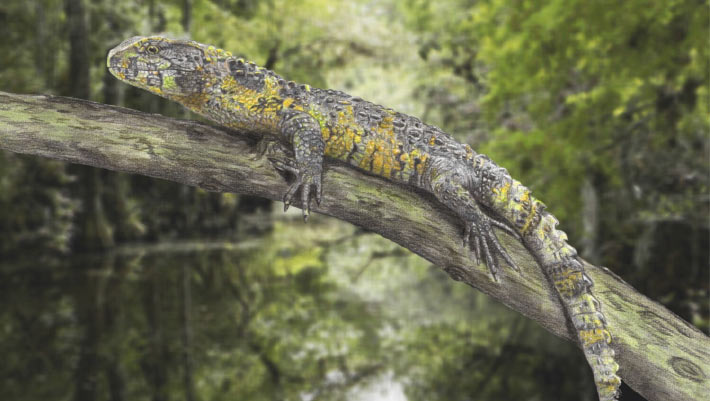
83-Million-Year-Old Crocodile Lizard Fossil Unearthed in France
Un fossile de lézard crocodile vieux de 83 millions d'années découvert en France
mâchoire France fossile découverte nouvelle espèce partiel
Les paléontologues ont identifié un nouveau genre et une nouvelle espèce de lézard pan-shinisaure à partir d'une mâchoire supérieure partielle découverte dans le sud de la France, repoussant la présence de sa lignée en Europe d'au moins 30 millions d'années. L'article Un fossile de lézard crocodile vieux de 83 millions d'années découvert en France est apparu en premier sur Sci.News : Breaking Science News.
22/05/2026 sci-news ⚙ Traduction automatique
Des ossements anciens révèlent des rituels de victoire effrayants après les premières guerres d’Europe
os dent France
De nouvelles preuves provenant de charniers néolithiques dans le nord-est de la France suggèrent que certaines des premières confrontations violentes en Europe n’étaient pas des actes de brutalité aléatoires, mais des démonstrations de pouvoir soigneusement mises en scène. En analysant des indices chimiques contenus dans des os et des dents anciennes, les chercheurs ont découvert que de nombreuses victimes étaient des étrangers qui avaient subi une violence extrême et ritualisée après le conflit. Les armes coupées semblent avoir été prises sur des ennemis locaux tués au combat, tandis que des captifs venus de plus loin ont été exécutés dans un gri
08/02/2026 sciencedaily ⚙ Traduction automatique
1 2